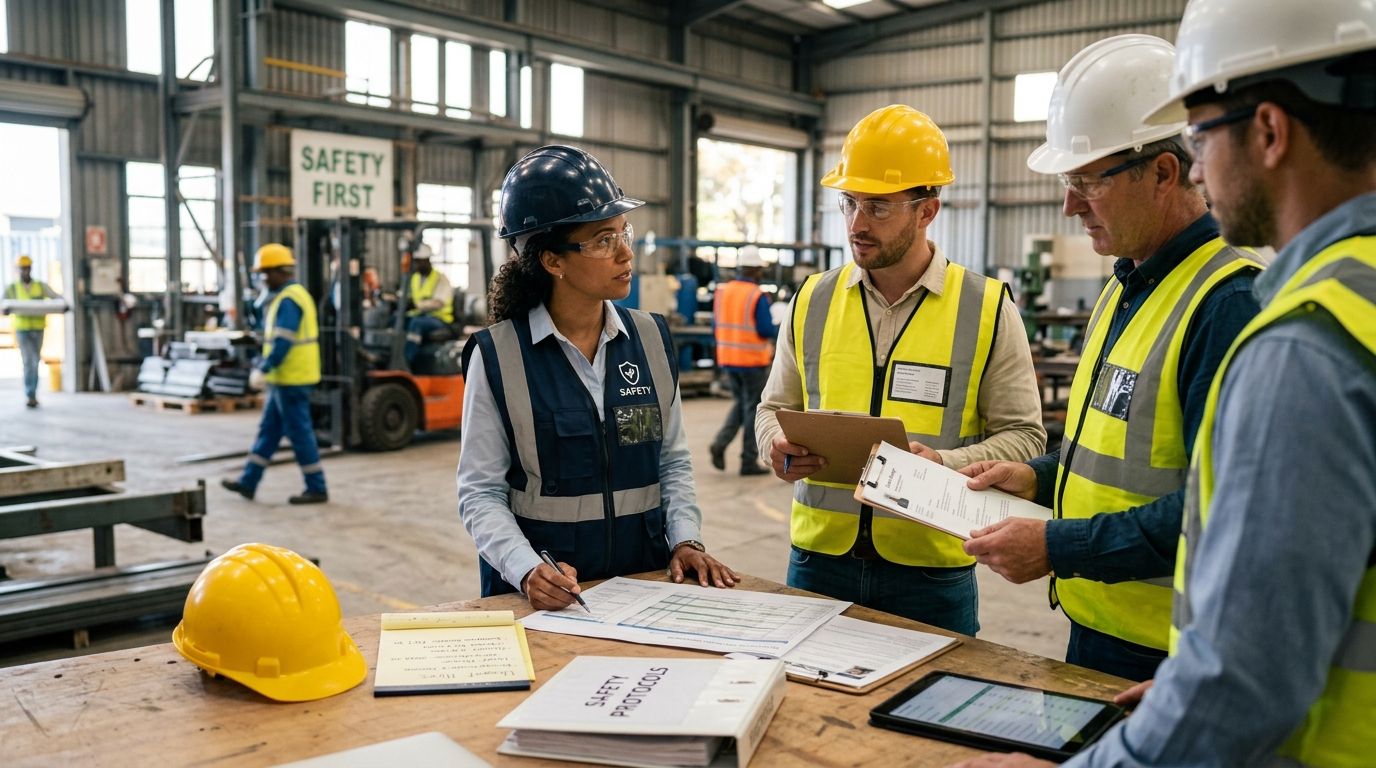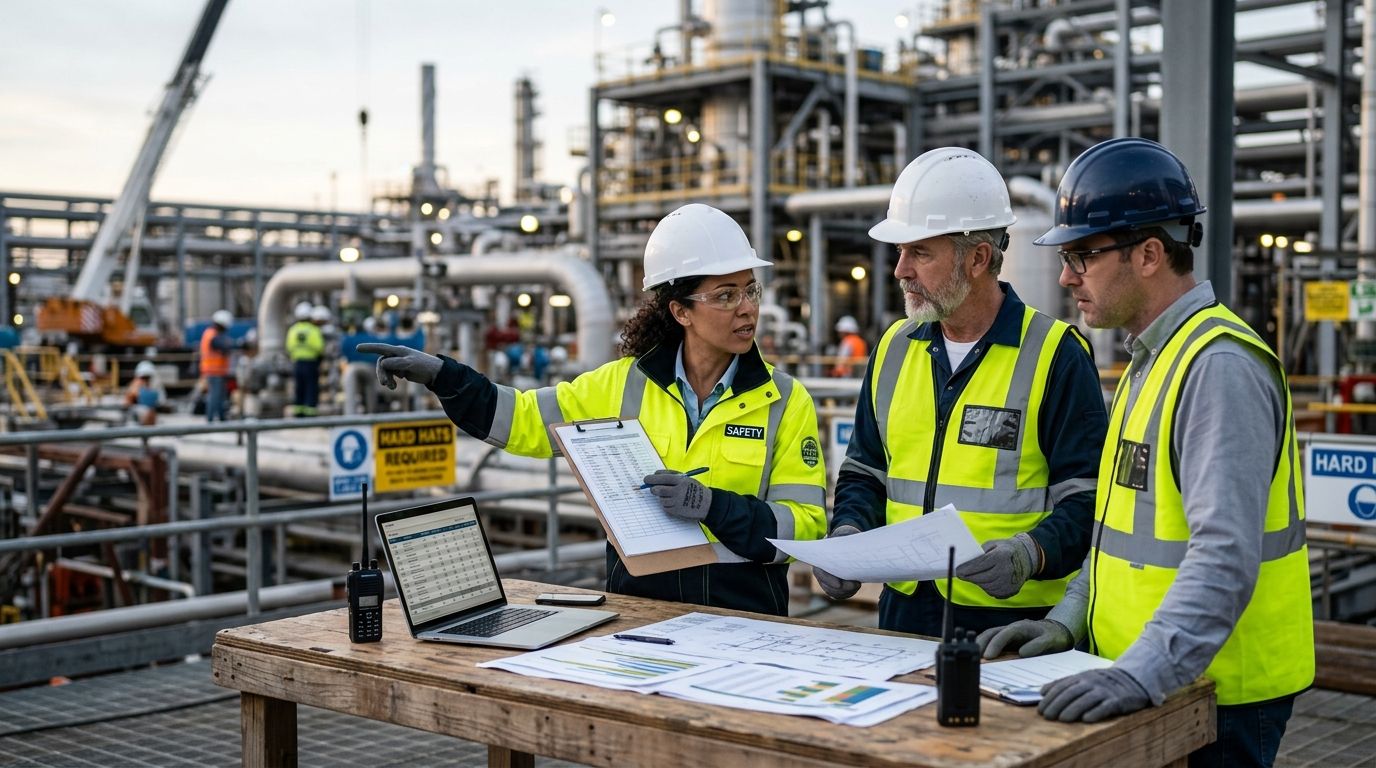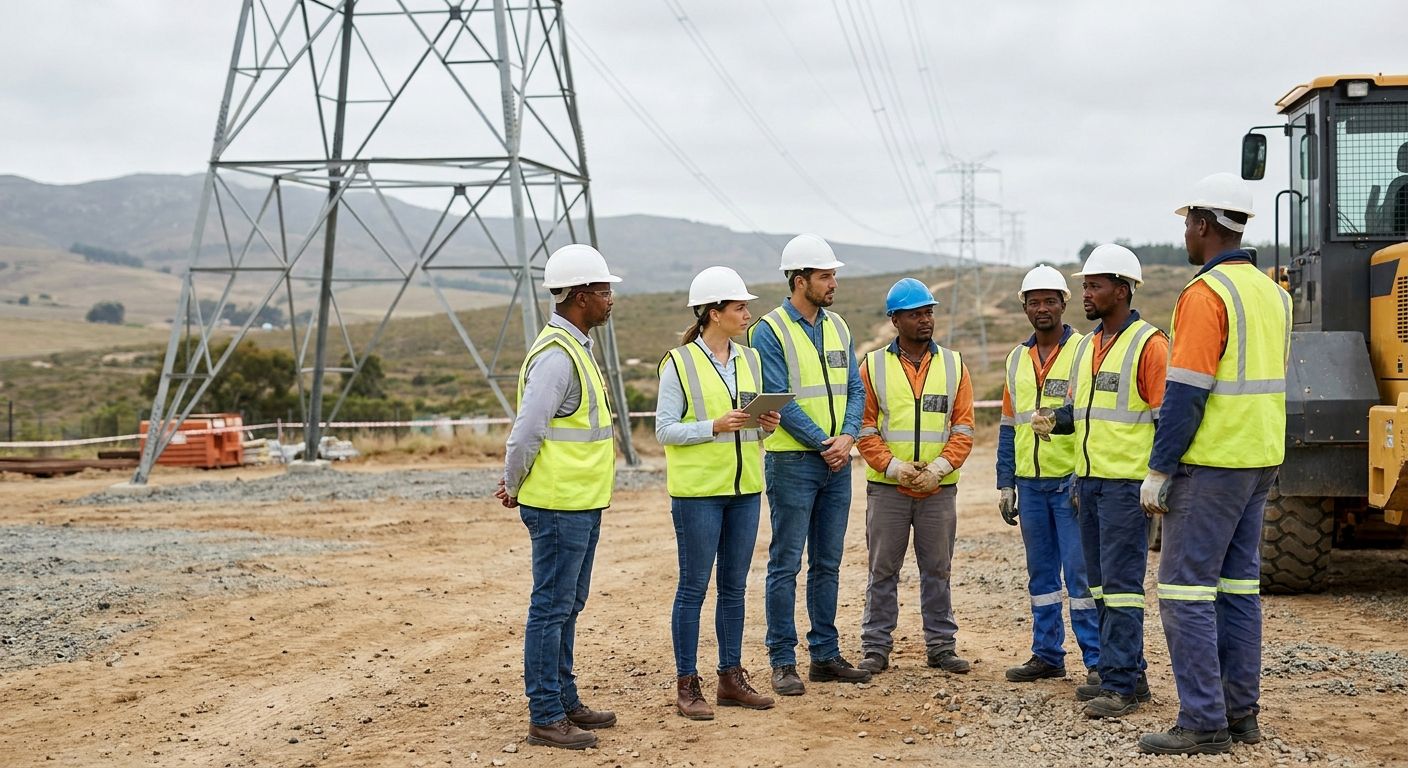
Safety staffing for utility transmission line construction means sourcing certified site safety officers, qualified observers, riggers, and first aid personnel who understand high-voltage work under OSHA 1926 Subpart V, not generalist construction safety hires. Transmission crews work energized or de-energized lines from 69kV up to 765kV, often in remote right-of-way corridors, which changes who you can put on a crew and how fast you need them there.
- Safety staffing for transmission line construction requires OSHA 1926 Subpart V-qualified personnel, not general construction safety hires.
- ResponsAble Staffing places qualified observers, riggers, and site safety officers for T&D projects nationwide, temp or direct hire.
- Storm and outage response work needs a pre-vetted bench, not a scramble after the call comes in.
- Direct hire fits long-term safety leadership roles; contract staffing fits project surge and storm restoration.
- Certification verification before placement is the single biggest gap agencies skip on transmission jobs.
Why safety staffing matters for transmission line construction
Transmission projects don't run like a typical commercial job site. Crews work at height on structures energized at more than 50 volts, per the threshold set in OSHA 1926.960, which pulls the whole crew into Subpart V requirements around minimum approach distances, grounding, and qualified-person designations.
A general safety coordinator who's never worked a transmission or distribution job can't sign off on a switching plan or verify a proper equipotential grounding setup. The pool of people who genuinely hold those qualifications is smaller than the pool of OSHA 30-certified generalists, and utilities and their EPC contractors know it.
Storm restoration adds a second pressure point. When a named storm knocks down transmission structures across three states, the utility needs safety staffing scaled up fast, and the agencies that already have a bench of pre-screened, credential-verified professionals win that work. The ones improvising from a resume database don't.
Staff the roles transmission crews actually need
Define the safety roles before you post a req
Transmission construction doesn't need one generic "site safety" hire. It needs a small set of specific roles, each with its own qualification path.
- Site safety officer / SSHO — oversees the overall safety program across the crew and reports to the project superintendent.
- Qualified observer / spotter — monitors minimum approach distances during energized or de-energized work near live lines.
- Rigger and qualified person — signs off on lift plans for structure erection and conductor stringing.
- First aid / EMT-certified crew member — mandatory on remote right-of-way sites with long response times to the nearest hospital.
- Flagger — controls traffic where access roads cross public roadways.
Getting this list wrong is the single most common reason a transmission safety team is understaffed on paper but still short-handed on site.
Verify OSHA 1926 Subpart V and NESC-specific credentials
Don't take a resume's certification claims at face value on a transmission job. The consequences of a bad match here are worse than on a standard commercial build — energized line work has no margin for a candidate who's padded a qualification.
- Confirm qualified-person or qualified-electrical-worker status against the employer's own written program, not just a training certificate.
- Check documented hours of hands-on transmission or distribution experience, not just classroom training.
- Verify current CPR/first aid cards for anyone working isolated right-of-way segments.
- Cross-reference OSHA 10/30 completion with the actual course provider, since fraudulent cards circulate in this labor pool.
- Confirm fall protection training aligns with ANSI Z359 for structure climbing, not just general construction fall protection.
The faster path here is working with an agency that already runs certification verification before a candidate is ever presented, instead of your team re-checking every credential after the fact.
Build a bench for storm and outage surge
Transmission safety staffing spikes hard and fast when a storm takes down structures or a utility calls an emergency outage. Waiting until the call comes in to start sourcing costs days you don't have.
- Pre-screen a rotating pool of qualified observers and SSHOs who've cleared background and drug screening in advance.
- Keep credential files current year-round, not refreshed only when a project starts.
- Negotiate standby or on-call terms with your staffing partner ahead of storm season, not during it.
- Track which candidates have prior storm restoration experience specifically, since that work has its own pace and hazards.
Match crews to line voltage and terrain
A transmission project at 69kV in flat farmland calls for a different safety staffing mix than a 500kV mountain crossing. Match experience to the actual job, not just the job title.
- Confirm prior experience at comparable voltage classes, since minimum approach distance and grounding procedures scale with system voltage.
- Staff extra qualified observers on structures requiring helicopter-assisted stringing or difficult terrain access.
- Pair less experienced safety staff with a senior SSHO on remote sites where support is hours away.
- Factor in weather exposure — heat illness prevention protocols matter as much as fall protection on summer transmission builds.
Plan lodging and logistics for remote right-of-way sites
Transmission corridors run through places without a hotel for fifty miles. Safety staffing for these jobs is partly a logistics problem, not just a credentialing one.
- Confirm per diem and lodging terms with your staffing partner before mobilization, not after a crew is already on the road.
- Build in travel time to the nearest emergency medical facility when planning first aid coverage.
- Stagger crew rotations on multi-week builds so fatigue doesn't erode safety judgment near energized lines.
- Keep a communication protocol for sites with no cell coverage.
Decide when to go direct hire instead of contract
Project-based safety staffing covers the build. Long-term safety leadership on a utility's ongoing T&D program is a different hire.
- Use temp or contract staffing for a single transmission project with a defined end date.
- Use direct hire safety manager recruiting when a utility or EPC needs a permanent safety director overseeing multiple transmission programs.
- Use contract-to-hire when you want to evaluate a candidate on one project before committing to a permanent seat.
- Build succession into the plan — transmission safety leadership positions have long ramp-up times, so start the direct hire search before the current person gives notice.
Coordinate safety staffing across rigging and vegetation crews
Transmission construction rarely runs in isolation. Rigging crews erecting structures and vegetation management crews clearing right-of-way both need dedicated safety coverage, and the requirements differ.
- Staff rigger and qualified person staffing separately from general line crew safety, since lift plans require their own sign-off authority.
- Coordinate with utility vegetation management crews working the same corridor to avoid overlapping hazard zones going unmonitored.
- Assign a single safety lead to own communication between rigging, line, and vegetation teams on shared right-of-way days.
ResponsAble Staffing built a national bench specifically for transmission and distribution safety roles, so a request for a qualified observer or SSHO doesn't start from zero.
Need transmission line safety staff fast?
Get vetted qualified observers, SSHOs, and riggers placed on your project.
Compare your staffing options
| Option | Best for | Engagement length | Key limitation |
|---|---|---|---|
| Temp / contract staffing | Single transmission project with a defined end date | Weeks to one year | Requires re-onboarding each new project unless the same staffing partner is retained |
| Contract-to-hire | Testing a safety hire before committing permanently | 3-6 months, then convert | Slower to fill than straight temp placement |
| Direct hire | Permanent safety director or manager over an ongoing T&D program | Permanent | Longer search timeline, not suited to short-term project surge |
| MSP / VMS program staffing | Utilities running multiple concurrent transmission projects | Ongoing, multi-vendor | Adds a management layer that can slow time-to-fill on urgent storm response |
The verdict: most transmission builds run on contract staffing for the project window and reserve direct hire for the safety leadership seat that outlasts any single job.
Common mistakes utilities and EPCs make on transmission safety staffing
- Treating "OSHA 30" as equivalent to "transmission qualified." A general construction certification says nothing about minimum approach distance training or switching plan competency.
- Sourcing storm response staff only after the storm hits. By the time crews are needed, the qualified pool is already committed to other utilities.
- Underestimating first aid coverage on remote right-of-way segments. A crew forty minutes from the nearest hospital needs more than a first aid kit and a hope.
- Skipping certification verification to save time on fast-track jobs. A single unverified qualified-person credential on an energized line job is the kind of mistake that ends a project, not just a placement.
- Assuming one safety hire covers rigging, vegetation, and line crews at once. Each discipline has its own hazard profile and its own qualified-person requirements.
FAQ
What certifications should a transmission line safety officer have in 2026?
A transmission safety officer should hold OSHA 30 construction training, documented qualified-person status under 1926 Subpart V, and current CPR/first aid certification. Fall protection training aligned to ANSI Z359 for structure climbing is standard on most transmission projects in 2026.
How fast can safety staffing agencies mobilize for storm restoration?
Mobilization speed depends on whether the agency keeps a pre-screened bench with current credential files. Agencies scrambling to source and verify candidates after the storm call comes in will always lag behind ones that already maintain a rotating pool.
Is direct hire or contract staffing better for transmission safety roles?
Contract staffing fits a single project with a defined end date; direct hire fits a permanent safety director overseeing an ongoing transmission and distribution program. Most utilities use both models depending on the role.
What voltage classes require qualified-person designation?
OSHA 1926.960 applies to lines and equipment energized at more than 50 volts, which covers essentially all transmission work from 69kV distribution-adjacent lines up through 765kV extra-high-voltage transmission.
Do transmission line crews need dedicated first aid staff on site?
Yes, especially on remote right-of-way segments where the nearest hospital may be an hour or more away. A certified first aid or EMT-trained crew member should be part of every transmission crew's safety staffing plan.
How does safety staffing differ between transmission and distribution work?
Transmission work generally involves higher voltage classes, more remote terrain, and larger structures requiring rigging and crane coordination, which raises the bar on qualified-person and rigger credentials compared to lower-voltage distribution jobs.
Can one staffing agency cover both rigging and line crew safety roles?
Yes, but the agency needs separate qualified candidates for each discipline rather than treating one safety hire as coverage for both rigging lift plans and energized line work.
What's the biggest risk in skipping certification verification on transmission jobs?
An unverified qualified-person credential on an energized line placement can lead to a serious incident or project shutdown. Verification before placement, not after, is the standard that matters most on transmission work.
One last thing
The utilities that handle storm restoration best in 2026 aren't the ones with the biggest safety budgets — they're the ones who had a pre-vetted bench of qualified observers and SSHOs sitting ready before the storm made landfall. Build that bench during the quiet season, not during the emergency, and staffing for transmission line construction stops being a scramble and starts being a plan you already ran before.