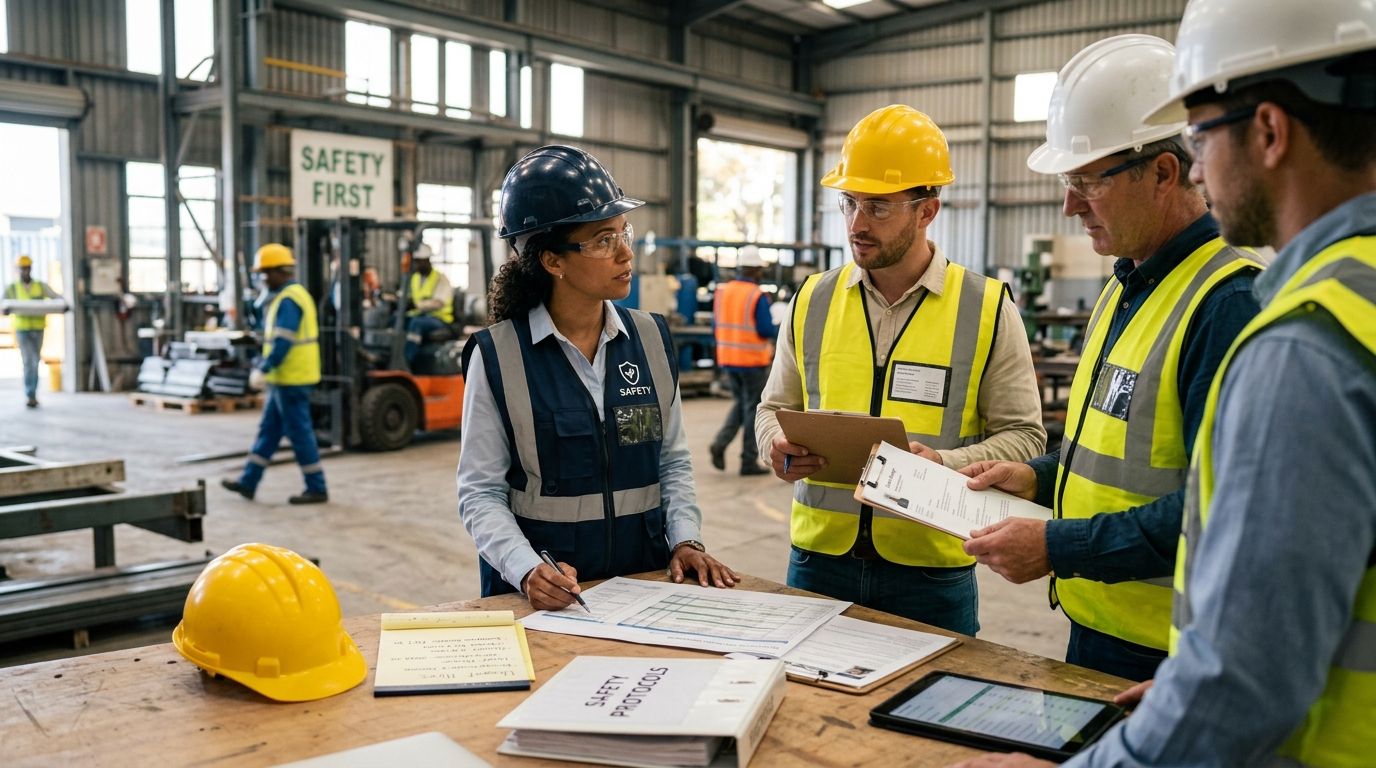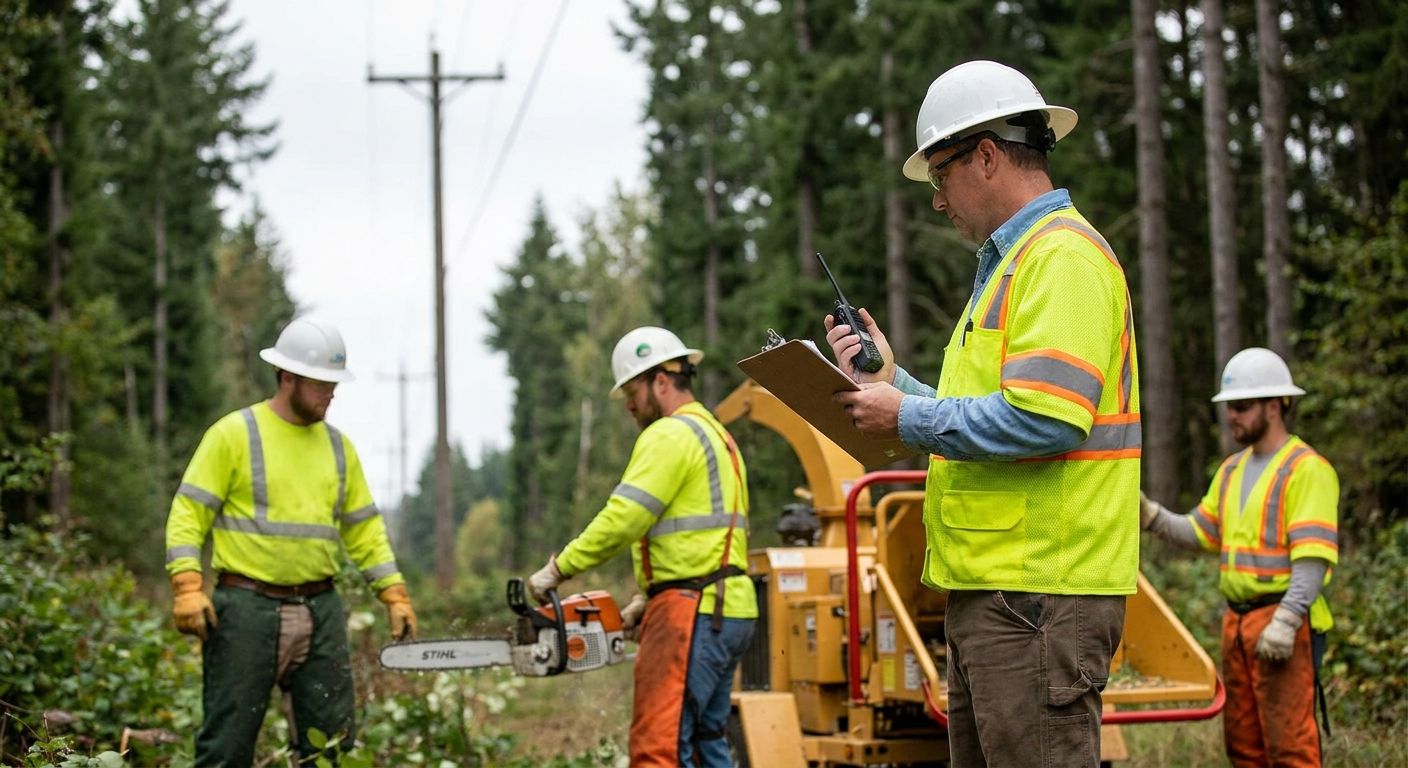
Utility vegetation management crews work feet from energized conductors, run chainsaws forty feet up in a bucket, and get measured on outage prevention, not paperwork. Safety staffing for utility vegetation management crews means putting a line-clearance-qualified safety professional on the job before the first truck rolls in 2026, not after the first near-miss.
- ResponsAble Staffing places 1910.269(q)-qualified safety coordinators for utility vegetation management crews in 2026, direct hire or contract.
- Skip generalist staffing agencies for line-clearance work: ANSI Z133 and 1910.269(q) qualification are non-negotiable near energized conductors.
- Storm season and seasonal surge crews need fast-turnaround safety staffing, not a six-week search cycle.
- Verdict: match the credential to the hazard first, the bill rate second.
Why this matters
Line-clearance tree trimming near energized power lines sits under its own OSHA rule for a reason: 29 CFR 1910.269(q) exists because general tree-care safety practices don't cover the electrical contact risk. ANSI Z133 layers on top of that as the arboriculture industry's own safety standard, covering everything from chainsaw operation to aerial rescue.
Utility wildfire mitigation programs keep pushing vegetation management budgets up heading into 2026, and that means more crews, more contractors, and more pressure to staff fast. Speed without credential verification is exactly how a utility ends up with a recordable incident, a Public Utilities Commission inquiry, or a fatality investigation instead of a cleared right-of-way.
Who this is for
This guide is for EHS directors at line-clearance and vegetation management contractors working under utility service agreements, and for internal utility safety teams managing multiple tree-care subcontractors across a service territory. If your crews touch conductors rated above 50kV, work from aerial devices, or operate during active wildfire season, this applies to you directly.
Growing a vegetation management program often means growing past what your current safety bench can carry, and that gap is exactly where the wrong hire does the most damage. Before adding headcount, it helps to know how to evaluate a staffing agency's safety incident track record rather than taking a sales pitch at face value.
What to look for in safety staffing for utility vegetation management crews
Line-clearance qualification under 1910.269(q)
A "qualified line clearance arborist" isn't a job title an agency can assign on paper. It's a specific 1910.269(q) status tied to training, demonstrated skill, and knowledge of electrical hazards. A staffing partner that can't produce documentation tying a candidate to this status is guessing, not verifying.
ANSI Z133 competency, not just a certificate
ANSI Z133 covers rigging, chainsaw use, aerial device operation, and electrical hazard awareness for tree care work. A candidate who passed a one-day course years ago and hasn't touched a chainsaw since doesn't meet the spirit of the standard, even with a card in hand.
Fall protection and aerial-device rescue readiness
Crews working from buckets need more than a harness. They need a documented rescue plan and a coordinator who can execute it in minutes, not hours, if a worker becomes unresponsive at height.
Wildfire and fire-risk awareness built into the work plan
Vegetation contact with energized lines is a wildfire ignition source, not just an outage risk. Crews working active fire-risk corridors need safety staff trained to spot fuel load and weather conditions, not just chainsaw technique.
Documented credential verification, not self-reported forms
Any agency can hand you a resume with "ANSI Z133 certified" typed on it. Ask how the credential gets verified before the candidate steps on your right-of-way, and get the answer in writing.
Surge and storm-response mobilization speed
Storm restoration doesn't wait for a normal hiring cycle. A staffing partner who can only fill roles on a standard timeline isn't built for utility vegetation management work.
“A crew that contacts an energized line during trimming doesn't get a second attempt, which is why the qualification comes before the bill rate.”
Top staffing solutions for utility vegetation management crews
1. Direct-Hire Safety Coordinators — the long-term anchor
For programs running year over year across a service territory, a permanent safety coordinator builds institutional knowledge of specific circuits, right-of-way conditions, and contractor crews. The right hire carries both 1910.269(q) qualification and ANSI Z133 fluency, not one or the other. Direct-hire recruiting for safety coordinators is the path when the role is permanent, not seasonal. Verdict: Buy if your vegetation management program runs 12 months a year.
2. Qualified Riggers and Aerial-Lift Qualified Persons — the bucket truck backbone
Every aerial device on a UVM job needs a qualified person who can inspect, operate, and, if needed, perform an aerial rescue. This role turns over fast on contract crews, which makes verified staffing more important than it sounds. Rigger and qualified person staffing for industrial projects covers this credential specifically. Verdict: Buy for any crew running bucket trucks or cranes.
3. Fire Watch and Storm-Response Safety Techs — the wildfire season backstop
During peak wildfire season or active storm restoration, crews need dedicated fire watch and rapid-mobilization safety techs who aren't also trying to run the crew. This role is short-cycle by design and should flex up and down with the calendar. Verdict: Consider for utilities in wildfire-designated territories; Skip the idea of asking your existing coordinator to cover this on top of daily duties.
4. OSHA Outreach Trainers for crew certification refreshers
OSHA 10-Hour and OSHA 30-Hour cards expire on a schedule, and a lapsed card on a line-clearance crew is a liability the moment an incident happens. A dedicated outreach trainer keeps refresher schedules from slipping. Verdict: Consider if your last audit found expired cards on any crew roster.
What to avoid
- Generalist staffing agencies with no line-clearance vetting process. If the recruiter can't explain the difference between ANSI Z133 and a general OSHA 10-Hour card, they're not staffing this work correctly.
- Self-reported certifications with no verification step. A resume claim isn't a credential until someone checks it against the issuing body.
- Single-point-of-contact vendors with no bench for storm surge. If your vendor's entire UVM staffing capacity is three names, you don't have a partner, you have a bottleneck.
Verdict comparison
| Role | Core credential | Best engagement type | Verdict |
|---|---|---|---|
| Direct-Hire Safety Coordinator | 1910.269(q) qualified line clearance arborist + ANSI Z133 | Direct hire | Buy |
| Rigger / Aerial-Lift Qualified Person | OSHA 10-Hour + fall protection competent person | Contract or contract-to-hire | Buy |
| Fire Watch / Storm Response Tech | OSHA 30-Hour + wildland fire awareness | Per diem / surge contract | Consider |
| OSHA Outreach Trainer | DOL-authorized outreach trainer card | Project-based | Consider |
| Generalist temp labor, no verified line-clearance credential | None verified | Any | Skip |
FAQ
What certification do utility vegetation management crews need for safety staffing?
Crews working near energized lines need staff qualified under 29 CFR 1910.269(q) as a line clearance arborist, plus ANSI Z133 competency for chainsaw and aerial work. A general OSHA 10-Hour card alone doesn't cover this exposure.
Is ANSI Z133 required for tree crews working near power lines?
ANSI Z133 is the arboriculture industry's own safety standard and is widely referenced by utilities and contracts as the baseline for tree care safety practices in 2026. Pair it with 1910.269(q) qualification for any work near conductors.
How fast can a safety staffing agency mobilize crews for storm restoration?
Mobilization speed depends on the agency's active bench of pre-vetted, credentialed safety professionals, not a standard hiring cycle. Ask any agency for their surge-response process before storm season, not during it.
What's the difference between direct hire and contract safety staffing for UVM programs?
Direct hire fits year-round programs that need institutional knowledge of a specific service territory. Contract staffing fits seasonal surge, storm response, and short-term project work where headcount needs change fast.
Do vegetation management safety coordinators need OSHA 30-Hour training?
OSHA 30-Hour Construction training is a common baseline for safety coordinators overseeing crews, though the specific requirement depends on the utility contract and site risk profile. Confirm the requirement in your governing safety agreement.
Can a staffing agency supply bilingual safety coordinators for tree crews?
Yes, bilingual safety staffing is common in vegetation management given crew demographics, and it should be requested explicitly rather than assumed. Ask any agency to confirm language capability alongside credential verification.
What happens if a placed safety professional lacks proper line-clearance credentials?
An uncredentialed worker performing line-clearance tree trimming near energized conductors creates direct OSHA 1910.269(q) exposure for the employer of record. Verify credentials before the first day on site, not after an incident.
How much does safety staffing cost for utility vegetation management crews?
Bill rates vary by credential level, region, and engagement type (direct hire versus contract). Ask any staffing partner for a rate breakdown tied to specific certifications rather than a flat quote.
One last thing
Setup and takedown of the aerial device is where credential gaps show up fastest, not the trim itself. A rigger without a current qualified-person card can turn a routine bucket lift into a recordable incident within minutes, long before a chainsaw ever starts. Staff that fifteen minutes with the same rigor as the cut, and the rest of the job gets easier heading into 2026.