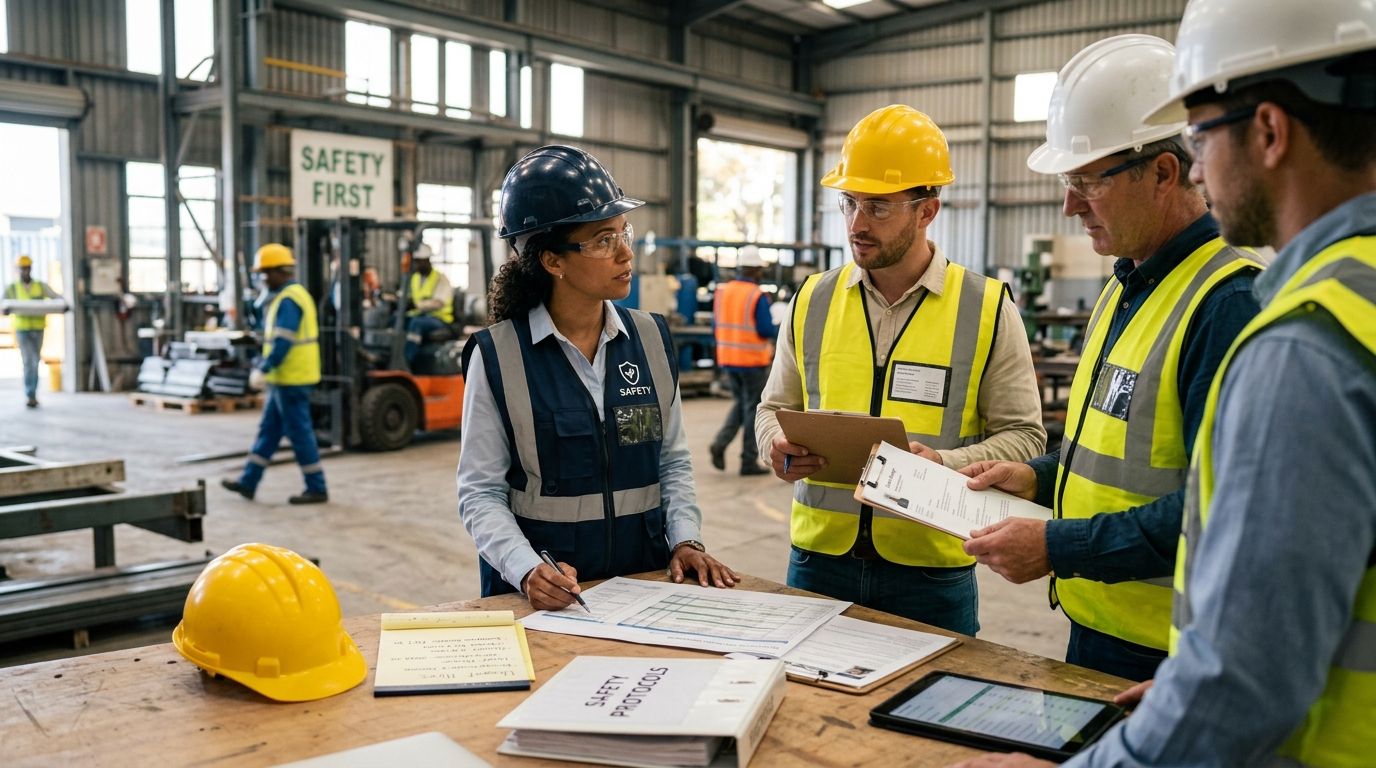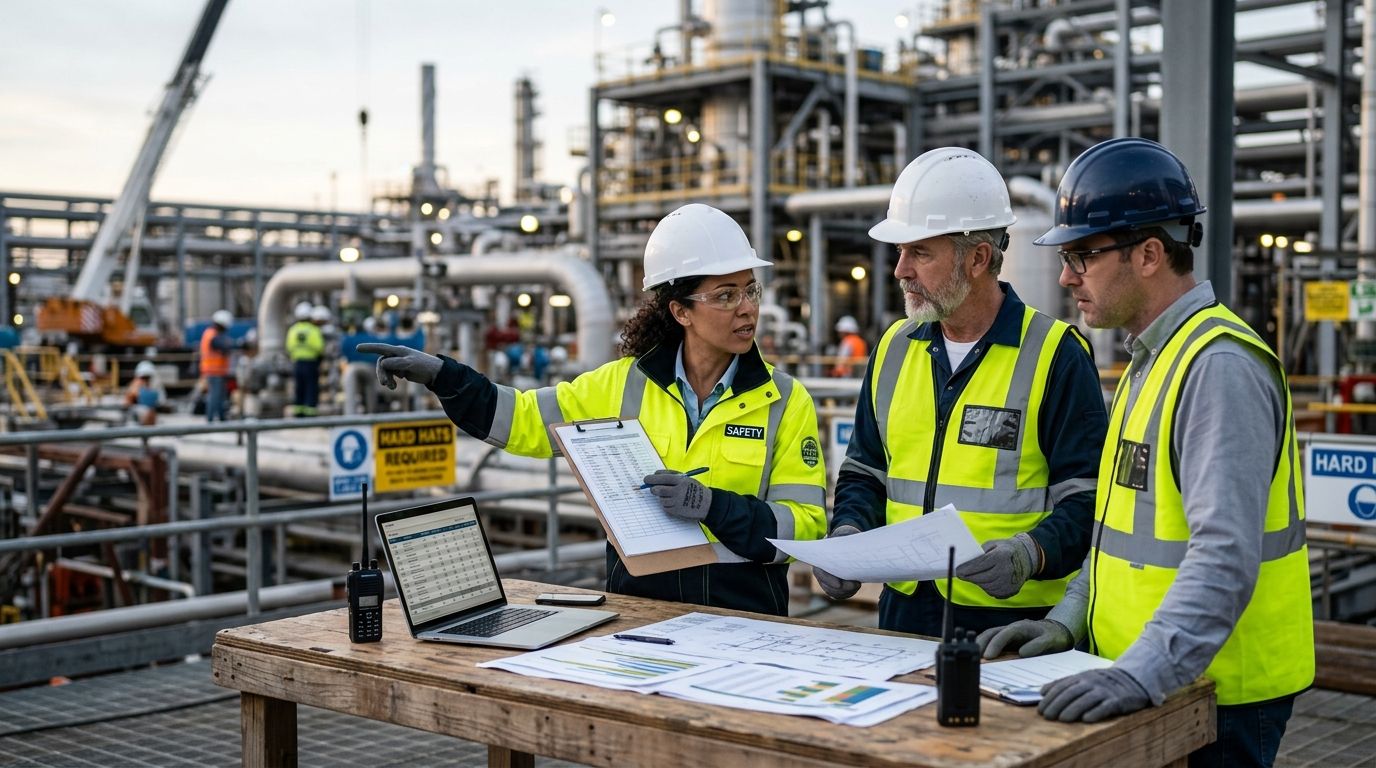
Filling a permanent safety coordinator seat wrong costs you more than the recruiting fee — it costs you an OSHA citation, a stalled project, or a coordinator who quits in month four because the site type didn't match their background. This guide breaks down what a direct hire search should actually look like in 2026 and where ResponsAble Staffing routes different types of coordinator hires.
- Direct hire recruiting for safety coordinators works best when the agency vets site-type experience, not just certifications on paper.
- OSHA 30-hour and HAZWOPER 40-hour credentials are table stakes — they don't tell you if a candidate has run a coordinator role on a live turnaround.
- ResponsAble Staffing's direct hire recruiting for safety managers page is the closest adjacent search for coordinator roles that report up to a senior EHS lead — Buy.
- Generalist staffing firms sourcing only from job boards miss the passive, already-employed coordinators who make the strongest hires — Skip.
- Fast-track construction safety staffing exists for a reason: a 2026 construction schedule doesn't wait six weeks for a slate of candidates.
Why this matters
A safety coordinator isn't a junior admin role, even though plenty of internal hiring managers treat it like one. The person handles daily inspections, incident documentation, toolbox talks, and PPE compliance — the stuff that keeps an OSHA inspector from shutting a site down.
Hire the wrong person and you find out during an audit, not during the interview. Direct hire recruiting for safety coordinators solves the problem direct hire recruiting for safety managers already solves one level up — matching a permanent candidate to your exact site type before the offer goes out, not after the first near-miss.
Who this is for
This guide is built for EHS directors, plant managers, and HR leads at construction, oil & gas, and manufacturing companies who need to fill a permanent — not temp, not project-based — safety coordinator opening. If you're staffing a short-term turnaround or a seasonal surge instead, the direct hire path below isn't the right tool; look at project-based safety staffing instead.
What to look for in a direct hire recruiter for safety coordinators
Site-type matching, not just certification matching
An OSHA 30-hour construction card and a HAZWOPER 40-hour card look identical on two very different resumes. A recruiter who only screens for the credential, not the site type the candidate actually worked, sends you a coordinator who's never seen a confined space permit in a refinery setting. Ask the agency how they verify hands-on site exposure, not just paper certifications.
Passive candidate reach
The best safety coordinators in 2026 are almost never actively job-hunting — they're employed, doing the job well, and not on Indeed. A recruiter working only inbound applicants is competing for the bottom third of the market. A recruiter with a standing network of vetted EHS professionals gets you candidates who aren't shopping around.
Speed to first slate
Construction and manufacturing schedules don't pause for a six-week search. If a recruiter can't produce a qualified slate inside two to three weeks, the opening sits unfilled while your current team absorbs the workload and burns out.
Replacement terms
Ask what happens if the hire doesn't work out in the first 90 days. A firm confident in its vetting process offers real replacement terms; a firm padding its placement numbers avoids the question.
Understanding of the coordinator-versus-manager distinction
A safety manager sets program strategy and manages a team. A safety coordinator executes day-to-day compliance work on the ground. Recruiters who conflate the two send overqualified candidates who leave within a year, or underqualified ones who can't handle the documentation load.
Industry-specific vocabulary
A recruiter who can talk through a JSA, a confined space entry permit, or a hot work permit without you explaining the term first has actually worked this space — not just read a job description template.
Where to route the search
The core path — Direct Hire Recruiting for Safety Managers. This is the closest adjacent service for a coordinator hire that reports to a senior EHS lead on a permanent basis. The vetting process covers OSHA 30-hour construction and HAZWOPER 40-hour credentials as a floor, not a finish line. Verdict: Buy if your coordinator opening sits under an existing safety management structure.
The high-stakes pick — Turnaround Safety Staffing for Oil & Gas and Refinery Projects. Refinery and petrochemical turnarounds run on compressed schedules where a coordinator without confined space and hot work permit experience becomes a liability inside the first shift. This path is built for that exposure level. Verdict: Consider if your site runs scheduled turnarounds and the coordinator needs refinery-specific background, not general construction experience.
The compliance-heavy pick — EHS Recruiting for Pharmaceutical Manufacturing Plants. Pharma plants layer FDA and cGMP documentation requirements on top of standard OSHA compliance, which means a coordinator here needs a different paperwork discipline than a construction site coordinator. Verdict: Consider if your facility runs regulated manufacturing, not general industrial work.
The speed pick — Fast-Track Construction Safety Staffing. Built for the scenario where a project starts in 2026 and the coordinator seat is still empty three weeks before mobilization. Verdict: Buy if your timeline is the binding constraint, not the search depth.
Start your safety coordinator search
Talk through your site type and timeline with ResponsAble Staffing.
What to avoid
- A generalist staffing agency without EHS-specific vetting. They'll fill the seat with someone who has a resume that says "safety" somewhere on it, not someone who's actually run a JSA on your site type.
- A recruiter who treats the coordinator role as junior and prices the search accordingly. Underpricing the search usually means underpricing the candidate pool.
- A firm sourcing exclusively from job boards. You end up competing with every other employer looking at the same shrinking pool of active applicants instead of the deeper, passive one.
Verdict comparison
| Recruiting path | Best fit | Site type | Verdict |
|---|---|---|---|
| Direct hire recruiting for safety managers | Coordinator under existing EHS structure | General industrial | Buy |
| Turnaround safety staffing (oil & gas) | High-risk, compressed-schedule sites | Refinery, petrochemical | Consider |
| EHS recruiting (pharmaceutical manufacturing) | Regulated documentation-heavy plants | Pharma, cGMP | Consider |
| Fast-track construction safety staffing | Timeline-constrained openings | Construction | Buy |
| Generalist staffing agency | Nobody, for this role | Any | Skip |
FAQ
What does a safety coordinator do differently from a safety manager?
A safety coordinator executes day-to-day compliance work — inspections, toolbox talks, incident reports — while a safety manager sets program strategy and oversees the team. Mixing up the two during recruiting is the most common cause of a bad hire.
How long does direct hire recruiting for safety coordinators take?
A qualified first slate should arrive within two to three weeks when the recruiter has an active EHS candidate network. Searches that rely only on job board applicants often stretch past six weeks.
Is direct hire better than temp-to-hire for a safety coordinator role?
Direct hire fits a permanent, ongoing seat; temp-to-hire fits a role you're still validating against a specific site or project. Choose based on whether the position is structural or situational.
What certifications should a safety coordinator have in 2026?
OSHA 10-hour or OSHA 30-hour construction certification is the baseline, with HAZWOPER 40-hour required for hazardous materials sites. Site-specific credentials like confined space entry or hot work permit training matter as much as the general OSHA cards.
How much does direct hire recruiting for safety coordinators cost?
Cost structures vary by agency and placement guarantee terms, so ask directly what's included in the fee and what happens if the hire doesn't work out in the first 90 days.
Can a national recruiting agency find safety coordinators for remote or travel-based roles?
Yes, agencies with a nationwide EHS network can source coordinators for travel-heavy roles across construction, oil & gas, and manufacturing sites, not just local candidates.
Which industries need dedicated safety coordinators the most?
Construction, oil & gas, manufacturing, and other high-risk industrial sectors carry the highest OSHA exposure and turnover cost, which is why a dedicated coordinator search matters more there than in low-risk office environments.
Should I promote internally instead of running a direct hire search?
Internal promotion works when the candidate already has cross-site exposure, but a coordinator who's only worked one site type often lacks the judgment an outside hire brings from a different risk environment.
One last thing
The strongest safety coordinators almost never come from the exact site type they're hired into. Someone who ran confined space entry through a refinery turnaround brings sharper judgment to a construction site than an internal promote who's never worked outside one environment. If your recruiting search only screens for candidates who've done the identical job before, you're filtering out the hires most likely to catch the problem your current team can't see.