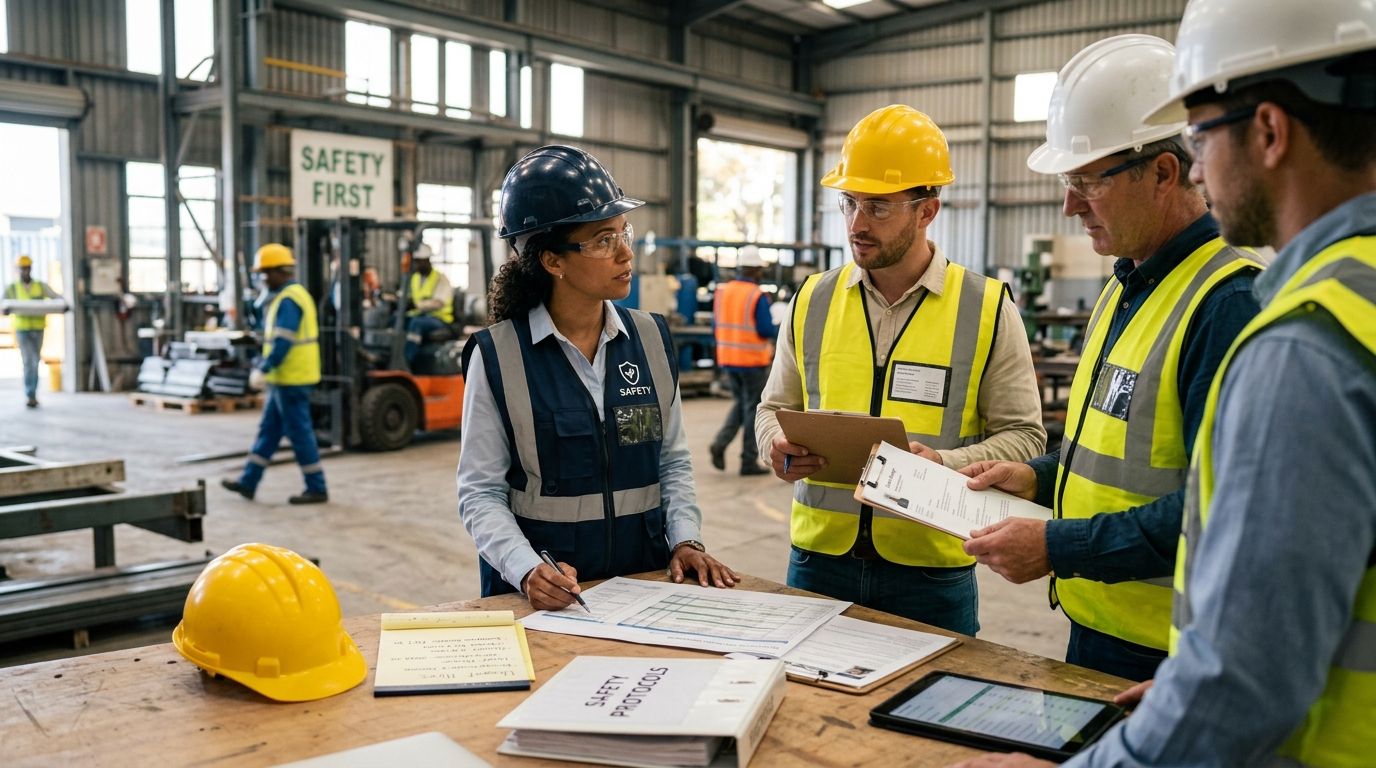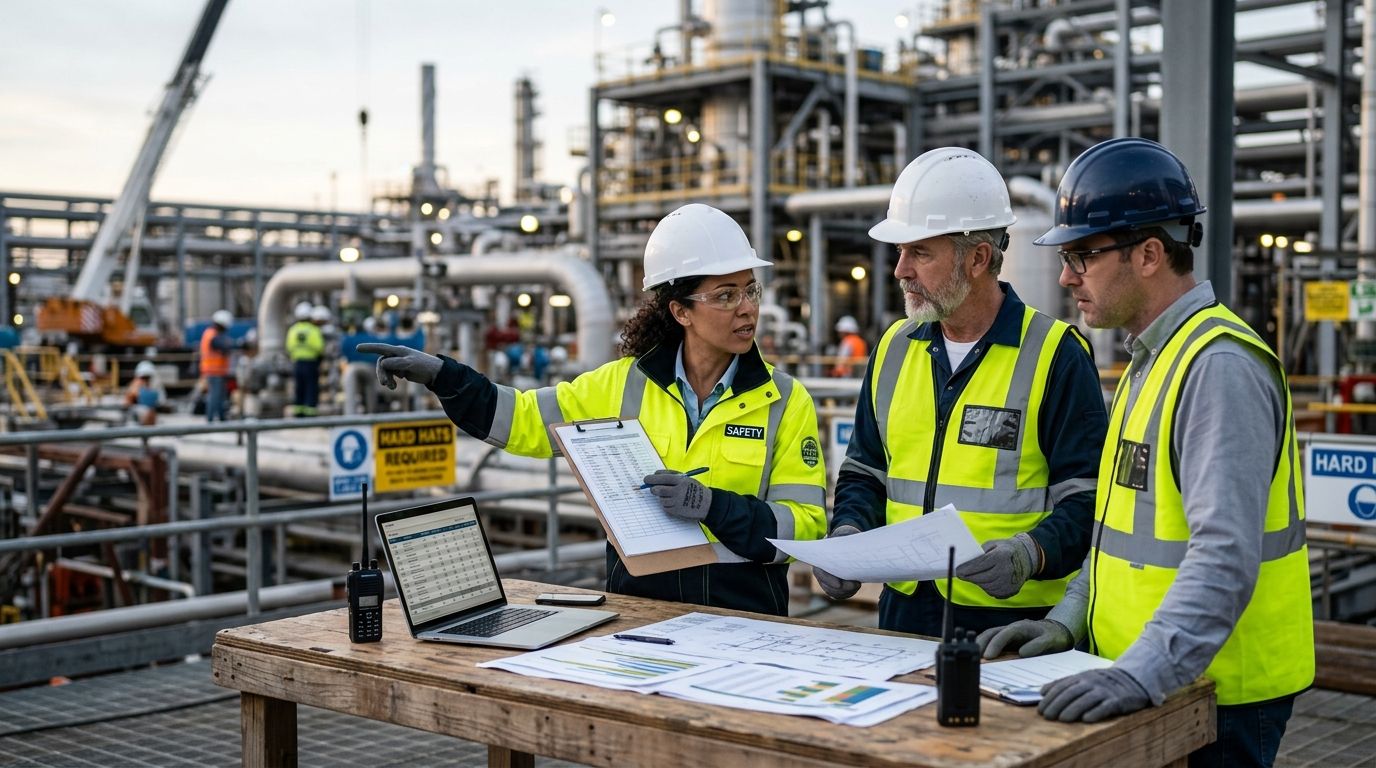
Direct hire recruiting for safety managers is a different search than filling a temp EHS role. You're hiring someone who will own your incident rate, your OSHA relationship, and your safety culture for years, not months. This guide breaks down what to look for, what to skip, and where a specialized safety staffing agency actually earns its fee in 2026.
- ResponsAble Staffing's direct hire model works best for oil and gas turnarounds, chemical plants, and LNG terminal builds.
- Generalist staffing agencies rarely verify OSHA 30-hour, CSP, or confined space credentials before submitting a candidate.
- Retained search fills a permanent safety manager role in weeks when the agency already has an industry bench; contingency search often stalls past 90 days.
- A candidate who can't walk you through a past incident investigation is a Skip in 2026, regardless of how clean the resume looks.
Why This Matters
A bad direct hire safety manager doesn't just cost you a signing bonus and an awkward exit interview six months later. A weak safety manager misses near-misses, under-reports incidents to protect an EMR number, or writes JSAs nobody on the crew actually reads. In construction, oil and gas, and manufacturing, that gap shows up as an OSHA citation, a lost-time incident, or a client pulling a contract after a surprise site visit.
Direct hire recruiting for safety managers in 2026 has to screen for judgment under pressure, not just a stack of certifications on a resume. That's the same standard ResponsAble Staffing applies across every high-risk vertical it works, from refinery turnarounds to LNG builds. A resume can list a CSP. A resume can't show you how someone actually ran an investigation after a crew member got hurt.
Who This Is For
This guide is written for operations leaders, HR directors, and site managers at construction firms, oil and gas contractors, manufacturing plants, and industrial project owners who need to permanently place a safety manager, not staff a single project for six months and move on. A specialized safety staffing agency approaches this search differently than a general HR recruiter would, because the stakes on a bad placement are higher and the candidate pool is smaller.
If you're filling a fire watch shift or a short confined space attendant gap, you want temporary staffing, not a direct hire search. Direct hire makes sense when the role is permanent, the site is high-risk, and a bad hire's cost shows up in your EMR and your OSHA log, not just your payroll.
What to Look for in Direct Hire Recruiting for Safety Managers
Verifiable credentials, not resume claims
An OSHA 30-hour card, a CSP, or a CHST designation on a resume means nothing until someone confirms it against the issuing body. Agencies that specialize in safety staffing check certification numbers directly instead of taking a candidate's word for it, a step generalist recruiters routinely skip because they don't know which credentials actually matter on an industrial site.
Field experience in your specific vertical
A safety manager who spent five years in food and beverage manufacturing doesn't automatically translate to a pipeline site with H2S exposure and confined space entries. Vertical-specific experience is the single biggest predictor of whether a new hire adapts in the first 90 days or gets exposed on the first serious incident review.
A search structure that matches your urgency
Retained search, where the agency works your role exclusively, moves faster and surfaces passive candidates who aren't shopping resumes around to five companies at once. Contingency search can work for lower-risk administrative roles, but for a safety manager overseeing a turnaround or a plant startup, retained is worth the premium in 2026's tight EHS labor market.
Reference checks that dig into incident history
Ask any agency running your search whether they talk to former supervisors about specific incidents the candidate handled, not just a generic "would you rehire this person." A safety manager's real track record shows up in how they investigated a lost-time incident, not in a two-minute reference call that checks a box.
Cultural fit with how your site actually runs
A safety manager who worked in a heavily unionized shop may clash with an open-shop crew, and the reverse is just as common. This gets missed constantly because it's harder to screen for than a certification number, but it drives retention more than salary does over the first year.
Start a direct hire safety manager search
Talk to a recruiter who places vetted EHS professionals nationwide.
Top Picks: Where Specialized Direct Hire Recruiting Pays Off
Not every industrial vertical needs the same search. ResponsAble Staffing runs these searches differently depending on the site, and here's where a specialized approach to direct hire recruiting for safety managers makes the clearest difference in 2026.
The high-stakes pick: oil and gas turnaround staffing
A turnaround compresses months of maintenance work into a few weeks, and the safety manager overseeing it needs confined space, H2S, and hot work experience walking in the door, not learning it on site under a deadline. Turnaround safety staffing for oil and gas and refinery projects is built around candidates who've already run safety on at least one full turnaround cycle. Buy if your next turnaround lands inside the next 12 months.
The compliance-heavy pick: chemical and petrochemical plants
Process Safety Management experience is non-negotiable here, and a safety manager without direct exposure to a PSM-covered facility will spend a first year catching up on paperwork instead of preventing incidents. EHS recruiting for chemical and petrochemical plants screens specifically for that background before a resume ever reaches you. Buy for any facility covered under OSHA's PSM standard.
The specialist pick: LNG terminal construction
LNG builds run under NFPA 59A and bring cryogenic hazards that most industrial safety managers have never touched in the field. Safety staffing for LNG terminal construction sources candidates with that specific exposure instead of stretching a generalist EHS resume to fit. Consider this route early since the candidate pool is smaller and searches take longer to fill in 2026.
The fast-moving pick: pipeline construction
Pipeline projects move across multiple states and jurisdictions in a single build cycle, and the safety manager needs to keep permits, JSAs, and crew certifications current across every location without a pause. A generalist EHS hire without multi-site pipeline experience typically falls behind by the second location change. Consider if your project spans more than one state; Skip a generalist candidate here regardless of how strong the resume reads on paper.
What to Avoid
- Generalist staffing agencies advertising "safety staffing" as an add-on service. If safety recruiting isn't their core business, certification verification is usually an afterthought handled by whoever's free that week.
- Contingency search for high-risk roles. A part-time recruiter search for a turnaround or plant-startup safety manager competes with every other open req that recruiter is juggling, and you'll lose the best candidates to whoever moves faster.
- A candidate who can't walk you through a specific incident investigation. Anyone can recite OSHA regulations from memory. Far fewer can explain what they actually changed on a site after a near-miss.
If a search has run longer than 90 days and you're still hearing generic answers in interviews, the sourcing pipeline is the problem, not the local candidate pool.
“A candidate who can't walk you through a specific incident investigation is a Skip, no matter how clean the resume looks.”
Verdict Comparison
| Vertical | Certification Focus | Search Structure | Verdict |
|---|---|---|---|
| Oil & gas turnaround | Confined space, H2S, hot work | Retained | Buy |
| Chemical / petrochemical | PSM experience | Retained | Buy |
| LNG terminal construction | NFPA 59A, cryogenic hazards | Retained | Consider |
| Pipeline construction | Multi-site, multi-jurisdiction permitting | Retained | Consider |
| General manufacturing (generalist hire) | None verified | Contingency | Skip |
FAQ
What's the difference between direct hire recruiting and temp safety staffing?
Direct hire places a candidate as a permanent employee of your company, while temp safety staffing keeps them on the agency's payroll for a project or contract period. Use direct hire when the safety manager role is ongoing and use temp staffing for coverage gaps like fire watch or confined space attendant shifts.
How long does direct hire recruiting for safety managers take in 2026?
A retained search with an agency that already has an industry-specific bench typically fills a safety manager role faster than a contingency search, which often stalls past 90 days. Specialized roles like LNG or petrochemical searches take longer because the qualified candidate pool is smaller.
Is retained search better than contingency for safety manager roles?
Retained search is better for high-risk industrial roles because the agency works your req exclusively instead of splitting attention across multiple open positions. Contingency search can work for lower-risk, easier-to-fill administrative EHS roles.
What certifications should a safety manager candidate have?
Look for OSHA 30-hour Construction or General Industry as a baseline, plus a CSP or CHST for senior roles depending on the site. The specific certification needed depends on the vertical: confined space and H2S for oil and gas, PSM familiarity for chemical plants, NFPA 59A exposure for LNG.
Can a generalist EHS recruiter fill a specialized industrial safety manager role?
A generalist recruiter can source candidates but often can't verify vertical-specific credentials like PSM experience or turnaround history. That gap shows up after the hire, usually in the first 90 days when the new safety manager is still learning site-specific hazards other candidates already knew.
What industries need direct hire safety manager recruiting most?
Construction, oil and gas, chemical and petrochemical manufacturing, and LNG or pipeline construction carry the highest stakes for a permanent safety manager hire. These industries have the tightest OSHA scrutiny and the most expensive consequences for a weak placement.
How much does direct hire recruiting for safety managers cost?
Fees vary by agency and role seniority, so confirm current pricing directly with the staffing agency you're evaluating. Retained search generally carries a premium over contingency because it comes with exclusive sourcing and faster turnaround.
One Last Thing
The certifications on a resume tell you what a candidate studied. The reference call about their last incident investigation tells you how they'll actually run your site in 2026. Weight the second conversation heavier than the first, every time you're this close to signing an offer letter.