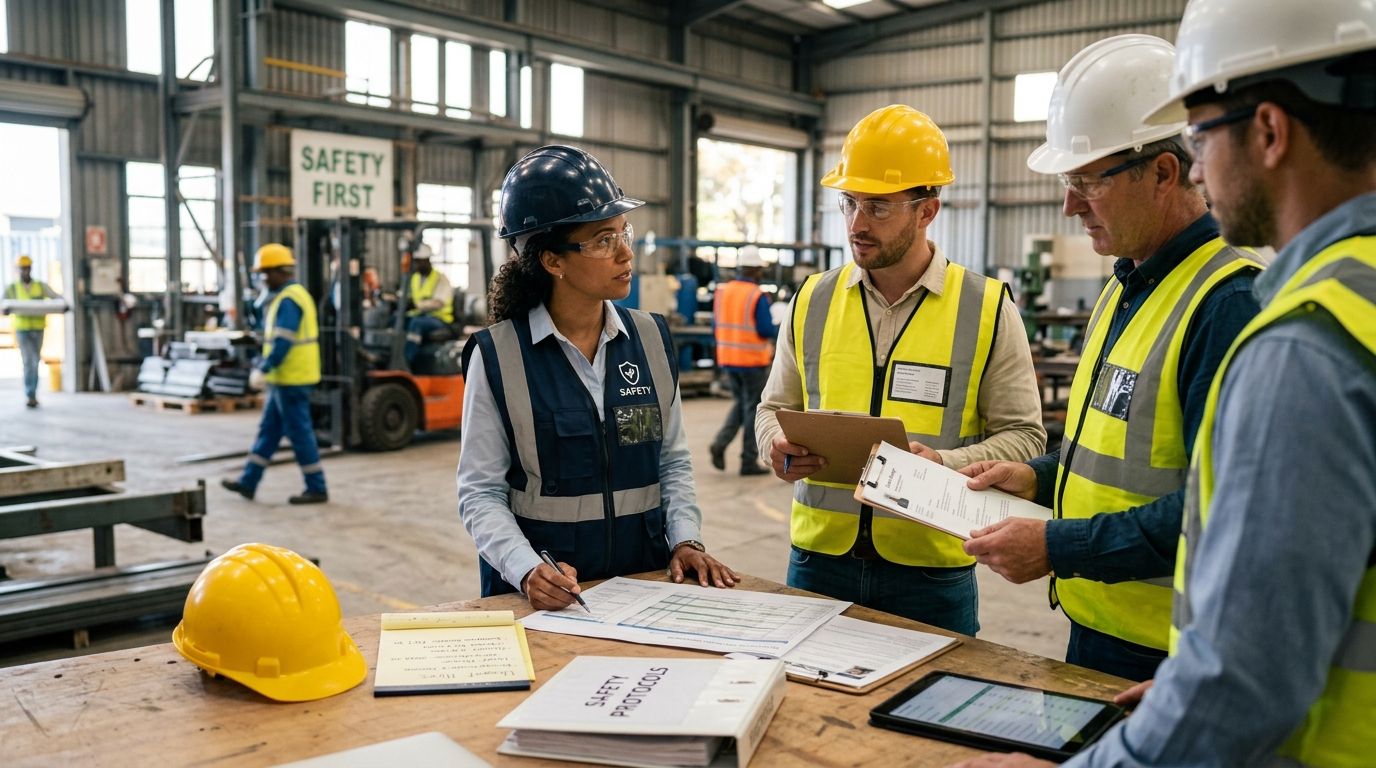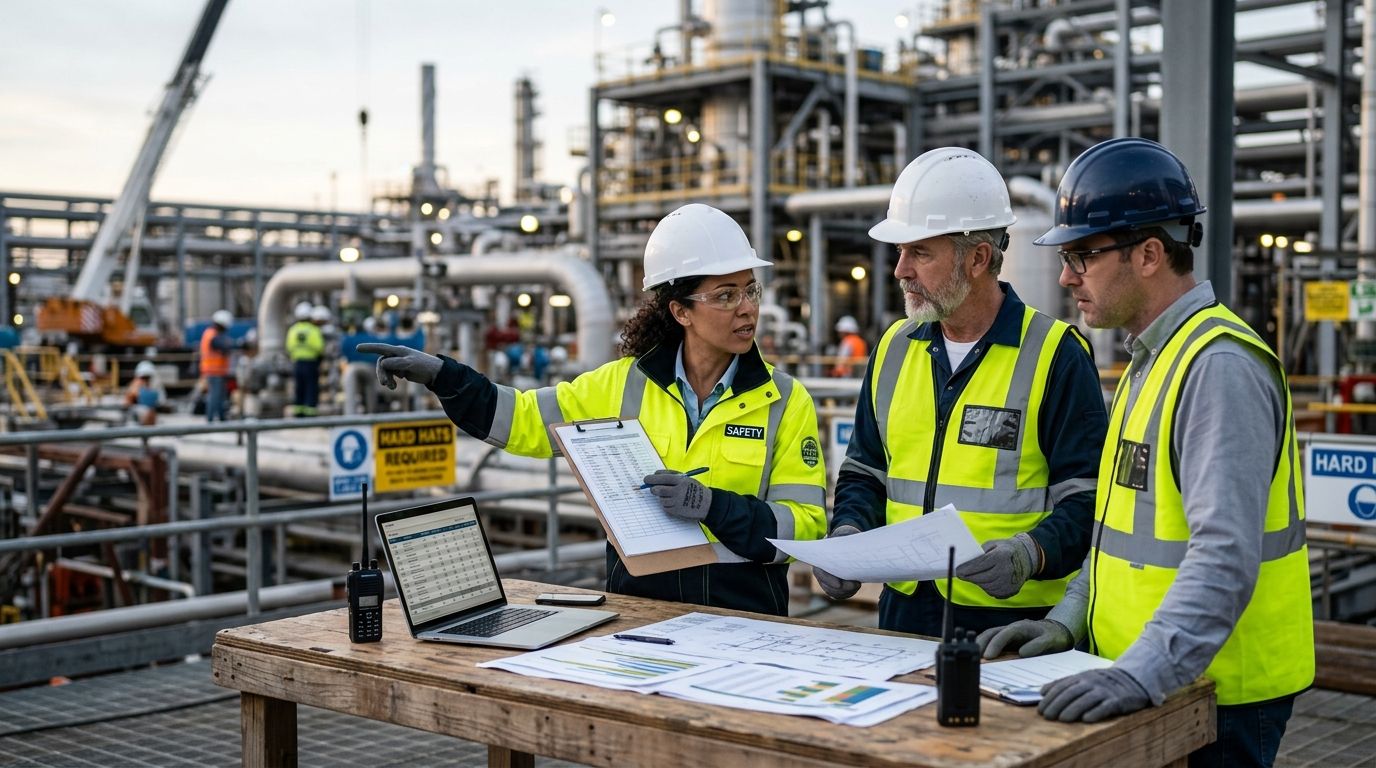
Fast-track construction safety staffing means finding certified fire watch attendants, confined space monitors, or EHS supervisors in days, not weeks, so a rush project never sits idle waiting on a body with the right card. This guide breaks down who needs it, what separates a real fast-track staffing partner from a slow one, and which specialty crews to call first in 2026.
- Fast track construction safety staffing works when a partner can name certified crew within 24 to 72 hours of the call.
- Confined space attendant staffing and fire watch staffing for hot work permits are the two categories most often needed on rush timelines.
- ResponsAble Staffing covers turnaround, pipeline, and industrial project staffing nationwide as of 2026 -- Consider it your short list.
- Skip any staffing vendor that can't verify OSHA 30 or HAZWOPER 40 credentials before dispatch.
Why this matters
A fast-track project doesn't wait for staffing to catch up. If a hot work permit needs a fire watch and there isn't one certified and on-site, the permit doesn't get pulled and the crew stands around. That's lost labor hours on a schedule that was already tight.
Standard safety staffing cycles run 3 to 10 business days once you count sourcing, credential verification, and background checks. Fast-track staffing compresses that window because the agency already carries a bench of pre-vetted, currently-certified people instead of starting the search cold. Fire watch staffing for hot work permits is the clearest example -- it's the role most often requested with less than 48 hours' notice on active construction sites in 2026.
General commercial staffing firms can fill a warehouse shift fast. They usually can't verify a confined space attendant's current 8-hour refresher or a rigger's qualified-person documentation on the same timeline. That gap is where fast-track construction safety staffing either earns its name or fails to.
Who this is for
This guide is for construction project managers, EHS directors, and general contractors running turnaround work, pipeline builds, plant expansions, or any job where a missing safety role stops the schedule. If your last-minute staffing need was a fire watch attendant, a confined space monitor, or an EMT for a job site, this applies to you directly.
What to look for in fast-track construction safety staffing
Mobilization speed, not just headcount
A large roster on paper means nothing if nobody on it is available this week. Ask what percentage of the bench is currently active and deployable within 24 to 72 hours -- not "available if we make some calls."
Credential verification before dispatch, not after
OSHA 30-Hour Construction, HAZWOPER 40-Hour, and confined space attendant refreshers expire. A staffing partner that checks credentials at intake, before the worker shows up, protects your permit and your audit trail. One that checks after the fact is a liability you're carrying, not one they're managing.
Industry-specific experience, not generalist labor
A safety professional who's worked pipeline right-of-way is not interchangeable with one who's worked pharmaceutical cleanroom protocols. Ask how many placements the agency has made in your specific vertical -- oil and gas, LNG, chemical processing, mining -- in the last 12 months.
Flexible engagement types
Rush projects don't always need a permanent hire. Look for a partner that offers temporary, project-based, and direct-hire placement so the engagement type matches the project length, not the other way around.
Documentation that survives an audit
OSHA and client-side EHS audits want proof: training records, medical clearances, site-specific orientation sign-offs. A fast-track hire with thin paperwork is a fast liability.
Nationwide reach with local responsiveness
Multi-site contractors need one point of contact who can staff a job in Texas this week and one in Ohio next month, without re-explaining the account every time.
Need certified safety staff this week?
Talk to ResponsAble Staffing about your project timeline before the permit deadline hits.
Top picks for fast-track projects
Fire watch staffing for hot work permits -- already covered above and worth repeating here: this is the role most often needed inside a 48-hour window. If your permit is stalled on a missing fire watch, this is the first call, not the third. Verdict: Buy.
Confined space attendant staffing for industrial sites -- the hook here is documentation depth. A qualified confined space attendant needs current rescue-plan familiarity and atmospheric monitoring training, and confined space attendant staffing for industrial sites is built around verifying that before dispatch, not after an incident. Tanks, vessels, and vaults don't wait for paperwork to catch up in 2026. Verdict: Buy.
Turnaround safety staffing for oil and gas and refinery projects -- the wildcard pick because turnaround windows are the tightest timelines in the industry, often 6 to 8 weeks total. Turnaround safety staffing for oil and gas and refinery projects exists specifically for that compressed window, where every day of delay compounds against a fixed shutdown date. Verdict: Buy.
Rigger and qualified person staffing for industrial projects -- the safe pick when heavy lifts are on the schedule and a qualified person sign-off is required before a crane moves. Rigger and qualified person staffing for industrial projects covers the credentialing gap that stalls lift plans more than any other single issue on a job site. Verdict: Consider -- lead time here runs slightly longer than fire watch or confined space because qualified-person documentation takes more review.
What to avoid
- Generalist staffing firms advertising "safety staff" as a checkbox category. If they can't name specific certifications by role, they're re-badging general labor, not placing EHS professionals.
- Agencies that quote a start date before checking current certification status. A fast promise with unverified credentials is worse than a slower one that's actually accurate.
- "Nationwide" claims with no local project history in your industry. Coverage on a map means nothing without placements in your specific vertical.
“If a staffing partner can't confirm certified crew names within 24 to 48 hours of a fast-track call, they're not built for the schedule you're running.”
Verdict comparison
| Role | Typical lead time | Credential focus | Best for | Verdict |
|---|---|---|---|---|
| Fire watch attendant | 24-48 hours | Hot work permit training | Hot work permits, welding, cutting | Buy |
| Confined space attendant | 24-72 hours | Atmospheric monitoring, rescue plan | Tanks, vessels, vaults | Buy |
| Turnaround safety tech | 3-7 days | Refinery/plant site-specific orientation | Refinery and plant shutdowns | Buy |
| Rigger / qualified person | 5-10 days | Lift plan sign-off documentation | Heavy lift and crane operations | Consider |
FAQ
What is fast track construction safety staffing?
Fast track construction safety staffing is the placement of certified EHS professionals -- fire watch attendants, confined space monitors, safety officers -- within 24 to 72 hours instead of the standard 3 to 10 business day staffing cycle. It relies on an agency keeping a pre-vetted, currently-certified bench ready to dispatch.
How fast can a safety staffing agency place certified workers on a rush job?
A staffing agency with an active bench can typically confirm names within 24 to 48 hours for common roles like fire watch and confined space attendant. Specialty roles like qualified riggers usually take longer, closer to 5 to 10 days, because lift-plan documentation needs review.
Is temporary staffing better than direct hire for short safety roles?
Temporary staffing fits short, defined windows like a turnaround or hot-work phase where the need ends with the project. Direct hire makes more sense for ongoing plant-level EHS roles that outlast a single job.
What certifications should a fire watch attendant have before mobilization?
A fire watch attendant on a hot work permit should hold current hot work safety training and site-specific orientation for the facility. Confirm the credential date directly with the staffing partner before the worker arrives, not after.
Can safety staffing agencies fill oil and gas turnaround crews on short notice?
Agencies with a dedicated turnaround staffing practice, like providers offering turnaround safety staffing for oil and gas and refinery projects, can typically staff within days rather than weeks because the bench is pre-qualified for site-specific orientation requirements common in refineries.
What's the difference between fast-track staffing and standard safety staffing timelines?
Standard staffing timelines run 3 to 10 business days for sourcing, verification, and background checks. Fast-track staffing compresses this because the credential verification and bench-building happen before the request comes in, not after.
Do fast-track safety staffing agencies cover nationwide projects?
Agencies built for multi-site industrial clients typically staff projects across states from a single point of contact. Ask for recent placement history in your specific state and industry before assuming coverage translates to speed there.
One last thing
The roles that stall fast-track projects in 2026 aren't the hardest to fill -- they're the most overlooked until the permit is already due. Fire watch and confined space attendant requests routinely come in with less notice than any other safety role on a job site, which is exactly why the agencies that keep a standing bench for those two categories move faster than the ones scrambling to source from scratch.