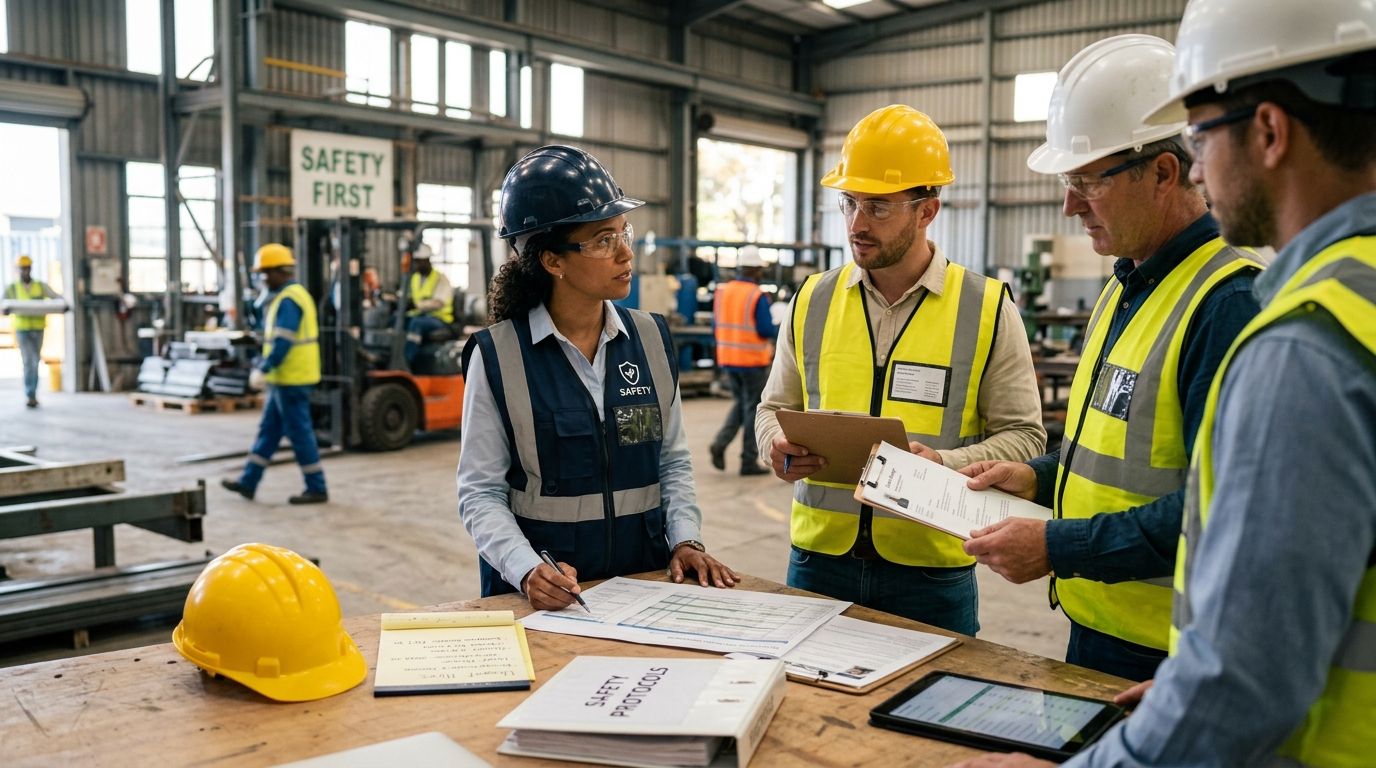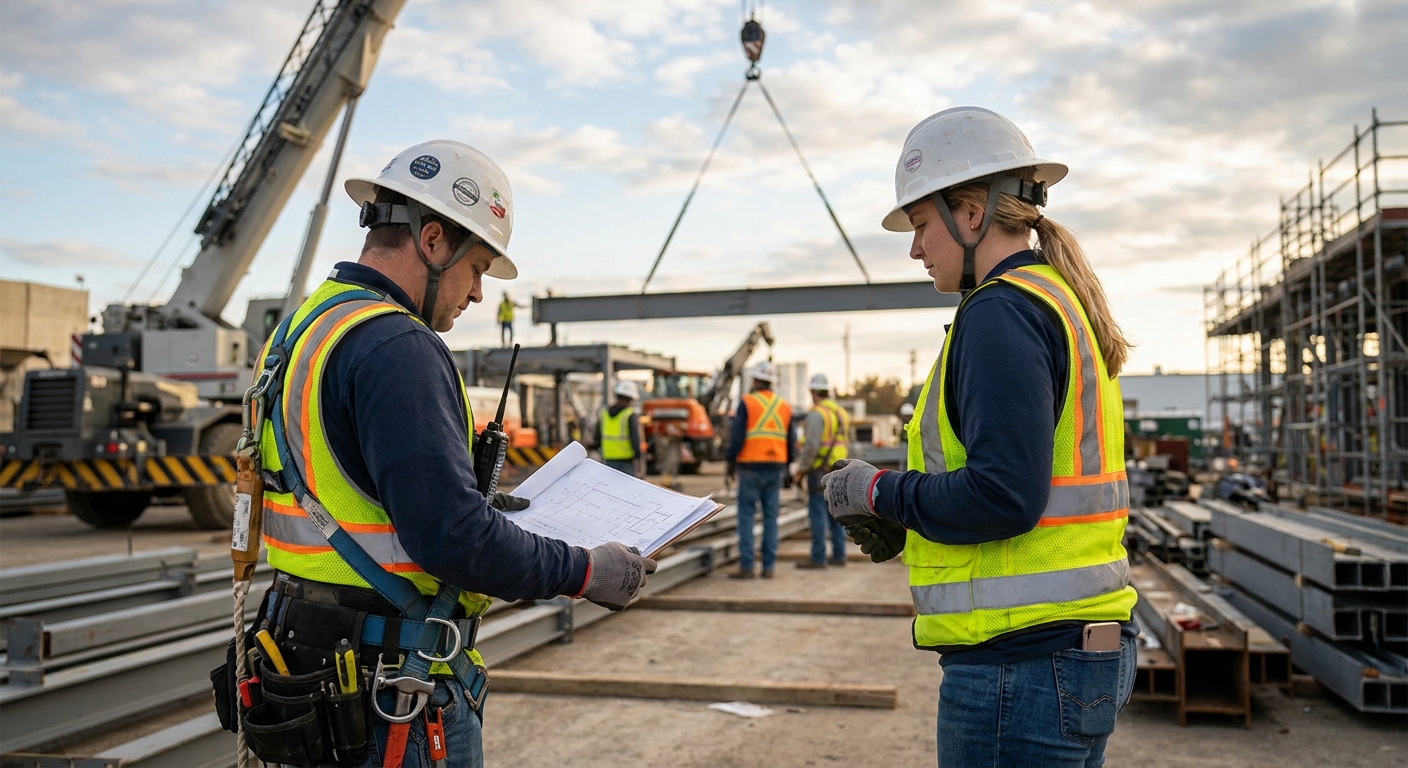
Industrial project managers don't lose sleep over headcount. They lose sleep over one bad lift plan and a rigger who never should have been on site. Rigger and qualified person staffing is the difference between a turnaround that finishes on schedule and an incident report that shuts the whole yard down.
- Rigger and qualified person staffing must verify OSHA 1926.753(e) rigger qualification per site, not a generic certificate — Buy verified, Skip self-attested.
- Refinery turnarounds and pipeline builds carry the highest rigging risk in 2026 and need dedicated qualified persons, not shared coverage.
- A qualified person's sign-off authority has to match the actual lift plan on your site, or the designation is meaningless on paper.
- Temp-to-direct-hire flexibility matters most on projects with unpredictable timelines like plant shutdowns and remediation work.
- ResponsAble Staffing places vetted riggers and qualified persons for construction, oil and gas, and manufacturing employers nationwide in 2026.
Why this matters
OSHA 29 CFR 1926.753(e) requires a qualified rigger for any lift where a worker enters the fall zone. That's not a suggestion — it's the standard cited most often when a crane or hoist incident triggers an investigation. A "qualified person" under 1926.32(m) is a separate designation with its own sign-off authority over lift plans, and the two roles get confused constantly on job sites.
Most general labor staffing agencies don't screen for either credential. They screen for warm bodies who can show up on time. That gap is exactly where rigger and qualified person staffing earns its keep in 2026 — construction, oil and gas, and manufacturing employers can't afford to discover a credential gap mid-lift.
Who this is for
This staffing model fits EHS managers, project superintendents, and plant maintenance leads running lifts on refinery turnarounds, pipeline builds, plant shutdowns, or heavy manufacturing floors. If your project involves a crane, a hoist, a rigging plan, or any load over a few hundred pounds moving through a work zone, you need this staffing category — not general labor, not a crane operator alone. ResponsAble Staffing places vetted riggers and qualified persons into exactly these environments across the country.
What to look for in rigger and qualified person staffing
OSHA-qualified rigger credentials verified before dispatch
A rigger qualification under 1926.753(e) is often site-specific, meaning a certificate from a past job doesn't automatically transfer. Verify credentials before the person walks onto your site, not after the first lift.
Qualified person sign-off authority that matches your lift plan
A qualified person under 1926.32(m) needs documented knowledge or experience specific to the equipment and load type on your project. A qualified person for tower crane work isn't automatically qualified to sign off on a below-the-hook lift plan for a 40-ton module.
Site-specific safety orientation and badge turnaround
Refineries, chemical plants, and shipyards all run their own orientation and badging process. Ask how fast a staffing partner can get riggers through TWIC, site-specific PEC, or plant orientation — a rigger who's certified but stuck in orientation for three days doesn't help your turnaround window.
Temp-to-direct-hire flexibility for project timelines
Turnarounds and remediation projects rarely run on fixed schedules. A staffing model that flexes between temporary, project-based, and direct hire protects you when a 30-day turnaround stretches to 45.
Crew scalability for turnarounds and shutdowns
A refinery turnaround can compress a year of deferred maintenance into a 15- to 30-day window, and rigging crews need to scale up fast for that stretch, then scale down just as fast. A staffing partner that can only supply one or two riggers at a time won't cover a shutdown of any real size.
EHS documentation and audit trail
Every lift, every credential check, every orientation completion should leave a paper trail. If OSHA shows up after an incident, you want documentation on hand, not a phone call to a staffing office asking them to reconstruct records.
Where rigger and qualified person staffing changes the outcome
Refinery turnarounds — the high-stakes sprint
Turnarounds compress a full maintenance cycle into weeks, sometimes 15 to 30 days, with dozens of simultaneous lifts happening across units. A qualified person on-site full-time during the turnaround window catches lift plan conflicts before they become incidents. Verdict: Buy — dedicated coverage through refinery turnaround safety staffing beats spreading one qualified person across multiple units.
Pipeline construction — the moving jobsite
Pipeline crews relocate every few miles as the route progresses, which means rigging setups get torn down and rebuilt constantly. Riggers here need to requalify fast at each new site segment because the site-specific nature of the OSHA standard doesn't disappear just because the crew moved two miles down the right-of-way. Verdict: Buy for projects running 6 months or longer — pipeline construction safety staffing covers the requalification churn that shorter-term staffing can't keep up with.
Manufacturing plants — the steady-state floor
Manufacturing plants running rigging operations across two or three shifts, 24 hours a day, need qualified persons on every shift, not just days. The risk profile is lower per-lift than a turnaround but the exposure is constant, year-round. Verdict: Consider — manufacturing plant safety staffing makes sense once your plant runs rigging operations on more than one shift consistently.
Marine terminals and shipyards — the overhead-lift environment
Dockside cranes at marine terminals and shipyards regularly handle loads over 40 tons, and a single miscalculated lift near water adds a rescue dimension that inland sites don't have. Qualified persons here need documented experience with heavy overhead lifts specifically, not general rigging exposure. Verdict: Buy — marine terminal and shipyard safety staffing is worth the premium given the load sizes involved.
What to avoid
- Self-attested "qualified rigger" status. A resume line isn't a qualification under 1926.753(e). Ask for the specific training and the specific site history.
- Treating crane operator certification as rigging authority. A certified crane operator is not automatically a qualified rigger or a qualified person — these are three separate designations with three separate standards.
- One qualified person covering multiple simultaneous lift plans. Sign-off authority means actual review of the plan in front of you, not a rubber stamp signed at the start of the shift.
Staff your next turnaround right
Get vetted riggers and qualified persons matched to your project scope.
Verdict comparison across project types
| Project type | Typical crew size | Rigging complexity | Staffing model | Verdict |
|---|---|---|---|---|
| Refinery turnaround | 20-100+ riggers | High, compressed timeline | Project-based surge staffing | Buy |
| Pipeline construction | 5-30 per segment | Moderate, site changes often | Temp with requalification support | Buy |
| Manufacturing plant | 2-10 per shift | Moderate, ongoing | Direct hire or long-term temp | Consider |
| Marine terminal/shipyard | 5-25 per berth | High, heavy overhead loads | Project-based or direct hire | Buy |
FAQ
What is a qualified rigger under OSHA rules?
A qualified rigger under OSHA 29 CFR 1926.753(e) is a worker who has documented knowledge, training, or experience specific to rigging operations on the site where the lift is happening. The qualification is often tied to the specific site and equipment, not a portable, universal certificate.
What is a qualified person for rigging operations?
A qualified person under 1926.32(m) has recognized degree, certificate, or professional standing, or documented extensive knowledge, training, and experience to solve or resolve problems related to a specific lift plan. They hold sign-off authority a general rigger does not.
Is a qualified rigger the same as a crane operator?
No. Crane operator certification, qualified rigger status, and qualified person designation are three separate OSHA-recognized roles. A worker can hold one, two, or all three, but none of them automatically confers the others.
How fast can employers staff riggers for a turnaround?
Timelines vary by site orientation requirements and how quickly credentials can be verified, but staffing partners that pre-vet riggers before dispatch cut days off the badging and orientation process compared to sourcing cold. Ask any staffing partner directly about their current 2026 turnaround timelines.
Do temporary riggers need site-specific certifications?
Yes, in most cases. Because 1926.753(e) qualification is frequently tied to the specific site and equipment, a temporary rigger arriving from a different job typically needs a site-specific orientation and, in some cases, requalification before working lifts.
What's the difference between temporary and direct-hire rigging staffing?
Temporary staffing covers a defined project window like a turnaround or a pipeline segment, while direct hire places a rigger or qualified person permanently on the employer's payroll. Employers with continuous rigging operations across shifts often move toward direct hire once volume justifies it.
How much does rigger and qualified person staffing cost in 2026?
Costs depend on project scope, credential level required, location, and duration, and rates vary by region and industry. Get a project-specific quote rather than relying on a general industry average.
Can one qualified person cover multiple lift plans at once?
Not effectively. A qualified person's sign-off authority requires actual review of each lift plan, and stretching one person across simultaneous lifts on different units undermines the purpose of the designation.
One last thing
The part most project managers miss: OSHA's rigger qualification standard doesn't grandfather anyone in. A rigger who worked flawlessly on a turnaround in Baytown last year still needs site-specific verification on your job this year — the qualification travels with the person only as far as the paperwork proves it. In 2026, that paperwork gap is the single most common finding when an incident investigation starts pulling records.