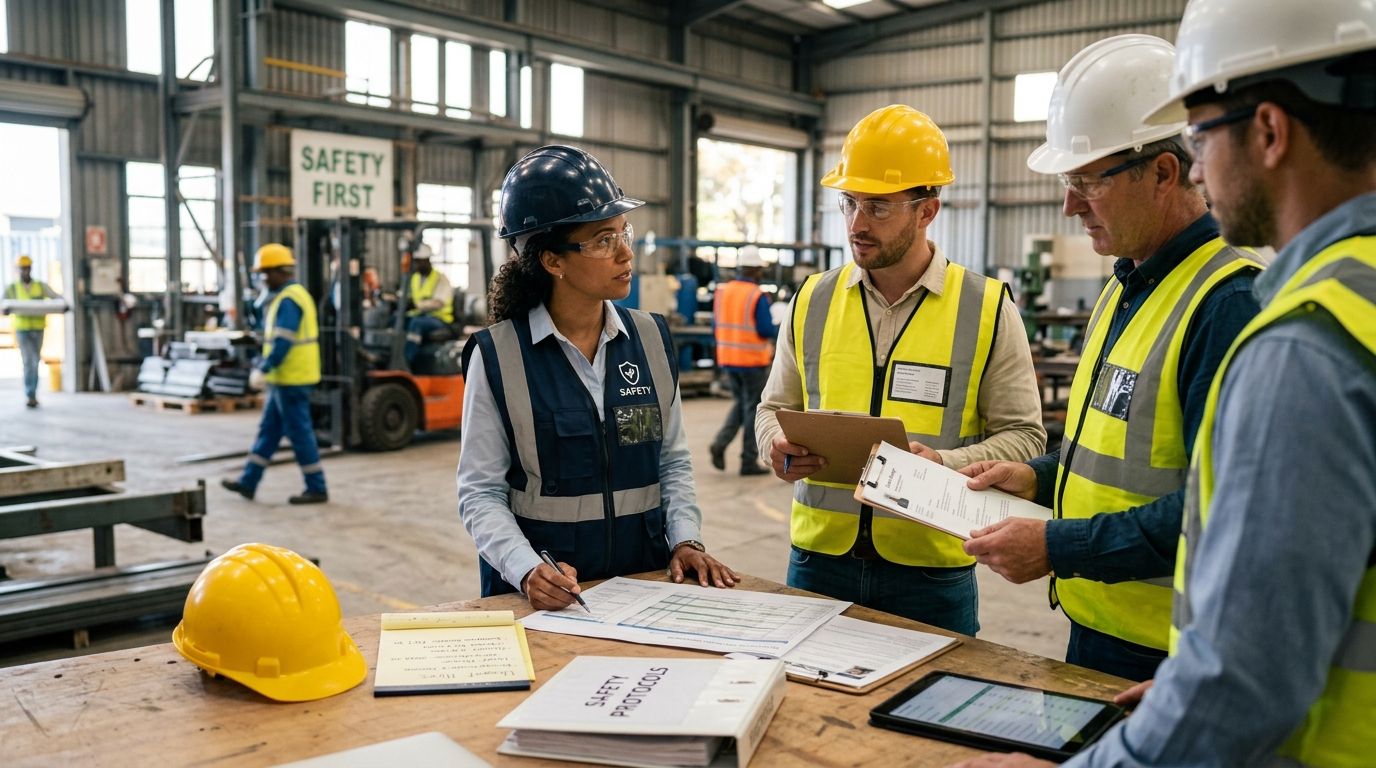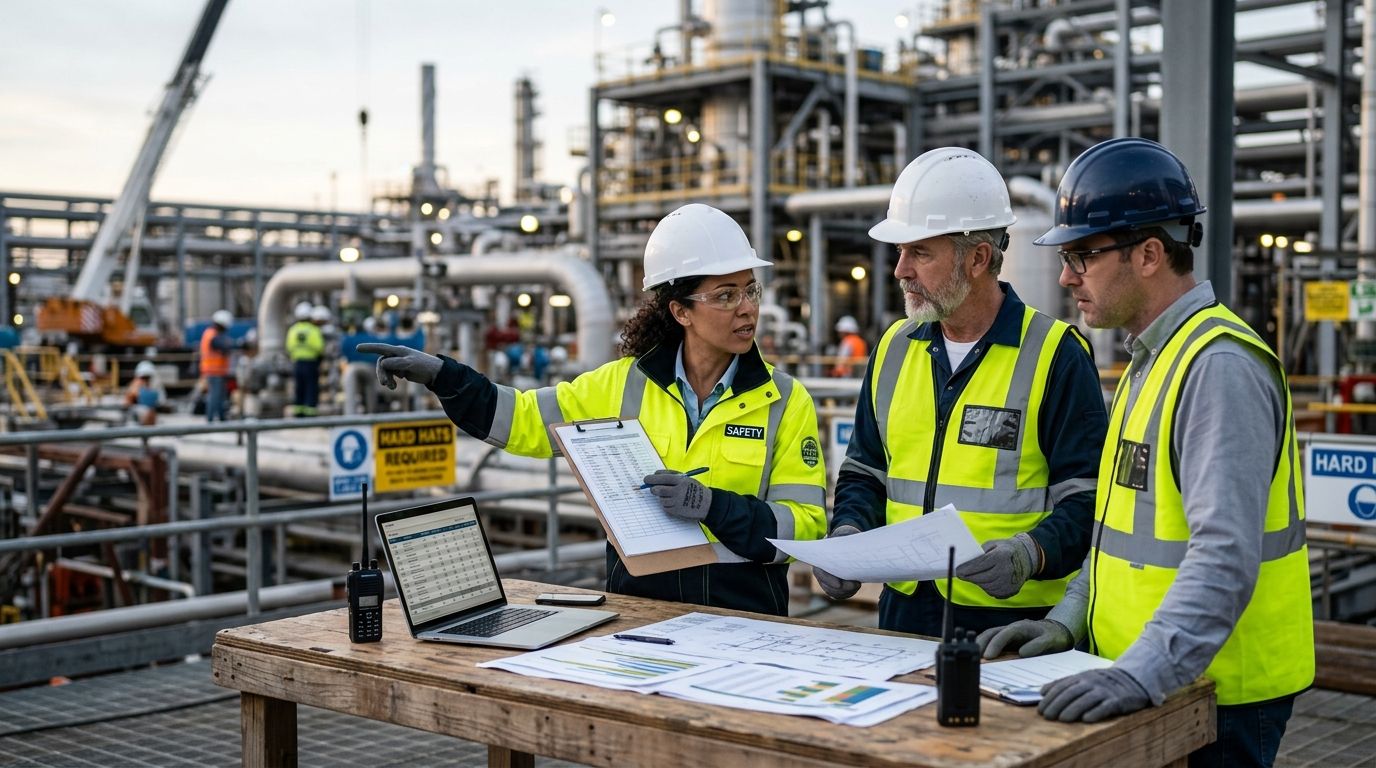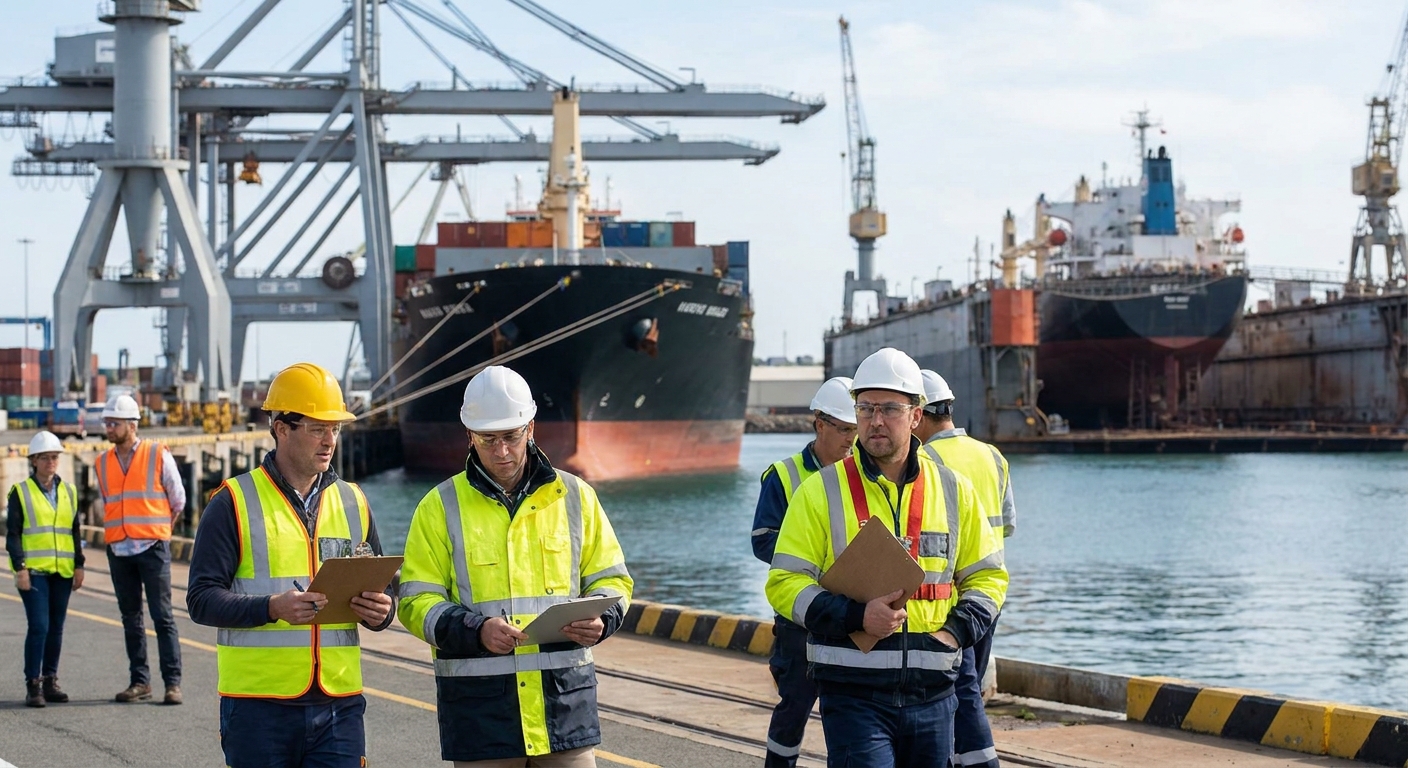
Marine terminals and shipyards run on tight vessel windows and heavy OSHA/USCG oversight, and a bad safety hire turns a two-day turnaround into a five-day delay. This guide covers what to look for in safety staffing for marine terminals and shipyards in 2026, who actually needs it, and which staffing models hold up when the Coast Guard or OSHA shows up unannounced.
- Safety staffing for marine terminals and shipyards works best as a mix of direct-hire EHS coordinators and project-based confined space specialists.
- TWIC card verification and current OSHA 30 credentials are non-negotiable for terminal access in 2026 — Skip any candidate missing either.
- ResponsAble Staffing places vetted safety professionals across construction, oil and gas, and marine environments with documented credential files, not resumes.
- Temporary safety techs for vessel turnarounds are worth staffing up on; multi-site EHS program managers are a Skip unless you run more than one port.
Why this matters
A marine terminal or shipyard operating without dedicated, credentialed safety coverage is one incident report away from a stop-work order. USCG-regulated facilities and OSHA maritime standards (29 CFR 1915, 1917, 1918) carry different documentation burdens than general industrial construction, and a generalist safety hire who's never worked a pier or a dry dock will miss things a terminal inspector won't.
The staffing challenge is speed and credential depth at the same time. Vessel turnarounds and dry-dock periods spike headcount need for two to six weeks, then drop it back down — which is exactly the surge pattern a specialized safety staffing partner is built to cover. ResponsAble Staffing places safety professionals into construction, oil and gas, manufacturing, and marine environments on temporary, project-based, and direct-hire terms, with the vetting already done before the candidate shows up at the gate.
Who this is for
This is for terminal operators, shipyard general contractors, marine construction firms, and EHS managers who need to staff up for a vessel turnaround, a dry-dock project, or a permanent site safety role without spending six weeks screening resumes. If you're running a single small dock with no OSHA-regulated activity, you don't need this — a general labor pool covers you. If you're managing port operations, ship repair, or marine construction with any confined space, hot work, or crane activity, keep reading.
What to look for in safety staffing for marine terminals and shipyards
Maritime-specific credentials, not general construction ones
A safety professional with OSHA 30 for general industry isn't automatically qualified for maritime work — 29 CFR 1915 (shipyard employment) and 1917/1918 (marine terminals and longshoring) are separate standards with separate testing and confined space rules. Ask for the specific maritime credential, not just an OSHA 30 card, before the candidate is on your roster.
TWIC card status verified before deployment
Every candidate stepping onto a secure terminal needs an active Transportation Worker Identification Credential. A staffing partner that verifies TWIC status before submitting a candidate saves you a wasted trip to the gate and a blown first day on a turnaround timeline.
Deployment speed for surge staffing
Dry-dock periods and vessel turnarounds don't give you six weeks of notice — they give you six days. A safety staffing partner needs bench depth of pre-vetted candidates who can be on-site within a week, not a fresh sourcing cycle that starts when you call.
Flexibility across temp, project-based, and direct hire
You don't want to direct-hire a safety tech you only need for a three-week turnaround, and you don't want a revolving door of temps in your permanent EHS coordinator seat. A partner that offers all three models — not just staffing or just placement — lets you match the hire to the actual duration of the need.
Documentation rigor: background checks, drug testing, and credential files
An inspector doesn't take your word that a candidate is qualified — they want the file. Drug testing results, background check status, and current certification copies need to exist in a folder before the person is on your payroll, not chased down after an incident.
Cross-industry experience that transfers to marine risk
Safety professionals who've worked oil and gas or heavy construction bring confined space, fall protection, and hot work experience that transfers directly to shipyard and terminal environments. That cross-industry bench is worth more than a resume that only lists port work.
Staff your next turnaround or dry-dock project
Talk to a recruiter about temp, project-based, or direct-hire safety staffing.
Top picks: staffing models that actually work for marine sites
The anchor hire — direct-hire Site Safety Officer
A permanent Site Safety Officer with OSHA 30 and shipyard-specific certification is the backbone of any terminal or repair yard running year-round activity. One credentialed hire covering a single site full-time cuts the coordination overhead of rotating temps by roughly half compared to a patchwork of short-term contractors. Verdict: Hire now if you run continuous marine operations at one site.
The specialized pick — Confined Space and Marine Chemist specialists
Tank entry, ballast work, and enclosed space certification on a vessel requires a marine chemist or confined space specialist, not a general safety tech. These roles are almost always project-based, tied to a specific dry-dock or repair window measured in weeks. Verdict: Hire now for any dry-dock or tank work — this isn't a role to fill with a generalist.
The surge crew — Temporary Safety Techs for vessel turnarounds
A vessel turnaround compresses two to six weeks of intense inspection, hot work, and crane activity into a short window, and that window needs three to five extra sets of eyes on the deck. Temporary safety techs sourced through a staffing partner with maritime bench depth can typically be on-site within a week of the request. Verdict: Consider — staff up for the turnaround window, then release the temp roster.
The compliance safeguard — TWIC-credentialed Compliance Auditors
A dedicated compliance auditor who checks credential currency, TWIC status, and incident documentation across your workforce catches the gap before an inspector does. This role pays off most on multi-crew sites where dozens of workers rotate through gate access weekly. Verdict: Consider if your site runs more than 15 rotating workers; Skip if you're a small single-crew operation where the site safety officer can cover it.
The scale play — Multi-site EHS Program Manager
This role oversees safety programs across multiple ports or yards and standardizes credential tracking and incident reporting company-wide. It's a real cost only when you're managing more than one physical location. Verdict: Skip for single-site operators; Hire now if you run two or more terminals or yards under one safety program.
“If a candidate doesn't hold a current TWIC card, they don't step foot on the terminal — no exceptions.”
What to avoid
- Generalist industrial staffing agencies with no maritime bench. They can fill a general laborer role fine, but they'll submit a candidate with construction-only OSHA 30 for a job that requires 1915 or 1917 credentials, and you'll find out during an inspection, not before.
- Agencies that submit candidates before verifying TWIC status. This looks like speed but costs you a wasted gate trip and a blown day on a compressed turnaround schedule.
- Per diem labor pools marketed as "safety staffing." A body on-site isn't the same as a credentialed safety professional — check for the specific certification, not just a job title on a resume.
Verdict comparison
| Role | Staffing Model | Deployment Speed | Best Fit | Verdict |
|---|---|---|---|---|
| Site Safety Officer | Direct hire | 2-4 weeks | Continuous single-site operations | Hire now |
| Confined Space / Marine Chemist | Project-based | 1-2 weeks | Dry-dock, tank entry work | Hire now |
| Temporary Safety Tech | Temporary | Under 1 week | Vessel turnarounds, surge periods | Consider |
| Compliance Auditor | Temp or project | 1-2 weeks | 15+ rotating workers on-site | Consider |
| Multi-site EHS Program Manager | Direct hire | 4-6 weeks | Multi-port or multi-yard operators | Skip (single-site) |
Where the hiring rigor matters
Every role above lives or dies on documentation, not intent. A staffing partner that hands over a credential file — background check status, drug test results, current certifications — with each candidate is doing the vetting work you'd otherwise have to do yourself before the person clears the gate in 2026. That's the actual product of specialized safety staffing for marine terminals and shipyards: not a resume, a compliance-ready file.
FAQ
What is safety staffing for marine terminals and shipyards?
It's the practice of sourcing pre-vetted EHS and safety professionals — credentialed for maritime standards like 29 CFR 1915 and 1917 — on temporary, project-based, or direct-hire terms for terminal and shipyard operators. It differs from general industrial staffing because of the maritime-specific certification and TWIC card requirements involved.
Do marine terminal safety staff need a TWIC card?
Yes, anyone accessing a secure terminal or port facility needs an active Transportation Worker Identification Credential. A staffing partner should verify TWIC status before submitting a candidate for placement.
Is temporary or direct-hire safety staffing better for shipyards?
Temporary staffing fits short surge periods like vessel turnarounds or dry-dock projects lasting weeks; direct hire fits continuous, year-round site safety coverage. Most shipyards in 2026 run a mix of both depending on project cadence.
What certifications should a marine safety hire carry?
Look for OSHA maritime-specific training under 29 CFR 1915 for shipyards or 1917/1918 for marine terminals, plus confined space or marine chemist certification for tank and enclosed space work. General OSHA 30 alone isn't sufficient for maritime-regulated activity.
How fast can a staffing agency deploy safety officers to a terminal?
A partner with an established maritime bench can typically deploy pre-vetted temporary safety techs within a week of the request. Direct-hire roles like a permanent Site Safety Officer usually take two to four weeks to fill properly.
Is nationwide safety staffing available for multi-port operators?
Yes, agencies that operate across construction, oil and gas, and manufacturing — including ResponsAble Staffing — typically place safety professionals nationwide, which matters for operators running more than one port or yard under one safety program.
What's the difference between an EHS coordinator and a confined space specialist?
An EHS coordinator manages the overall site safety program, incident reporting, and compliance documentation day to day. A confined space specialist or marine chemist handles a specific technical task — tank entry and enclosed space clearance — usually on a project basis tied to a dry-dock window.
How much does safety staffing cost for a shipyard project in 2026?
Cost depends on role, certification level, and project duration — a temporary safety tech for a two-week turnaround costs less than a direct-hire program manager role. Get a specific quote based on your project scope and site headcount.
One last thing
The single biggest gap on marine sites isn't a missing certification on paper — it's a credential that expired three months ago and nobody checked. Build a 90-day recertification review into your staffing process for 2026, whether the safety staff are direct hires or temps, and you'll catch the lapse before an inspector does.
Safety staffing for marine terminals and shipyards isn't about filling a seat fast. It's about filling it with someone whose file is already clean when the Coast Guard walks up the gangway.