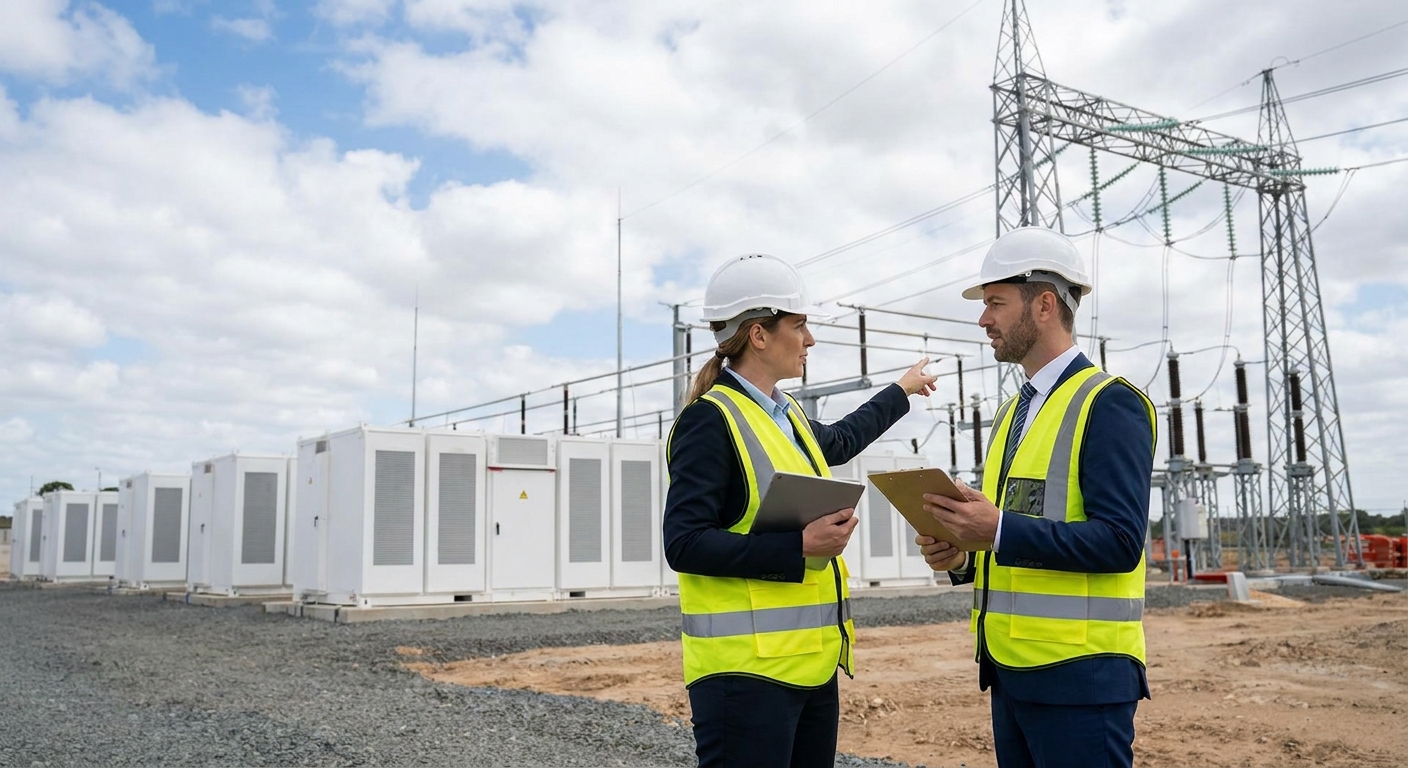
Battery storage and grid interconnection projects move faster than the safety staffing world is built for, and that gap is where projects get shut down by OSHA or delayed by a preventable thermal event.
- BESS Site Safety Manager is the priority hire for any battery storage project over 100 MWh in 2026 — staff it before mobilization, not after.
- EHS recruiting for battery storage projects fails most often on NFPA 855 and arc flash credentials, not general construction safety experience.
- Project-based EHS staffing beats a single direct hire during EPC ramp cycles when crew size swings 3x in 30 days.
- Generic construction safety generalists without lithium-ion hazmat training are a Skip for battery storage sites, even with 10+ years in the field.
Why this matters
Grid-scale battery storage is a different hazard profile than a wind farm or a substation upgrade, and treating it like standard electrical construction is how sites end up with a thermal runaway incident on the evening news. Lithium-ion energy storage systems combine high-voltage DC work, confined enclosure fire risk, and 24/7 EPC construction schedules — three hazard categories that rarely live in one safety professional's resume.
EHS recruiting for battery storage projects in 2026 means finding people who've actually worked NFPA 855 compliance, not people who read about it. The staffing decision you make in week one determines whether your project passes its first OSHA inspection or becomes a case study.
Who this is for
This guide is for EPC project managers, developers, and safety directors staffing battery energy storage system (BESS) construction, grid interconnection, or substation upgrade projects in 2026 — whether that's a single 50 MWh site or a portfolio of grid-scale installations across multiple states. If you're mobilizing crews on a 60- to 180-day construction window and need EHS professionals who understand lithium-ion hazard classes and high-voltage interconnection work, not generalist construction safety, keep reading.
What to look for in EHS recruiting for battery storage projects
NFPA 855 familiarity, not just electrical certifications
NFPA 855 governs stationary energy storage system installation and is the code most battery storage EHS staff need to know cold. A safety professional with a decade of refinery experience but zero NFPA 855 exposure will miss enclosure spacing, thermal runaway venting, and fire suppression system requirements that are unique to lithium-ion storage.
OSHA 1926 Subpart V and high-voltage DC exposure
Battery storage and grid interconnection work runs on high-voltage DC and AC systems that fall under OSHA 1926 Subpart V for electric power transmission and distribution. Staff without direct Subpart V experience default to AC-only lockout/tagout procedures, which don't fully cover DC arc flash risk in a battery rack.
Lithium-ion fire and hazmat response training
Thermal runaway in a lithium-ion cell doesn't behave like a standard electrical fire — it self-sustains and can reignite hours later. EHS staff need documented hazmat or fire watch training specific to lithium-ion chemistry, not general HAZWOPER credentials alone.
Flexibility for EPC ramp-and-taper crew cycles
Battery storage EPC projects staff up fast during equipment installation and taper during commissioning, often within a 30-day window. A safety staffing model built around a single direct hire can't flex with a crew that goes from 15 to 60 workers and back down in six weeks.
Confined space and enclosure-specific competency
Battery containers and switchgear enclosures create confined space conditions that differ from open-yard construction. Safety staff need enclosure-specific gas monitoring and rescue plan experience, not just a confined space certificate from a different industry.
Multi-state travel and per diem readiness
Grid-scale storage projects are rarely local hires — most crews travel between sites across state lines. EHS professionals who haven't worked travel-based safety staffing before tend to underestimate the coordination burden of managing compliance documentation across multiple state OSHA jurisdictions.
Top picks: roles to prioritize for battery storage and grid projects
BESS Site Safety Manager — the anchor hire
This role owns NFPA 855 compliance, fire suppression system verification, and thermal event response planning for the full site. On projects scaled at 100 MWh or more, this position needs to be filled before equipment mobilization, not after the first battery rack arrives. Verdict: Priority Hire.
Electrical Safety / Arc Flash Specialist — the compliance shield
This specialist manages lockout/tagout for high-voltage DC systems and runs arc flash risk assessments under OSHA 1926 Subpart V. Grid interconnection and substation tie-in work without this role staffed separately from general EHS coverage is how arc flash incidents get missed in daily inspections. Verdict: Priority Hire.
Hazmat / Fire Watch Technician — the frontline
This technician monitors battery enclosures for off-gassing and thermal signatures during commissioning, the highest-risk window on a storage project. Staff this role with lithium-ion-specific hazmat training, not a generalist fire watch certificate carried over from oil and gas work. Verdict: Consider — prioritize on projects over 50 MWh, optional on smaller distribution-scale installs.
EHS Coordinator for EPC Ramp Cycles — the multiplier
This role handles onboarding, documentation, and compliance tracking as crew size swings through the 30- to 60-day mobilization window common on battery storage builds. It multiplies the effectiveness of your Site Safety Manager rather than replacing them. Verdict: Consider — bring on once crew size crosses 25 workers.
Generalist Construction Safety Officer with no ESS experience — the false economy
This is the hire that looks fine on paper — solid OSHA 30 credential, years in commercial construction — but has never worked a lithium-ion battery site. The gap shows up during thermal event drills and enclosure gas monitoring, exactly when it matters most. Verdict: Skip for battery storage and grid interconnection work specifically.
Staff your battery storage project right
Talk through your EPC timeline and EHS staffing gaps for 2026.
What to avoid
- A single direct-hire safety manager covering the whole EPC ramp. One person can't run NFPA 855 compliance and arc flash oversight simultaneously once crew size exceeds 40 workers.
- Fire watch staff with HAZWOPER but no lithium-ion-specific training. General hazmat credentials don't cover thermal runaway behavior in battery cells, and that gap only surfaces during an actual event.
- EHS staffing agreements that don't flex for the 30-day ramp-and-taper cycle. A rigid staffing contract built for steady-state manufacturing doesn't fit a construction schedule that swings crew size three times over.
Projects that mirror this staffing profile — grid interconnection, pipeline tie-ins, and high-voltage construction — face the same hazard mismatch problem. The safety staffing for pipeline construction projects approach applies directly where battery storage sites connect to pipeline-adjacent infrastructure.
Verdict comparison
| Role | NFPA 855 knowledge | OSHA 1926 Subpart V | Hazmat/fire training | Flex for ramp cycles | Verdict |
|---|---|---|---|---|---|
| BESS Site Safety Manager | Required | Required | Required | High | Priority Hire |
| Electrical/Arc Flash Specialist | Preferred | Required | Not required | Medium | Priority Hire |
| Hazmat/Fire Watch Technician | Preferred | Not required | Required | High | Consider |
| EHS Coordinator | Not required | Not required | Not required | High | Consider |
| Generalist Construction Safety Officer | Not present | Partial | Not present | Low | Skip |
Battery storage isn't the only high-hazard construction segment running into this staffing gap in 2026 — safety staffing for solar and wind energy construction faces a nearly identical mismatch between generalist credentials and renewable-scale hazard profiles.
FAQ
What is EHS recruiting for battery storage projects?
EHS recruiting for battery storage projects means sourcing safety professionals with NFPA 855, OSHA 1926 Subpart V, and lithium-ion hazmat credentials specific to battery energy storage system construction. General construction safety staffing doesn't cover the thermal runaway and high-voltage DC hazards unique to these sites.
What credentials should a BESS safety manager have in 2026?
A BESS safety manager needs NFPA 855 fire code familiarity, OSHA 1926 Subpart V electrical safety experience, and documented thermal runaway response training. Look for prior work on lithium-ion energy storage sites specifically, not just general electrical construction.
How is battery storage EHS staffing different from solar or wind staffing?
Battery storage adds lithium-ion fire chemistry and confined enclosure hazards that solar and wind construction don't have. Solar and wind EHS staff typically need fall protection and high-voltage AC experience, while battery storage requires DC arc flash and thermal event competency on top of that.
Should I use direct hire or project-based EHS staffing for a battery storage build?
Project-based staffing fits most battery storage EPC timelines because crew size ramps and tapers within 30 to 60 days. Direct hire makes sense for a Site Safety Manager role that spans the full project, with project-based staff filling technician and coordinator roles around them.
What does an EHS coordinator do on a battery storage project?
An EHS coordinator manages onboarding documentation, compliance tracking, and daily inspection logs as crew size scales during construction. This role supports the Site Safety Manager rather than replacing the need for NFPA 855 and Subpart V expertise at the top of the safety org.
Is lithium-ion fire training required for battery storage EHS staff?
Yes, lithium-ion fire and thermal runaway training is required for any EHS staff working fire watch or emergency response roles on battery storage sites. General HAZWOPER or industrial fire watch credentials don't cover the reignition risk specific to lithium-ion cells.
How fast can EHS staff be placed on a grid or battery storage project?
Placement timelines depend on the credential mix required, but project-based safety staffing agencies typically move faster than direct-hire searches for specialized roles like BESS Site Safety Manager. Confirm current placement timelines directly with a staffing partner before locking a mobilization date.
One last thing
The projects that get flagged during OSHA inspections in 2026 aren't the ones without a safety manager — they're the ones with a safety manager who's never worked a lithium-ion site before. Credential depth in the specific hazard class beats years of general experience every time on a battery storage build.