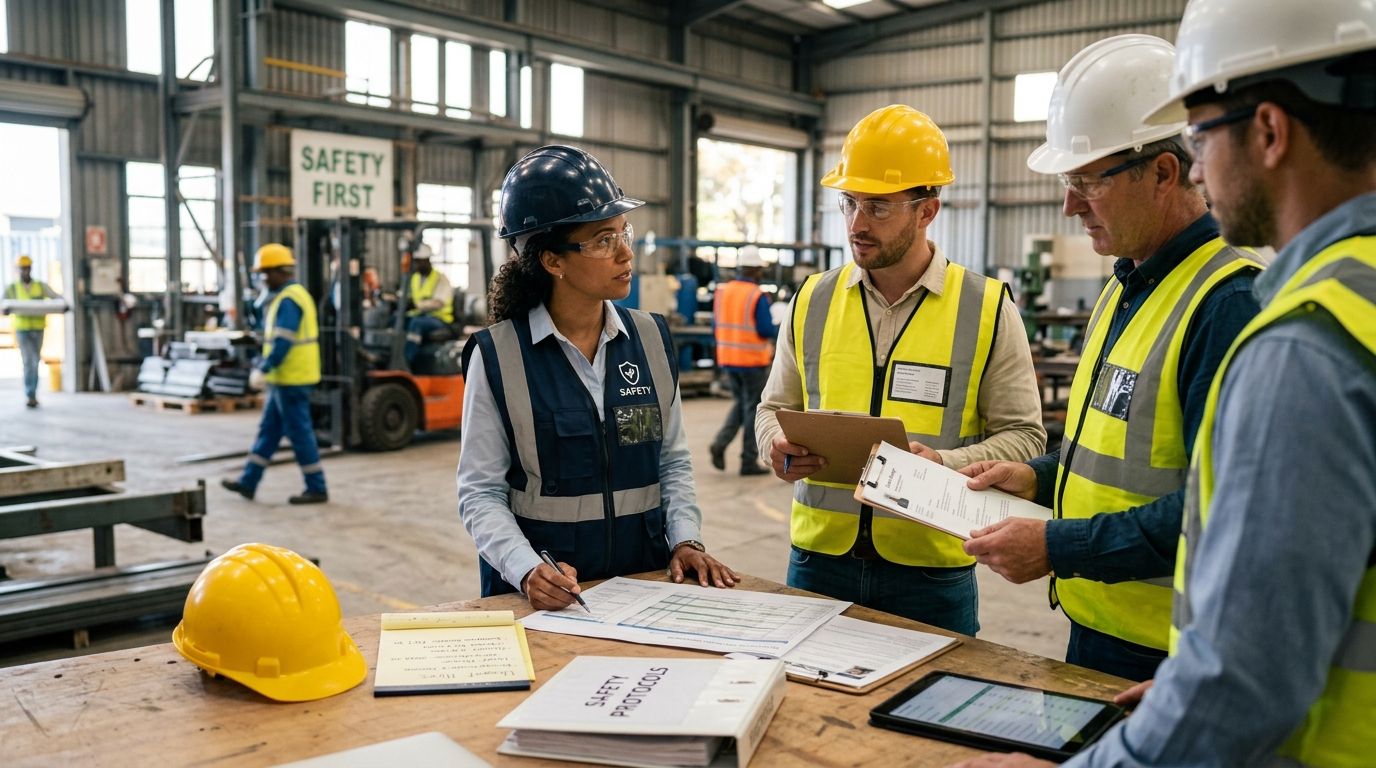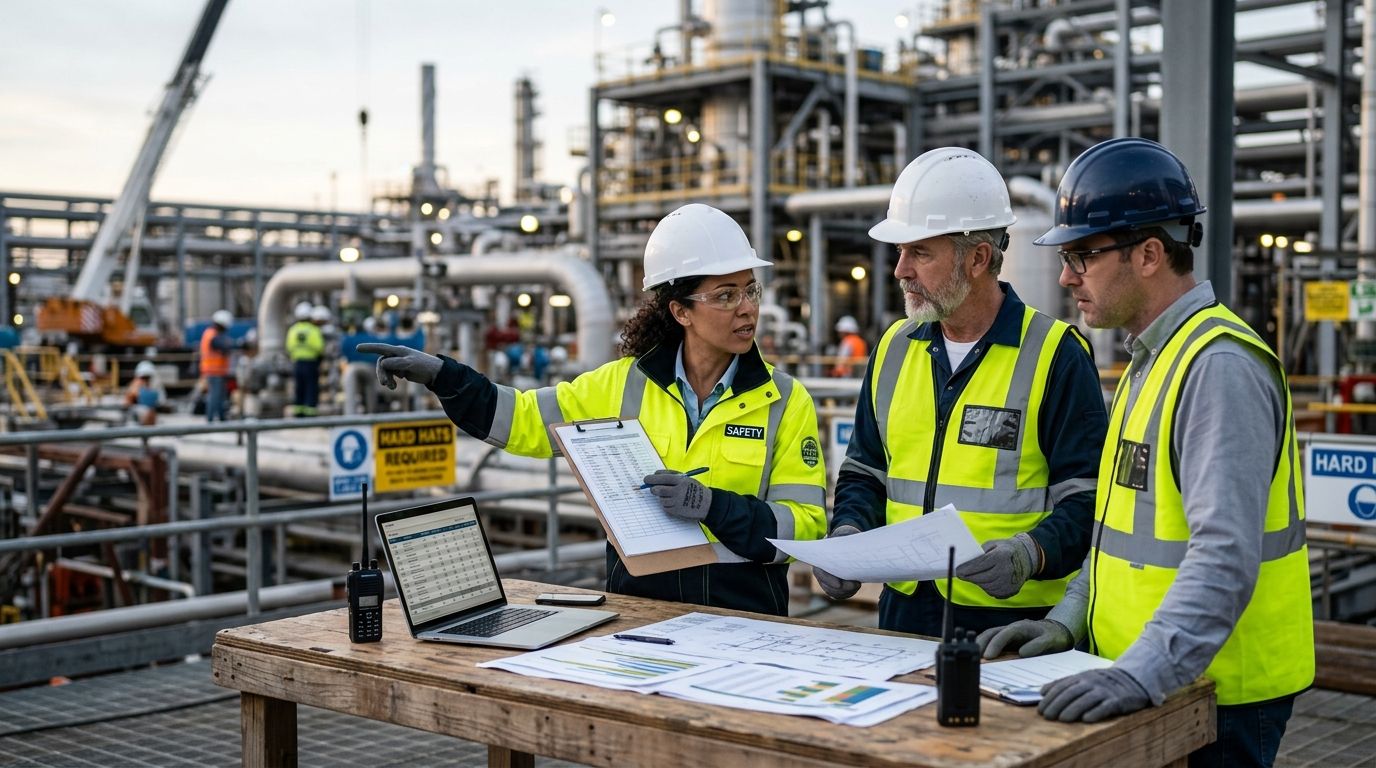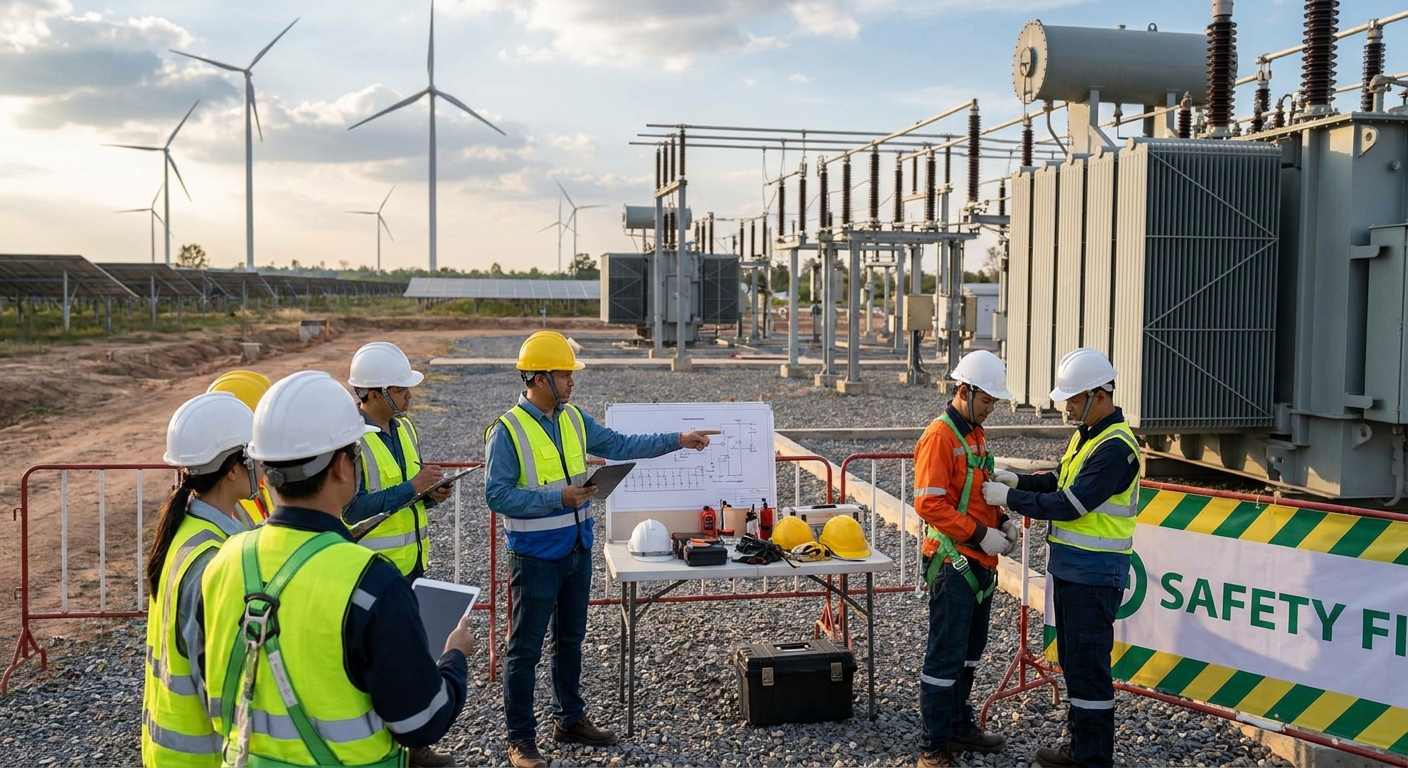
Renewable energy substation builds move fast, sit on tight interconnection deadlines, and mix high-voltage electrical risk with confined space and fall hazards on a single site — which means generic staffing agencies send you people who aren't ready for day one.
- ResponsAble Staffing places confined space attendants, safety techs, and EHS specialists built for solar, wind, and battery storage substation work.
- Confined Space Attendant Crews win for underground vault and control building work in 2026 — Buy.
- Solar and Wind Construction Safety Techs cover BOP crews on 230kV to 500kV interconnection builds — Buy.
- Skip general light-industrial temp agencies for substation energization phases — they lack arc flash and HAZWOPER depth.
Why this matters
Substation projects for solar, wind, and battery storage sit at the intersection of two risk categories most staffing agencies don't cross-train for: high-voltage electrical work and confined space entry. A control building foundation pour, an underground cable vault tie-in, and a switchyard energization test can all happen on the same site in the same week in 2026.
Miss the certification depth on any one of those and you're either shutting down for an OSHA citation or explaining a recordable incident to your EPC client. ResponsAble Staffing places safety professionals who already carry the confined space, arc flash, and HAZWOPER credentials this work demands, so your project safety plan doesn't rest on a hope that a generalist temp figures it out on site.
Who this is for
This guide is for EPC project managers, utility-scale developers, and site safety directors staffing solar, wind, or battery storage substation and interconnection projects who need EHS professionals on the ground within days, not weeks. If you're running a 230kV to 500kV substation build with a hard energization date, this applies directly to your staffing plan.
What to look for in safety staffing for renewable energy substation projects
Confined space and arc flash certification depth
Substation control buildings, underground cable vaults, and transformer pits all trigger confined space entry procedures under OSHA 1926 Subpart AA. A staffing partner needs candidates who already hold current confined space entrant/attendant credentials and NFPA 70E arc flash training, not people who'll get certified after they arrive on your site.
Deployment speed against interconnection windows
Interconnection agreements come with fixed energization dates set by the utility, not your project schedule. If a safety tech quits mid-build, you need a replacement on site in days, not the standard multi-week staffing agency search cycle.
Familiarity with utility switching and lockout procedures
Substation work involves utility-owned equipment, clearance procedures, and switching orders that differ from a typical construction site's lockout/tagout program. Safety personnel who've worked grid-tied projects before know how to coordinate with utility operators without slowing the crew down.
40-hour HAZWOPER and hazardous materials handling
Battery storage substations bring lithium chemistry, coolant systems, and fire suppression equipment that most construction safety generalists haven't handled. A 40-hour HAZWOPER certification is the baseline for anyone managing hazard communication on a battery storage or grid interconnection site in 2026.
Direct hire pipeline for the transition to operations
A construction-phase safety tech is a different hire than the permanent safety manager who'll run the substation once it's energized and handed to the utility or asset owner. Your staffing partner should offer a direct hire path for that transition, not just temp coverage that ends at substantial completion.
Multi-site coordination for portfolio developers
Developers building three or four substations across a region in the same construction season need one point of contact managing staffing across all sites, not four separate vendor relationships with inconsistent documentation standards.
Top picks for substation safety staffing
Confined Space Attendant Crews — the compliance backbone. Vetted for underground cable vault and control building entry work, with current confined space entrant/attendant credentials and documented rescue plan experience. One dedicated attendant per active entry point is the standard on grid-tied sites in 2026. Buy — this is the role that gets cited when it's missing, and confined space attendant staffing fills it fastest.
Solar and Wind Construction Safety Techs — the field generalist. Built for the balance-of-plant phase: grading, foundation, racking, and cable pulling crews across a multi-acre solar array or wind interconnection corridor. These techs carry OSHA 30 construction cards and arc flash awareness training as a baseline. Buy — safety staffing for solar and wind energy construction covers the widest span of your build calendar.
EHS Recruiting for Battery Storage and Grid Projects — the interconnection specialist. Purpose-built for battery energy storage system installs and grid interconnection substations, where 40-hour HAZWOPER certification and lithium hazard awareness matter more than general construction experience. Buy — EHS recruiting for battery storage and grid projects is the pick once your project scope includes storage.
Contract fire watch coverage for energization testing — the overlooked line item. Hot work and energization testing on a switchyard needs a dedicated fire watch separate from your general safety crew, and most project budgets forget to staff it until the week before testing starts. Consider — plan this into your staffing request at least two weeks ahead of the energization date, not the week of.
Staff your substation project now
Request vetted safety professionals for your 2026 build schedule.
What to avoid
- General light-industrial temp agencies — they place warehouse and assembly line workers, not confined space attendants or arc flash-rated techs, and it shows the first time a permit-required entry comes up.
- OSHA-10-only staffing for high-voltage work — a 10-hour construction card covers general awareness, not the switching and clearance procedures a substation site actually runs on.
- Agencies with no direct hire pipeline — if your safety manager needs to convert to permanent staff once the substation goes live, a pure temp-to-nowhere vendor leaves you re-recruiting from scratch.
Verdict comparison
| Role type | Best for | Certification depth | Deployment speed | Verdict |
|---|---|---|---|---|
| Confined Space Attendant Crews | Cable vaults, control buildings | Confined space entrant/attendant, rescue plan | Fast | Buy |
| Solar/Wind Construction Safety Techs | BOP construction phase | OSHA 30, arc flash awareness | Fast | Buy |
| EHS for Battery Storage/Grid | Interconnection, BESS sites | 40-hour HAZWOPER, lithium hazard training | Moderate | Buy |
| Contract Fire Watch | Energization/hot work testing | Fire watch, hot work permit | Fast if booked early | Consider |
| General light-industrial temps | Not substation-appropriate | OSHA 10 or none | N/A | Skip |
FAQ
What certifications should safety staff have for a renewable energy substation project?
Substation safety staff in 2026 need OSHA 30 construction certification at minimum, plus confined space entrant/attendant training and NFPA 70E arc flash awareness. Battery storage sites add a 40-hour HAZWOPER requirement on top of that.
How fast can a staffing agency deploy safety techs to a substation site?
A specialized safety staffing agency can typically place confined space attendants or construction safety techs within days when candidates are pre-vetted and pre-certified. Generalist agencies without an industrial bench usually take multiple weeks.
Is direct hire or temporary staffing better for substation safety managers?
Temporary staffing covers the construction phase, but a direct hire safety manager makes sense once the substation transitions to ongoing operations. Look for a staffing partner offering both paths under one contract.
Do solar and wind substation projects need confined space attendants?
Yes, underground cable vaults and control building entries on solar, wind, and battery storage substations trigger OSHA 1926 Subpart AA confined space procedures, requiring a dedicated attendant at every active entry point.
What's the difference between staffing for solar construction and battery storage projects?
Solar and wind construction staffing focuses on OSHA 30 and arc flash-rated field techs for balance-of-plant work. Battery storage adds 40-hour HAZWOPER and lithium hazard handling requirements on top of that baseline.
How much does safety staffing cost for a substation project?
Rates vary by certification level, project location, and shift length, and specialized confined space or HAZWOPER-certified techs cost more than general construction safety staff. Get a project-specific quote rather than relying on a flat industry rate.
Can one staffing agency cover multiple substation sites for a developer?
Yes, a staffing partner with a national bench can coordinate safety personnel across several substation builds under one point of contact, which keeps documentation and certification tracking consistent across sites.
One last thing
The fire watch line item is the one project managers forget until the week before energization testing, and it's the fastest way to blow a hard interconnection date when nobody's staffed for it. Build fire watch and hot work coverage into your staffing request the same week you lock the energization schedule, not after.