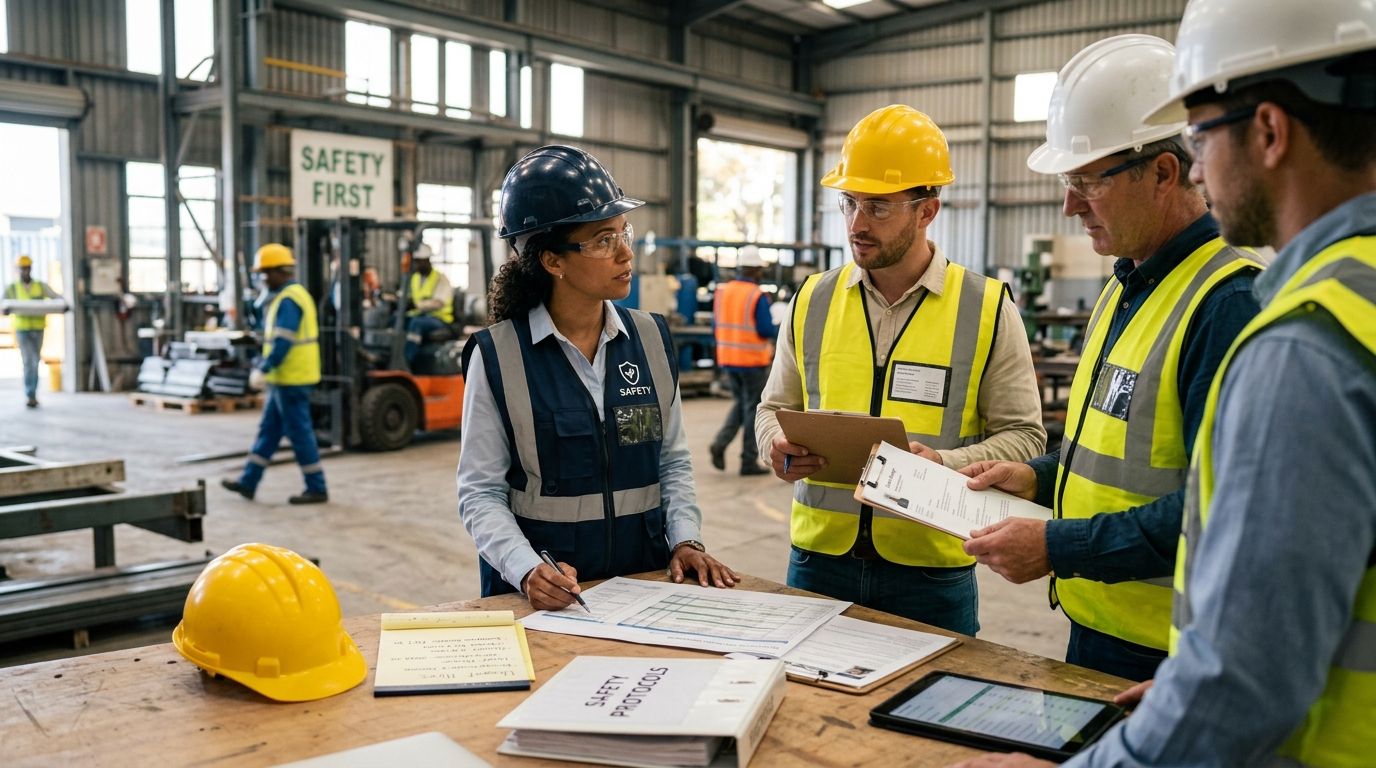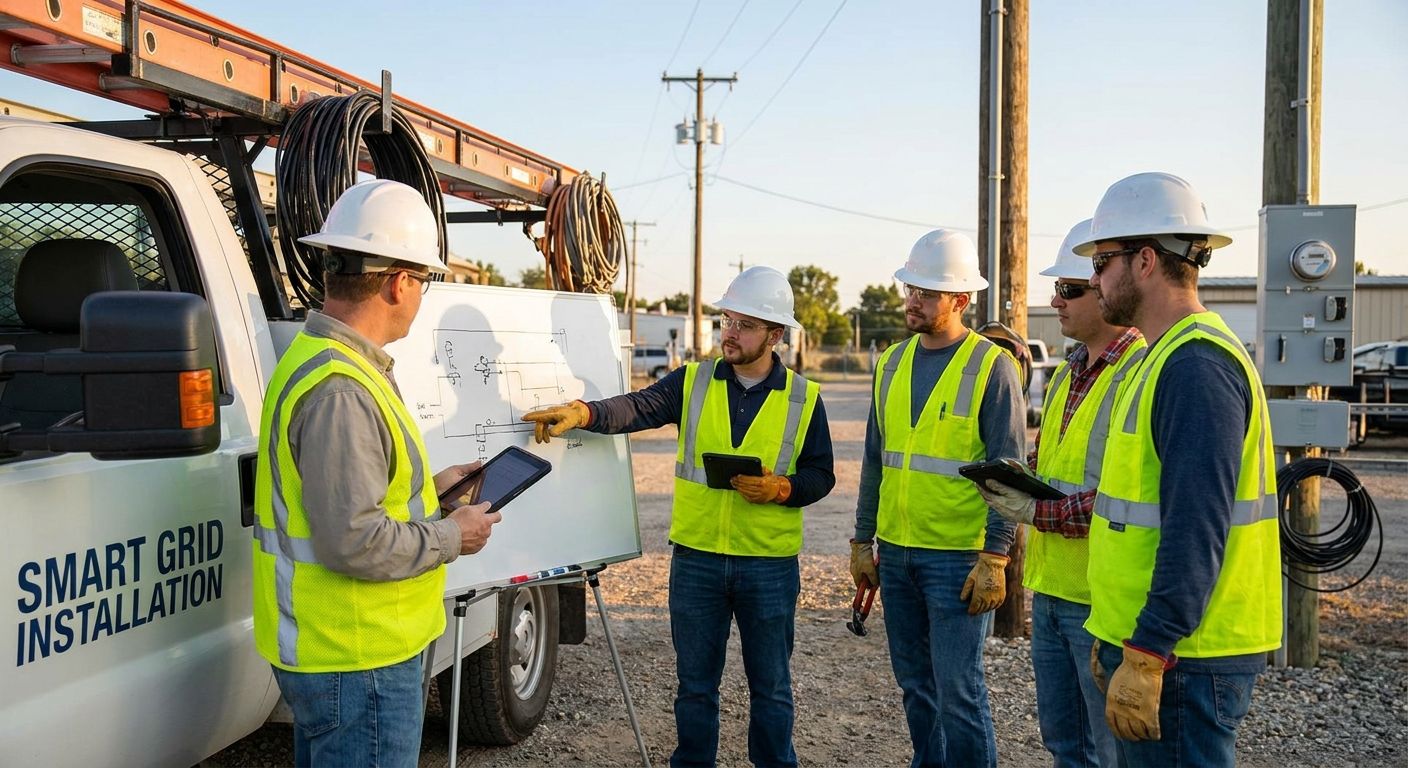
Safety staffing for smart grid installation crews means placing OSHA-certified safety officers, confined space attendants, and fall protection monitors on advanced metering infrastructure (AMI) and grid modernization projects so utility contractors stay compliant without slowing down the install schedule. Smart grid rollouts move differently than a typical job site: crews work in residential yards, climb utility poles, enter transformer vaults, and interact with live or de-energized electrical equipment on the same day, often across dozens of service territories at once.
- Smart grid crews need safety staff trained on 1910.269 electrical hazards, not generalist construction safety coverage.
- ResponsAble Staffing places confined space attendants and safety officers for smart grid and meter installation crews nationwide in 2026.
- Temp-to-hire staffing fits surge install phases; direct hire fits once the rollout settles into steady-state operations.
- Bilingual coverage and night-shift staffing are the two most common gaps on multi-crew AMI rollouts.
Why safety staffing matters for smart grid installation crews
Meter installation and grid hardening work looks low-risk from the outside — a tech swaps a meter, climbs a pole, or opens a cabinet. It isn't. Crews work near energized conductors covered under 29 CFR 1910.269, enter confined vaults and manholes to access transformers, and spend most of the day on residential property where dogs, locked gates, and unpredictable homeowner interactions create their own hazard category.
Grid modernization funding has pushed utilities and their contractors to scale install crews fast in 2026, sometimes tripling headcount for a single territory in a matter of weeks. That pace is exactly where safety gaps show up: certifications lapse, onboarding gets rushed, and a safety officer hired for a slow construction schedule can't keep pace with 40 crews working staggered shifts across three counties. ResponsAble Staffing exists to close that gap with vetted safety professionals who already understand utility work, not generalists learning it on the job.
Map the hazard profile before you write a job order
A meter installation crew and a substation build crew face different risks, and your staffing request should say so explicitly.
- Electrical clearance distances and arc flash exposure near live conductors
- Fall protection for pole climbing and bucket truck work
- Confined space entry for vaults, manholes, and pad-mount transformer cabinets
- Traffic control on roadside meter routes
- Residential access hazards: dogs, gate access, homeowner confrontation protocols
Verify certifications before crews mobilize
A resume that says "safety officer" doesn't tell you whether the candidate can actually run a compliant job site for utility work.
- OSHA 10 or OSHA 30 construction certification, current and documented
- 1910.269 qualified electrical worker training for anyone near energized equipment
- Fall protection and confined space entry/attendant certification
- First aid, CPR, and AED current within the certifying body's renewal window
- Defensive driving or DOT compliance for staff assigned to fleet vehicles between sites
Build a staffing plan around the install curve, not a fixed headcount
Meter rollouts ramp, plateau, and taper — a static safety staffing number either leaves crews uncovered during the ramp or overstaffed during the taper.
- Phase safety officer coverage to match projected crews-per-week, not total project headcount
- Use a temp-to-hire bridge during the ramp so you're not locked into permanent headcount before volume is proven
- Add night-shift safety coverage if any portion of the work touches outage-sensitive switching windows
- Build in bilingual coverage where crew composition skews Spanish-speaking, which is common on large residential AMI rollouts
- Coordinate with related grid work — battery storage and grid projects often share crews and safety staff with meter installation phases on the same contract
Standardize onboarding so new safety staff aren't the bottleneck
The fastest way to stall a 40-crew rollout is a safety officer who takes two weeks to get site-ready.
- Pre-mobilization checklist: certifications, background check, drug screen, PPE sizing, all completed before day one
- Utility-specific site orientation covering that contractor's lockout/tagout and switching procedures
- Pair new safety staff with a tenured officer for the first week on unfamiliar territory
- A staffing partner that can onboard temporary safety professionals quickly shortens this window from weeks to days once volume spikes mid-contract
Staff confined space and elevated work as separate disciplines
Don't assume one safety officer can competently cover both a vault entry and a pole-top rescue plan — the certifications and the attention required are different.
- Dedicated confined space attendants for vault and manhole entries
- Fall protection monitors for pole climbing and bucket truck operations
- Qualified riggers for any material handling near energized lines
- Fire watch coverage if hot work occurs near substations or fueling infrastructure
- Cross-training where crew size doesn't justify two separate roles, but never at the cost of certification gaps
Track incidents and adjust staffing mid-project
A safety program that only reports incidents after the fact is a safety program that's already failed once.
- Weekly near-miss reporting reviewed with the general contractor's safety director
- A documented escalation path for repeat hazards tied to a specific crew or route
- The contractual flexibility to swap an underperforming safety officer without a lengthy notice period
- Vegetation and access hazards near overhead lines tracked the same way utility vegetation management crews track them, since meter and line-clearance work frequently overlaps on the same right-of-way
Comparison: staffing options for smart grid safety coverage
| Option | Best for | Key limitation |
|---|---|---|
| Generalist construction staffing agency | Short residential jobs with low electrical exposure | Rarely stocks 1910.269-trained or confined space-certified candidates |
| In-house direct hire only | Utilities with stable, ongoing AMI programs | Slow to scale for a sudden multi-county rollout |
| Utility-only safety staffing specialist | Contractors needing deep electrical hazard expertise | Smaller candidate pool, longer time-to-fill on surge requests |
| ResponsAble Staffing (temp, project, direct hire) | Rollouts that ramp fast and need a bridge to permanent hires | Best value comes from planning staffing phases ahead of mobilization, not reacting to a shortage |
Verdict: contractors running multi-crew smart grid or meter installation rollouts get the most coverage flexibility from a staffing partner that offers temp, project-based, and direct hire in the same contract — a generalist agency or a direct-hire-only approach forces a tradeoff between speed and certification depth that smart grid work doesn't tolerate well.
Staff your smart grid crews safely
Get vetted safety officers matched to your rollout schedule.
Common mistakes smart grid contractors make on safety staffing
- Treating meter installers as low-risk workers and skipping confined space or 1910.269 certification requirements, then discovering the gap during an OSHA inspection
- Understaffing residential access hazards — dogs, locked gates, and homeowner interactions cause more lost-time incidents on meter routes than most contractors budget for
- No bilingual safety coverage on crews where a majority of installers speak Spanish, which turns toolbox talks into a box-checking exercise instead of real communication
- Direct-hiring a safety officer before the rollout schedule is confirmed, leaving that hire idle for weeks or buried the moment volume ramps
- Losing track of certification expiration dates across a workforce that scales from 10 to 100 in a month, which is the single fastest way to fail a utility safety audit
FAQ
What certifications does a safety officer need for smart grid installation work?
A safety officer on smart grid or meter installation crews needs OSHA 10 or 30 construction training plus 1910.269 qualified electrical worker training, since crews work near energized distribution equipment. Confined space and fall protection certification are also standard requirements for vault access and pole work.
Is temp staffing or direct hire better for a smart grid rollout?
Temp-to-hire staffing works best during the ramp-up phase of a rollout, since headcount needs can double or triple within weeks. Direct hire fits better once the install volume stabilizes into ongoing maintenance or steady-state operations.
How fast can safety staff be onboarded for a meter installation surge?
A staffing partner with pre-vetted, certified candidates can typically get safety officers site-ready within days rather than weeks, provided background checks and certifications are verified before mobilization. Delays usually come from incomplete pre-screening, not candidate availability.
What's the biggest safety hazard on residential meter installation routes?
Residential access hazards — dogs, locked gates, and unpredictable homeowner interactions — cause more incidents on meter routes than electrical exposure does. Crews also face fall risk from pole climbing and confined space risk when accessing vaults or transformer cabinets.
Do smart grid crews need confined space attendants?
Yes, any crew entering vaults, manholes, or pad-mount transformer cabinets needs a dedicated confined space attendant under OSHA's permit-required confined space rules. This is a separate role from general site safety and shouldn't be combined without proper certification.
How does bilingual safety staffing affect smart grid job sites?
Crews with a high share of Spanish-speaking installers need bilingual safety officers to run effective toolbox talks and hazard communication, not just translated paperwork. Contractors who skip this often see lower incident-reporting rates, not fewer actual incidents.
What's the standard covering electrical hazards on grid installation crews?
29 CFR 1910.269 covers electric power generation, transmission, and distribution work, and applies to most smart grid and meter installation crews working near energized equipment. Safety staff assigned to these crews should hold documented training under this standard, not general construction-only certification.
One last thing
Most contractors budget safety staffing around total project headcount, but the real risk window on a smart grid rollout is the ramp — the first four to six weeks when crew count triples and onboarding gets compressed. Build your safety staffing plan around that ramp curve, not the average headcount across the whole contract, and the rest of the compliance picture gets a lot easier to manage through 2026 and beyond.