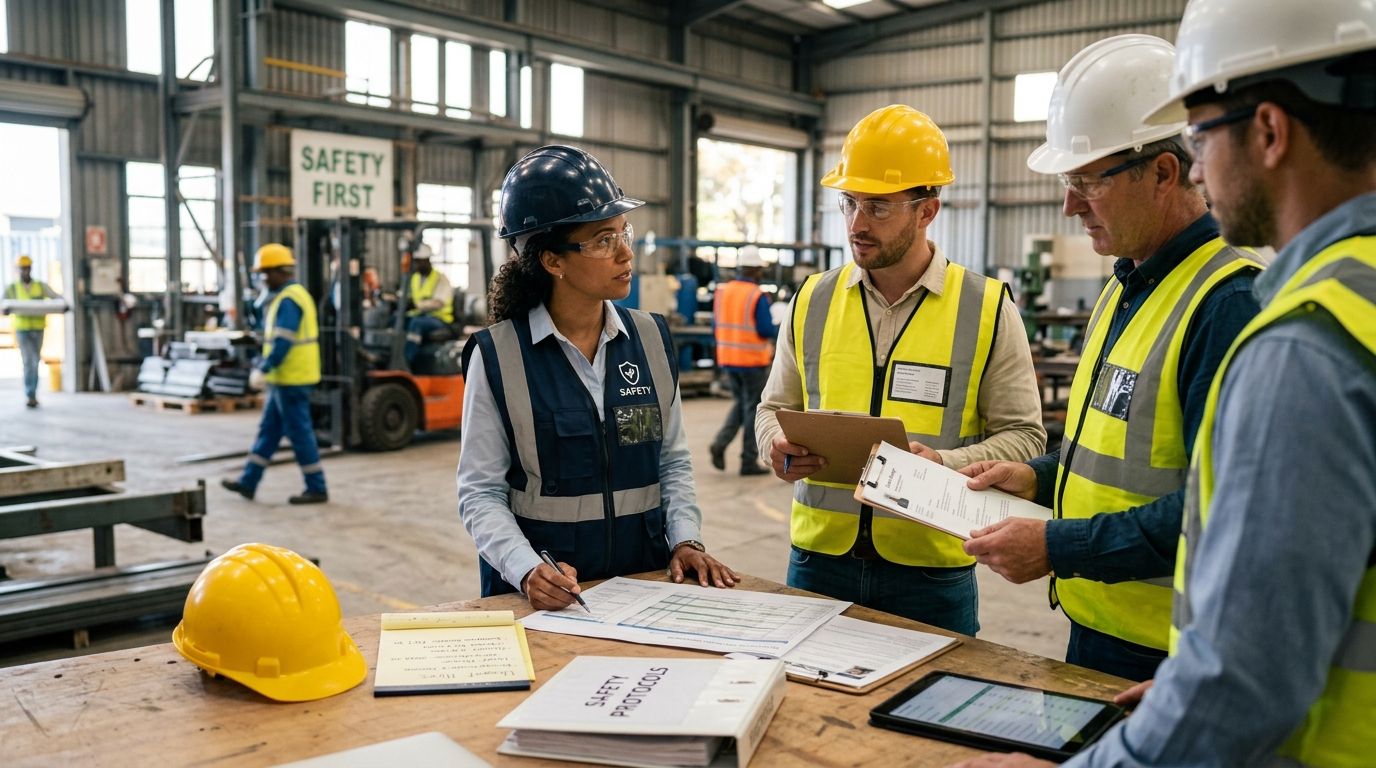
Craft breweries and distilleries run confined fermentation cellars, combustible grain dust, and flammable ethanol vapor under one roof, and safety staffing for craft breweries and distilleries in 2026 has to account for all three hazards at once instead of applying a generic industrial safety template.
- Confined space attendants for fermenter and grain silo entries are the first hire craft breweries and distilleries need in 2026 -- book before the next tank cleaning cycle.
- Fire watch staffing on hot work near stills and brew kettles prevents citations that cost far more than the labor line item.
- Seasonal safety staffing covers holiday bottling and canning surges without adding permanent headcount.
- A generalist industrial temp who has never worked a confined space entry on a fermenter is a skip, no matter how cheap the bill rate.
Why this matters
Craft breweries and distilleries sit in an odd regulatory gap. OSHA's permit-required confined space standard, 29 CFR 1910.146, applies the moment someone climbs into a fermenter, mash tun, or grain silo, and most craft operations run those entries several times a month during cleaning and maintenance. Add CO2 buildup from active fermentation, ammonia refrigeration lines, and combustible grain dust, and you have three separate hazard classes stacked in one building.
Most general industrial staffing agencies don't carry candidates who have actually worked a brewery floor. ResponsAble Staffing's safety staffing bench for craft breweries and distilleries skews toward food and beverage manufacturing specifically, because the hazard mix doesn't match a warehouse or a refinery -- it's close, but not identical, to either one. Safety staffing for craft breweries and distilleries in 2026 means matching people to that specific mix, not just filling a headcount line.
Who this is for
This guide is for the plant manager, head brewer, or ops lead at a craft brewery or distillery running more than one shift, adding a canning or bottling line, or expanding into a second facility without a full-time EHS department yet. A staffing partner like ResponsAble Staffing gets called in exactly at that inflection point. If you're running a 10-barrel nano-brewery with two employees, you likely don't need this yet. If you're running canning around the clock during a seasonal push or bringing a new distillation building online, you do.
What to look for in safety staffing for craft breweries and distilleries
Confined space certification, not just a generic OSHA 10
A candidate who holds a general OSHA 10 or OSHA 30 card hasn't necessarily entered a permit-required confined space. Ask specifically about fermenter, mash tun, or grain silo entries -- the atmosphere testing, ventilation setup, and attendant duties differ from a manhole or a refinery tank. Someone who's only worked construction confined spaces will still need a ramp-up period on your floor.
Combustible dust and hot work awareness
Grain handling produces fine dust that behaves like a fuel source under the right conditions, and hot work on stills or brew kettles introduces an ignition source in the same building. A safety professional who can run a hot work permit process and understands dust housekeeping cuts your exposure on both fronts at once.
CO2 and ammonia exposure training
Active fermentation displaces oxygen fast and without warning, and craft facilities using ammonia-based refrigeration carry a second toxic exposure risk. Staff who can read a gas monitor and know the evacuation trigger points for both hazards are worth more than a generic first-aid certification.
Flexible engagement models for seasonal production
Bottling and canning volume for craft breweries and distilleries often spikes around holiday orders and spring seasonal releases. A staffing partner who offers temp, project-based, and direct-hire placement lets you scale safety coverage up for the length of that push without carrying a full salary the rest of the year.
A verified placement and incident track record
Ask any agency for their placement history on food and beverage or manufacturing sites before you sign anything -- not a sales pitch, actual references. An agency that can't produce that track record is asking you to take the hazard mix above on faith.
Where to staff first: the roles that matter most
These are the roles ResponsAble Staffing places most often for craft breweries and distilleries scaling production in 2026.
Confined space attendant -- the non-negotiable hire. Every fermenter cleaning, mash tun entry, or grain silo inspection under 29 CFR 1910.146 needs a dedicated attendant outside the space, not a brewer pulled off the floor for twenty minutes. Confined space attendant staffing covers exactly this gap on a temp or project basis, so you're not carrying a full-time attendant for entries that might happen twice a month. Verdict: Buy -- this is the first role most craft breweries and distilleries staff once entries become routine.
Fire watch attendant -- the cheap insurance policy. Any hot work -- welding a new tank support, brazing copper on a still -- needs a fire watch attendant on-site per your hot work permit process, and standard practice keeps that attendant on watch for a set period after work stops. Fire watch staffing fills that role for a single job or an entire construction phase without pulling a production employee off the line. Verdict: Buy -- skipping this on a distillery floor next to ethanol storage is the kind of shortcut that shows up in an incident report.
Seasonal surge safety staff -- the one you forget until Q4. Holiday bottling runs and spring seasonal can releases push production volume up fast, and safety coverage has to scale with it -- more forklift traffic, more new temp hands on the floor, more hours logged overall. Seasonal safety staffing for manufacturing surge periods lets you add EHS coverage for the push and step back down after. Verdict: Consider -- worth it once your seasonal volume swing is large enough to strain current safety headcount.
Direct-hire safety manager -- the growth hire. Once you're running more than one shift, adding a second facility, or answering to an insurance carrier that wants a named safety lead, a direct-hire safety manager on payroll starts to make more sense than rotating temp coverage. Direct-hire recruiting for this role means someone who's actually run a food and beverage or manufacturing safety program before, not a first-time hire learning your hazards on the job. Verdict: Consider -- hold off until your production footprint justifies a full-time salary.
Staff your brewery's safety gaps now
Confined space, fire watch, and seasonal EHS staffing built for craft production floors.
What to avoid
Every agency claims safety expertise. ResponsAble Staffing's approach checks placements against actual food and beverage floor experience, not just a certifications list. If your current staffing conversation can't tell a confined space permit from a hot work permit, they don't know your brewery floor.
- A generalist industrial temp agency with no food and beverage bench. They'll hand you a warehouse safety profile that's never seen a fermenter or a still -- technically OSHA-trained, practically useless for your hazard mix.
- A staffing partner who treats confined space and hot work as interchangeable. The permits, the monitoring, and the attendant duties are different disciplines. An agency that blurs them together will staff the wrong person for the job in front of you.
- A bill rate that looks too clean. If a quote comes in well under what a confined space attendant or fire watch role normally runs, ask what's missing -- usually it's the actual certification and experience, not agency margin.
“If your staffing agency can't tell a confined space permit from a hot work permit, they don't know your brewery floor.”
Verdict comparison
| Role | Best for | Engagement model | Verdict |
|---|---|---|---|
| Confined space attendant | Fermenter, mash tun, grain silo entries | Temp / project | Buy |
| Fire watch attendant | Hot work near stills, tanks | Project | Buy |
| Seasonal surge safety staff | Holiday bottling, canning spikes | Temp, seasonal | Consider |
| Direct-hire safety manager | Multi-shift or multi-site operations | Direct hire | Consider |
FAQ
What's the best safety staffing solution for a craft brewery or distillery in 2026?
For most craft breweries and distilleries, confined space attendants and fire watch staff cover the highest-frequency hazards -- fermenter entries and hot work -- and should be staffed before adding a full-time safety manager.
Is temp safety staffing better than direct hire for a distillery?
Temp and project-based staffing work better for irregular needs like confined space entries and seasonal bottling surges. Direct hire makes more sense once you're running multiple shifts or facilities and need a named safety lead every day.
How much does confined space attendant staffing cost for a brewery?
Cost varies by market, shift length, and whether gas monitoring equipment is included, so get a bill rate quote directly from the agency instead of budgeting off a national average.
What OSHA standard applies to fermenter entry at a brewery?
29 CFR 1910.146, OSHA's permit-required confined space standard, applies whenever a worker enters a fermenter, mash tun, or grain silo for cleaning or inspection, and a trained attendant has to stay outside the space during the entry.
Do craft distilleries need fire watch staffing?
Yes. Any hot work near ethanol storage, stills, or tank fabrication needs a fire watch attendant under standard hot work permit procedures, typically staying on-site for a set period after work stops.
How fast can a safety staffing agency fill a confined space attendant role?
Agencies with a dedicated food and beverage bench typically turn a confined space attendant request around faster than a generalist industrial staffing firm working from a cold start, because the vetted candidates already exist.
What's the difference between a safety coordinator and a safety manager at a brewery?
A safety coordinator handles day-to-day compliance tasks like permits, PPE checks, and training logs, while a safety manager sets the program and reports to leadership. Craft breweries scaling past one shift usually add the coordinator role first.
Should a small distillery use a staffing agency or hire safety staff directly?
A small distillery running irregular hot work and confined space entries usually gets more value from temp or project staffing through an agency than carrying a full-time safety hire. That calculation flips once volume and shift count grow.
One last thing
CO2 from active fermentation has no smell and no color, and a worker can lose consciousness in a cellar before noticing anything is wrong. That's the exact reason a gas monitor belongs on the attendant outside the space, not just the entrant inside it. In 2026, more craft breweries are running gas checks on routine cellar walk-throughs even outside a formal confined space entry -- a low-cost habit worth adopting before your next OSHA inspection, and one ResponsAble Staffing's placed safety professionals bring with them on day one.