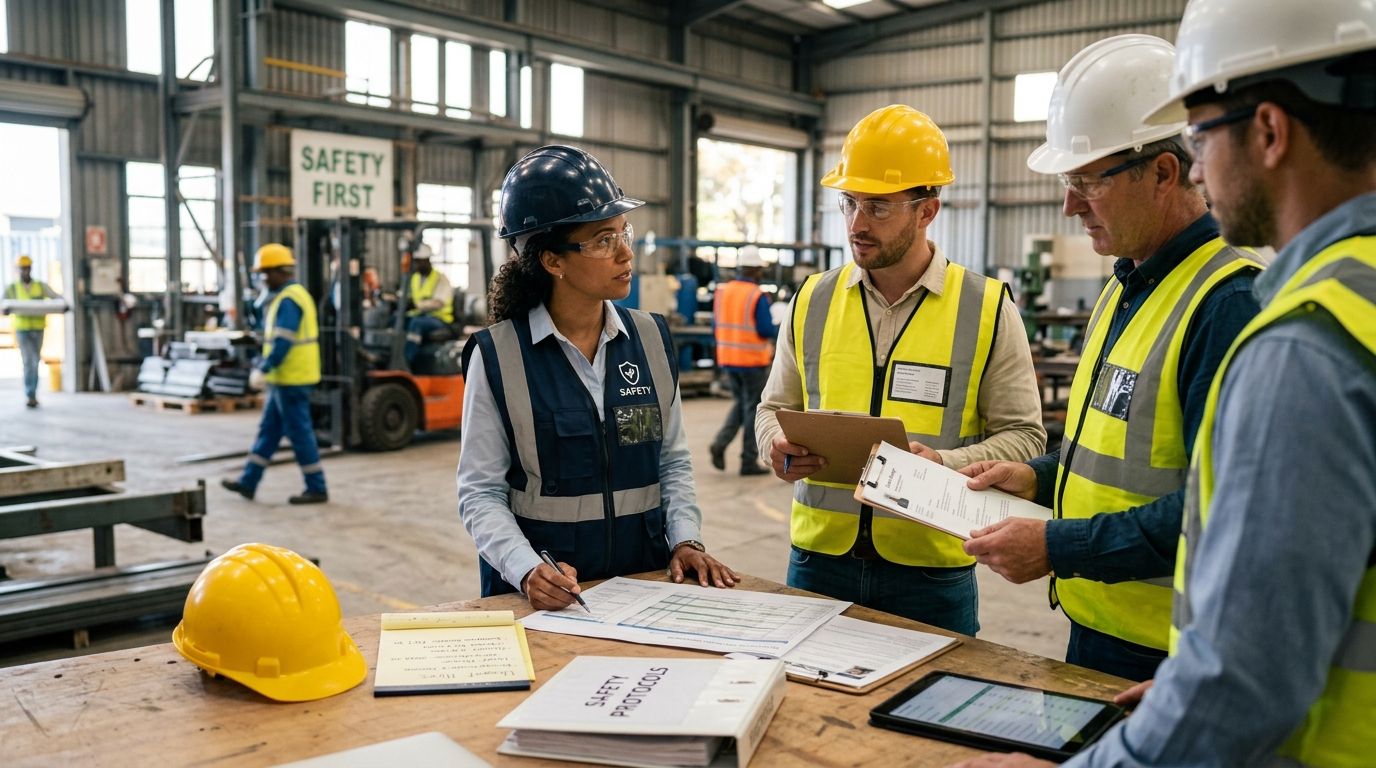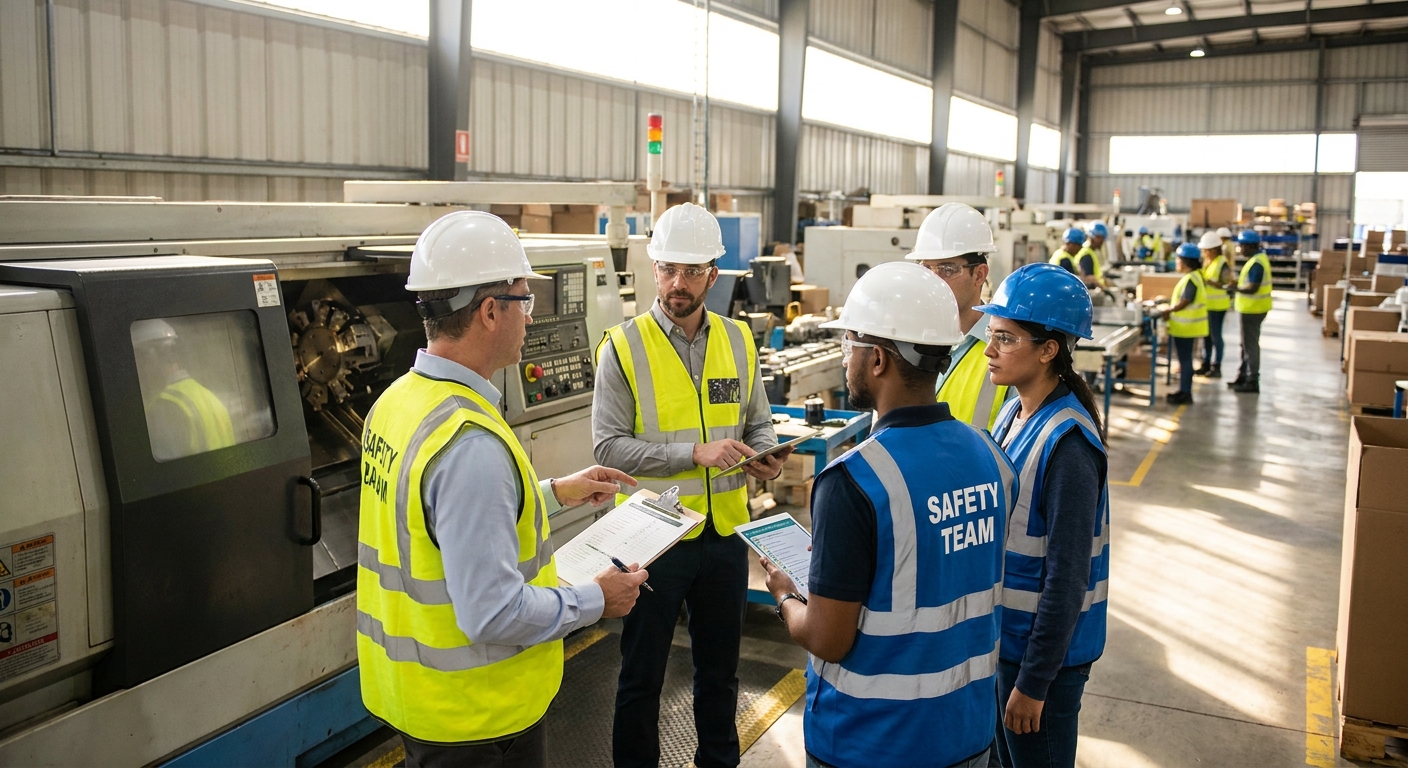
Manufacturing surges hit fast — a new product line ramps, a holiday order spike lands, or a plant restart pulls in contractors faster than your safety team can badge them. This guide breaks down what to look for in seasonal safety staffing for manufacturing and which roles to prioritize first.
- Seasonal safety staffing for manufacturing works best when surge contracts run 60-120 days with a defined conversion path.
- Fire watch and confined space attendants are the two roles that get skipped first during fast ramps — and cost the most when they're missing.
- ResponsAble Staffing places vetted EHS professionals on temporary and project-based terms for food and beverage, pharma, and general manufacturing surges.
- Plants that staff safety ahead of headcount growth in 2026 see fewer line stoppages than plants that staff it after.
Why this matters
A production surge without matching safety coverage is how OSHA recordable rates spike. New hires, temp labor, and third-party contractors moving through a plant faster than your safety team can onboard them creates exactly the conditions the general duty clause was written for.
Most manufacturing plants don't lack safety policy. They lack bodies — certified fire watch attendants, confined space monitors, EHS coordinators who can run a compliance program while the plant manager is focused on output. Seasonal safety staffing for manufacturing exists to close that gap on a temporary or project-based footing instead of forcing a permanent headcount decision under pressure.
Who this is for
This guide is for plant managers, EHS directors, and HR leads at manufacturing operations — food and beverage, pharmaceutical, industrial, or general assembly — who see predictable production surges tied to seasons, contracts, or shutdowns and need certified safety coverage that scales up and down without a permanent hiring commitment. If your surge lasts a defined window and your internal safety team is already stretched, this is your buyer profile.
What to look for in seasonal safety staffing for manufacturing
Speed to deployment
A surge doesn't wait for a 30-day requisition cycle. Ask any staffing partner how fast they can have a credentialed EHS professional on-site — under two weeks should be the standard for most roles, and faster for common certifications like fire watch or first aid/CPR.
Verified credentials, not self-reported ones
Certifications for confined space entry, fire watch, and rigging need to be verified before someone steps on the floor, not audited after an incident. A staffing partner that skips verification is transferring liability straight to your plant.
Flexible contract length matched to the surge
Most manufacturing surges run somewhere in the 60- to 120-day range — a seasonal production run, a plant shutdown, a new-line startup. The staffing structure should match that window instead of forcing you into a standard 6- or 12-month term you don't need.
Industry-specific experience
A confined space attendant who's worked chemical plants brings different instincts than one who's only worked general warehousing. Food and beverage manufacturing has sanitation and allergen protocols that a generalist safety hire won't know on day one.
A conversion path, if you want one
Some surge hires turn into permanent employees once the ramp stabilizes. Look for a staffing model that supports temp-to-hire conversion inside a defined window — 90 days is a common benchmark — instead of one that locks you into pure temp labor with no off-ramp.
Single point of accountability
When you're staffing five roles across three shifts during a surge, you don't want five separate vendor relationships. One recruiting partner managing fire watch, confined space, first aid, and EHS coordination cuts the coordination overhead in half.
Staff your 2026 production surge now
Vetted EHS professionals placed temporary, project-based, or direct hire.
Top picks for surge coverage
Food & Beverage Surge Support — the seasonal specialist
Food and beverage plants see some of the most predictable seasonal spikes in manufacturing — holiday production runs, harvest processing, back-to-school packaging cycles. Sanitation, allergen control, and line-speed safety all need coverage that scales with the run. Verdict: Buy for any plant with a recurring seasonal calendar — safety staffing for food and beverage manufacturing is built for exactly this window.
Fire Watch for Hot Work Permits — the compliance safeguard
Any surge that involves welding, cutting, or grinding triggers a hot work permit, and every hot work permit needs a dedicated fire watch attendant — typically billed in 8- or 12-hour shift blocks for the length of the job. Skipping this role is the fastest way to draw an OSHA citation during a plant expansion or line retrofit. Verdict: Buy if any part of your surge involves hot work — fire watch staffing for hot work permits covers shift-by-shift or project-length terms.
Confined Space Attendant Coverage — the one people forget
Tank cleaning, vessel entry, and pit work during a plant shutdown all require a certified confined space attendant on standby for the entire entry — no exceptions, no rotating that duty to whoever's free. This is the role most likely to get quietly skipped when a surge stretches internal staff thin, and it's the one an inspector checks first. Verdict: Buy for any shutdown or turnaround tied to your surge — confined space attendant staffing for industrial sites places certified attendants on temporary terms.
First Aid and EMT Onsite Coverage — the quiet insurance policy
Headcount doubles during a surge and incident risk rises with it, even on a well-run floor. Onsite first aid or EMT coverage catches minor injuries before they become recordable incidents and keeps response time inside the window plant insurance carriers expect. Verdict: Consider for surges adding 20 or more temporary workers to a shift; skip it for smaller, short-duration ramps where existing coverage already handles the load.
What to avoid
- Generalist labor agencies filling safety roles. A staffing firm that places forklift drivers and fire watch attendants out of the same pool usually hasn't verified either credential the way a dedicated EHS recruiter would.
- Contracts with no defined end date. Open-ended temp arrangements make it hard to scale down once the surge ends, and you end up carrying safety headcount you no longer need going into 2027 planning.
- Skipping verification because the surge is "temporary." A confined space attendant without current certification creates the same liability whether they're on-site for two weeks or two years.
Verdict comparison
| Role | Best For | Typical Deployment | Verdict |
|---|---|---|---|
| Food & Beverage Surge Support | Seasonal production runs, holiday packaging | Weeks to a full season | Buy |
| Fire Watch (Hot Work) | Welding, cutting, grinding during expansion | 8- or 12-hour shift blocks | Buy |
| Confined Space Attendant | Shutdowns, tank/vessel entry | Duration of the entry job | Buy |
| First Aid/EMT Onsite | Surges adding 20+ temp workers | Full shift coverage | Consider |
FAQ
What is seasonal safety staffing for manufacturing?
It's temporary or project-based placement of certified EHS professionals — fire watch, confined space attendants, safety coordinators — to cover production surges without a permanent hire. Contracts typically run 60 to 120 days depending on the surge.
How fast can a manufacturing plant get seasonal safety staff in 2026?
Most credentialed placements move in under two weeks, with common roles like fire watch or first aid coverage moving faster. Speed depends on how specific the certification requirement is.
Is temp safety staffing better than hiring permanent EHS staff for a surge?
For a defined surge window, temp or project-based staffing avoids carrying headcount you don't need once the ramp ends. If the workload proves permanent, most staffing partners support conversion to direct hire inside a 90-day window.
What safety roles get overlooked first during a manufacturing surge?
Confined space attendants and fire watch attendants get skipped most often because internal staff assume someone else is covering the shift. Both roles legally require dedicated, uninterrupted coverage.
Do seasonal safety staff need the same certifications as permanent employees?
Yes. A temporary confined space attendant or fire watch worker needs the same current certification as a permanent employee in that role — there's no reduced standard for short-term placements.
How much does seasonal safety staffing cost for a manufacturing plant?
Cost varies by role, shift length, and certification level, with fire watch and first aid roles typically billed by the shift. Get a specific quote based on your surge timeline and headcount.
Can one staffing partner cover multiple safety roles during a surge?
Yes — a single EHS recruiting partner can place fire watch, confined space, and first aid coverage together, which cuts vendor coordination during a fast ramp.
One last thing
The plants that handle surges best don't scramble for safety coverage after the production schedule is set — they line up staffing before the ramp starts, treating it as part of the production plan instead of an afterthought. That single sequencing change is usually the difference between a clean surge and one with a line stoppage in the middle of it.