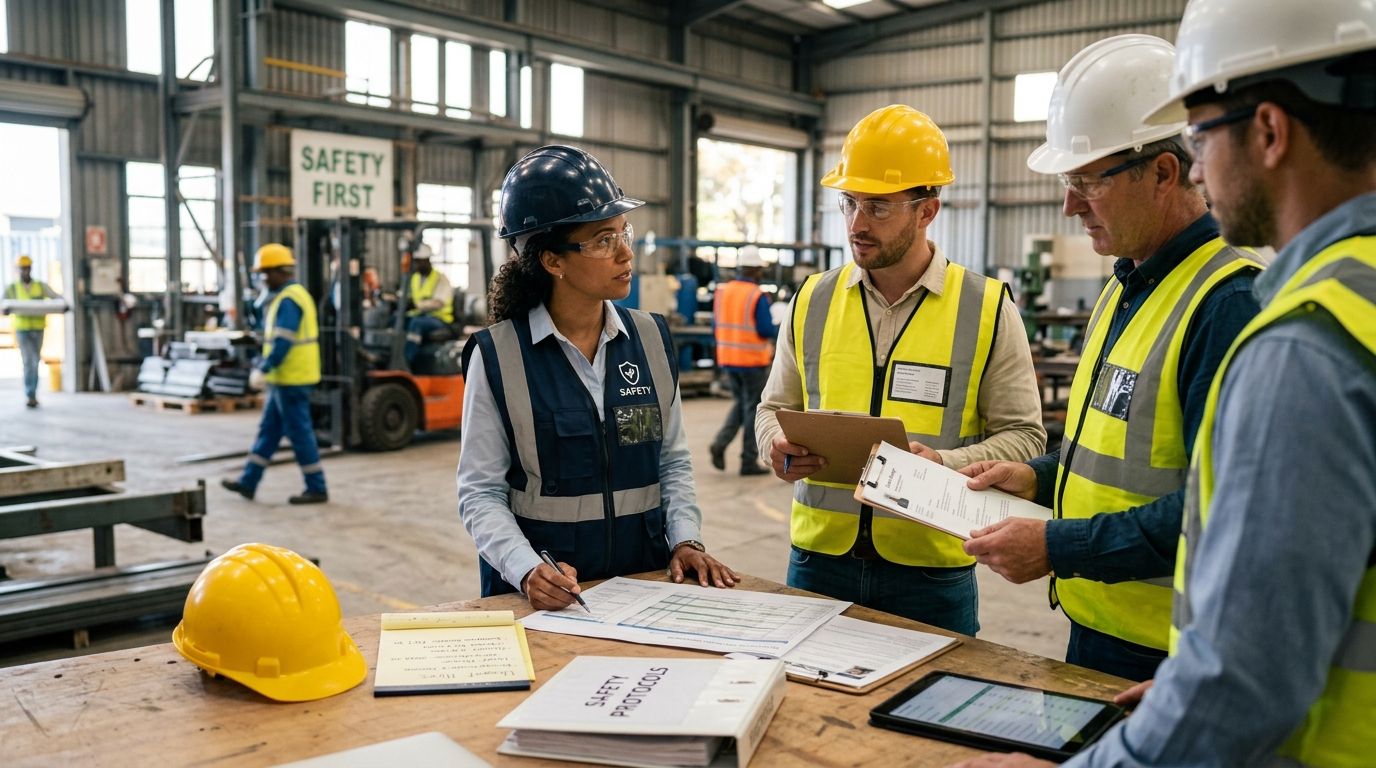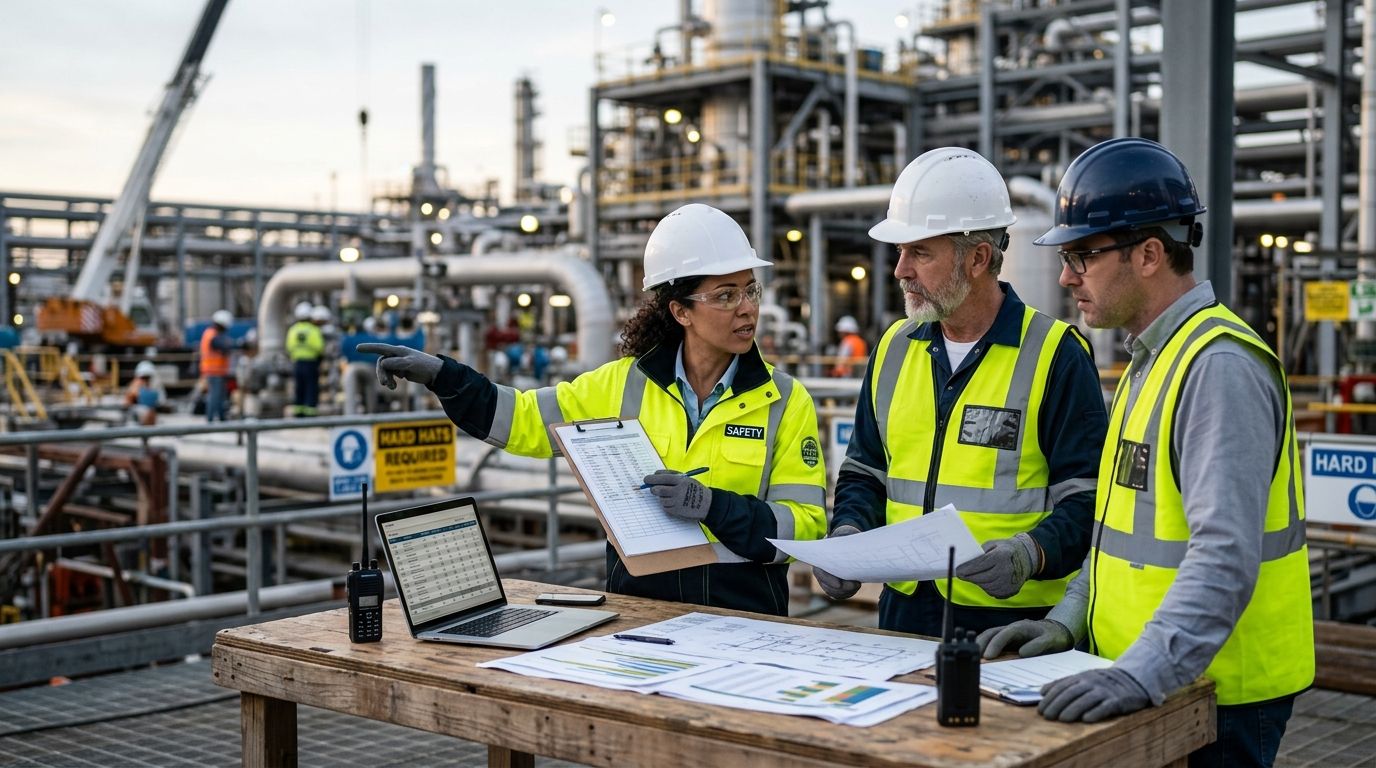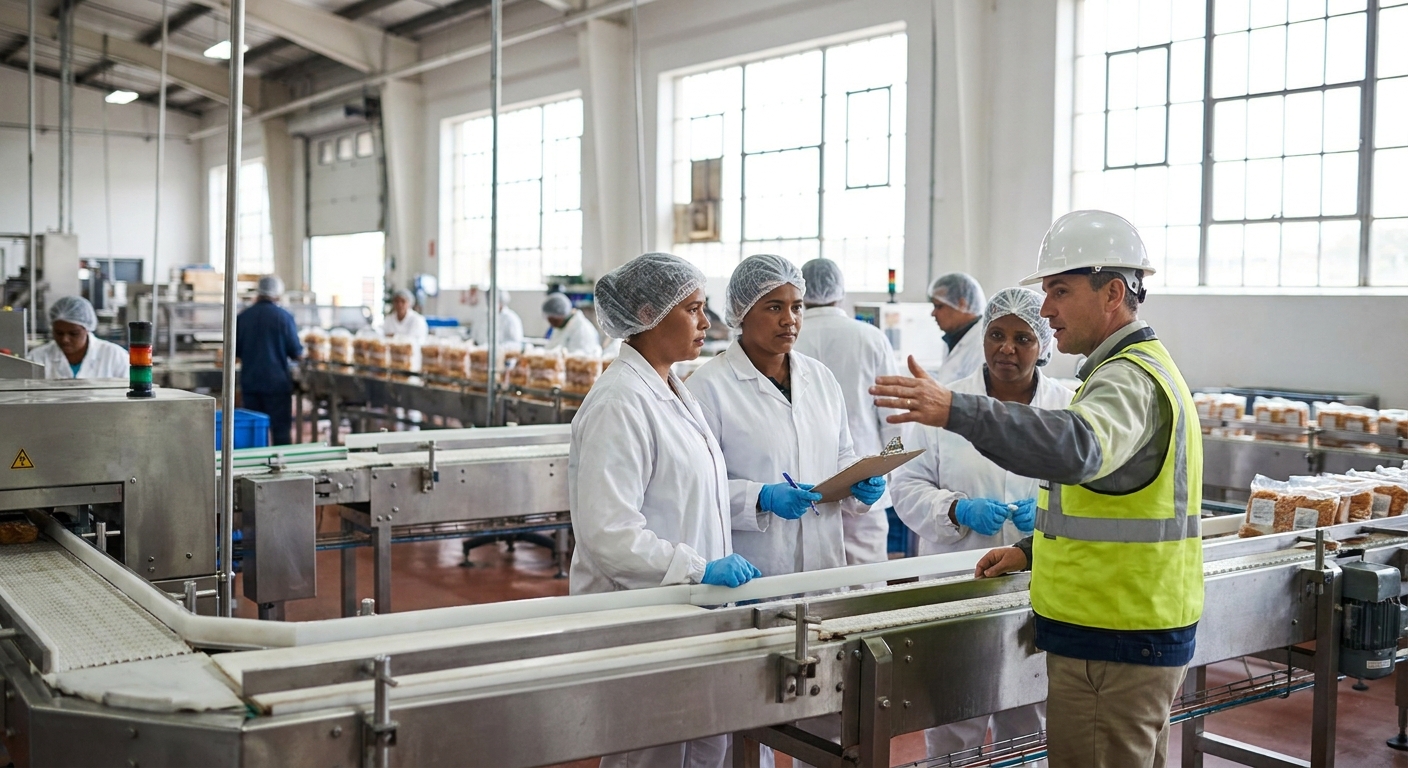
Food and beverage plants run some of the highest-hazard production lines in manufacturing — ammonia refrigeration, wet floors, sanitation chemicals, fast-moving conveyors — and most safety staffing for food and beverage manufacturing gets built around generic industrial safety criteria that miss those specifics entirely.
- Direct-hire EHS Manager placements are the safe pick for plants running 100+ line workers — Buy.
- Generalist safety recruiters without ammonia refrigeration or PSM experience are a Skip for food plants in 2026.
- Project-based Safety Technicians work best for sanitation audits and line changeovers, not full-time compliance ownership.
- Safety staffing for food and beverage manufacturing needs FSMA and HACCP fluency, not just an OSHA 30-Hour card.
Why this matters
Food and beverage manufacturing carries a hazard profile that doesn't match a typical factory floor: cold storage rooms running on anhydrous ammonia, wash-down sanitation cycles that soak electrical panels, and allergen controls layered on top of standard lockout/tagout under 29 CFR 1910.147. A safety hire who's spent a career in general manufacturing can walk onto a plant floor and miss all three.
That gap is why more plants are turning to specialized safety staffing for manufacturing plants instead of pulling from a general staffing pool. Heading into 2026 audit cycles, plants that fill EHS roles with candidates who already know FSMA preventive controls and HACCP documentation close compliance gaps faster than those training generalists from scratch.
Who this is for
This guide is for plant managers, HR leads, and EHS directors at food and beverage manufacturing sites — bakeries, meat and poultry processors, dairy plants, beverage bottlers, co-packers — who need to fill a safety role in weeks, not months, and can't afford a placement that doesn't already understand ammonia refrigeration, sanitation chemical hazards, and recall protocols.
What to look for in safety staffing for food and beverage manufacturing
FSMA and HACCP fluency
A candidate with only OSHA credentials can run a lockout/tagout program but won't necessarily catch a HACCP critical control point gap during a line audit. Food plants need EHS professionals who read FSMA preventive controls documentation as easily as an incident report.
Ammonia refrigeration and PSM experience
Any plant storing 10,000 pounds or more of anhydrous ammonia falls under the Process Safety Management standard, 29 CFR 1910.119. A safety hire who hasn't worked around ammonia refrigeration systems before will need months to get comfortable with the risk — time most cold-storage operations don't have.
Sanitation and allergen control knowledge
Wash-down cycles, wet floors, and chemical sanitizers create a different daily hazard pattern than dry manufacturing. Add allergen segregation protocols on top, and a safety hire needs to think about cross-contamination the same way they think about slip hazards.
Speed to fill for seasonal surges
Beverage bottlers ramp up ahead of summer, bakeries surge before holidays. A staffing partner that takes six weeks to source a temporary Safety Coordinator misses the window entirely — plants need candidates in the plant within days of a surge starting, not after it peaks.
Direct-hire versus temporary flexibility
A plant opening a new line needs a different commitment than one covering a maternity leave. Safety staffing for food and beverage manufacturing has to flex between direct hire, temporary, and project-based without forcing a plant into a one-size engagement.
Multi-site and multi-shift coverage
Plants running three shifts or multiple sites need a safety staffing partner who can source candidates comfortable with off-hour coverage, not just a single day-shift hire.
Top picks: staffing solutions for food and beverage plants
1. Direct-Hire EHS Manager — the safe pick. OSHA 30-Hour certified, owns the full compliance calendar including FSMA documentation and the OSHA 300 injury log. Best fit for plants running 100 or more line workers where compliance ownership can't rotate between temps. Verdict: Buy.
2. Temporary Safety Coordinator — the flexible pick. Built for 8 to 16-week assignments covering seasonal surges or medical leave. Handles daily floor walks and toolbox talks but shouldn't be the sole compliance signature on file. Verdict: Consider.
3. Project-Based Safety Technician — the specialist pick. Deployed for 30 to 90-day engagements around sanitation audits, line changeovers, or new equipment commissioning. Narrow scope, high value when a plant needs eyes on one specific hazard window. Verdict: Consider.
4. Contract Safety Trainer — the compliance pick. Focused on training crews to FSMA preventive controls and allergen handling rather than day-to-day floor supervision. Pairs well with an existing EHS Manager who needs training capacity, not headcount. Verdict: Buy.
5. Interim EHS Director — the wildcard pick. A 6 to 12-month placement for plant startups, M&A integration, or a director departure with no internal successor. Overkill for a stable single-site plant, essential for anyone opening a new facility in 2026. Verdict: Consider for expansion, Skip for steady-state single-site operations.
Fill an EHS role for your plant
Request vetted safety staffing candidates for food and beverage manufacturing.
What to avoid
- Generalist safety recruiters with no chemical hazard background. Ammonia refrigeration behaves like a process safety issue, not a general-industry one. A recruiter sourcing for EHS recruiting for chemical and petrochemical plants understands PSM depth that most general food-safety recruiters skip entirely — and food plants running ammonia need that same rigor.
- Staffing firms built around a mining-industry hazard model. Safety staffing for mining operations demands confined-space and heavy-equipment expertise that has almost nothing to do with sanitation cycles or allergen control — a mismatch that shows up fast during a food plant audit.
- Temps with only a 10-Hour OSHA card and no FSMA exposure. Fine for a warehouse dock. Not enough for a plant floor where a missed critical control point can trigger a recall.
Comparison table
| Pick | Engagement | Typical Length | Best For | Verdict |
|---|---|---|---|---|
| Direct-Hire EHS Manager | Direct hire | Permanent | 100+ worker plants | Buy |
| Temporary Safety Coordinator | Temporary | 8-16 weeks | Seasonal surges, leave coverage | Consider |
| Project-Based Safety Technician | Project | 30-90 days | Audits, line changeovers | Consider |
| Contract Safety Trainer | Temporary | Varies | FSMA/allergen training | Buy |
| Interim EHS Director | Interim | 6-12 months | Startups, M&A integration | Consider |
FAQ
What makes safety staffing for food and beverage manufacturing different from general industrial staffing?
Food and beverage plants combine standard OSHA hazards with ammonia refrigeration under PSM, FSMA preventive controls, and allergen cross-contamination risk. A generalist safety hire without that background needs extra ramp-up time a plant usually can't spare.
Is direct hire or temporary staffing better for an EHS role in a food plant?
Direct hire fits plants that need permanent compliance ownership, while temporary staffing covers seasonal surges or short-term leave. Most plants running one site with a stable headcount are better served by a direct-hire EHS Manager.
Does an EHS hire for a food plant need ammonia refrigeration experience?
Yes, if the plant stores 10,000 pounds or more of anhydrous ammonia, since that triggers OSHA's Process Safety Management standard under 29 CFR 1910.119. Hires without prior PSM exposure take longer to get compliant.
How fast can a plant fill a temporary Safety Coordinator role during a seasonal surge?
Timelines vary by market and role scope, but plants planning around a known seasonal ramp should start sourcing well before the surge begins rather than after volume spikes.
What certifications should an EHS Manager at a food plant hold?
An OSHA 30-Hour certification is the standard baseline for EHS managers, paired with working knowledge of FSMA preventive controls and HACCP documentation specific to food production.
Can one safety staffing partner cover multiple plant sites and shifts?
A staffing partner built for multi-site coverage can source candidates comfortable with off-hour and multi-shift assignments, but not every general staffing firm has that bench depth.
Should a food plant use a project-based Safety Technician instead of hiring full time?
Project-based technicians make sense for a defined window, like a sanitation audit or line changeover lasting 30 to 90 days, but they shouldn't replace a permanent compliance owner for ongoing plant operations.
One last thing
The plants that struggle most in 2026 audits aren't the ones without a safety hire — they're the ones whose safety hire came from a general staffing pool and never learned the difference between a lockout/tagout gap and an ammonia PSM gap. Match the hire to the hazard, not just the job title.