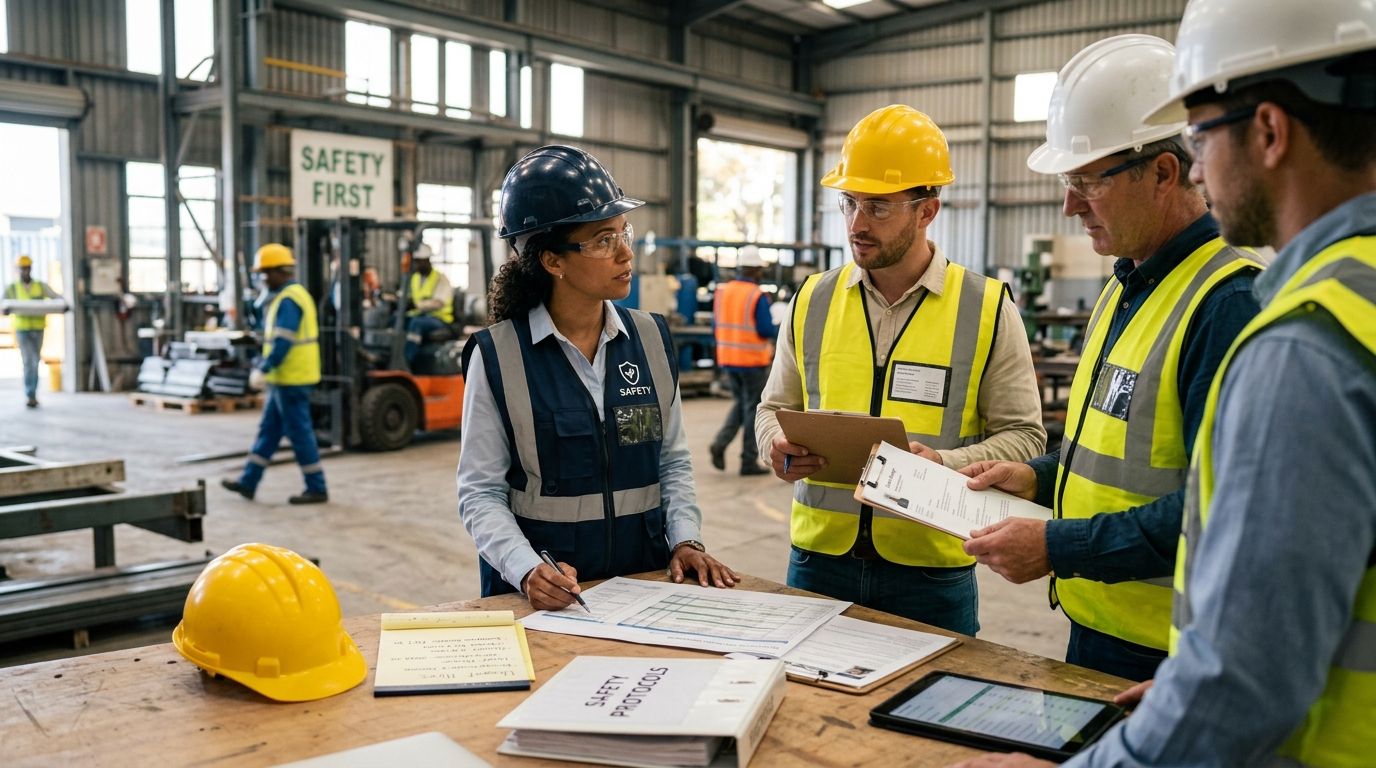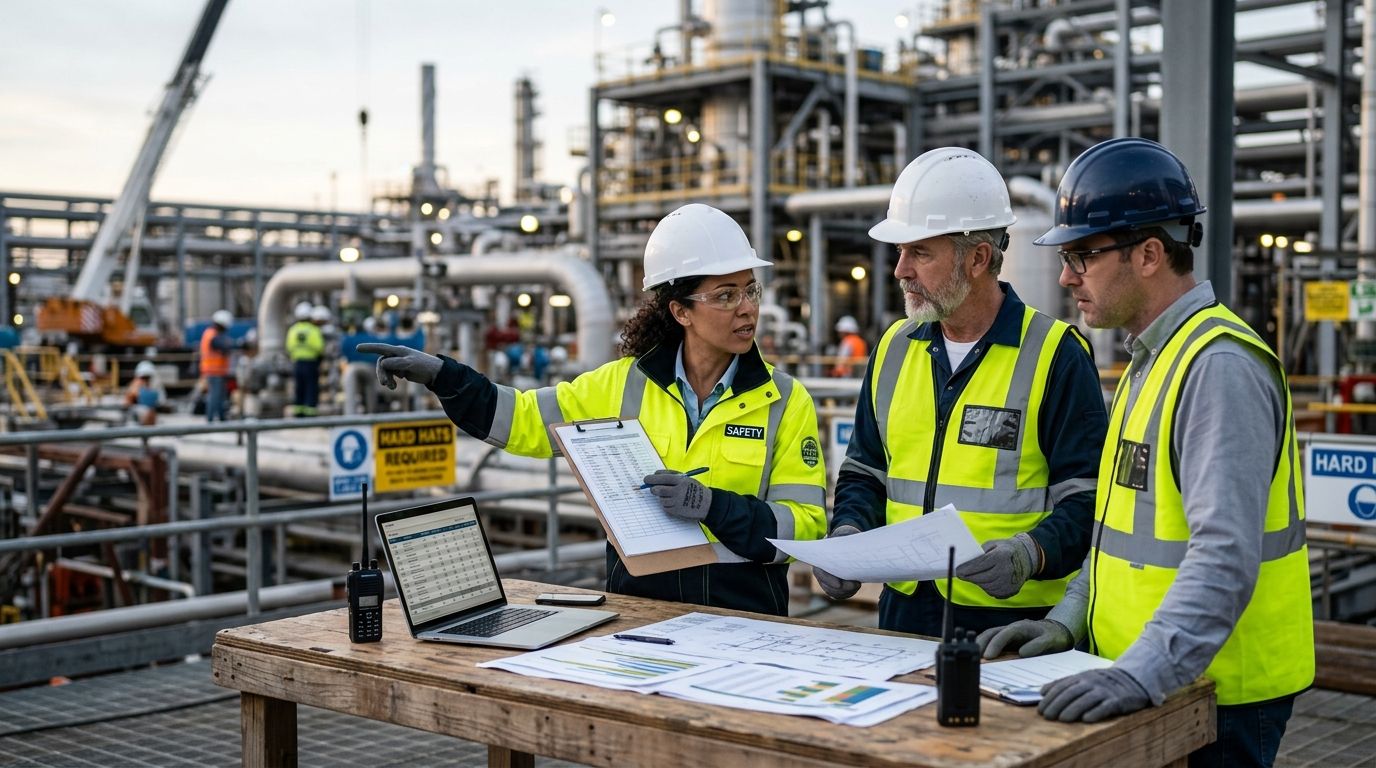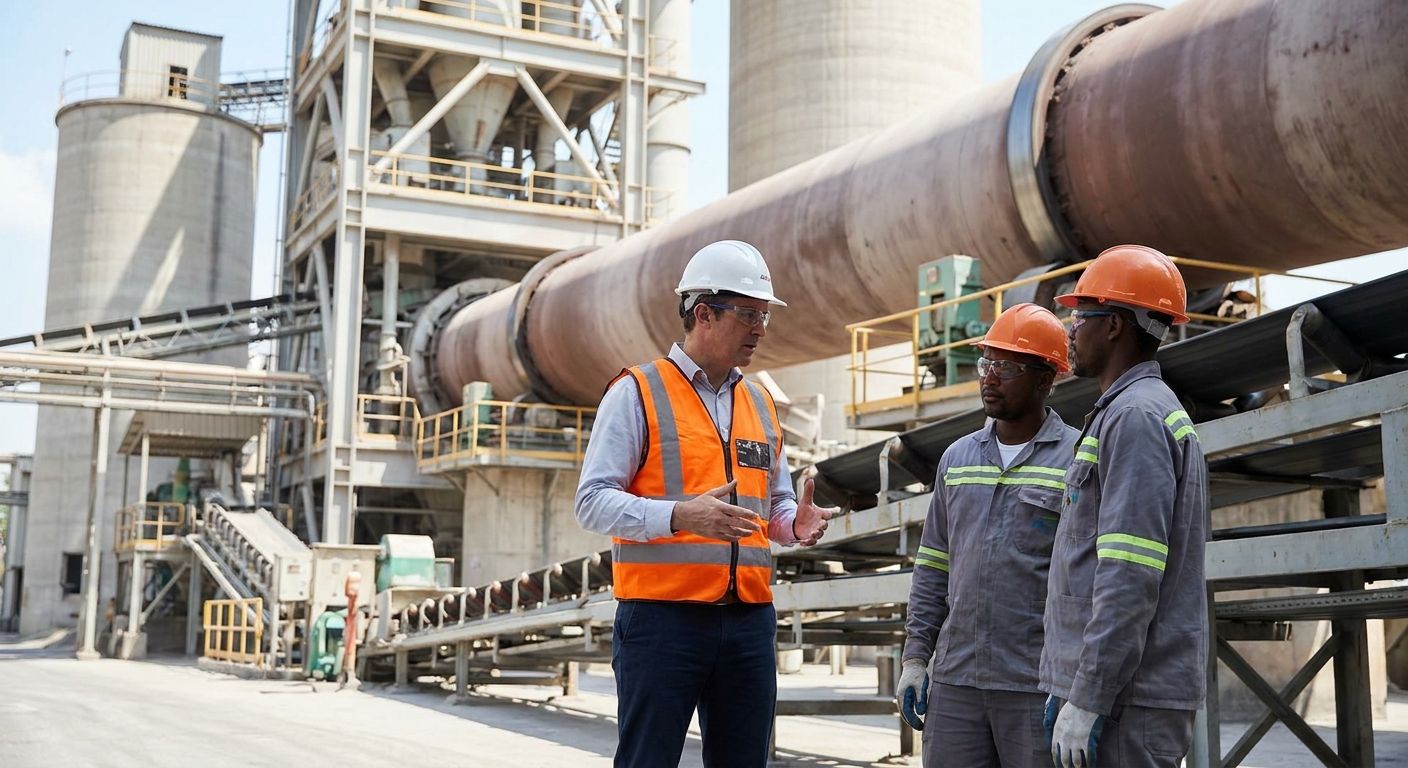
Cement and concrete manufacturing plants need safety staffing built around silica dust control, kiln heat exposure, and confined-space silo entry, not a generalist industrial safety hire pulled from a general labor pool. These plants run continuous kiln operations, high-volume conveyor systems, and combustible dust zones that most general manufacturing safety staff have never worked around, and that gap shows up fast during an OSHA inspection or a silo entry gone wrong.
Safety staffing for cement manufacturing plants overlaps heavily with safety staffing for manufacturing plants in structure, but the hazard profile diverges the moment you get near a kiln, a raw mill, or a clinker silo.
- Cement plants need respirable crystalline silica compliance staff, confined-space attendants, and kiln-adjacent fire watch, not generalist EHS temps.
- Safety staffing for cement manufacturing plants should combine contract coverage for shutdowns with direct-hire for the site safety manager role.
- OSHA's silica PEL of 50 micrograms per cubic meter over an 8-hour TWA drives most of the compliance headcount at a cement or concrete plant in 2026.
- Vet a staffing agency's incident record before signing, not after the first confined-space entry.
Why safety staffing matters for cement and concrete plants
Cement plants combine four hazard categories in one facility: airborne crystalline silica, high-heat kiln zones, combustible cement dust, and confined spaces inside raw material silos and clinker coolers. Concrete batch plants layer on heavy mobile equipment traffic and repetitive material handling injuries.
OSHA's respirable crystalline silica standard (1910.1053) sets the permissible exposure limit at 50 micrograms per cubic meter averaged over an 8-hour shift. That single number drives a large share of the staffing decision at a cement plant in 2026, because it requires a designated competent person, exposure monitoring, and engineering controls oversight that a plant's production supervisors are rarely trained to run alongside their day job.
A cement plant that staffs safety as an afterthought inherits silica exposure risk, confined-space risk, and combustible dust risk all at once. That combination is why plants increasingly bring in specialized safety staffing rather than stretching a single in-house EHS manager across every hazard category.
Build the safety staffing plan step by step
Audit your current safety headcount against plant hazard zones
Start by mapping which areas of the plant currently have no dedicated safety coverage.
- Kiln and preheater tower zones (heat stress, confined access points)
- Raw mill and finish mill areas (noise above 85 dBA action level)
- Silo and clinker cooler confined spaces
- Bagging and packaging lines (repetitive motion, dust)
- Rail or truck loadout areas (mobile equipment traffic)
Source EHS credentials specific to cement and concrete hazards
A generic OSHA 30 card is not enough for a cement plant. Look for candidates with hazard-specific training on top of the base certification.
- Respirable crystalline silica competent person training
- Confined space entry supervisor and attendant certification
- HAZWOPER for raw material handling
- Combustible dust hazard analysis experience
- Hearing conservation program administration
Build a confined-space entry team for silos and kilns
Silo entry and kiln shutdown work require a full entry team, not a single safety officer. Staff the roles as a unit rather than filling them one at a time.
- Entry supervisor
- Attendant stationed outside the space
- Rescue-trained standby personnel
- Atmospheric monitoring technician
- Communication and permit documentation lead
Staff for respirable crystalline silica compliance
Exposure monitoring and engineering control verification need a dedicated hire, not a shared duty. Bring in someone whose full job is silica compliance during any period of increased dust-generating activity.
- Personal air sampling technician
- Industrial hygienist for exposure assessment
- Engineering control verification (dust collection, wet suppression)
- Medical surveillance program coordination
Cover shutdowns, turnarounds, and startup surges with temporary staff
Cement kiln relines and major maintenance shutdowns concentrate the highest injury risk into the shortest time window of the year. This is where contract safety staffing earns its cost, because permanent headcount sitting idle 50 weeks a year to cover a two-week shutdown makes no financial sense.
- Additional fire watch personnel for hot work permits
- Extra confined-space attendants for parallel silo entries
- Contract safety coordinators for 24/7 shutdown shift coverage
- Short-term industrial hygienists for exposure sampling spikes
Add fire watch and hot work coverage for kiln maintenance
Welding, cutting, and grinding around kiln refractory brick generate hot work permits that require a dedicated fire watch, separate from general site safety staff.
- Fire watch stationed at every active hot work permit
- Fire extinguisher and suppression equipment checks before work starts
- Post-work monitoring period after hot work concludes
- Documentation tied to each permit
Move toward direct-hire for core safety leadership roles
Contract staffing solves coverage gaps, but the site safety manager role benefits from continuity a rotating contractor can't provide. Once a cement plant knows its steady-state hazard profile, direct-hire recruiting for safety managers fills the leadership seat with someone who stays through multiple shutdown cycles and builds institutional knowledge of the plant's specific silo and kiln layout.
Vet the agency's safety incident record before signing
Any agency placing safety staff should be able to show its own track record on incident-free placements. Before committing to a contract, run through how to evaluate a staffing agency's safety incident track record so you're not learning the agency's placement history the hard way, mid-shutdown.
Compare your staffing options
| Staffing Option | Best For | Key Limitation |
|---|---|---|
| Contract/temporary safety staffing | Shutdowns, turnarounds, seasonal production surges | Ramp-up time for site-specific silo and kiln orientation |
| Project-based safety staffing | Kiln reline or capital construction projects | Ends with the project, no long-term plant knowledge retained |
| Direct-hire placement | Site safety manager, safety director roles | Longer search cycle for cement-specific hazard experience |
| Fully in-house hiring | Large, single-site plants with steady headcount needs | Slow to scale up or down around shutdown-driven demand spikes |
Verdict: a cement plant running a fixed shutdown schedule gets the best coverage from a blended model — direct-hire for the safety manager seat, contract staffing for shutdown surges and confined-space entry teams.
Common mistakes cement and concrete plants make
- Treating silica compliance as paperwork instead of a staffing decision. A competent person title on an existing supervisor's job description doesn't replace dedicated exposure monitoring staff.
- Understaffing confined-space entry during kiln relines. A single attendant covering two silo entries at once violates the standby requirement and slows rescue response.
- Hiring general industrial safety staff without combustible dust experience. Cement dust behaves differently from wood or metal dust in a fire scenario, and a generalist hire may miss housekeeping standards specific to cement fines.
- Skipping agency vetting until after a placement goes wrong. Reviewing an agency's safety incident record before the contract is signed catches gaps that are expensive to discover mid-shutdown.
- Running night shift with no dedicated safety coverage. Cement plants operating 24/7 often staff safety heavily on day shift and thin it out overnight, right when fatigue-related incidents climb.
Build your cement plant safety team
Get vetted safety professionals for silica compliance, confined-space entry, and shutdown coverage.
FAQ
What is safety staffing for cement manufacturing plants?
Safety staffing for cement manufacturing plants places EHS professionals trained in silica exposure control, confined-space entry, and kiln-area hazards into temporary, project-based, or direct-hire roles. It differs from general manufacturing safety staffing because of the silica dust, high-heat, and combustible dust hazards specific to cement production.
How many safety staff does a cement plant need per shift?
Headcount depends on plant size and whether confined-space entries or hot work are active that shift. A confined-space entry alone requires an entry supervisor, an attendant, and standby rescue personnel as a minimum, on top of any general site safety coverage.
Do cement plants need a confined space attendant?
Yes, any entry into a raw material silo, clinker cooler, or similar permit-required confined space requires a dedicated attendant stationed outside the space per OSHA's confined space standard. This role cannot be combined with other safety duties during the entry.
What certifications should a cement plant safety hire have?
Look for respirable crystalline silica competent person training, confined space entry certification, and HAZWOPER at minimum. Hot work and fire watch experience matters for plants running frequent kiln maintenance.
Is temporary or direct-hire safety staffing better for cement plants?
Temporary staffing works best for shutdowns, turnarounds, and seasonal production surges where demand spikes for a few weeks. Direct-hire fits the ongoing site safety manager role, where continuity across multiple shutdown cycles matters more than flexibility.
How does OSHA's silica standard affect cement plant staffing?
OSHA's respirable crystalline silica standard sets a permissible exposure limit of 50 micrograms per cubic meter over an 8-hour shift, which requires a designated competent person, exposure monitoring, and engineering control verification. That requirement is a primary driver of dedicated compliance staffing at cement plants in 2026.
Can a staffing agency cover night shift safety roles at a cement plant?
Yes, agencies staffing 24/7 industrial operations place safety coordinators, confined-space attendants, and fire watch across all shifts, including overnight. Night shift coverage needs to be requested explicitly since many plants understaff safety after day shift ends.
How fast can a cement plant fill a safety coordinator opening?
Fill time depends on the certification requirements and whether the role is contract or direct-hire; contract placements for pre-vetted, credentialed candidates move faster than a direct-hire search. Plants planning a shutdown should start the request well before the shutdown date to avoid gaps in confined-space and hot work coverage.
One last thing
The hazard most cement plants underrate isn't the kiln or the silo, it's noise. OSHA's 8-hour noise PEL sits at 90 dBA with an action level at 85 dBA, and raw mills and finish mills routinely run above that threshold for full shifts. A hearing conservation program needs its own dedicated administrator, not a line item on the safety manager's already-full plate during shutdown season.