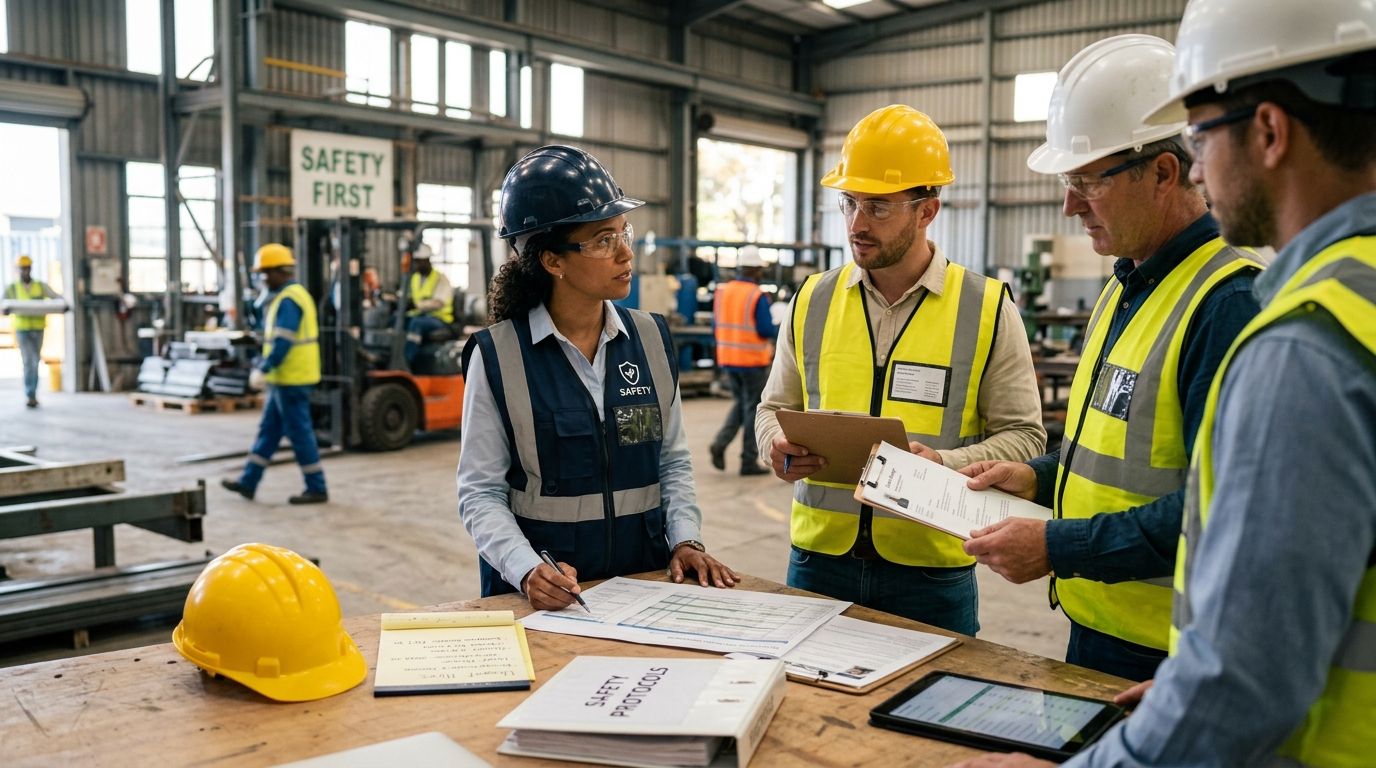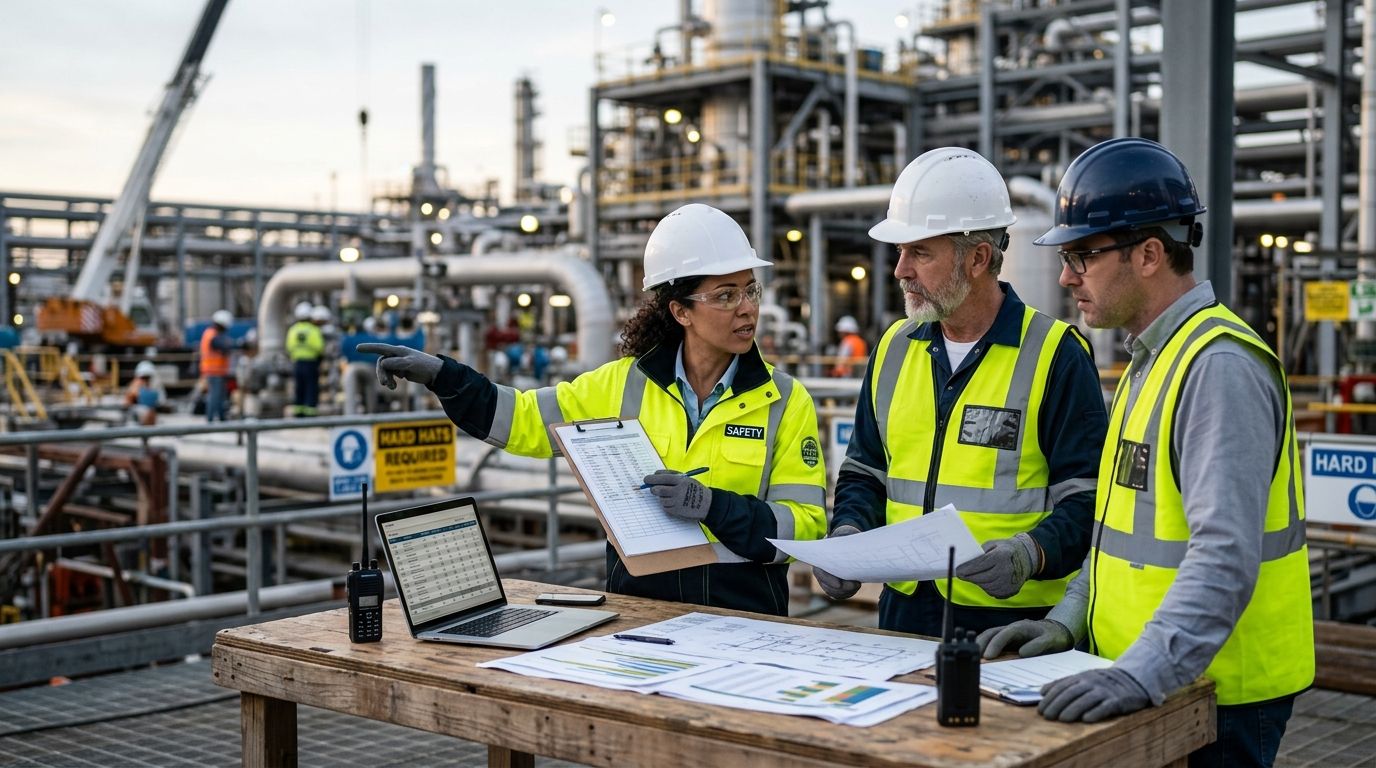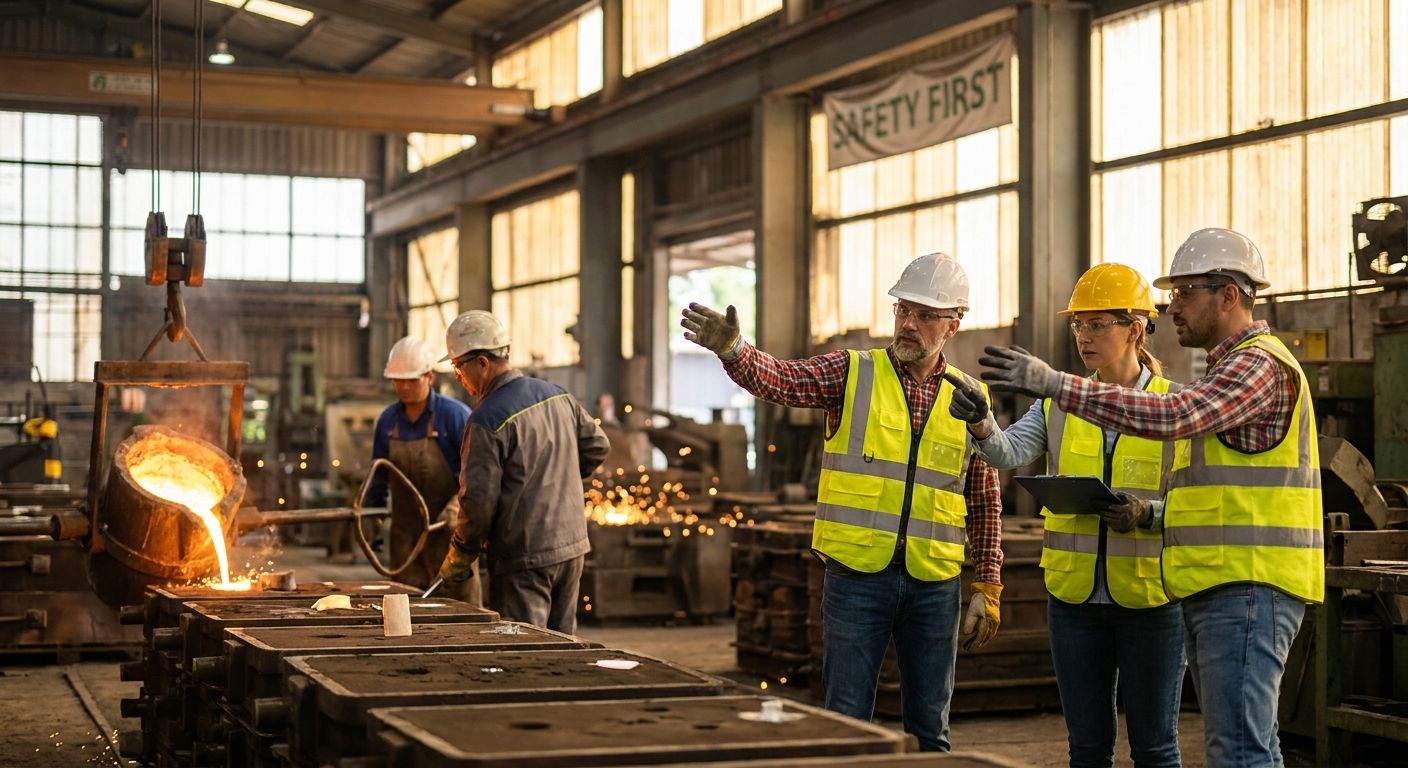
Safety staffing for foundries and metal casting plants means placing EHS professionals who already understand pour-side burns, respirable silica, and furnace-adjacent PPE, not general industrial labor wearing a hard hat. A foundry's hazard profile is different from a warehouse or a typical construction site: molten metal handling, sand systems, shakeout floors, and grinding/finishing departments each carry exposures a generalist agency rarely screens for before placement.
- Safety staffing for foundries and metal casting works best when the agency vets foundry-specific certifications, not generic industrial safety credentials.
- ResponsAble Staffing places temporary, project-based, and direct-hire EHS professionals for pour lines, shakeout, and finishing departments nationwide.
- Furnace relines and planned outages create short surge windows, so plan staffing 60-90 days ahead, not four days ahead.
- OSHA's respirable crystalline silica standard sets an 8-hour TWA of 50 micrograms per cubic meter, and any foundry safety hire should know that number cold.
Why safety staffing matters for foundries and metal casting
A foundry floor stacks hazards that rarely coexist elsewhere: thermal burns at the pour line, respirable particulate at the sand system, high noise at shakeout, and mechanical hazards wherever cranes move ladles overhead. Staffing decisions made under deadline pressure, ahead of a furnace reline or a seasonal production surge, tend to default to whoever's available, not whoever's qualified for that specific station.
The hazard mix in a foundry looks closer to what steel mills and metal fabrication plants deal with than to a typical manufacturing line: high heat, heavy metal handling, and particulate exposure in the same shift. Plants that staff foundry safety roles the same way they'd staff a distribution center end up with EHS professionals who need weeks of ramp-up before they can actually cover a pour deck. In 2026, that ramp-up time is the difference between a safe outage and a recordable incident during it.
Map your foundry's high-risk stations before you post a job
Start by walking the floor, not the job board. A station-by-station hazard map tells you what kind of safety professional you actually need, before a requisition goes out.
- Tag each station by hazard type: thermal, respirable particulate, noise, mechanical
- Note existing engineering controls (local exhaust ventilation, sound enclosures) versus gaps
- List the PPE required per station: face shields, FR clothing, respirators, hearing protection
- Flag stations that need dedicated safety coverage during turnarounds or relines
- Identify which stations require confined space entry protocols (ladle pits, cupola access)
Verify certifications specific to metal casting
Generic "OSHA 30" on a resume tells you almost nothing about whether someone has worked a pour line. Foundries need candidates whose certifications map to the specific hazards on your floor.
- Confined space entry or attendant certification for ladle pits and cupolas
- Respiratory protection fit-test documentation less than 12 months old
- Hot work and fire watch training for pour-side coverage
- Hearing conservation program experience for shakeout and finishing departments
- OSHA 30 for General Industry specifically, not the Construction track
This is where a specialized partner earns its keep. ResponsAble Staffing pre-screens candidates against foundry-specific hazard profiles before they ever reach your interview, which cuts the vetting cycle that generalist agencies push onto your plant.
Build a bench ahead of furnace relines and planned outages
Furnace relines and planned outages create short, predictable surge windows. Staffing them at the last minute means paying rush rates for whoever's left.
- Forecast outage dates 60-90 days out and flag headcount gaps early
- Cross-train temporary safety staff on shakeout and finishing hazards before the outage window opens
- Use project-based placements to cover multi-week reline windows without adding permanent headcount
- Confirm availability of confined space attendants before the reline schedule locks
Screen for heat stress and PPE compliance experience
A candidate's resume can list "heat stress program experience" without any hands-on history managing one. Ask direct questions before you place anyone near a pour deck.
- Ask candidates to walk through a heat stress incident they managed start to finish
- Confirm hands-on experience running FR clothing compliance audits
- Verify experience with heat acclimatization protocols for new hires in their first two weeks
- Check whether they've adjusted work-rest cycles based on WBGT readings
Track the agency's own safety incident record before you sign
An agency's placement history tells you more about risk than its sales pitch does. Before signing with any safety staffing agency, ask for the numbers, not the assurances.
- Request the agency's OSHA recordable rate for placed workers
- Ask exactly how incidents on assignment get reported and investigated
- Check references from plants with a similar hazard profile to yours
- Confirm how quickly the agency replaces a worker who doesn't meet your site's standards
The full breakdown of what to ask lives in how to evaluate a staffing agency's safety incident track record — read it before you sign anything for a 2026 outage.
Get a foundry safety staffing plan
Talk through your next outage or surge window before you post a single job.
Structure temp-to-hire paths for your best EHS candidates
Some temporary placements deserve a permanent seat. Set the terms before you're deciding under pressure.
- Define a 60-90 day evaluation window before conversion
- Set clear conversion fee terms upfront, not after you've already decided to hire
- Align pay rate progression with documented performance milestones
- Confirm the candidate's willingness to relocate or commit long-term before converting
Onboard fast without skipping documentation
Speed and paperwork aren't opposites. Foundries that onboard fast still confirm every credential before day one on the floor.
- Pre-load safety data sheets and site-specific hazard training before arrival
- Confirm PPE fit and respirator fit-test on day one, not week two
- Assign a buddy from the permanent safety team for the first two weeks
- Verify certifications against your original hazard map, not a generic checklist
Comparing staffing approaches for foundries and metal casting
| Staffing approach | Best for | Key limitation |
|---|---|---|
| In-house recruiting | Plants with steady, predictable headcount | Too slow to fill surge roles ahead of a reline |
| General industrial staffing agency | Broad labor pools, non-safety roles | Rarely vets foundry-specific hazard certifications |
| Specialized safety staffing agency | Foundries needing pre-vetted EHS professionals fast | Needs a clear scope upfront to price project-based work accurately |
| Direct hire only | Long-term safety leadership roles | Leaves surge and turnaround coverage gaps unaddressed |
A specialized safety staffing agency wins for foundries running planned outages and seasonal production surges in 2026 — general staffing pools simply don't carry the pre-vetted bench for pour-side and shakeout hazard coverage.
Common mistakes foundries make with safety staffing
- Posting foundry safety roles with a generic "industrial safety" job description that never mentions pour-side burns, silica, or confined space entry
- Accepting "OSHA 30" as proof of readiness without checking whether it's the General Industry or Construction version
- Under-forecasting reline staffing needs, then paying rush rates for whoever answers the phone
- Skipping hearing conservation program verification for high-noise shakeout and finishing departments
- Converting a temporary safety hire to full-time without a documented evaluation period
FAQ
What's the best safety staffing approach for foundries and metal casting plants in 2026?
A specialized safety staffing agency that pre-vets candidates against foundry-specific hazards, pour-side burns, respirable silica, confined space entry, works best. General industrial staffing pools rarely screen for those exposures before placement.
Is direct hire or temporary safety staffing better for a furnace reline?
Temporary or project-based placements work better for furnace relines because the surge window is short and predictable. Direct hire makes sense for permanent safety leadership roles, not a multi-week outage.
How much does foundry safety staffing cost compared to general industrial staffing?
Cost varies by role, certification level, and assignment length, so ask for a project-based quote rather than comparing generic day rates. A candidate who already knows confined space and hot work protocols costs less overall by cutting onboarding time.
What certifications should a foundry safety hire have?
Confined space entry or attendant certification, current respiratory fit-test documentation, hot work and fire watch training, and OSHA 30 for General Industry specifically. Hearing conservation program experience matters for shakeout and finishing departments.
How do you staff for a planned furnace reline or outage?
Forecast the outage 60-90 days out, build a bench of pre-vetted temporary safety staff, and cross-train them on shakeout and finishing hazards before the window opens. Waiting until the reline date is set usually means paying rush rates.
Can a staffing agency place someone with confined space attendant experience for ladle pits?
Yes, specialized safety staffing agencies maintain benches of candidates with confined space entry and attendant certification specific to industrial sites like ladle pits and cupolas. Verify the certification date before placement, not after.
Is silica exposure regulated differently for foundries?
No, foundries fall under OSHA's respirable crystalline silica standard for General Industry, which sets an 8-hour time-weighted average of 50 micrograms per cubic meter. Sand systems and shakeout floors are the stations most likely to trigger exposure monitoring.
How fast can safety staffing fill a foundry surge position?
Fill speed depends on how far ahead the agency built its bench for your hazard profile. Plants that forecast surge needs 60-90 days out fill faster than plants that wait until the outage date is confirmed.
One last thing
OSHA extended the respirable crystalline silica standard to General Industry, including foundries, and the 50 microgram-per-cubic-meter, 8-hour TWA limit still catches plants off guard in 2026 because sand system and shakeout exposure gets treated as an afterthought during hiring. Ask every foundry safety candidate one direct question before you place them: can they describe how exposure monitoring works at a sand system station, not just recite the PEL number. The ones who can are the ones worth the seasonal surge rate.