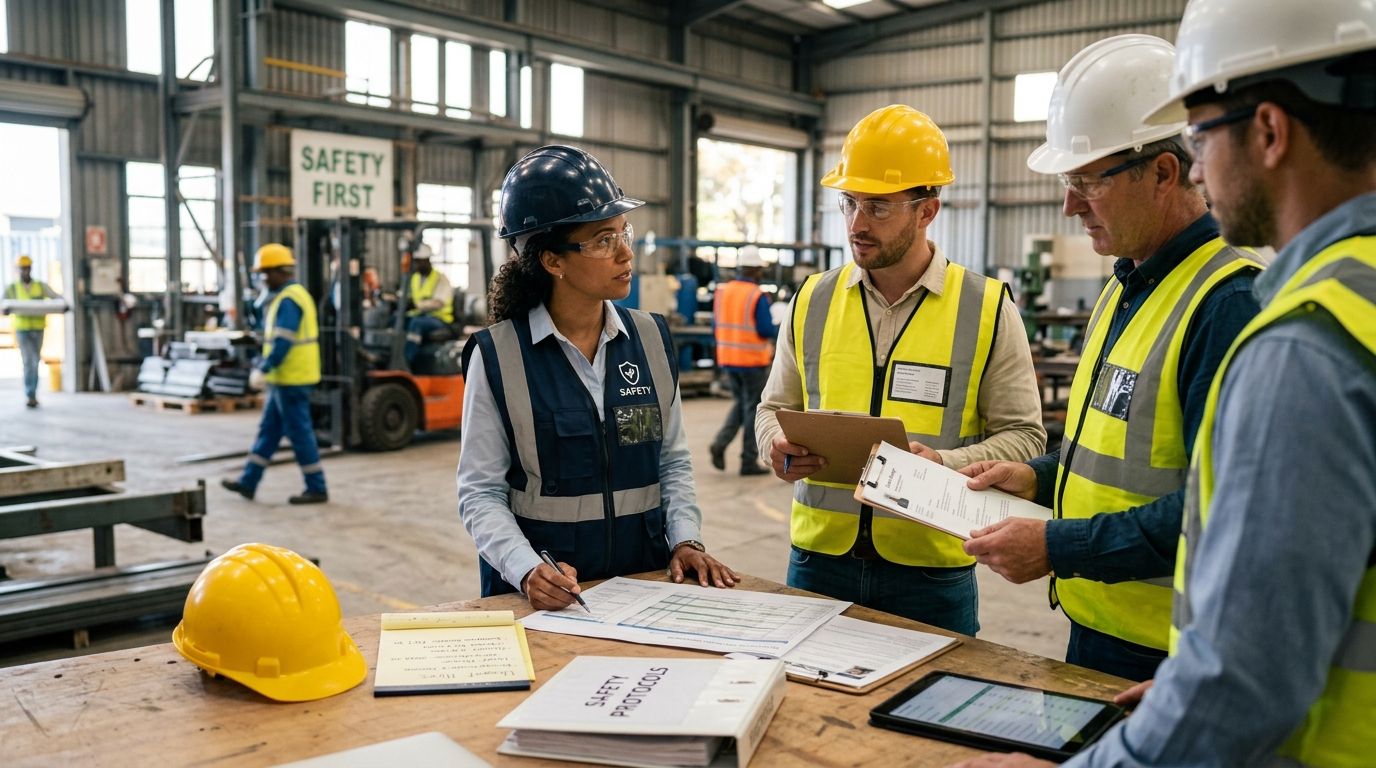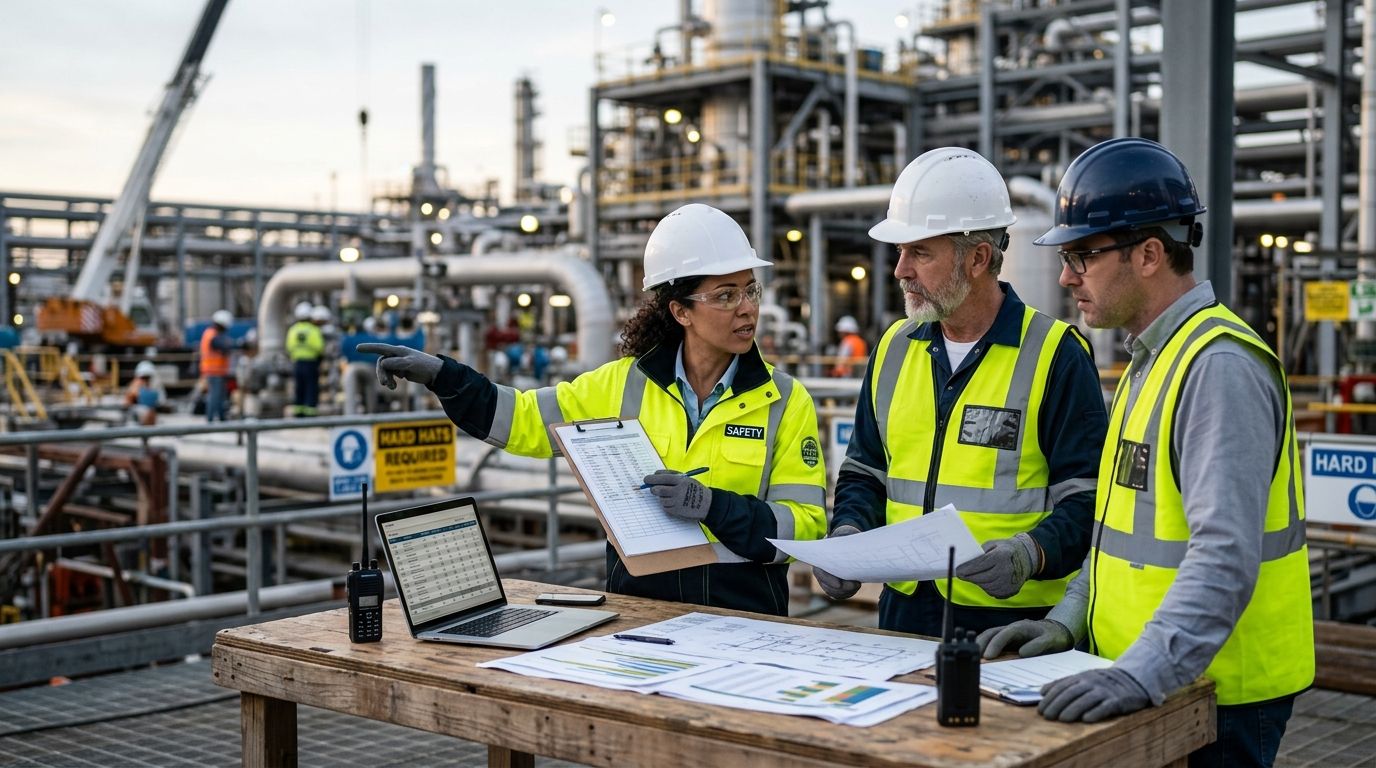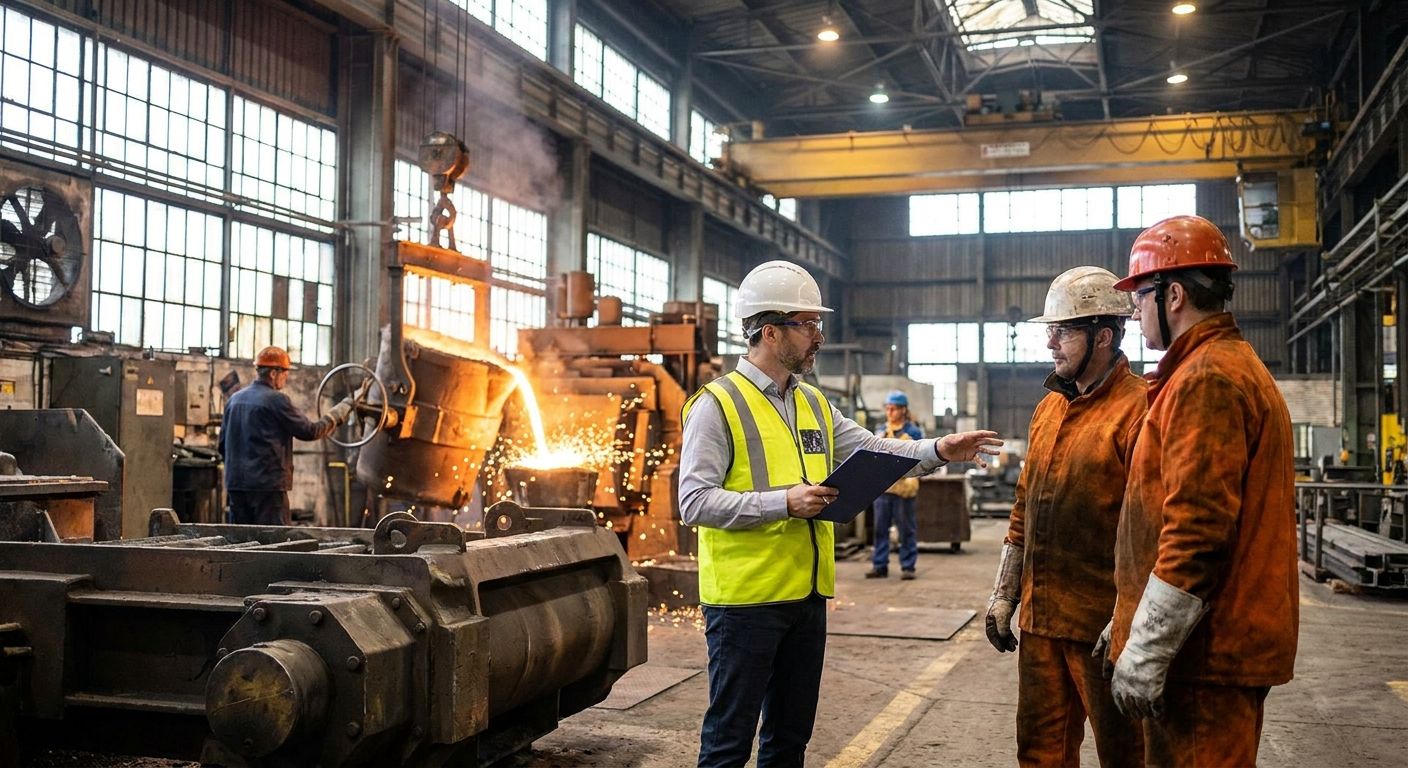
Safety staffing for steel mills and metal fabrication means placing OSHA-certified safety professionals — confined space attendants, fire watch, industrial hygienists, EHS managers — into melt shops, rolling mills, and fab shops on a temporary, project-based, or direct-hire basis, with the goal of cutting recordable incidents and keeping furnace turnarounds staffed without gaps. Molten metal, overhead crane loads, hot work, and continuous 24/7 shift schedules make this segment's staffing needs sharper and less forgiving than general manufacturing.
- Safety staffing for steel mills works best when temp coverage is booked 60-90 days before a furnace reline or planned outage, not after.
- General staffing agencies rarely verify confined space, hot work, or crane signal certifications — verify independently before placement.
- Direct hire fits permanent safety manager and director roles; contract and contract-to-hire fit turnarounds and surge periods.
- ResponsAble Staffing places vetted industrial safety professionals nationwide for construction, manufacturing, and high-risk plant environments including steel and metal fab.
Why this matters for steel mills and metal fabrication
A steel mill or metal fab shop doesn't get a slow season to fix a safety staffing gap. Melt shops run continuous, furnace relines are scheduled months in advance, and a missing confined space attendant or fire watch on a hot work permit stops the job — not just slows it.
General labor staffing agencies are built to fill headcount fast, not to verify whether a candidate's confined space entry certification is current or whether they've ever worked a hot work permit near a furnace. A safety staffing agency built around EHS recruiting checks that before the person shows up on site, which is the entire difference in a segment where the cost of a bad placement is an incident, not just a missed deadline.
Metal fabrication shops carry a related but distinct problem: shorter project cycles, more welding and cutting hot work, and higher turnover on the floor. Both segments need the same discipline — verified certifications, fast onboarding, and a bench that's ready before the surge hits, not after.
Update your role map before you post a single requisition
Steel mills and fab shops need a different mix of safety roles than a typical manufacturing plant, and posting a generic "safety technician" job description misses most of what the floor actually requires.
- Confined space attendants for ductwork, tanks, and pit access
- Fire watch and hot work permit monitors for welding and cutting bays
- Site safety managers or coordinators for melt shop and rolling mill floors
- Industrial hygienists for noise, fume, and heat stress monitoring
- Crane and rigging safety personnel for overhead load operations
- Radiation safety officers where weld inspection uses NDT/radiography
Verify certifications before anyone steps on the melt shop floor
The manual, free way to do this is to request documentation directly from every candidate and cross-check training provider records yourself — OSHA outreach cards, confined space entry/attendant/rescue certificates, and hot work permit training all have paper trails. It's slow, but it works if your team has the bandwidth.
The faster path is a staffing partner that already verifies this before a resume reaches you. How to evaluate a staffing agency's safety incident track record walks through the specific questions to ask any agency claiming to vet safety professionals.
- OSHA 10 or OSHA 30 (general industry or construction, matched to the role)
- Confined space entry, attendant, and rescue certification
- Hot work and fire watch permit training
- Crane signal person or rigger qualification
- Current respirator fit test and audiometric records
- Documented incident history with prior employers, not just a resume line
Build a surge bench before the turnaround is announced
Furnace relines and planned outages are scheduled 60-90 days out in most steel operations, which means the safety staffing plan should be locked before the maintenance schedule is finalized, not after crews are already on site.
- Pre-qualify a bench of 5-10 EHS professionals before the outage window opens
- Stagger contract lengths so coverage doesn't cliff-edge at the same date
- Reserve per diem or travel-ready staff for out-of-market surges
- Confirm 24/7 coverage plans in writing, including night shift premiums
- Build a backup list in case a primary placement falls through mid-turnaround
The mills that avoid turnaround injuries book their safety bench before the outage is public, not after the schedule slips.
Choose the right mix of contract, contract-to-hire, and direct hire
Not every safety role on a steel mill floor needs the same hiring model, and mixing them up wastes budget on either end.
- Use straight contract staffing for a defined reline or turnarounds window
- Use contract-to-hire when you're not sure yet if the role justifies permanent headcount
- Use direct hire recruiting for safety director or safety manager roles you plan to keep for years
- Use MSP/VMS-managed staffing if you're coordinating safety coverage across multiple mill sites
Onboard temporary safety professionals fast without cutting corners
The manual way is a one-day site orientation packet your HR team builds and updates each time regulations or equipment change. It works, but it's labor-intensive to keep current for every temp placement.
A faster route is working with a staffing partner that pre-loads site orientation and PPE sizing before day one. How to onboard temporary safety professionals quickly covers the checklist most mills skip under time pressure.
- Site-specific hazard briefing before floor access is granted
- PPE and hot-work gear issued and fitted on day one
- Badge and site access provisioned ahead of the first shift
- A buddy shift paired with a senior operator for the first 1-2 days
- A walkthrough of the plant's lockout/tagout and confined space program
Budget safety staffing across a multi-year production plan
Steel mill safety budgets that treat every year the same miss the spikes that actually drive cost — planned outages, expansions, and seasonal production surges.
- Separate line items for baseline coverage versus planned outage surges
- Build in escalation clauses for turnarounds that run long
- Account for union or prevailing wage requirements where they apply
- Reserve a night-shift premium line for 24/7 melt operations
- Revisit the plan annually against actual 2026 production and outage schedules
Build your steel mill safety bench
Get vetted, certified safety professionals for your next turnaround or fab shop expansion.
Comparing your options for steel mill and metal fab safety staffing
| Option | Best For | Key Limitation |
|---|---|---|
| Contract/temp safety staffing | Furnace relines, planned outages, surge coverage | Requires lead time to vet certifications for niche roles |
| Direct hire recruiting | Permanent safety manager or director roles | Longer search cycle than a contract fill |
| MSP/VMS-managed program | Multi-site steel groups coordinating several vendors | Adds an administrative layer smaller shops don't need |
| General staffing agencies (non-specialized) | Filling general labor, not safety-critical roles | Rarely verify confined space or hot work certifications |
| In-house safety hiring | Mills with an established HR/EHS recruiting function | Slow to scale for sudden turnaround or expansion needs |
Verdict: contract and contract-to-hire safety staffing is the right call for turnaround coverage; direct hire is the right call for permanent safety leadership. Neither works well pulled from a general labor pool.
Common mistakes steel mills and fab shops make
- Treating safety staffing like general labor staffing and mixing up welders with confined space attendants
- Booking turnaround safety coverage after the outage schedule is already public instead of 60-90 days ahead
- Trusting a resume's certification claim instead of verifying it independently
- Ignoring bilingual coverage needs on floors with non-English-speaking crews
- Leaving night shift and 24/7 melt operation coverage as an afterthought instead of a planned line item
FAQ
What is safety staffing for steel mills?
Safety staffing for steel mills places vetted EHS professionals — confined space attendants, fire watch, industrial hygienists, site safety managers — into mill and fab shop operations on a temporary, project, or direct-hire basis. The goal is coverage without gaps during continuous production and planned outages.
How much lead time do you need before a furnace turnaround?
Most steel operations schedule furnace relines 60-90 days ahead, and safety staffing should be locked in that same window. Waiting until the outage is public usually means competing for the same pool of certified professionals every other mill is chasing.
Is contract or direct hire better for a steel mill safety manager?
Direct hire fits a permanent safety manager or director role you plan to keep for years. Contract or contract-to-hire fits a defined turnaround window or a role you're not yet ready to commit headcount to.
What certifications should a confined space attendant have at a metal fab shop?
A confined space attendant should carry confined space entry, attendant, and rescue certification along with OSHA 10 or 30 training matched to the site's industry classification. Verify these directly rather than relying on a resume line.
How fast can a staffing agency place fire watch or hot work certified workers?
Placement speed depends on how deep the agency's pre-qualified bench already is for hot work and fire watch roles. A staffing partner with a standing pool of vetted candidates fills faster than one starting the search from scratch after the request comes in.
Do steel mills need bilingual safety staff?
Many steel mill and metal fab floors run crews with non-English-speaking workers, and a safety briefing that doesn't reach everyone on shift leaves a real gap. Bilingual coverage should be part of the staffing plan, not an exception request.
How is safety staffing for steel mills different from general manufacturing staffing?
Steel mills add molten metal handling, overhead crane loads, hot work permits, and continuous 24/7 operations that general manufacturing plants don't carry at the same intensity. The certification and onboarding bar is higher, and the cost of a bad placement is an incident, not just a missed shift.
What does ResponsAble Staffing verify before placing a safety professional?
ResponsAble Staffing verifies safety certifications and incident history before a candidate is placed with a client, rather than relying on resume claims alone. That verification step is what separates specialized safety staffing from general labor staffing.
One last thing
The mills that get burned in 2026 aren't the ones without a safety budget — they're the ones who booked their turnaround staffing the same week the outage went public and got whoever was left in the pool. Book the bench before the schedule is announced, verify every certification independently, and treat night shift coverage as a line item, not an afterthought.