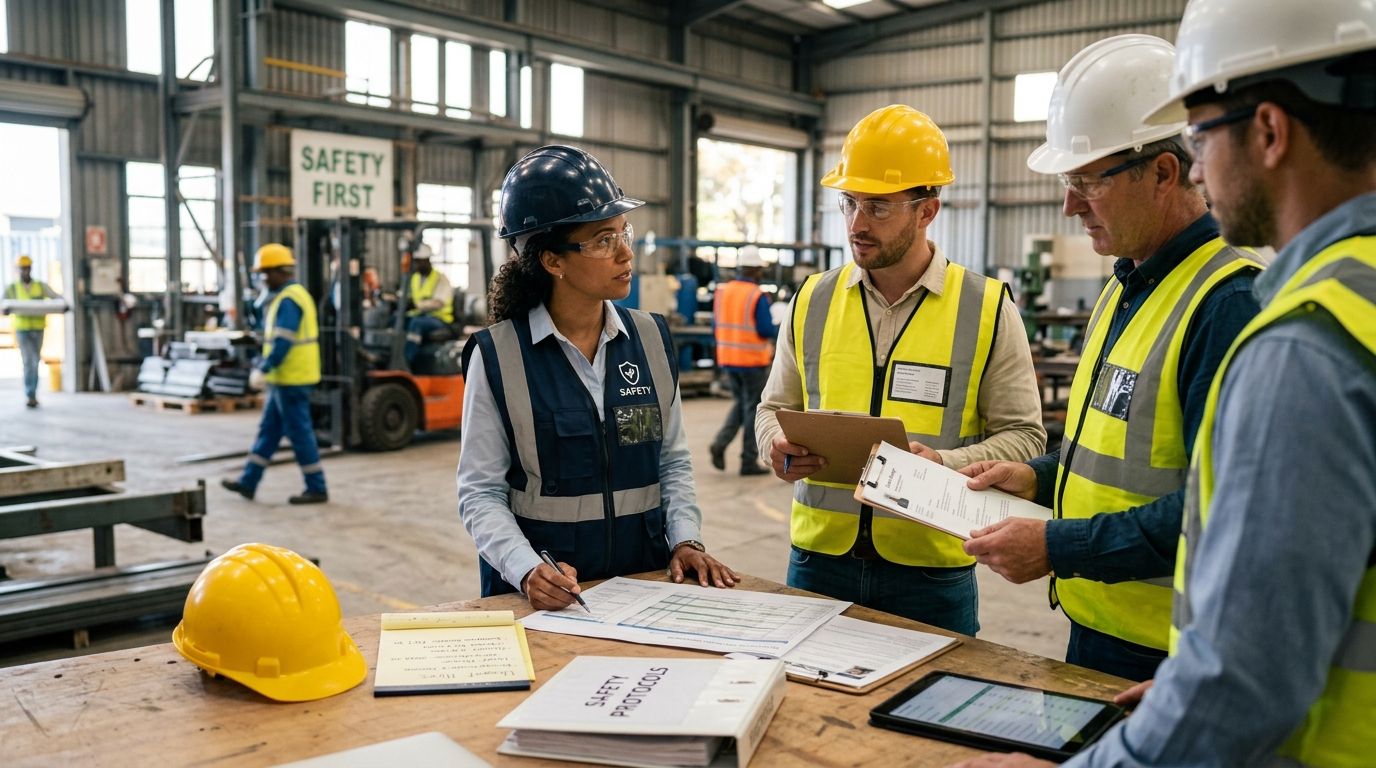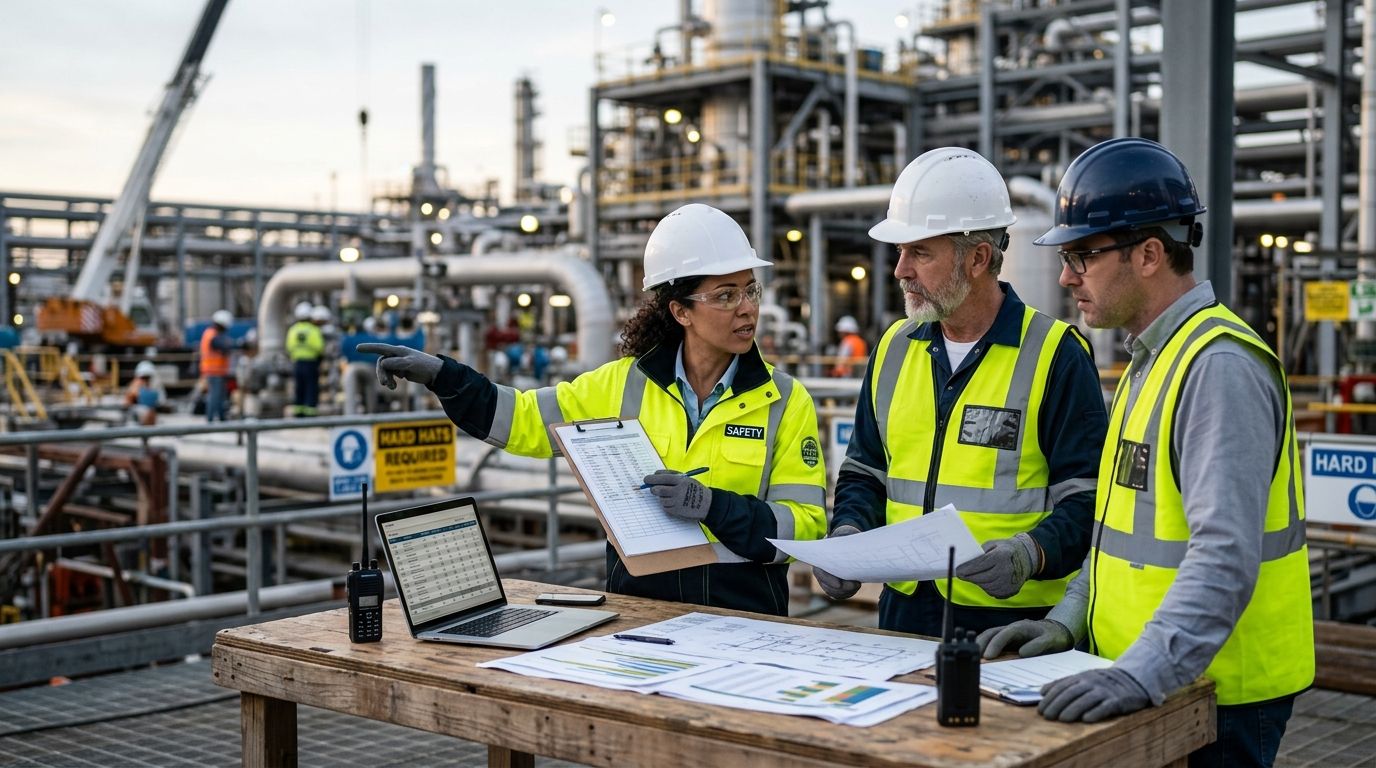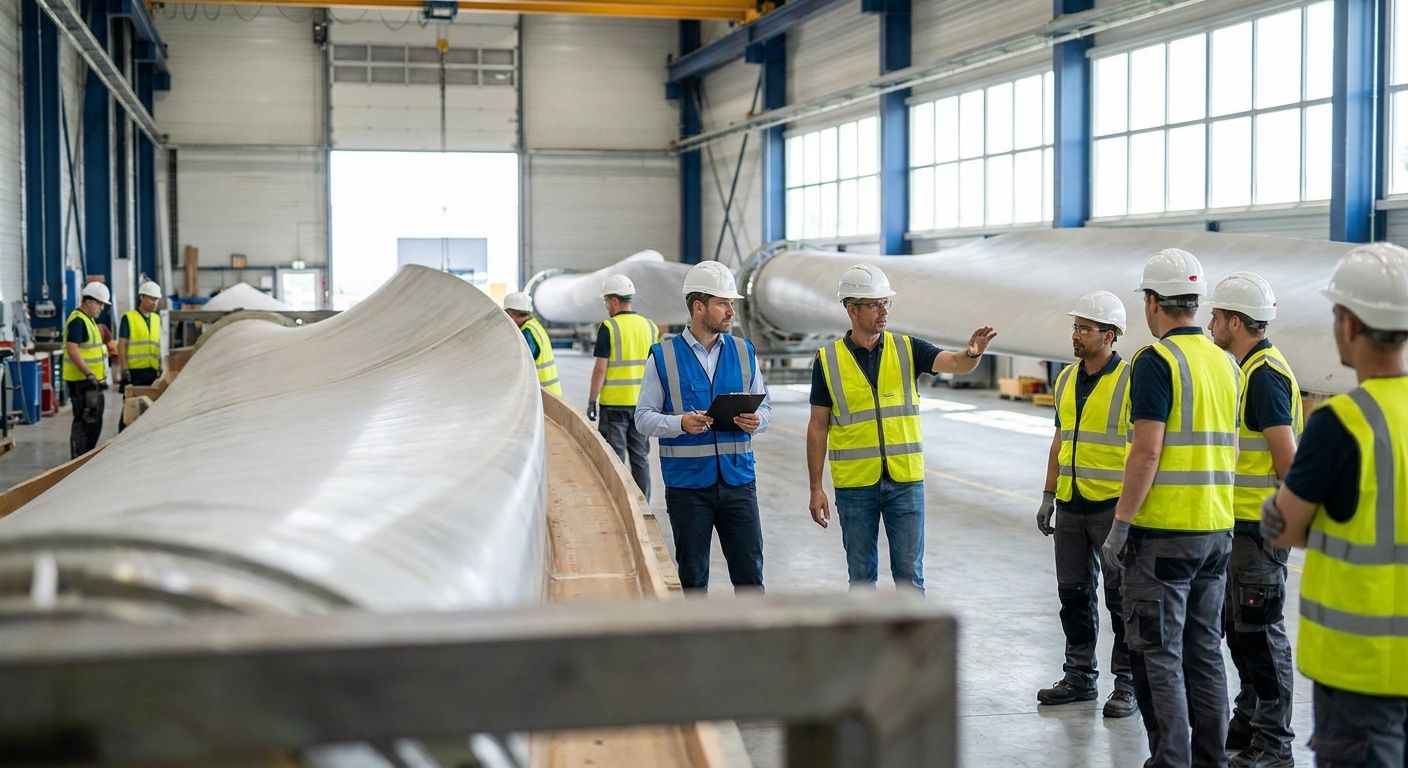
Wind turbine blade manufacturing safety staffing places EHS professionals who understand composite resin exposure, confined-space blade root entry, and continuous-cure production schedules into blade plants that can't afford a training gap on the line.
- Safety staffing for wind turbine blade manufacturing needs EHS pros trained in composites, styrene exposure, and confined-space blade root entry.
- ResponsAble Staffing places temp, project-based, and direct-hire safety coordinators pre-vetted for composite manufacturing hazards.
- OSHA sets the 8-hour styrene exposure limit at 100 ppm - generalist manufacturing safety hires rarely know this standard.
- Direct hire fits permanent safety manager roles; temp staffing covers line launches and shift gaps faster.
- Verify confined space and HAZWOPER certifications before day one, not after the first incident.
Why safety staffing matters for wind turbine blade manufacturing plants
Blade manufacturing stacks two hazard categories that most general industrial safety hires have never handled together: chemical exposure from resin infusion and open-mold layup, and confined-space entry into blade root and spar cap cavities that can run longer than a football field on today's utility-scale turbines. A safety coordinator who's only worked automotive stamping or food processing lines doesn't automatically know how to write a confined-space rescue plan for a tapered composite shell or how to set up real-time styrene monitoring during a resin pour.
Blade plants are also competing for the same thin pool of EHS talent as wind and solar energy construction crews, pipeline turnarounds, and EV battery gigafactories. In 2026, that competition means a job posting with generic manufacturing safety language sits unfilled while composites-specific candidates go to whoever moves faster and screens smarter. ResponsAble Staffing treats blade manufacturing as its own hiring lane precisely because the hazard profile doesn't map cleanly onto standard manufacturing safety recruiting.
How to staff safety roles for a wind turbine blade plant
Map the plant's hazard profile before you post a job
A job description written from a template misses the hazards that actually drive incidents on a blade line. Start with a hazard inventory specific to your process, not a generic manufacturing checklist.
- Resin, gelcoat, and composite dust exposure during layup and finishing
- Confined-space entry into blade root and spar cap sections
- Overhead crane and rigging risk during mold turning and blade transport
- Repetitive-motion injury risk at hand layup, sanding, and grinding stations
- Fire and combustible-dust risk near solvent, epoxy, and catalyst storage
Write the job posting around composites experience, not generic safety credentials
A posting that says "3+ years manufacturing safety experience" pulls candidates who have never handled a styrene exposure log or a confined-space entry permit for a curved composite structure.
- Require documented composites or fiberglass manufacturing safety experience
- List exposure monitoring experience for styrene or other VOCs by name
- Specify confined space entry supervisor or attendant certification, not just "OSHA trained"
- State the shift pattern up front since curing cycles often run continuous
- Name whether the role covers root-to-tip production or nacelle and hub assembly
Verify certifications and OSHA training before the first interview
Don't take a resume line at face value. Certification numbers get verified with issuing bodies, or by an agency that already does this for every candidate it submits.
- OSHA 30-Hour General Industry, current within the plant's required window
- Confined space entry, attendant, or supervisor certification
- HAZWOPER 40 if the role touches solvent or catalyst handling
- Forklift and overhead crane operator certification
- First Aid/CPR/AED current within the last two years
The manual path here is calling training providers one by one to confirm a certificate is real and current. Agencies that specialize in industrial EHS placement build this verification into the submission process, which is why it's worth learning how to evaluate a staffing agency's safety incident track record before you sign a vendor agreement.
Build coverage for 24/7 or multi-shift production
Resin curing and mold cycles rarely stop for a shift change, so safety coverage can't either.
- Staff a dedicated night-shift safety coordinator instead of rotating day staff onto nights
- Cross-train first aid and EMT-certified staff across every shift, not just days
- Plan weekend coverage around curing cycles, not around the standard five-day week
- Budget differently than a standard 40-hour manufacturing role - blade plant safety staffing often runs shift differentials
Decide between temporary, project-based, and direct hire for the role
The right staffing model depends on why the seat is open, not on what's cheapest this quarter.
- Temporary/contract: fastest fill for medical leave, line ramp-up, or seasonal surge
- Project-based: right for a new blade line launch, plant startup, or pre-certification audit push
- Direct hire: the move for a permanent safety manager or coordinator seat that needs institutional knowledge over years, not months
Learn more about direct hire recruiting for safety managers if the seat you're filling is permanent rather than a bridge.
Talk through your blade plant staffing gap
Get matched with pre-vetted composites and confined-space EHS candidates.
Onboard new safety hires without slowing the line
A slow onboarding process costs production days. A rushed one costs an incident.
- Pre-load site-specific PPE and complete respirator fit testing before day one
- Run a paired shadow shift with the outgoing or incumbent safety coordinator
- Log a styrene exposure monitoring baseline before the hire works a solo shift
- Confirm confined-space rescue plan sign-off before assigning blade root entry duties
- Set 30/60/90 check-ins tied to line output and near-miss reporting, not just injury counts
Comparing staffing options for blade manufacturing plants
| Option | Best for | Key limitation |
|---|---|---|
| Temporary/contract safety staffing | Line ramp-ups, medical leave coverage, quick gaps | Needs plant-specific PPE and confined-space onboarding each placement |
| Project-based safety staffing | New line launch, plant startup, audit prep | Ends when the project scope ends; doesn't build long-term institutional knowledge |
| Direct hire recruiting | Permanent safety coordinator or manager roles | Recruiting cycle runs longer than a temp placement |
| General job board posting | Budget-limited searches with time to screen | No pre-vetting of certifications or composites experience before the interview |
Verdict: temp and project-based staffing solve the near-term coverage problem; direct hire is the right call once the seat becomes permanent infrastructure for the plant, not a bridge.
Common mistakes wind turbine blade manufacturers make
- Treating composite manufacturing safety experience as interchangeable with general industrial safety experience - styrene exposure and confined blade cavities require different training than a stamping plant or assembly line.
- Understaffing night and weekend shifts because curing cycles run continuous, leaving real production hours without dedicated safety coverage.
- Assigning confined-space attendants to blade root work without verifying the rescue plan is current for that specific mold configuration.
- Hiring against injury-rate metrics alone while ignoring near-miss reporting culture at grinding and finishing stations, where most early signals show up.
- Underestimating certification renewal lead time, then discovering a contract safety hire's confined-space card lapses mid-project.
FAQ
What certifications should a wind turbine blade plant safety hire have in 2026?
Look for OSHA 30-Hour General Industry, confined space entry/attendant/supervisor certification, and current First Aid/CPR/AED. If the role touches solvent or catalyst handling, HAZWOPER 40 should be on the resume too.
Is temporary or direct hire staffing better for a new blade manufacturing line?
Temporary or project-based staffing fits a new line launch because the need is time-bound to startup and ramp-up. Direct hire fits once the seat becomes a permanent part of plant operations.
What OSHA standards apply to composite and fiberglass blade manufacturing?
The OSHA styrene permissible exposure limit is 100 ppm as an 8-hour time-weighted average under 29 CFR 1910.1000 Table Z-1. Confined space entry into blade root and spar cap sections also falls under 29 CFR 1910.146.
Does ResponsAble Staffing verify confined space certifications before placement?
Certification verification is part of vetting any candidate submitted for confined-space work, since a lapsed or unverified card creates liability on day one of a placement.
Can safety staffing agencies cover night shift blade production lines?
Yes - blade plants running continuous curing cycles need dedicated night-shift safety coordinators rather than day staff stretched across shifts, and temp or project-based staffing can fill that gap quickly.
How is safety staffing for blade manufacturing different from general industrial manufacturing?
Blade manufacturing combines chemical exposure from resin and gelcoat with confined-space entry into long composite cavities, a combination general manufacturing safety training rarely covers together.
How long does it take to fill a safety coordinator role at a blade plant?
Time to fill depends on whether the search is temp, project-based, or direct hire - temp and project roles typically move faster because the candidate pool for short-term composites work is broader than for permanent leadership seats.
How much composites experience should a safety hire have before starting solo shifts?
A new hire should complete a paired shadow shift and log a baseline exposure reading before working solo, regardless of prior composites experience, since every plant's mold configuration and ventilation setup differs.
One last thing
The styrene exposure limit hasn't changed in decades, but the blades getting built in 2026 are longer and the cure cycles tighter, which means the margin for a safety coordinator who doesn't know composites is smaller than it was five years ago. The plants that staff this role right treat it as a specialized composites-and-confined-space hire, not a generic manufacturing safety fill - that one distinction is the difference between a smooth ramp-up and a production line that keeps tripping over its own safety gaps.