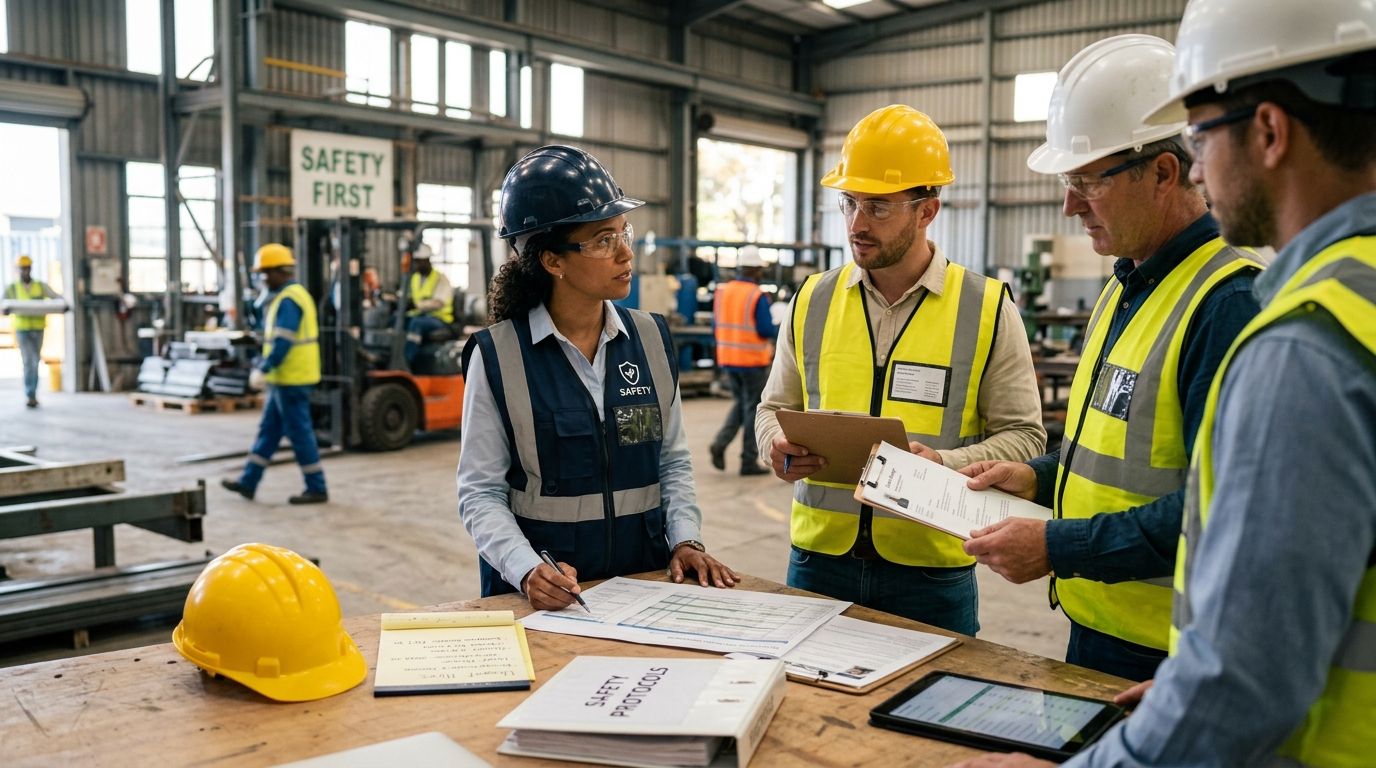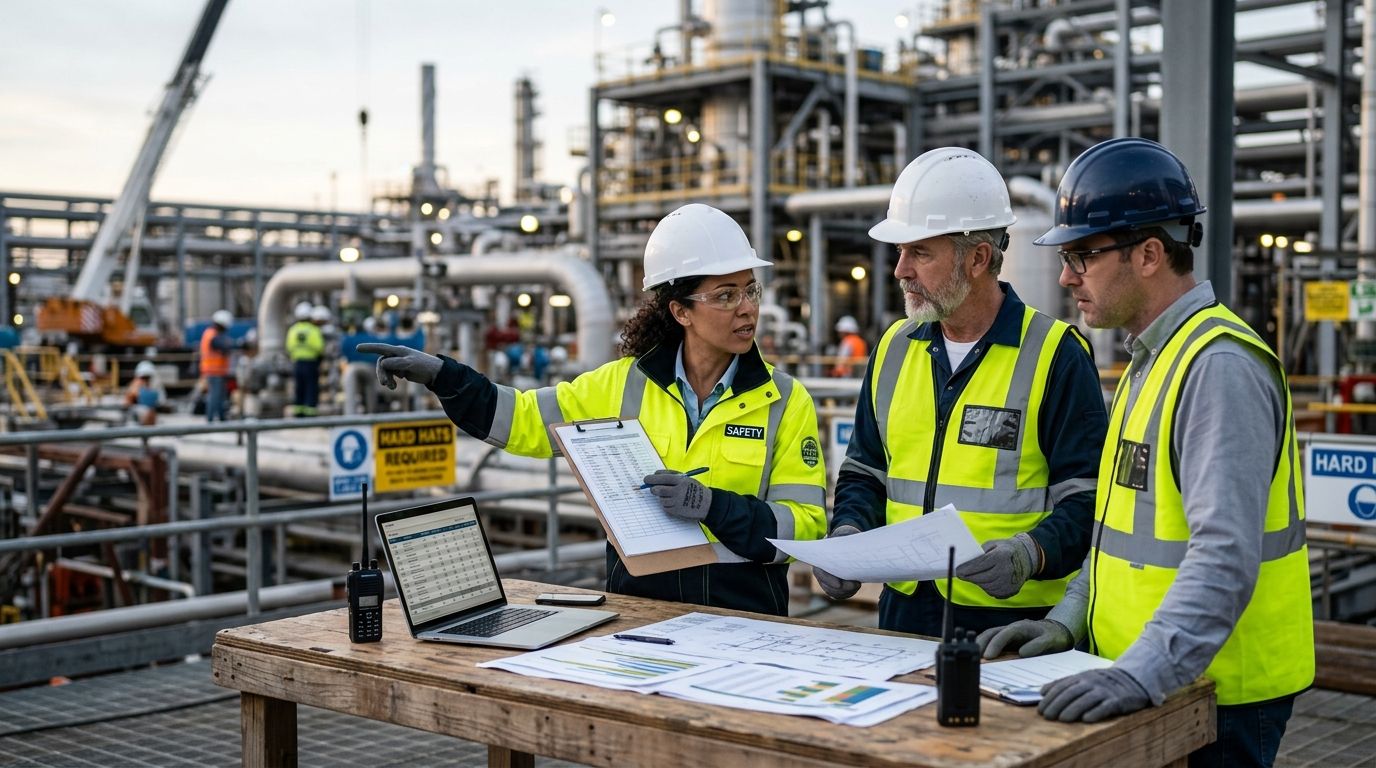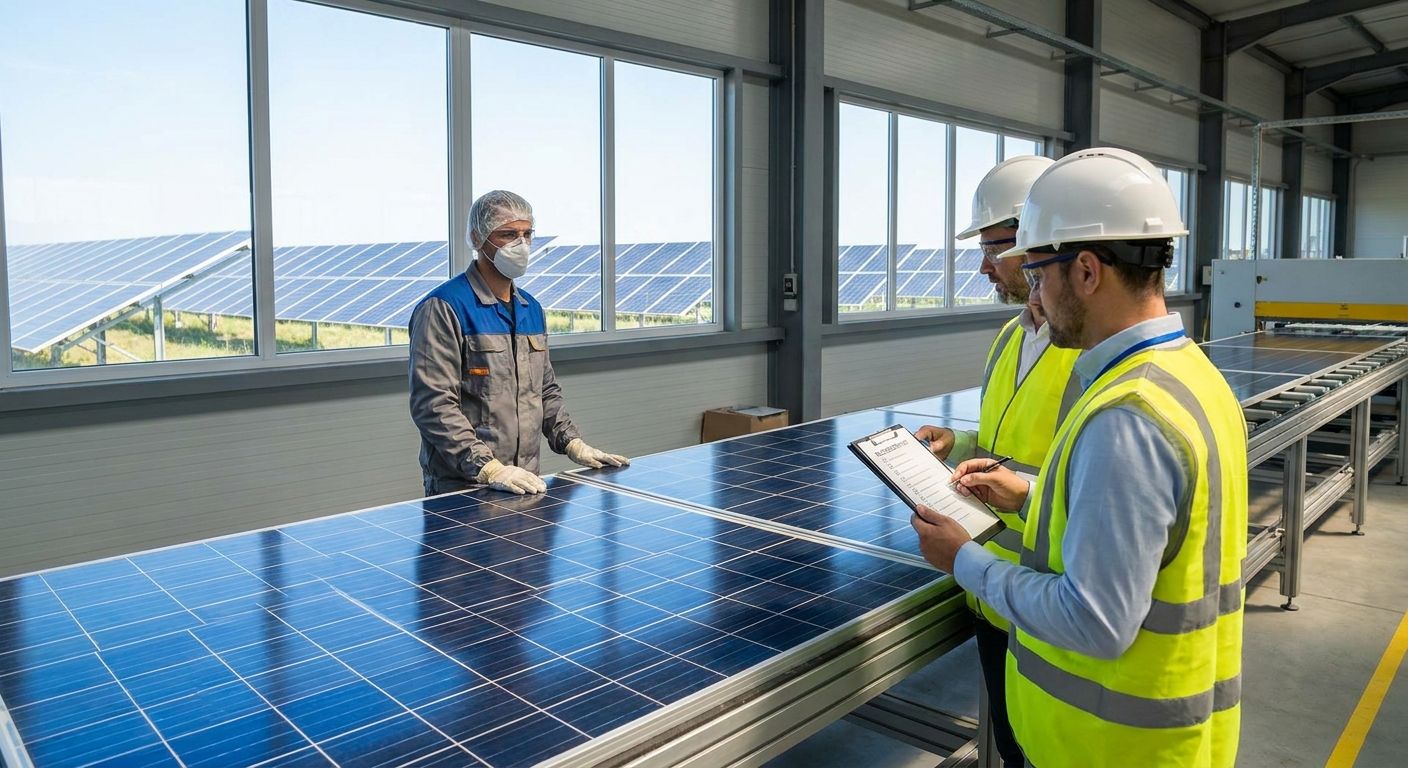
Solar panel manufacturing plants ramping up production in 2026 are running into the same wall: there aren't enough safety professionals who've actually worked a PV line, and generalist staffing agencies keep sending candidates who've never touched a chemical bath or a confined space tank. Safety staffing for solar panel manufacturing has to account for hazards that overlap construction, general industry, and semiconductor-style processing all at once.
- Solar and wind-specific EHS staffing beats generalist agencies on safety staffing for solar panel manufacturing in 2026 — Buy.
- Direct hire fits permanent plant safety managers; contract-to-hire covers the construction-to-operations ramp without adding headcount overhead.
- Confined space attendant staffing matters most around wafer-cleaning tanks and chemical storage areas generalist recruiters routinely miss.
- Verify HAZWOPER, confined space, and fall protection certifications before any candidate reaches the plant floor.
Why this matters
Solar panel manufacturing plants aren't standard factories. Wafer and cell production runs chemical baths, some involving hydrofluoric acid and silane, alongside cleanroom protocols, high-voltage inverter testing, and lamination lines that involve hot work. New builds in 2026 often run construction crews and production crews on the same site simultaneously, which means the safety team has to hold both general industry and construction standards at once.
That combination is rare. Most staffing agencies have a bench of generalist safety techs who can run a hard-hat area but have never verified a chemical handling permit or staffed a confined space entry team around a wafer-cleaning tank. Getting safety staffing for solar panel manufacturing wrong doesn't just slow down a plant startup — it puts an OSHA citation, or worse, an injury, on the table during the exact quarter a plant is trying to hit production targets.
Who this is for
This guide is for plant managers, EHS directors, and HR leaders at solar cell and module manufacturers who are staffing up for a new fab, expanding an existing line, or covering a surge in 2026 production. You need certified safety staff — industrial hygienists, confined space attendants, fire watch, safety managers — on a contract, contract-to-hire, or direct hire basis, and you need them fast enough to keep the build-out on schedule.
What to look for in safety staffing for solar panel manufacturing
PV-specific chemical handling knowledge
A safety hire who's only worked general manufacturing won't recognize the hazard profile of a wafer-cleaning line or a wet-bench chemical process. Ask any staffing partner directly whether their candidates have documented HAZWOPER training (40 hours initial, 8 hours annual refresher) and experience with acid and gas handling protocols specific to PV or semiconductor environments.
Confined space and fall protection certification depth
Solar plants have chemical storage tanks, ventilation systems, and elevated platforms that all trigger confined space and fall protection rules. OSHA's fall protection trigger height in general industry is 4 feet — lower than the 6-foot construction standard most safety staff are used to. A candidate who only knows the construction threshold will misjudge risk on the plant floor.
Speed to fill for fast-track plant startups
Solar manufacturing capacity is scaling fast in 2026, and plant timelines rarely wait for a six-week recruiting cycle. A staffing partner needs an active bench of vetted, credentialed safety professionals ready to deploy within days, not weeks, when a startup date moves up.
Contract flexibility across build-out phases
A new plant needs different safety staffing at ground-breaking than it does once production lines are running. Look for a partner who can flex from temporary construction-phase safety techs to a permanent safety manager without forcing you to restart the search from scratch.
Verified incident track record
Any agency can claim their candidates are safe. Few can show you documented placement history without incidents on comparable industrial sites. Push for references and actual data before signing a contract — not a sales pitch.
Top picks for solar panel manufacturing safety staffing
The industry-native pick: Solar and wind energy construction safety staffing Built for crews who understand PV-specific hazards from the ground-breaking phase through commissioning. One detail that matters: candidates sourced through this track already carry HAZWOPER and fall protection certs relevant to panel and inverter installation work, not just generic construction safety. Buy if you're staffing a plant build-out from the ground up in 2026.
The hybrid-site pick: EHS recruiting for battery storage and grid projects Many solar manufacturing plants now co-locate battery storage lines or feed directly into grid interconnection projects. This staffing track covers the electrical and storage-specific hazard training a pure solar hire might not have. Consider it when your plant scope includes storage or grid-tie work alongside panel production.
The compliance-critical pick: Confined space attendant staffing for industrial sites Wafer-cleaning tanks, chemical storage vaults, and ventilation shafts all require a dedicated confined space attendant on permit-required entries. This is the role generalist agencies most often understaff or skip certifying properly. Buy for any plant running wet-chemical processing lines.
The permanent-hire pick: direct hire recruiting for safety managers Once a plant moves past construction and into steady-state production, a permanent safety manager on staff — rather than a rotating contract hire — gives you continuity on OSHA recordkeeping, incident investigation, and audit prep. Consider locking in a direct hire once your production schedule stabilizes past the first two quarters.
What to avoid
- Generalist agencies with no PV or semiconductor background. A resume that says "manufacturing safety" without chemical handling or cleanroom experience is a red flag for a solar cell or module line.
- Agencies that can't produce certification proof before day one. If a staffing partner can't hand you HAZWOPER cards, confined space training records, and fall protection certs before a candidate steps on site, you're taking on liability, not reducing it.
- Bill rates well below market. A rate that looks too good usually means the candidate pool behind it is thin on verified credentials. Cheap safety staffing for a solar panel manufacturing plant is expensive the day something goes wrong.
Staff your solar plant's safety team
Get vetted EHS professionals matched to your plant's build-out phase.
Verdict comparison
| Staffing approach | Best for | Contract type | Verdict |
|---|---|---|---|
| Solar and wind energy construction staffing | Ground-up plant build-outs | Temp, contract-to-hire | Buy |
| EHS recruiting for battery storage and grid projects | Hybrid solar-plus-storage sites | Contract, project-based | Consider |
| Confined space attendant staffing | Wet-chemical processing lines | Temp, per-shift | Buy |
| Direct hire safety managers | Steady-state production plants | Direct hire | Consider |
| Generalist manufacturing staffing | Non-hazard back-office roles only | N/A | Skip |
ResponsAble Staffing built its safety staffing model around this exact gap — matching certified EHS professionals to the specific hazard profile of the plant, not just the job title on the requisition. That's the difference between safety staffing that checks a box and safety staffing for solar panel manufacturing that actually holds up during an audit.
FAQ
What is safety staffing for solar panel manufacturing?
It's the practice of sourcing certified EHS professionals — safety managers, industrial hygienists, confined space attendants, fire watch — specifically for the chemical, electrical, and construction hazards found in solar cell and module plants. In 2026, this increasingly means staff who understand both wet-chemical processing and construction-phase safety on the same site.
Is direct hire or contract staffing better for a new solar plant?
Contract or contract-to-hire staffing fits the construction and ramp-up phase, while direct hire works better once production stabilizes. Most new solar plants in 2026 use a mix: contract safety techs during build-out, then a direct hire safety manager once operations are steady.
What certifications should a solar plant safety hire have?
Look for HAZWOPER (40-hour initial, 8-hour annual refresher), confined space entry and attendant training, and fall protection certification. Roles tied to chemical handling should also show documented experience with acid or gas processes specific to PV manufacturing.
How much does safety staffing cost for a manufacturing plant in 2026?
Cost varies by role, certification level, contract length, and geographic market, so there's no single flat rate. Get a quote based on your specific staffing needs rather than comparing generic bill rates across agencies.
Can a staffing agency provide confined space attendants for chemical tanks?
Yes, but only agencies with a dedicated confined space staffing track should be trusted for this role. Confined space attendant staffing for industrial sites requires verified permit-required entry training, not general safety experience.
How fast can a staffing agency fill an EHS manager role?
Fill speed depends on the agency's active bench of pre-vetted candidates. A partner built for fast-track plant startups should be able to deploy qualified safety staff within days rather than the weeks a standard recruiting cycle takes.
Do solar manufacturing plants need bilingual safety staff?
Many do, since production floor crews at solar manufacturing plants are often multilingual. Bilingual safety staff reduce miscommunication risk during safety briefings and incident response, which matters most during high-turnover build-out phases.
What's the difference between EHS staffing for solar construction and solar manufacturing?
Construction staffing covers ground-breaking through commissioning and focuses on fall protection, electrical, and general site hazards. Manufacturing staffing covers ongoing production and adds chemical handling, cleanroom protocol, and confined space requirements specific to running the line.
One last thing
The plants that struggle most in 2026 aren't the ones with the most complex chemistry — they're the ones that staffed their safety team the same way they'd staff a warehouse. Face the staffing gap directly, match the hire to the hazard, and the plant moves forward instead of stalling out on an avoidable citation.