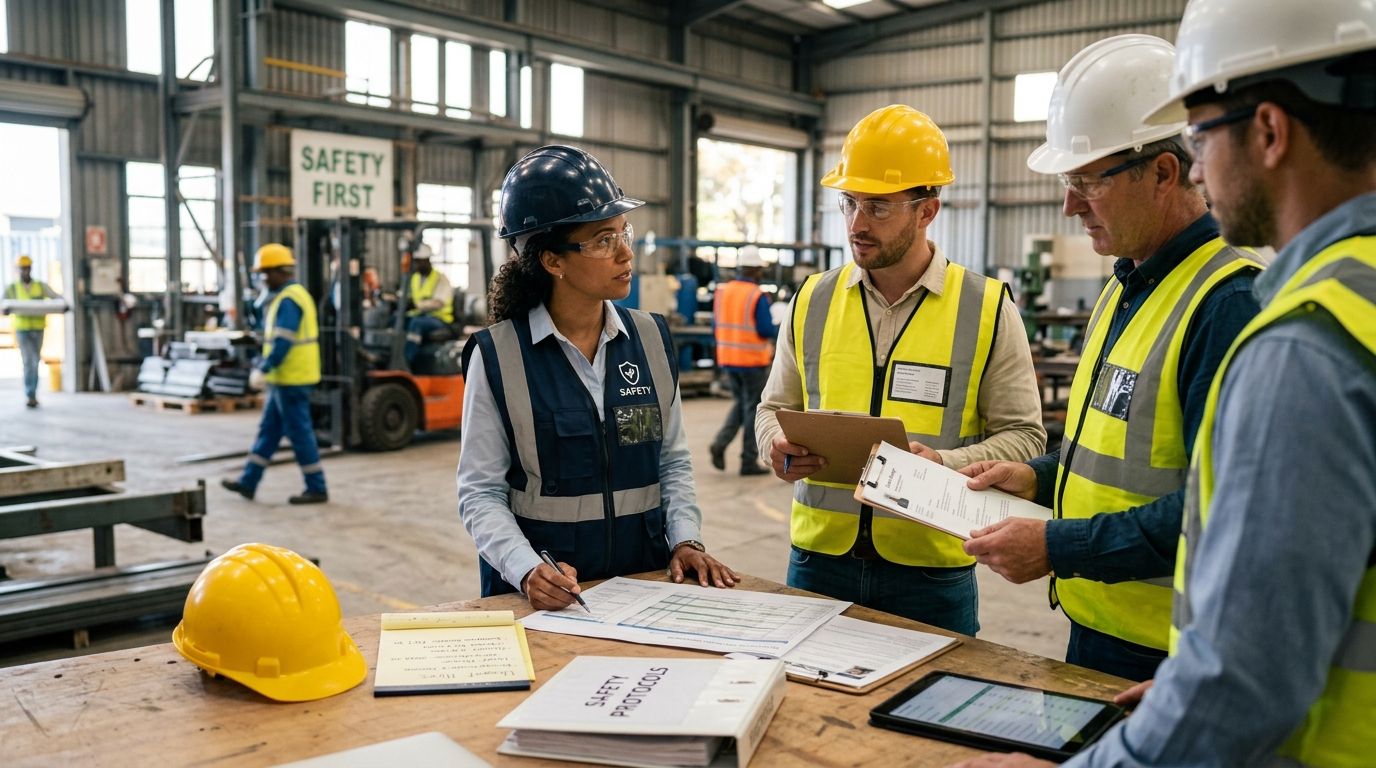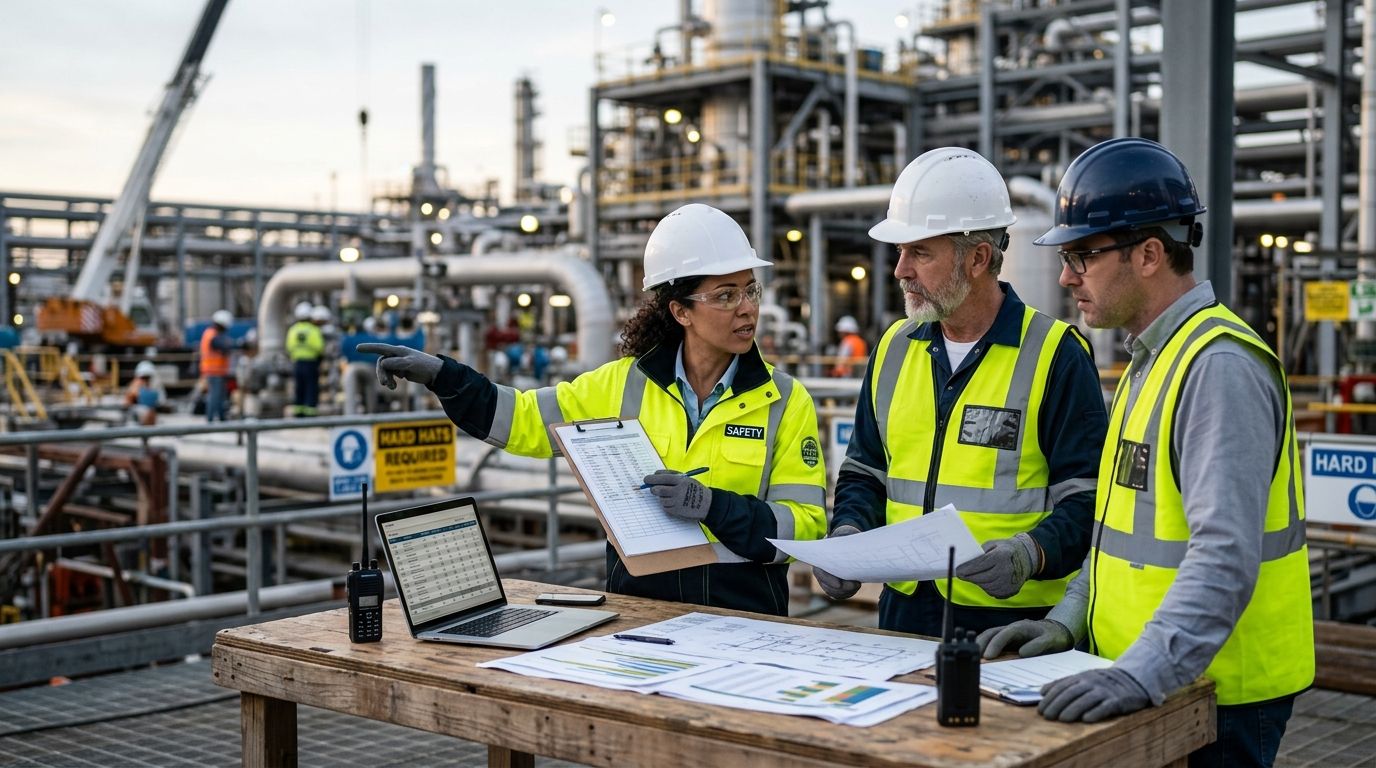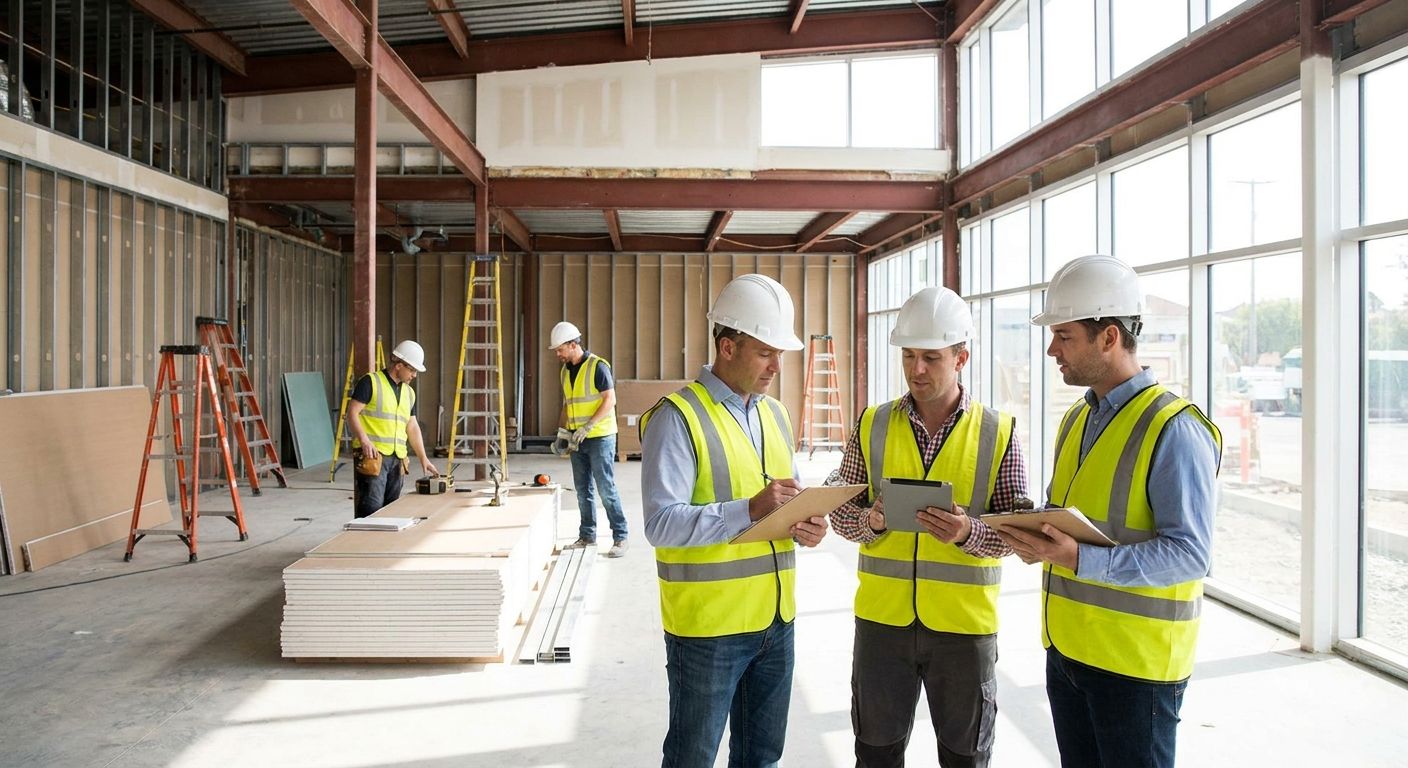
Retail and commercial build-out projects run on compressed timelines and shared spaces with the public, which means safety staffing has to move as fast as the schedule and cover risks a typical jobsite never sees. This guide breaks down what to look for, which roles matter most, and which shortcuts cost you an OSHA citation or a blown store-opening date.
- Retail build out safety staffing works best when the provider can staff a fire watch attendant within 48 hours for hot work near occupied tenants.
- Night and weekend coverage matters more than daytime headcount because most mall and strip-center build-outs happen after hours in 2026.
- Fast-track construction safety staffing beats generalist temp labor when your opening date is fixed and can't slip.
- Site Safety Managers with retail/tenant-improvement experience are the anchor hire — skip generalist industrial-only candidates.
- ResponsAble Staffing places vetted safety professionals for retail and commercial build-outs on temp, project, and direct-hire terms.
Why this matters
A retail build-out isn't a greenfield jobsite. You're welding and cutting ductwork ten feet from an active nail salon, running electrical after mall hours, and coordinating three trades in a space with a hard lease deadline. General contractors who staff safety like it's a standard commercial job get burned twice: once when OSHA shows up during hot work near occupied units, and again when the opening date slips because nobody had a qualified fire watch on site.
ResponsAble Staffing places safety professionals specifically for these fast-moving, occupied-space builds, and the difference between a generalist staffing vendor and one that understands retail build-out risk shows up in the first 30 days, not the last week.
Who this is for
This guide is for general contractors, retail construction project managers, and facility teams handling store build-outs, tenant improvements, restaurant conversions, or mall and strip-center renovations where the space stays partially occupied during construction. If your project has a hard opening date tied to a lease, a franchise launch, or a seasonal retail calendar, the staffing decisions below apply directly to you.
What to look for in retail build-out safety staffing
Retail-specific hazard experience
A safety professional who's only worked ground-up industrial sites doesn't automatically know how to manage hot work near an occupied storefront or coordinate egress around active foot traffic. Ask for candidates with tenant-improvement or occupied-building experience specifically, not just years in construction generally.
Fast turnaround on short-notice requests
Retail build-outs get compressed constantly — permit delays eat into the schedule and the safety hire becomes the last piece to fill before crews mobilize. A provider that can't place a qualified fire watch attendant or safety coordinator inside 48 to 72 hours will cost you calendar days you don't have in 2026's tight commercial construction market.
OSHA compliance paperwork ready before day one
Hot work permits, confined space documentation, and training records need to exist before the torch lights, not after an inspector asks for them. Vet whether candidates arrive with current OSHA 10/30 credentials and hot-work certifications already in hand.
Flexibility for night and weekend shifts
Most retail and mall build-outs happen after business hours or on weekends to avoid disrupting neighboring tenants and shoppers. A staffing partner built around standard 7-to-3 industrial shifts will struggle to keep coverage consistent across a 9 p.m. to 5 a.m. build schedule.
Multi-site and multi-state coverage
Retail chains frequently build out three, five, or ten locations in the same quarter across different states. A provider with a single regional bench forces you to source a new vendor every time you cross a state line.
Need safety staffing for a build-out?
Get vetted safety professionals matched to your project timeline.
Top picks: the roles that matter most
The anchor hire: Site Safety Manager or Coordinator
Every retail build-out needs one person accountable for daily safety walkthroughs, subcontractor coordination, and OSHA documentation. Look for a coordinator with at least one prior tenant-improvement or occupied-space project on their resume, not just new-construction background. Verdict: Buy — skip this role and every other hire on the project inherits the compliance risk.
The hot-work safeguard: Fire Watch Attendant
Retail build-outs run constant welding, cutting, and soldering for HVAC, electrical, and plumbing tie-ins, almost always near flammable finish materials and occupied units. A dedicated fire watch staffing for hot work permits arrangement keeps a trained attendant on site for the full duration of hot work plus the required 30-minute post-work watch. Verdict: Buy — this is the single most common OSHA gap on occupied-building build-outs.
The schedule saver: Fast-track safety support
When a lease deadline forces a 30-day build into 18 days, generalist temp labor can't keep pace with the documentation and inspection cadence required. Fast-track construction safety staffing puts a safety professional on site who's used to compressed schedules and can flex between compliance duties and crew coordination without a ramp-up period. Verdict: Buy for any project with a fixed opening date; Skip if your timeline has real flexibility — a standard hire covers it.
The after-hours cover: Night and weekend safety staffing
If your build happens between store-close and store-open, daytime-only safety coverage leaves the riskiest hours unmonitored. Night shift safety staffing for 24/7 operations matches crews to the actual work window instead of forcing a schedule mismatch. Verdict: Buy for any build running after 6 p.m.; Hold if your entire scope happens during normal business hours in a vacant space.
What to avoid
- Generalist temp labor with no OSHA 10/30 in hand. It looks like a cost saver until the first inspection, then it's a stop-work order.
- A staffing vendor with a one-region bench when your build-out is part of a multi-location rollout — you'll be re-sourcing every few weeks instead of scaling with one partner.
- Skipping a dedicated fire watch to save a headcount. A general laborer standing near the torch does not satisfy OSHA's hot work watch requirement, and citations here are common on occupied-building projects.
Verdict comparison
| Role | Best for | Key requirement | Verdict |
|---|---|---|---|
| Site Safety Manager/Coordinator | Every retail build-out | Tenant-improvement experience | Buy |
| Fire Watch Attendant | Any hot work near occupied space | Current hot-work cert | Buy |
| Fast-track safety support | Compressed opening dates | Fast onboarding, no ramp-up | Buy for fixed deadlines |
| Night/weekend safety coverage | After-hours or 24/7 builds | Shift flexibility | Buy for after-hours work |
Bottom line: if your retail build-out touches an occupied space, has hot work, or runs on a fixed opening date, you need at minimum a Site Safety Manager and a fire watch attendant on the schedule from day one — everything else scales with the project's speed and hours.
FAQ
What is retail build out safety staffing?
Retail build out safety staffing is the placement of certified safety professionals — site safety managers, fire watch attendants, and safety coordinators — on store, restaurant, and commercial tenant-improvement projects. It covers temporary, project-based, and direct-hire arrangements matched to the project's timeline and hours.
How fast can a fire watch attendant be placed for a retail project?
Providers experienced in fast-track construction safety staffing can typically place a qualified fire watch attendant within 48 to 72 hours of a request. Shorter turnaround depends on candidate availability in your metro area and whether hot-work certification is already current.
Do retail build-outs require a full-time site safety manager?
Most retail build-outs with active hot work, multiple subcontractors, or an occupied surrounding space need a dedicated site safety manager on site daily in 2026. Smaller single-trade projects in vacant space may only need periodic safety consulting instead.
Is night shift safety staffing more expensive than daytime coverage?
Night and weekend safety staffing typically carries a shift differential above standard daytime rates, but it costs less than the delay caused by leaving after-hours work unmonitored. Most mall and strip-center build-outs run entirely after business hours, making night coverage a scheduling necessity rather than an upsell.
What OSHA documentation should a retail build-out safety hire bring?
At minimum, expect current OSHA 10 or OSHA 30 certification, hot-work permit training, and any confined-space or electrical safety credentials relevant to the scope. Documentation should be ready before the first hot-work permit is pulled, not requested after an inspection.
Can one staffing partner cover a multi-location retail rollout?
A provider with multi-state coverage can staff several simultaneous retail build-outs without forcing a new vendor search at each location. This matters most for chains opening three or more stores in the same quarter.
What's the biggest safety staffing mistake on retail build-outs?
The most common mistake is skipping a dedicated fire watch attendant during hot work near occupied tenants, which is a direct OSHA violation. The second most common is staffing daytime-only coverage for a project that actually runs on a night or weekend schedule.
One last thing
The build-outs that go smoothly in 2026 aren't the ones with the biggest crew — they're the ones where the Site Safety Manager and fire watch attendant were locked in before the general contractor even finalized the trade schedule. Staff the safety roles first, and the rest of the schedule has room to move when it inevitably needs to.