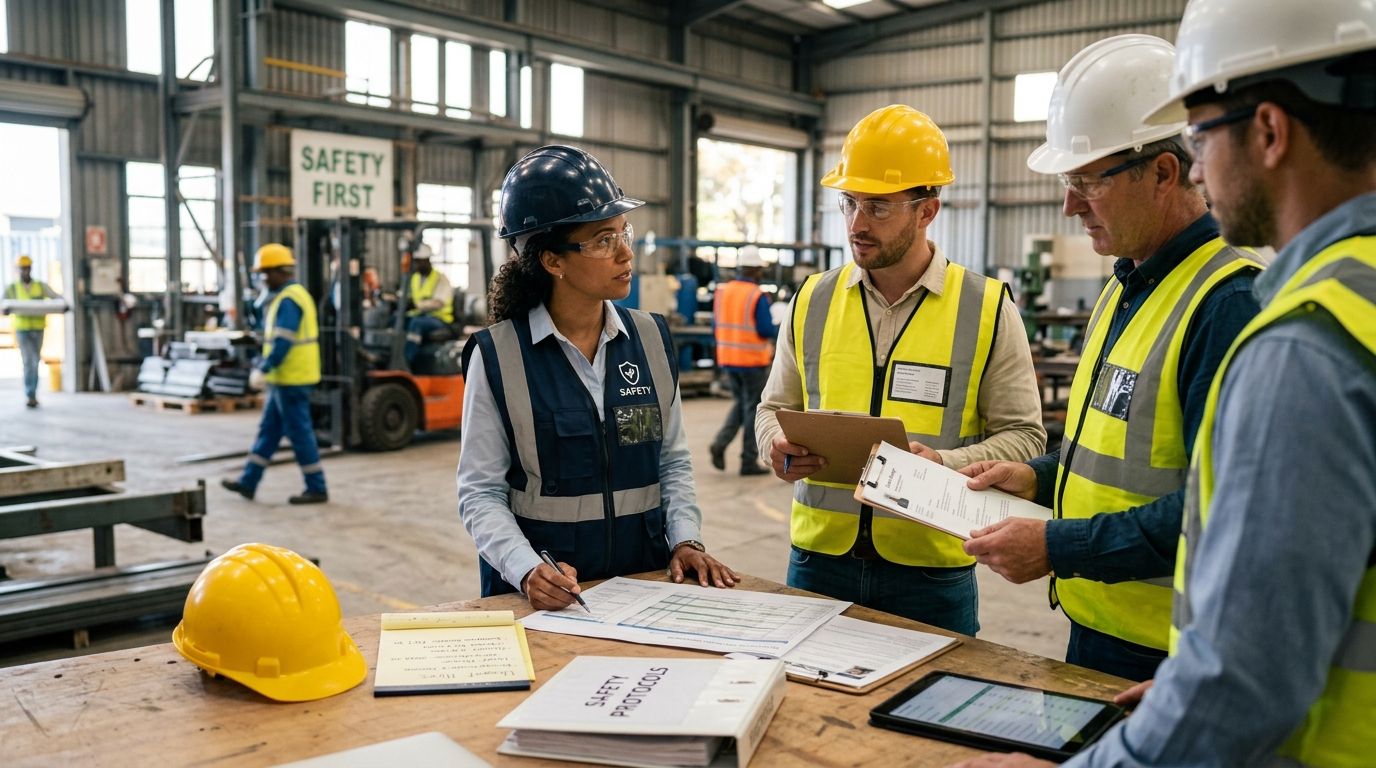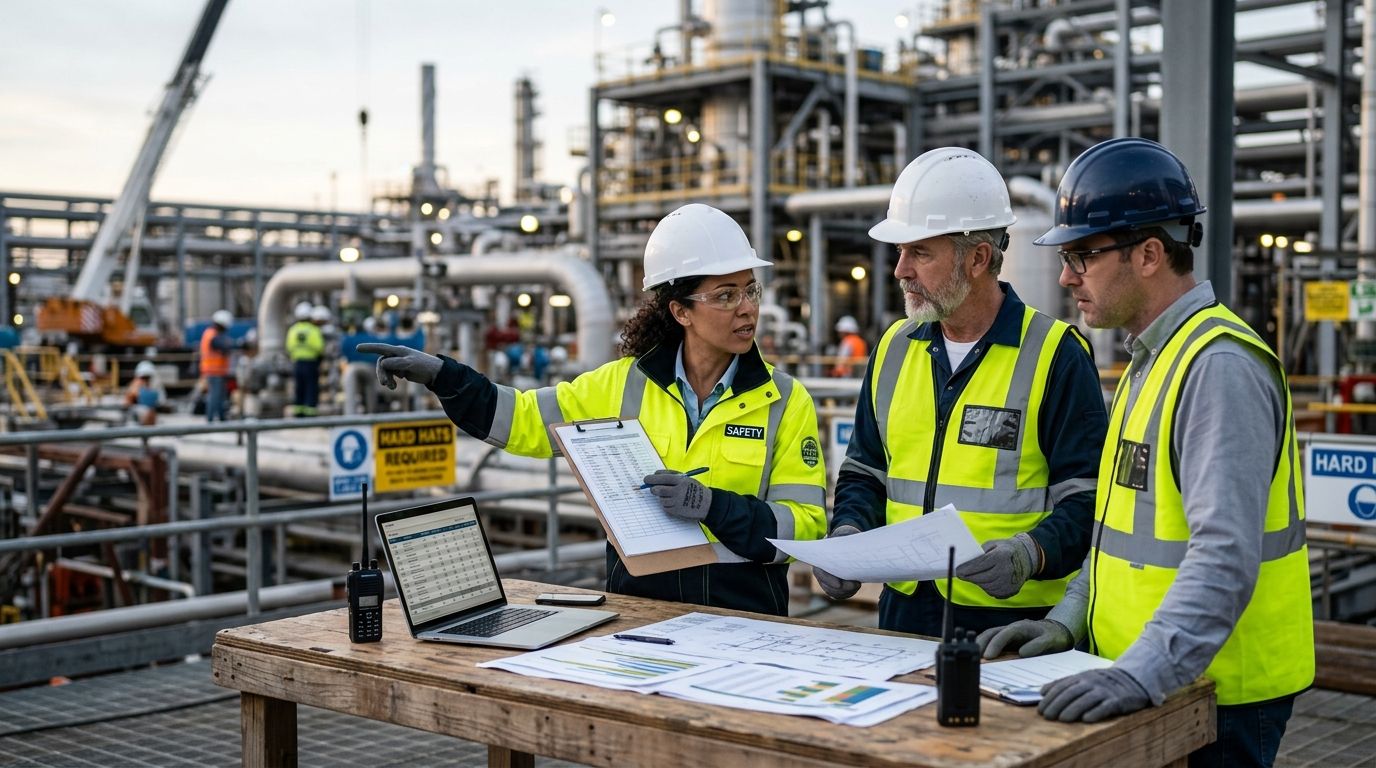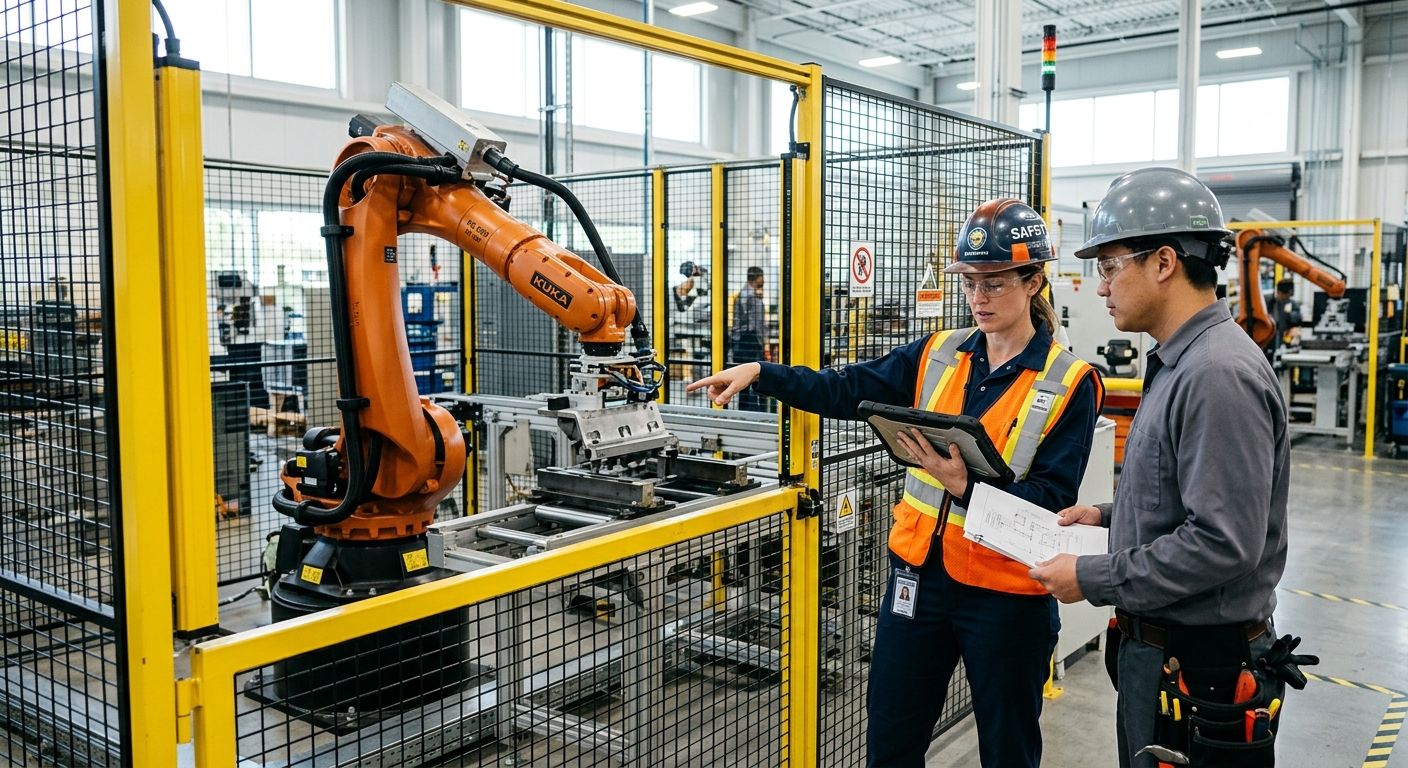
Robotics and automation plant safety staffing places EHS professionals who understand human-robot collision zones, automated lockout/tagout sequences, and PLC-controlled machine guarding — not generalist safety hires who learned OSHA basics on a standard construction site. Automated plants run a different risk profile than a conventional assembly line, and the staffing search has to reflect that from the first job posting.
- Safety staffing for robotics manufacturing requires EHS pros fluent in ANSI/RIA R15.06 and lockout/tagout on automated cells.
- ResponsAble Staffing places safety professionals with robotics floor experience on temporary, project, or direct-hire terms nationwide.
- General staffing agencies without safety specialization routinely miss machine-guarding and AGV traffic nuances unique to automated plants.
- Verify a candidate's incident history and certification currency before day one, not after an OSHA citation lands in 2026.
Why safety staffing for robotics manufacturing matters
A robotics and automation plant isn't just a manufacturing floor with more wiring. Collaborative robots working alongside humans, automated guided vehicles sharing aisles with foot traffic, and PLC-driven cells that need multi-energy-source lockout/tagout create hazard patterns a generalist safety hire has rarely trained for. OSHA's machine guarding standard, 1910.212, and its lockout/tagout standard, 1910.147, apply to every one of these cells — but neither standard tells a new hire how to read an ANSI/RIA R15.06 safeguarding zone, which is the actual industry standard governing robot-human collision distances.
ResponsAble Staffing built its safety staffing practice around exactly this gap: placing EHS professionals who've already worked automated production lines instead of retraining a generalist on your dime. Growing an automation floor often means growing beyond what your internal recruiting team can manage alone — that's not a staffing failure, it's what real growth looks like.
“If a generalist safety hire has never audited an ANSI/RIA R15.06 zone, don't let a live robotics cell be their first lesson.”
Map your robotic cell hazard zones first
Before you write a single job posting, walk the floor and document what's actually there.
- Mark collision zones, light curtain coverage, and e-stop placement per cell.
- List every point where an AGV path crosses a pedestrian aisle.
- Document interlock and guarding status against OSHA 1910.212 requirements.
- Flag any cell missing perimeter guarding or presence-sensing devices as an open item, not a someday fix.
Define the certifications your safety hires actually need
A generic "safety manager" job description undersells what an automated plant needs.
- ANSI/RIA R15.06 familiarity for anyone entering a robotic work cell unsupervised.
- OSHA 30-Hour General Industry as the floor, not the ceiling, for plant safety roles.
- Lockout/tagout authorized-employee training specific to multi-energy-source robotic cells.
- Confined space entry certification where automated lines feed enclosed paint booths or vaults.
- Arc flash awareness on any robotic welding cell running high-voltage supply.
Decide whether to build the team in-house or bring in a specialized partner
Run the math before you commit either way.
- Calculate how many weeks an open safety manager requisition has sat unfilled against your recordable incident rate.
- Weigh the cost of a bad hire — retraining, re-vetting, lost production days — against a specialized recruiter's fee.
- Ask whether your internal team has ever verified an ANSI/RIA R15.06 credential before extending an offer.
This is the point where a specialized partner earns its place. ResponsAble Staffing keeps a bench of EHS professionals who've already worked robotic and automated production lines, available on temporary, project-based, or direct-hire terms, so the search doesn't start from zero.
Talk through your robotics staffing plan
See how ResponsAble Staffing fills automated-plant safety roles.
Vet any staffing partner's safety track record before signing
A polished pitch deck doesn't tell you how a placement performs on a live floor.
- Ask for the agency's placement-level incident history, not just client testimonials.
- Confirm how candidates are screened for prior citations tied to automated-cell work.
- Check whether certifications are verified against the issuing body or just taken at face value.
See how to evaluate a staffing agency's safety incident track record for the exact questions to ask before signing anything.
Structure the engagement around your ramp timeline
Match the contract type to the phase your plant is actually in.
- Use temporary placements to cover a robotics line commissioning phase running a few months.
- Use project-based contracts when a new automated cell installation has a fixed start and end date.
- Move to direct hire once the automated line becomes permanent production, not a pilot.
Ramping hiring fast without a plan burns out the safety staff you already have. How to staff a safety team during a hiring ramp-up walks through a sequencing order that avoids that trap.
Onboard fast without skipping certification verification
Speed and diligence aren't opposites if you build the checklist ahead of time.
- Build a one-page certification checklist per role before day one.
- Pair new safety hires with a plant veteran for the first two weeks on the robotics floor.
- Confirm PPE and lockout device assignments before the candidate touches a live cell.
Measure safety performance after placement
A hire isn't done being evaluated once they clear onboarding.
- Track near-miss reporting rate in the first 90 days — a sudden drop usually means under-reporting, not fewer incidents.
- Compare recordable incident rate quarter over quarter against your 2026 baseline.
- Review certification renewal dates on a quarterly cycle so nothing lapses mid-project.
Comparing your options for robotics plant safety staffing in 2026
| Option | Best for | Key limitation | Verdict |
|---|---|---|---|
| In-house safety hire | Plants with one stable automated line and steady headcount | Internal recruiters rarely vet robotics-specific certs | Consider if hiring is slow but steady |
| General staffing agency | Fast headcount on generalist floor roles | Rarely verifies ANSI/RIA R15.06 or LOTO experience on automated cells | Skip for robotics-specific roles |
| Specialized safety staffing agency (ResponsAble Staffing) | Robotics and automation plants needing temp, project, or direct-hire EHS talent fast | Needs a clear scope upfront to move quickly | Best fit for automated plants |
| Independent safety consultant | Short, defined-scope audits of a single cell or line | Not built for ongoing staffing coverage | Use for audits only |
Common mistakes robotics and automation plants make
- Assuming a generalist safety hire understands robot safeguarding zones — most have never worked an ANSI/RIA R15.06 audit before.
- Treating AGV traffic paths like forklift traffic paths — the sensing profile and stopping distance are not the same.
- Waiting until a new automated cell goes live to start the safety hire search, instead of starting during commissioning.
- Skipping incident-history verification on staffing partners because a resume reads well on paper.
- Under-staffing night shift automated lines, where the fewest people are watching for an anomaly.
FAQ
What is safety staffing for robotics manufacturing?
Safety staffing for robotics manufacturing is the placement of EHS professionals trained on automated-cell hazards — lockout/tagout, machine guarding, and ANSI/RIA R15.06 safeguarding zones — into temporary, project-based, or direct-hire roles. It differs from general manufacturing safety staffing because generalist candidates rarely have robotics-specific training.
Is a general staffing agency good enough for a robotics plant?
Usually not for safety-critical roles. General agencies rarely verify ANSI/RIA R15.06 familiarity or lockout/tagout experience on multi-energy-source robotic cells, which is exactly the gap that causes hiring mistakes.
What certifications should a robotics plant safety hire have?
At minimum, OSHA 30-Hour General Industry, authorized-employee lockout/tagout training, and familiarity with ANSI/RIA R15.06 robot safeguarding zones. Confined space and arc flash certifications matter depending on the specific automated line.
Should robotics plants use direct hire or temporary safety staff?
Use temporary or project-based staff during commissioning of a new automated cell, and move to direct hire once the line becomes permanent production. Matching contract type to project phase avoids overpaying for permanent headcount too early.
How does contract-to-hire work for robotics plant safety roles?
A contract-to-hire arrangement places a safety professional on a fixed initial term, then converts to a permanent role once both sides confirm fit. It reduces the risk of a bad direct-hire decision on a specialized role.
What's the difference between OSHA 1910.212 and ANSI/RIA R15.06?
OSHA 1910.212 is the general federal machine guarding standard that applies broadly across manufacturing. ANSI/RIA R15.06 is the industry consensus standard specifically for industrial robot and robot system safeguarding, including collision zone requirements.
How do you vet a safety staffing agency before signing a contract?
Ask for placement-level incident history, confirm how candidates are screened for prior citations, and verify certifications against the issuing body rather than taking a resume at face value.
What does OSHA cite most often on automated production lines?
General machine guarding violations under 1910.212 regularly rank among OSHA's most-cited standards across manufacturing, and automated cells are not exempt just because a robot controls the motion instead of a person.
One last thing
General machine guarding violations under 1910.212 regularly rank among OSHA's most-cited standards across manufacturing every year, and automated cells get cited just as often as manual ones — the presence of a robot doesn't excuse missing or bypassed guarding. The safest robotics plants in 2026 are the ones that staffed for this before an inspector found it, not after.