Semiconductor fabs run some of the tightest safety environments in manufacturing — arsine and phosphine gas lines, HF acid baths, and cleanroom protocols that don't forgive a poorly vetted temp. This guide breaks down who needs specialized safety staffing for semiconductor fabrication plants, what to check before a candidate ever badges in, and which roles to fill first.
- Cleanroom-certified EHS technicians with HAZWOPER 40 are the highest-priority hire for any fab ramping production in 2026 - Buy.
- Generalist manufacturing safety staff without gas-hazard training are a Skip for wafer fabs handling arsine or phosphine.
- Direct-hire EHS managers make sense once a fab passes steady-state production; project-based staffing wins during construction and tool install.
- Safety staffing for semiconductor fabrication plants should include documented respirator fit-testing and cleanroom gowning experience, not just OSHA 10/30 cards.
Why this matters
Fab construction in the US hit a multi-year high heading into 2026, driven by CHIPS Act-funded expansions in Arizona, Texas, and Ohio. Every one of those builds needs safety coverage that scales from construction crews to cleanroom production staff inside the same facility, often within the same quarter.
General industrial safety staffing doesn't map cleanly onto semiconductor work. A safety tech who's excellent on a refinery turnaround can still walk into a fab and miss a gowning protocol breach or misread a toxic gas monitor calibration log. Getting the hire wrong costs downtime, and in a cleanroom, downtime is measured in wafer lots, not hours.
Who this is for
This guide is built for EHS directors, plant managers, and HR leads at semiconductor fabrication and assembly/test facilities who need to staff safety roles for a construction ramp, a production line expansion, or ongoing compliance coverage. If you're evaluating safety staffing services for a fab that handles specialty gases, wet chemistry, or Class 10,000-and-tighter cleanrooms, the criteria below apply directly to your hiring decision.
What to look for in safety staffing for semiconductor fabrication plants
Cleanroom protocol experience
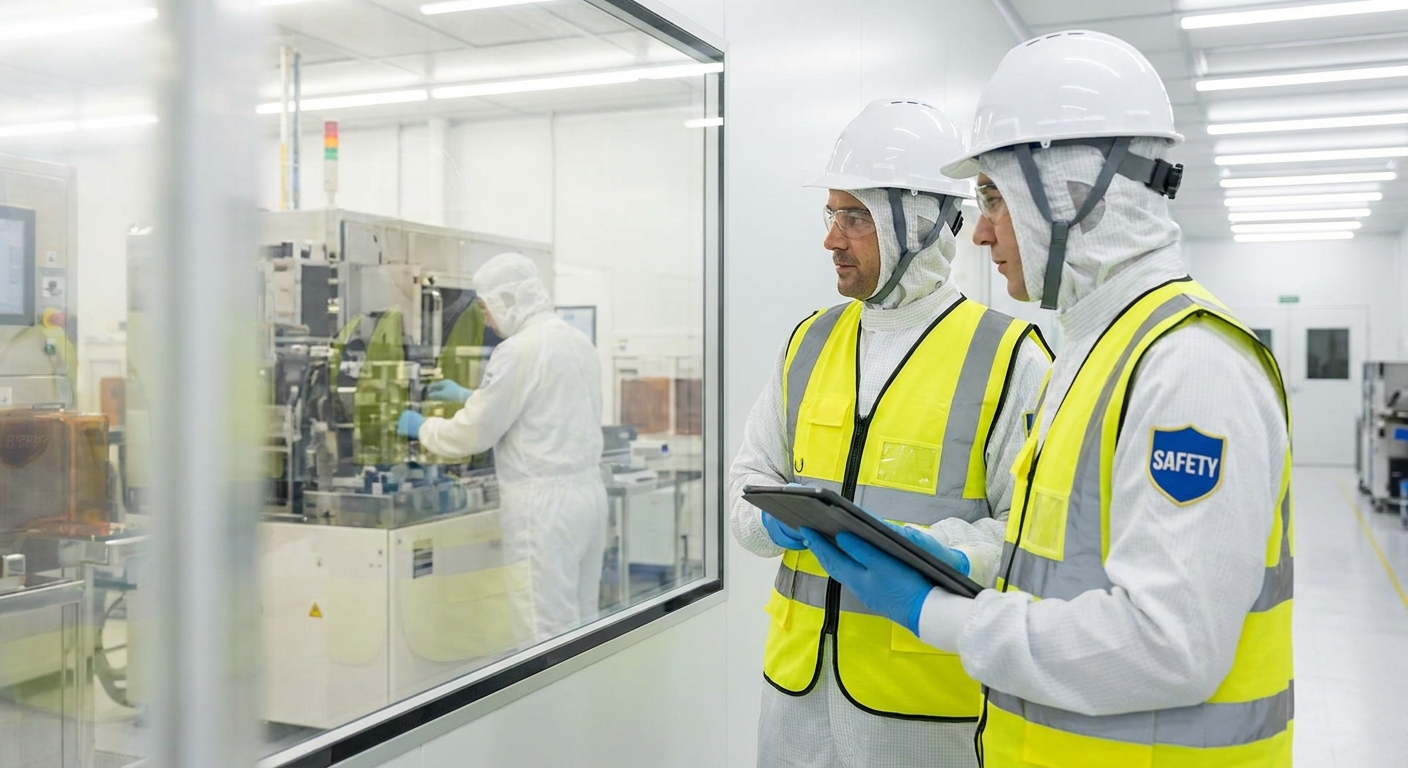
A safety professional who hasn't worked inside a controlled environment will slow down your line just learning gowning sequence and contamination control basics. Look for candidates with documented cleanroom hours, not just a certificate — the difference shows up in the first week on the floor.
Chemical and gas-hazard credentials
Semiconductor fabs run hydrofluoric acid, arsine, phosphine, and silane in production quantities. HAZWOPER 40-hour training is table stakes; ask specifically whether the candidate has hands-on experience with toxic gas monitoring systems and emergency shutdown procedures, not just classroom exposure.
Respiratory protection and PPE program depth
Fit-testing, SCBA familiarity, and PPE program administration separate a competent EHS tech from one who's just filling a badge slot. A fab audit will surface gaps here fast, and OSHA citations for respiratory protection violations remain among the most common in general industry inspections.
Speed of vetting and placement
Fab ramps move on tight timelines tied to tool install schedules. A staffing partner that takes three weeks to present candidates is already behind the construction milestone you're trying to hit. Ask for a placement timeline in writing before you sign anything.
Flexibility across staffing models
Construction phase, tool qualification, and steady-state production each need different coverage. A partner that only offers direct hire will leave you exposed during the construction-to-production handoff, when safety risk is often highest.
Documentation and audit readiness
Every safety hire needs a paper trail — training records, certification expiration dates, incident history — that survives a customer audit or an OSHA inspection. Staffing partners that can't produce this on request are a liability, not a solution.
Staff your fab's safety team faster
Vetted EHS professionals for construction, ramp, and steady-state production.
Roles to prioritize
Cleanroom EHS Technician — the workhorse role. Handles daily walkthroughs, gas monitor calibration checks, and incident response inside production. Look for at least 2 years of cleanroom-specific experience and a current 40-hour HAZWOPER card. Buy — this is the first role to fill on any fab ramp.
Industrial Hygienist — the compliance safeguard. Runs exposure monitoring for silane, arsine, and solvent vapors, and builds the sampling data that keeps you ahead of an OSHA Permissible Exposure Limit issue. Fabs running more than one shift need this role staffed before production hits full capacity, not after an incident. Buy if you're past 50% capacity ramp.
Contractor Safety Coordinator — for outsourced trades during construction and tool install. Manages subcontractor safety orientation, permit-to-work systems, and lockout/tagout coordination across multiple trade crews on the same floor. Project-based staffing fits this role well since the need shrinks once construction wraps. Compare against how manufacturing plants staff contractor safety during expansions — the coordination model is nearly identical. Consider for any build with more than three concurrent trade contractors.
Fire and Life Safety Specialist — covers gas detection systems, fire suppression for pyrophoric gas cabinets, and emergency response planning. Semiconductor fabs need this role built into commissioning, not bolted on after the first false alarm. Consider during tool install phase; Buy once specialty gas systems go live.
Direct-Hire EHS Manager — the long-term culture fit. Owns the site's overall safety program, OSHA recordkeeping, and audit relationships once the fab reaches steady-state production. This is a direct-hire decision, not a temp fill — the role needs institutional continuity across years, not months. Buy once your production schedule stabilizes past initial ramp.
What to avoid
- Generalist safety staffing with no chemical-hazard specialization. A candidate who's strong in general manufacturing but has never worked with toxic gas systems will miss the specific risks a fab runs every shift.
- Staffing partners who treat cleanroom experience as optional. Gowning and contamination control aren't soft skills — a breach shuts down a production lot and costs real money.
- Temp-to-perm pipelines with no documentation trail. If a staffing partner can't produce training records and certification dates on demand, you're inheriting an audit risk along with the hire.
Verdict comparison
| Role | Certification benchmark | Best staffing model | Verdict |
|---|---|---|---|
| Cleanroom EHS Technician | HAZWOPER 40, 2+ yrs cleanroom | Temporary or project-based | Buy |
| Industrial Hygienist | CIH or working toward, exposure monitoring experience | Direct hire once past ramp | Buy |
| Contractor Safety Coordinator | OSHA 30, LOTO/permit systems | Project-based | Consider |
| Fire and Life Safety Specialist | Gas detection systems experience | Project-based through commissioning | Consider |
| Direct-Hire EHS Manager | 5+ yrs EHS leadership | Direct hire | Buy (post-ramp) |
EHS recruiting for facilities running wet chemistry or acid baths follows a similar certification stack to what chemical and petrochemical plants require, particularly around HAZWOPER and PPE program depth.
FAQ
What certifications should safety staff have for semiconductor fabs?
HAZWOPER 40-hour training, respirator fit-testing, and documented cleanroom experience are the minimum for production-floor roles in 2026. Roles involving gas systems also need toxic gas monitoring familiarity.
Is temp staffing or direct hire better for fab safety roles?
Temp or project-based staffing fits construction and tool-install phases best, while direct hire suits steady-state production roles like the EHS Manager. Fabs ramping in 2026 typically need both models running in parallel.
How much cleanroom experience should an EHS technician have?
Look for at least 2 years of hands-on cleanroom experience, not just classroom certification. Contamination control mistakes from inexperienced staff directly cost production lots.
Do semiconductor fabs need an industrial hygienist on staff?
Yes, once a fab runs multiple shifts or handles arsine, phosphine, or solvent vapors in volume. An industrial hygienist builds the exposure monitoring data needed to stay ahead of OSHA exposure limits.
What's the biggest safety staffing mistake in fab construction?
Using generalist manufacturing safety staff without chemical-hazard or cleanroom specialization. They miss gas-hazard and contamination risks that a fab-specific EHS professional catches immediately.
How fast can a staffing partner place fab safety roles?
Timelines vary by role and location, but a partner should give a written placement estimate before you sign. Slow vetting during a fab ramp becomes a construction schedule risk, not just a hiring inconvenience.
One last thing
The role most fabs understaff isn't the cleanroom technician — it's the Fire and Life Safety Specialist during commissioning. Gas cabinet fire suppression systems get tested during tool qualification, not after go-live, and a fab without dedicated coverage at that stage is running its highest-risk phase with the thinnest safety bench.