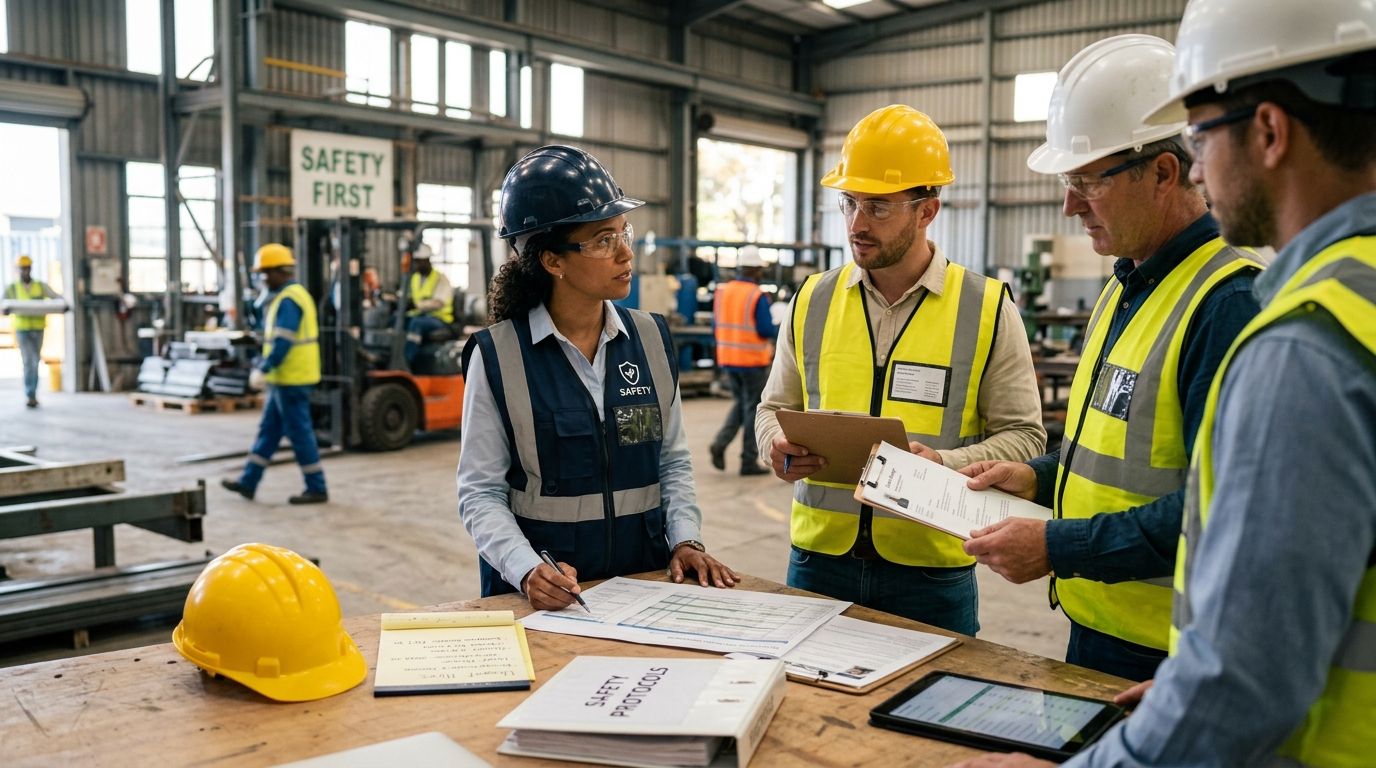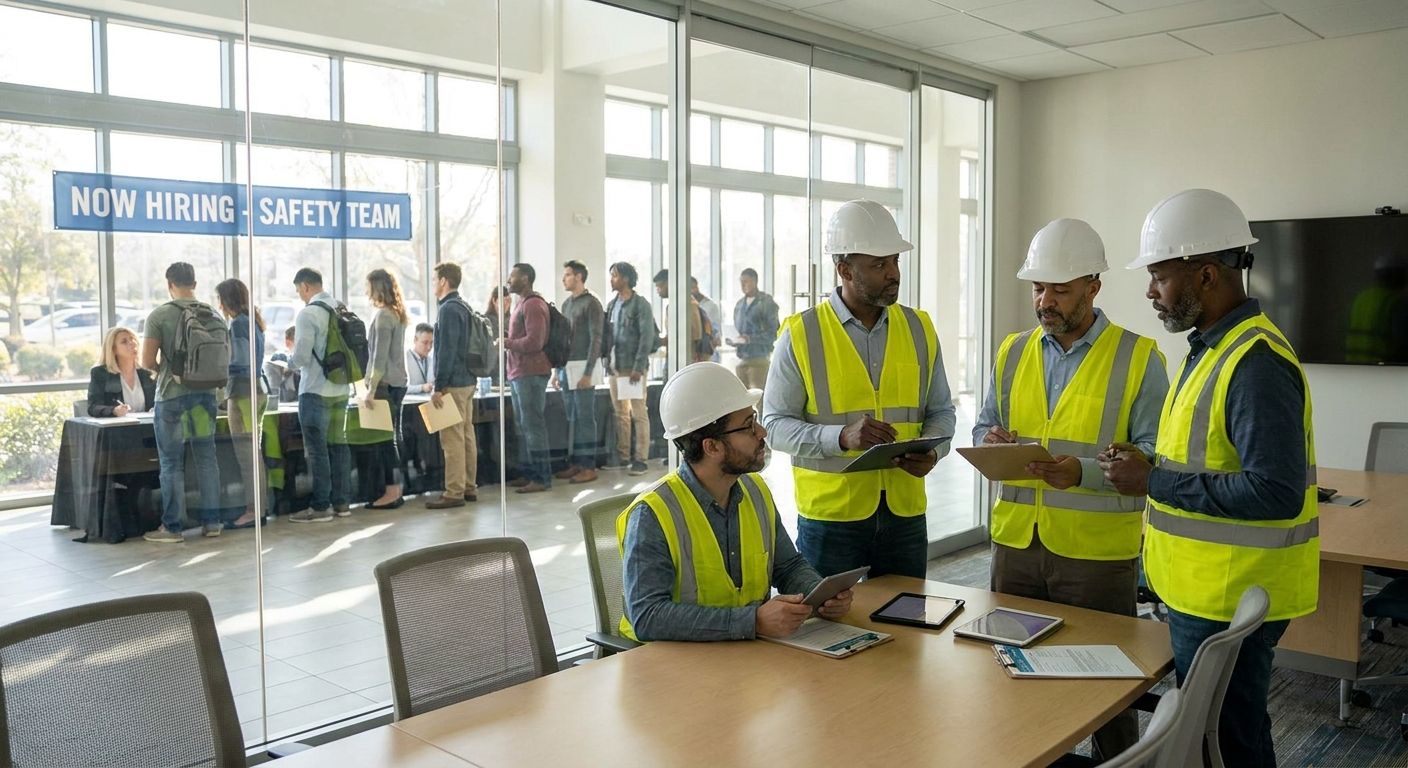
Ramping up hiring fast without matching safety headcount is how OSHA citations, incident spikes, and stalled start dates happen. Staffing a safety team during a hiring ramp-up means sequencing certified hires ahead of the general workforce, not behind it, and choosing the right mix of temporary, contract-to-hire, and direct-hire safety professionals for how long the ramp actually lasts.
- Staff safety roles before or alongside the general hiring surge, never after — the safety team should never be the bottleneck.
- Match the staffing model (temporary, contract-to-hire, direct hire) to how long the ramp-up realistically lasts.
- OSHA 10-hour and OSHA 30-hour certifications are the baseline screen for any safety hire brought on during a surge.
- A specialized safety staffing agency like ResponsAble Staffing shortens time-to-fill when internal recruiting cannot keep pace.
- Confined space and high-hazard roles need a full team structure under OSHA 1910.146 — do not skip a seat to save time.
Why this matters
A hiring ramp-up puts pressure on every department, but safety is the one place where being short-staffed shows up as an incident report instead of a missed deadline. When headcount on the floor or the job site doubles in a few weeks and the safety function does not grow with it, the ratio of trained eyes to new hands quietly collapses.
That is the moment recordable injuries climb, near-misses go unreported, and a project that was ahead of schedule ends up behind because of a stop-work order. Growing a company beyond its current safety capacity is a real inflection point — the same kind of stretch that tests whether leadership built its hiring plan on solid ground or on hope. Getting the sequence right now saves the cleanup later.
How do you staff a safety team during a hiring ramp-up?
Staff the safety team on a fixed sequence, not an ad hoc one:
- Forecast headcount before you forecast production. Know how many total workers, shifts, and job classifications the ramp-up adds, then back into how many safety professionals that requires.
- Set the certification floor first. Decide which roles need OSHA 10-hour, OSHA 30-hour, or site-specific credentials (confined space, fall protection, hazmat) before a single resume gets reviewed.
- Open the requisition for safety roles the same week as production roles — not after the first cohort of new hires starts. Safety coverage that trails the workforce by even two weeks is coverage that never catches up.
- Pick a staffing model that matches the ramp's duration. A 90-day surge needs a different structure than an 18-month buildout (see the table below).
- Use a specialized safety staffing partner to fill the gap between the requisition and the internal hire. General recruiters vet for culture fit; safety staffing firms vet certifications, incident history, and site-readiness first.
- Verify credentials before day one on site, not after — a candidate whose OSHA 30 has lapsed is not a placement, it is a liability.
- Build in a review point at 30 and 90 days to check whether the ramp-up's pace has changed and whether the safety headcount needs to flex again.
Calculating headcount for a site safety team before the ramp starts is the single step most companies skip in 2026, and it is the one that prevents the scramble in week six.
Staffing models for a ramp-up
| Model | Best for | Speed to fill | Commitment |
|---|---|---|---|
| Temporary / contract | Short, defined surges such as turnarounds and seasonal spikes | Fastest | Weeks to months |
| Contract-to-hire | Ramp-ups where the headcount is likely permanent but unproven | Fast | Trial period, then convert |
| Direct hire | Long-term, planned growth with a stable budget | Slower | Permanent from day one |
| Project-based | Fixed-scope builds with a known end date | Fast | Duration of project |
Temporary and contract safety staff win when the ramp-up has a defined end date — a plant startup, a seasonal production spike, or a construction push with a fixed close-out. Contract-to-hire is the better call when leadership expects the headcount increase to stick but wants a working trial before committing to a full-time safety director or coordinator. Review the contract-to-hire safety staffing options before locking in a model — the wrong choice either burns budget on permanent hires for a temporary spike or leaves a long-term program understaffed with rotating temps.
“Safety headcount that trails the workforce by even two weeks is coverage that never catches up.”
Why safety staffing needs vary during a ramp-up
- Industry and hazard class — a chemical plant startup needs process safety and industrial hygiene coverage that a retail build-out never will.
- Shift structure — adding a second or third shift multiplies safety coverage needs faster than raw headcount suggests.
- Certification lead time — OSHA 30-hour, confined space, and site-specific credentials take time to verify, and a rushed hire without verification is a liability, not a solution.
- Union or prevailing wage requirements — some ramp-ups require safety staff sourced through specific labor agreements, which narrows the candidate pool.
- Geographic spread — a multi-site or multi-state ramp-up needs safety coverage staffed regionally, not from one central hire.
- Regulatory threshold — under 29 CFR 1904, employers with 10 or more employees carry OSHA recordkeeping obligations that smaller operations do not trigger, which changes how much dedicated safety staff the growth actually requires.
Fill safety roles before the ramp-up outpaces you
Specialized placement for temporary, project-based, and direct-hire safety roles.
How fast can you fill a safety role during a hiring surge?
Time-to-fill depends on certification requirements and how narrow the candidate pool is, but the biggest lever is starting the requisition early instead of reacting after the workforce has already grown. Reducing time-to-fill for safety professional openings usually comes down to pre-vetting a bench of certified candidates before the need is urgent, rather than starting the search cold in the middle of a 2026 ramp.
Should you hire safety staff before or after production staff during a ramp-up?
Safety staff should be hired before or alongside production staff, never after — a workforce that outgrows its safety coverage even for a few weeks is the window where incident rates spike. If the requisition timeline forces a choice, the safety hire goes first.
Do you need a safety staffing agency or can internal recruiting handle a ramp-up?
Internal recruiting can handle a ramp-up when the hiring volume is modest and the roles are generalist, but high-hazard or certification-heavy roles usually move faster through a specialized safety staffing agency. Internal teams rarely keep a pre-vetted bench of OSHA-certified candidates ready to verify and deploy on short notice, which is the gap safety staffing firms like ResponsAble Staffing are built to close.
One last thing
The companies that handle a hiring ramp-up cleanly are rarely the ones with the biggest recruiting budget — they are the ones that treated the safety hire as the first hire, not the afterthought. That single sequencing decision, made in 2026 or any other year, is the difference between a ramp-up that scales and one that stalls under an incident investigation.
FAQ
How do you staff a safety team during a hiring ramp-up?
Forecast the added headcount, set certification requirements first, and open safety requisitions the same week as production requisitions rather than after. Use temporary or contract-to-hire safety staffing to bridge the gap while internal hiring catches up.
What is the fastest way to fill a safety role during a hiring surge in 2026?
The fastest path is a pre-vetted bench of OSHA-certified candidates through a specialized safety staffing agency. Internal recruiting rarely has certified safety professionals ready to deploy on short notice.
Is contract-to-hire better than direct hire for a ramp-up?
Contract-to-hire is better when the added headcount is likely permanent but unproven, giving a trial period before converting the role. Direct hire fits planned, stable growth with a confirmed long-term budget.
How many safety professionals do you need during a ramp-up?
The right ratio depends on hazard class, shift count, and regulatory thresholds like the 10-employee mark that triggers OSHA recordkeeping under 29 CFR 1904. Headcount should be calculated per site, not applied as a flat rule.
What certifications should a safety hire have during a hiring ramp-up?
OSHA 10-hour and OSHA 30-hour are the baseline for most industrial and construction roles. Site-specific credentials like confined space or fall protection layer on top depending on the hazard.
Should safety staff be hired before general workforce staff during a ramp-up?
Yes, safety staff should be hired before or alongside general workforce staff, not after. A workforce that outgrows its safety coverage even briefly is when incident rates climb.
Can a staffing agency handle multi-site safety hiring during a ramp-up?
Yes, a specialized safety staffing agency can source regionally for multi-site or multi-state ramp-ups. That is faster than one central internal recruiter trying to cover every location.