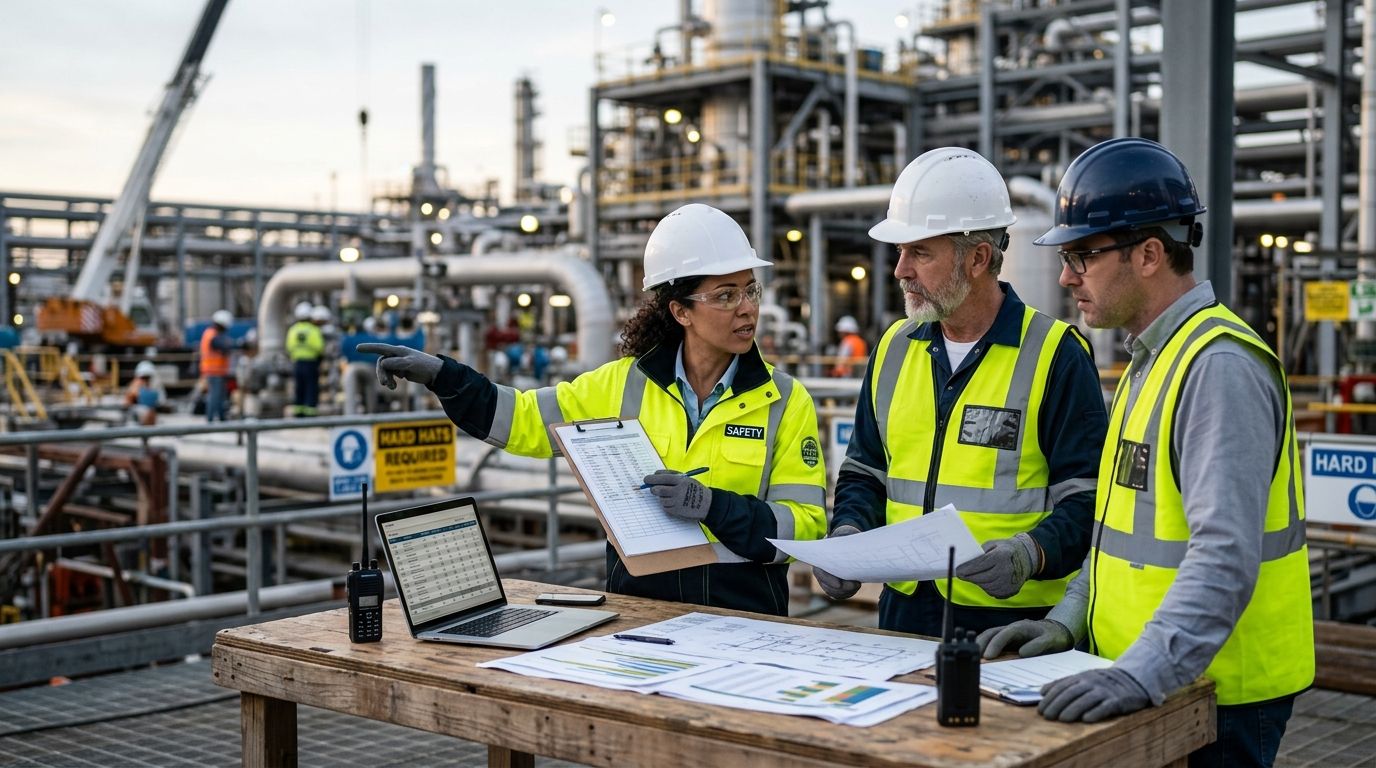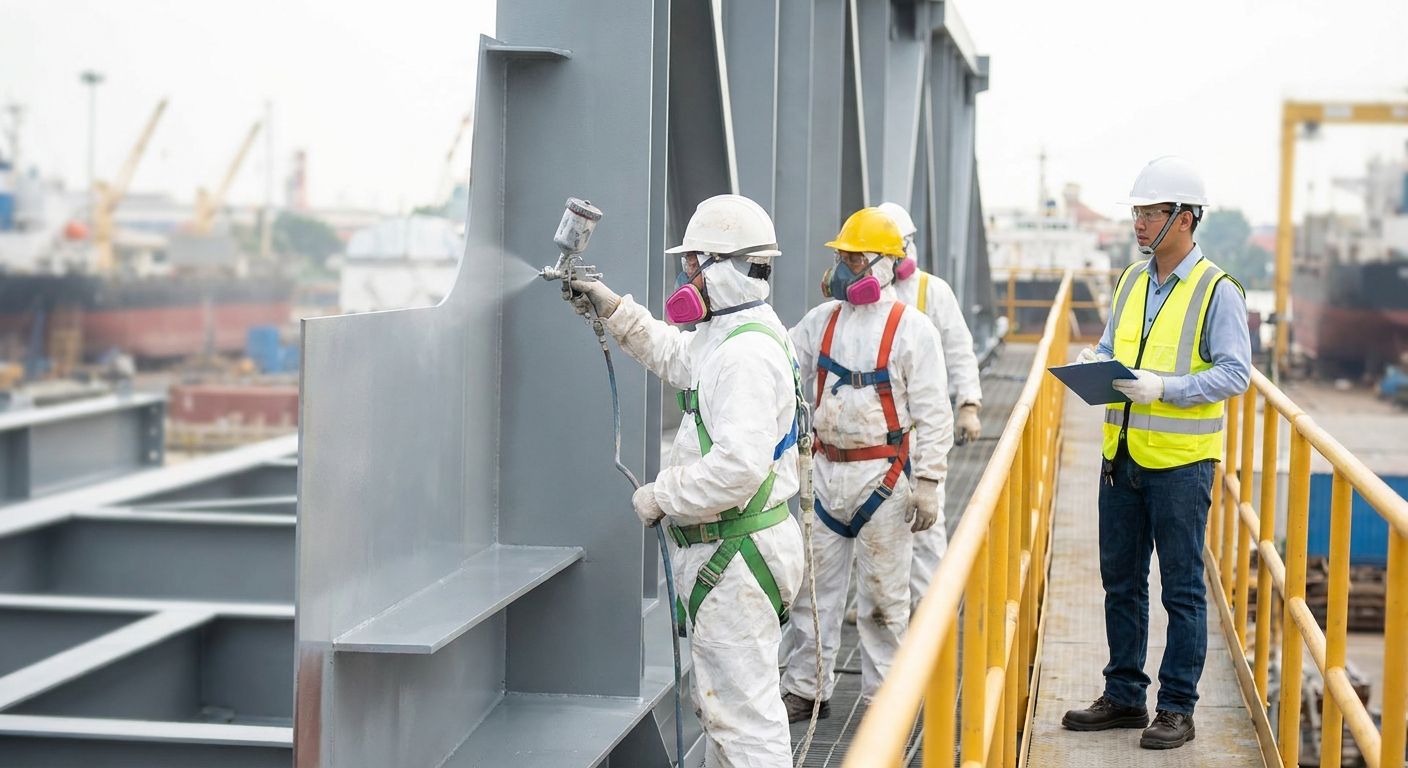
Safety staffing for industrial painting contractors is the practice of placing vetted EHS professionals — confined-space attendants, fire watches, industrial hygienists, and lead abatement supervisors — on coating and blasting crews so the job meets OSHA standards without stalling the schedule. Painting and coatings crews carry a hazard mix most general labor staffing firms never screen for: isocyanate exposure from polyurethane and epoxy systems, confined-space entry into tanks and vessels, and lead paint on structures built before 1978.
- Safety staffing for industrial painting contractors covers confined-space attendants, fire watches, and industrial hygienists for coating crews.
- ResponsAble Staffing places safety professionals for tank lining, blast-and-coat, and lead abatement jobs nationwide.
- Confined space entry and isocyanate exposure are the two biggest coverage gaps on painting crews in 2026.
- Contract staffing fits turnaround-driven coating work; direct hire fits ongoing in-house safety programs.
Why safety staffing matters for industrial painting contractors
Coating work looks like a finishing trade until you look at what it actually exposes workers to. Confined-space tank lining falls under OSHA 1910.146. Isocyanate-based coatings require documented respiratory protection under 1910.134. Fire watch duty during hot work near solvent-based paint isn't optional paperwork — it's the difference between a clean job and a flash fire.
Most painting contractors staff these roles the same way they staff a laborer position: post the job, hire the first warm body, hope the résumé holds up. That approach works until an OSHA inspector asks for the confined-space rescue plan or the respirator fit-test records and nobody has them. ResponsAble Staffing exists because coating crews need EHS talent vetted for this exact hazard profile, not generalist safety staff pulled from a construction bench.
Map the hazard profile before you post a job
Start with what the job actually requires, not a generic "safety tech" job description. Industrial painting and coatings work touches several distinct hazard categories at once, often on the same shift.
- Confined space entry into tanks, silos, and vessel interiors during lining jobs
- Isocyanate and solvent exposure from polyurethane, epoxy, and urethane coating systems
- Fall protection on scaffolding, suspended platforms, and rigging during exterior blast-and-coat work
- Hot work fire watch near abrasive blasting, grinding, or welding adjacent to freshly applied coatings
- Lead-based paint disturbance on pre-1978 structures during surface prep
Staff for confined space entry compliantly
Tank and vessel coating jobs are where painting contractors get cited most often, and it's rarely the coating itself — it's the entry permit. A compliant crew needs three distinct roles filled, not one person wearing all three hats.
- A dedicated attendant stationed outside the space for the full entry duration
- A qualified air-monitoring technician running continuous atmospheric checks
- A documented rescue plan with trained personnel, not a call-911-if-something-happens note
- Entry supervisor sign-off before every shift change
A confined space attendant who's only worked general construction sites won't know the difference between a permit-required space and a non-permit space until it costs you a citation.
Cover fire watch and hot work permits around the coating line
Solvent-based coatings have low flash points. Grinding, blasting, or welding near a curing coating line without a trained fire watch is one of the fastest ways to shut a job down.
- Fire watch stationed during and after hot work, per the permit duration required
- Flash-point awareness specific to the coating chemistry being applied that day
- Fire extinguisher placement checked at shift start, not once a week
- Permit documentation that matches what's actually happening on the floor
Vet certifications for coatings-specific competencies
A safety generalist résumé doesn't tell you whether a candidate understands coatings work. Screen for credentials that actually map to the job.
- NACE/AMPP coating inspector certification for quality-and-safety crossover roles
- Current respirator fit-test records, not a fit test from two employers ago
- EPA RRP or state-equivalent lead abatement certification where applicable
- OSHA 10 or OSHA 30 construction card, verified, not self-reported
Build the industrial hygiene layer
Coating crews are one of the few trades where the safety professional and the industrial hygienist need to work as a pair, not a single generalist role.
- Baseline exposure monitoring for isocyanates and solvent vapors before work starts
- PPE selection between supplied-air respirators and air-purifying respirators based on actual exposure data
- Medical surveillance coordination for workers on isocyanate-heavy jobs
Handle lead paint abatement as its own hazard track
Recoating older structures almost always means disturbing lead paint first. Treat abatement as a separate staffing decision, not an add-on to the coating crew.
- Certified lead abatement supervisor on-site for the duration of prep work
- Containment and negative-air verification before demolition or blasting begins
- Clearance testing documentation before the coating crew re-enters the space
Contractors who staff abatement and coating as one undifferentiated crew are the ones who end up with EPA findings, not OSHA findings. Safety staffing for asbestos and lead abatement contractors covers this hazard track specifically.
Decide contract vs. direct hire for the crew
Turnaround-driven coating jobs — tank shutdowns, plant outages, seasonal recoating — don't need a permanent safety headcount. Ongoing coatings divisions running multiple jobs a year usually do.
- Contract staffing fits a single tank-lining job, a turnaround window, or a surge in bid volume
- Direct hire fits a coatings division running steady work and needing a permanent safety lead
- Contract-to-hire fits contractors testing whether a candidate fits before committing to payroll
This is the point where a staffing partner like ResponsAble Staffing becomes the faster path than posting a job board listing and waiting three weeks for qualified applicants — not a prerequisite, a shortcut once you know which model fits.
Set onboarding speed expectations
Coating jobs run on tight schedules. A safety hire who takes two weeks to clear orientation defeats the purpose of contract staffing.
- Credential verification completed before the candidate is presented, not after placement
- Site-specific orientation scheduled for day one, not week two
- Drug and alcohol screening completed to the contractor's own program requirements
- Rapid replacement terms in place if a placement doesn't fit the crew
Comparison: staffing options for industrial painting and coatings crews
| Option | Best for | Key limitation |
|---|---|---|
| In-house EHS hire | Coatings divisions running steady, year-round work | Slow to scale for a single turnaround or surge job |
| Generalist staffing agency | Fast fills for general labor roles | Rarely screens for confined space or isocyanate exposure credentials |
| Safety-specialized staffing agency (ResponsAble Staffing) | Coating crews needing confined space, fire watch, and industrial hygiene coverage fast | Contract talent still needs site-specific orientation on arrival |
| Independent EHS consultant | One-time audits or exposure assessments | Not built for day-to-day crew staffing |
Verdict: ResponsAble Staffing wins for coating contractors who need confined-space attendants, fire watch, or IH coverage on a specific job window without carrying full-time headcount.
Common mistakes industrial painting contractors make
- Treating fire watch as a generic laborer slot. A fire watch needs hot-work-permit training, not just a warm body standing near an extinguisher.
- Starting tank lining without a confined-space rescue plan on file. Attendants without a documented rescue plan are a citation waiting to happen.
- Skipping respirator fit testing on isocyanate jobs. A generic respirator issued without a current fit test doesn't protect anyone and doesn't hold up under review.
- Assuming lead abatement crews don't need dedicated safety oversight. Abatement and coating are two separate hazard tracks, and staffing them as one blurs accountability.
- Understaffing multi-shift blast-and-coat turnarounds. A single safety professional covering three shifts is a coverage gap, not a cost saving.
Staff your coating crew's safety roles
Confined-space attendants, fire watches, and IH coverage placed fast.
FAQ
What safety roles does an industrial painting crew actually need?
Most coating crews need a confined-space attendant, a fire watch for hot work near the coating line, and an industrial hygienist or IH-trained safety professional for isocyanate and solvent exposure. Lead abatement work adds a certified abatement supervisor as a separate role.
Is contract or direct hire better for coatings safety staffing?
Contract staffing fits a single tank-lining job, turnaround window, or seasonal surge. Direct hire fits a coatings division running steady work year-round that needs a permanent safety lead in 2026.
How much does safety staffing for industrial painting contractors cost?
Cost depends on the role, certification level, and contract length, so check current rates directly with a safety staffing agency rather than relying on a published figure.
Do confined space attendants need special certification for tank coating jobs?
Yes. Confined space attendants working tank or vessel interiors need training specific to OSHA 1910.146, plus familiarity with atmospheric monitoring equipment used during coating application.
Can one safety professional cover both fire watch and confined space duties on the same shift?
No. Each role requires undivided attention for the duration of the permit, so a compliant crew staffs them separately rather than combining them under one person.
What certifications should a coatings safety hire have?
Look for NACE/AMPP coating inspector credentials where quality and safety overlap, current respirator fit-test records, OSHA 10 or 30 construction cards, and EPA RRP certification for lead abatement work.
How fast can a staffing agency fill a confined space attendant role?
Turnaround times vary by market and certification requirements, so confirm current fill times directly with the agency rather than assuming a standard timeline.
Do generalist staffing agencies work for painting and coatings crews?
Generalist agencies can fill labor roles quickly but rarely screen for confined space, isocyanate exposure, or lead abatement credentials, which leaves the contractor exposed on the specific hazards coatings work carries.
One last thing
The hazard most painting contractors underrate isn't the confined space or the lead paint — it's the overlap. A tank lining job with abrasive blasting, isocyanate coating, and hot work happening in sequence on the same shift needs three different safety competencies staffed at once, not one generalist rotating between tasks. Contractors who staff for the overlap up front finish turnarounds without a mid-job scramble to add coverage.