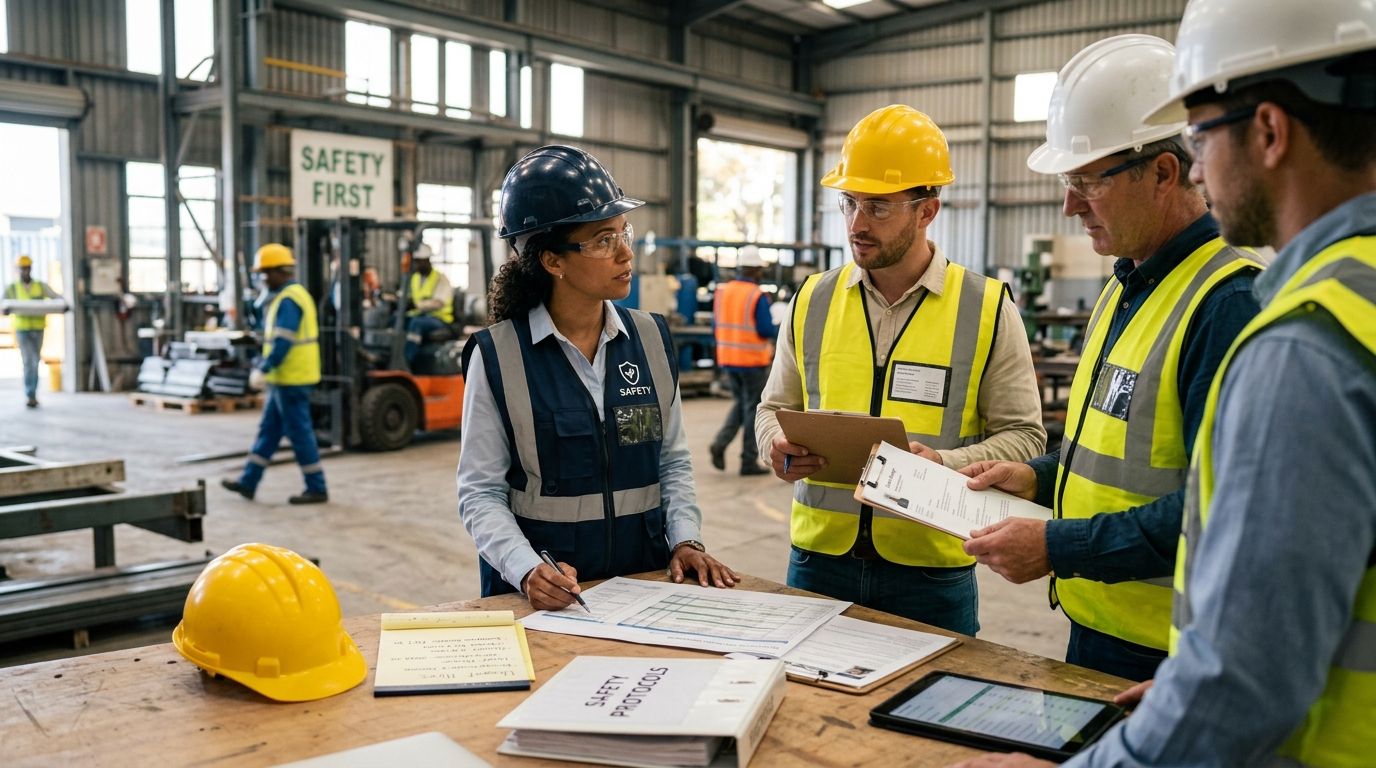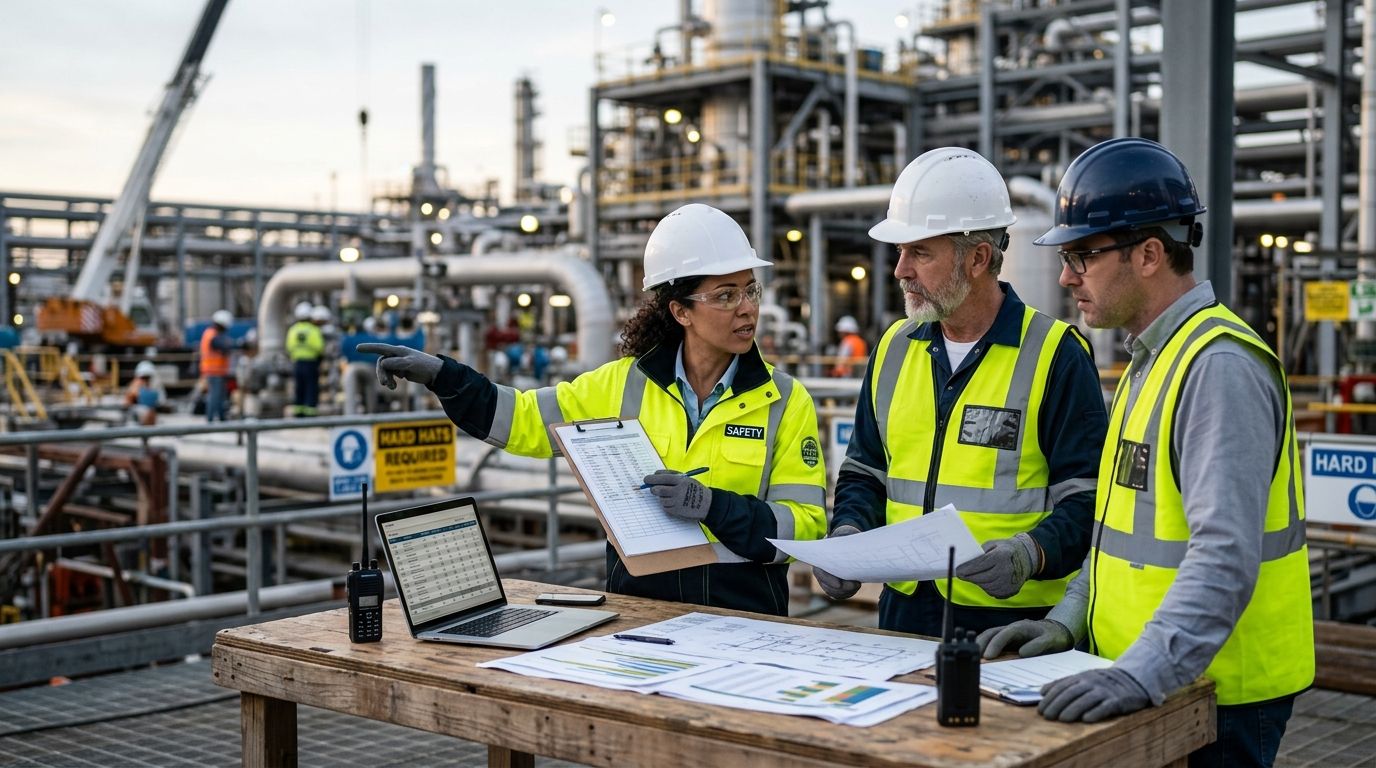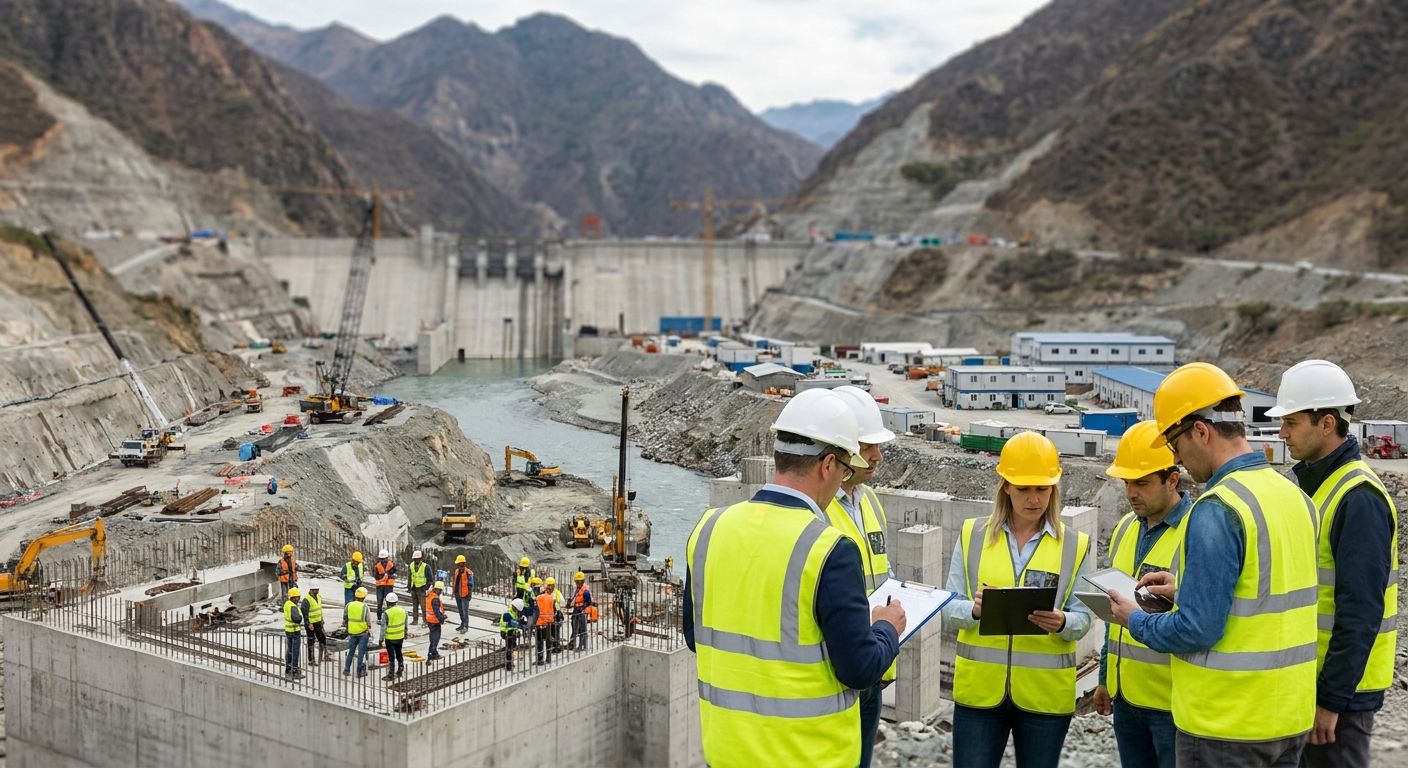
Hydroelectric and dam construction sites combine confined-space entry, swift-water hazards, and heavy rigging in one job site — generalist safety staff aren't built for penstocks, spillway galleries, or turbine bays. Dam construction safety staffing means matching certified EHS professionals to those specific risks, not just filling a headcount.
- Dam construction safety staffing works best when confined space attendants and riggers are staffed as separate roles, not one generalist hire.
- Federal dam builds under USACE or Bureau of Reclamation require safety officers who know EM 385-1-1 documentation, not just a 30-hour OSHA card.
- Direct-hire safety managers make sense for builds running past 12 months; temp coverage fits mobilization and short phases. Buy direct-hire for long builds.
- Skip generalist construction safety staff for penstock and spillway work — confined space entry supervisor experience is non-negotiable.
Why this matters
OSHA's confined space standard for construction, 29 CFR 1926.1211, applies directly to penstocks, intake towers, and spillway galleries — spaces most generalist site safety officers have never entered under a permit. Federal dam projects run through the U.S. Army Corps of Engineers or the Bureau of Reclamation, and both attach EM 385-1-1 documentation requirements on top of standard OSHA paperwork. A hydroelectric build running three to seven years needs a staffing plan that shifts from temp coverage during mobilization to a stable direct-hire safety manager once the site settles into full construction.
A construction safety recruiting partner that only sources generalist site safety officers leaves the confined-space and rigging gaps unfilled on a job where both hazards show up in the first month of excavation. Infrastructure spending on dam rehabilitation and hydroelectric retrofits kept crews mobilizing through 2026, and the safety staffing gap on these projects hasn't closed — most contractors still hire generalists first and scramble for confined space and rigging specialists after an incident or a stop-work order.
Who this is for
This guide is for project managers, EHS directors, and general contractors staffing a hydroelectric retrofit, new dam construction, or spillway rehabilitation project in 2026 — anyone who needs certified safety coverage for confined spaces, swift water, and heavy lifts on a multi-year federal or private build.
What to look for in dam construction safety staffing
Confined space and rescue certification, not just awareness training
Penstocks, intake structures, and spillway galleries qualify as permit-required confined spaces under 29 CFR 1926.1211. Ask candidates about entry supervisor and attendant experience specifically, not a one-day "confined space awareness" webinar — the two credentials look similar on a resume and mean completely different things on site.
Federal contracting familiarity (USACE, Bureau of Reclamation)
Public dam work runs through the Corps or Reclamation, and both attach Activity Hazard Analyses and EM 385-1-1 requirements on top of OSHA. A safety officer without EM 385-1-1 experience slows down every submittal on a federal job, and submittal delays on a dam project cost weeks, not days.
Swift-water and drowning-hazard awareness
Diversion tunnels, cofferdams, and spillway work put crews near moving water every shift. Staff need practical understanding of lockout procedures around gates and valves — a generic fall-protection background doesn't cover the drowning hazard that's specific to dam and hydroelectric sites.
Rigging and crane safety for heavy lifts
Turbine runners, gate structures, and penstock sections move by crane, often inside a tight site footprint with limited clearance. A qualified rigger or qualified person, credentialed under ASME B30 standards, addresses the most common heavy-lift incident cause on dam sites: uncontrolled load movement during a blind or partially blind lift.
A staffing model that matches build phase
Mobilization and excavation phases run hot with temp and project-based safety techs. Once the site stabilizes into multi-year construction, a direct-hire safety manager anchors the program and carries institutional knowledge the temp rotation can't. A staffing partner offering only one model — all temp or all direct-hire — forces the project into a schedule that doesn't fit a build running three to seven years.
Where to prioritize your first hires
The non-negotiable pick: confined space attendant staffing. Every permit-required entry into a penstock, intake tower, or spillway gallery under 1926.1211 requires an attendant stationed outside the space for the full duration of entry — there's no workaround. Buy. Confined space attendant staffing covers this role for temp or project-based scopes.
The heavy-lift safeguard: rigger and qualified person staffing. Crane lifts on dam sites routinely move gate and turbine components weighing well past 40 tons, inside site footprints with little margin for error. A qualified person sign-off per ASME B30 catches load-path and rigging issues before the crane operator does. Buy. Rigger and qualified person staffing fits this scope on a project or temp basis.
The federal compliance hire: federal project site safety officers. EM 385-1-1 documentation adds an entire layer on top of a standard OSHA safety plan, and a safety officer without prior Corps or Reclamation experience typically needs several weeks to catch up on the format. Consider this hire specifically when the project is USACE- or Reclamation-funded — skip it for privately funded builds where standard OSHA compliance covers the job.
The hot-work cover: fire watch attendants. Welding and cutting on gate structures, penstock sections, and steel liner repairs trigger a hot work permit every time, and dam sites run hot work constantly during structural phases. Consider dedicated fire watch coverage during any phase with active welding or cutting; outside those windows it's not worth staffing separately.
The long-build anchor: direct-hire safety managers. Builds running past 12 months benefit from a single accountable safety manager who knows the site's history, not a rotating temp roster. Buy for builds beyond 12 months; skip for short mobilization-only scopes where a temp safety tech covers the work. Direct-hire recruiting for safety managers covers this hire when the project timeline justifies it.
Staff your dam construction site
Get vetted safety professionals matched to your project timeline.
What to avoid
- Generalist site safety officer credentials without confined space entry supervisor experience. It reads fine on a resume and fails at the first spillway gallery inspection.
- An all-temp staffing model on a five-year hydroelectric build. Turnover resets the safety program's institutional knowledge every few months, and EM 385-1-1 documentation gets inconsistent as a result.
- A crane operator card presented as rigging qualification. State-issued operator certification doesn't cover site-specific qualified person duties for gate and turbine lifts under ASME B30 — the two credentials are not interchangeable.
How the roles compare
| Role | Best for | Key certification | Staffing model | Verdict |
|---|---|---|---|---|
| Confined space attendant | Penstocks, intake towers, spillway galleries | 29 CFR 1926.1211 entry supervisor/attendant | Temp or project-based | Buy |
| Rigger / qualified person | Turbine, gate, and penstock lifts | ASME B30 qualified person | Project-based | Buy |
| Federal project site safety officer | USACE or Reclamation-funded builds | EM 385-1-1 | Temp or direct hire | Consider if federally funded |
| Fire watch attendant | Hot work on gates and penstock sections | OSHA hot work permit competency | Temp | Consider during active welding phases |
| Direct-hire safety manager | Builds running past 12 months | CSP/CHST plus site tenure | Direct hire | Buy for long builds, skip for short scopes |
FAQ
What certifications should safety staff have for dam construction?
Confined space entry supervisor or attendant certification under 29 CFR 1926.1211 is the baseline for dam interior work in 2026. Riggers need ASME B30 qualified person credentials, and federal projects require EM 385-1-1 familiarity on top of standard OSHA training.
Is confined space training required for dam construction workers?
Yes, if the work involves entering a penstock, intake tower, or spillway gallery classified as a permit-required confined space under 29 CFR 1926.1211. An attendant must be stationed outside the space for the entire entry.
How does dam construction safety staffing differ from general construction staffing?
Dam construction safety staffing adds confined space entry, swift-water hazard awareness, and heavy rigging expertise that generalist construction safety staff typically don't carry. Federal dam projects also require EM 385-1-1 documentation experience that most private-sector safety officers haven't handled.
Do federal dam projects require specific staffing compliance?
Federal dam projects funded through the U.S. Army Corps of Engineers or the Bureau of Reclamation require EM 385-1-1 safety documentation on top of OSHA compliance. A safety officer without prior federal contracting experience usually needs extra time to adjust to the paperwork format.
What's the difference between temp and direct-hire safety staffing for a dam project?
Temp and project-based safety staffing covers mobilization, excavation, and short-duration phases, while direct-hire fits builds running past 12 months that need one accountable safety manager. Most multi-year dam builds use both models across different project phases.
How many safety professionals does a typical dam construction site need?
Staffing levels scale with the number of concurrent confined space entries, hot work permits, and crane lifts running on a given day rather than a fixed headcount. A site running simultaneous penstock entry, welding, and turbine lifts needs a confined space attendant, fire watch, and qualified rigger on-site at the same time.
Are riggers required for dam and hydroelectric construction?
Yes, whenever crane lifts move gate structures, turbine components, or penstock sections. ASME B30 requires a qualified person to verify load path and rigging setup before each lift, which is standard practice on dam and hydroelectric builds.
One last thing
EM 385-1-1 requires its own Activity Hazard Analysis for every definable feature of work on a federal dam project, not one project-wide safety plan. A safety officer without prior Corps or Reclamation experience usually needs two to three weeks just to catch up on the documentation format — plan for that ramp-up before the safety officer's start date, not after the first submittal gets kicked back.