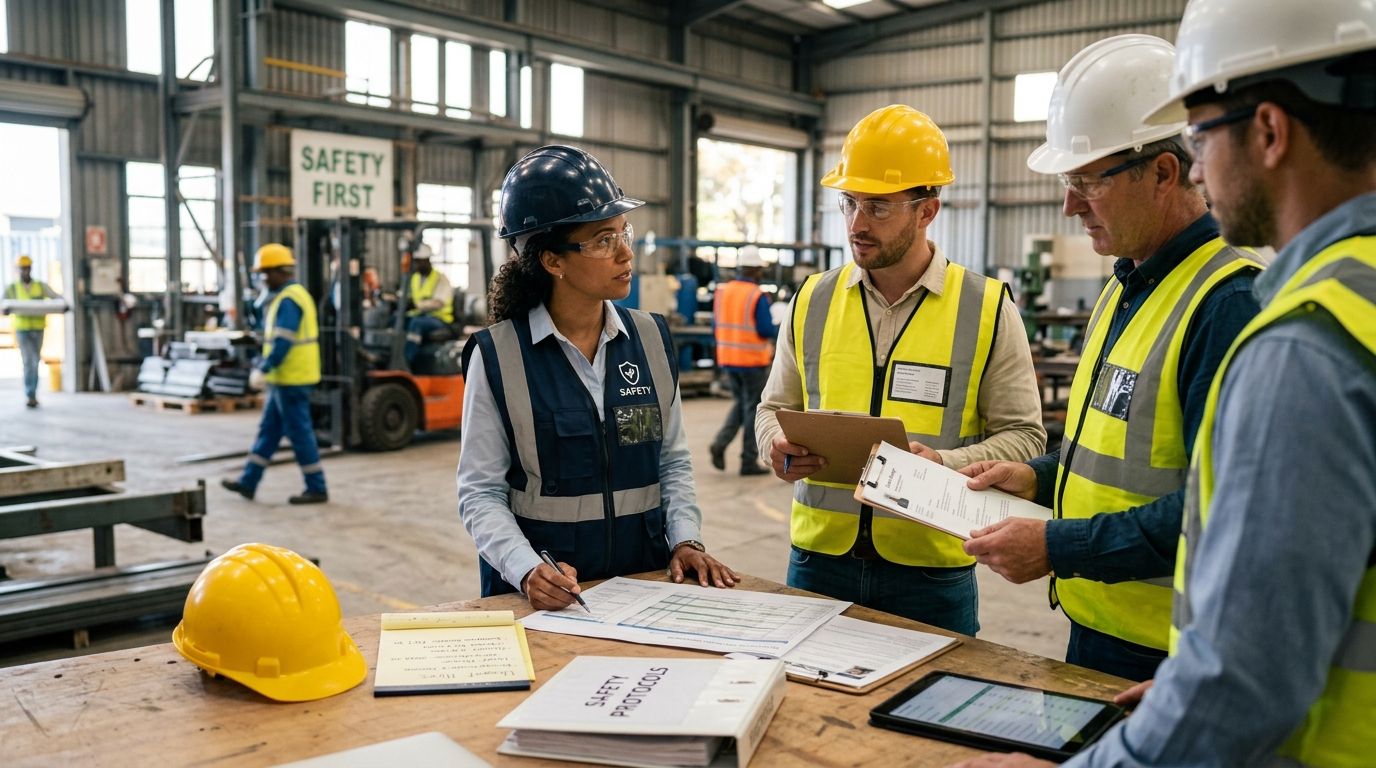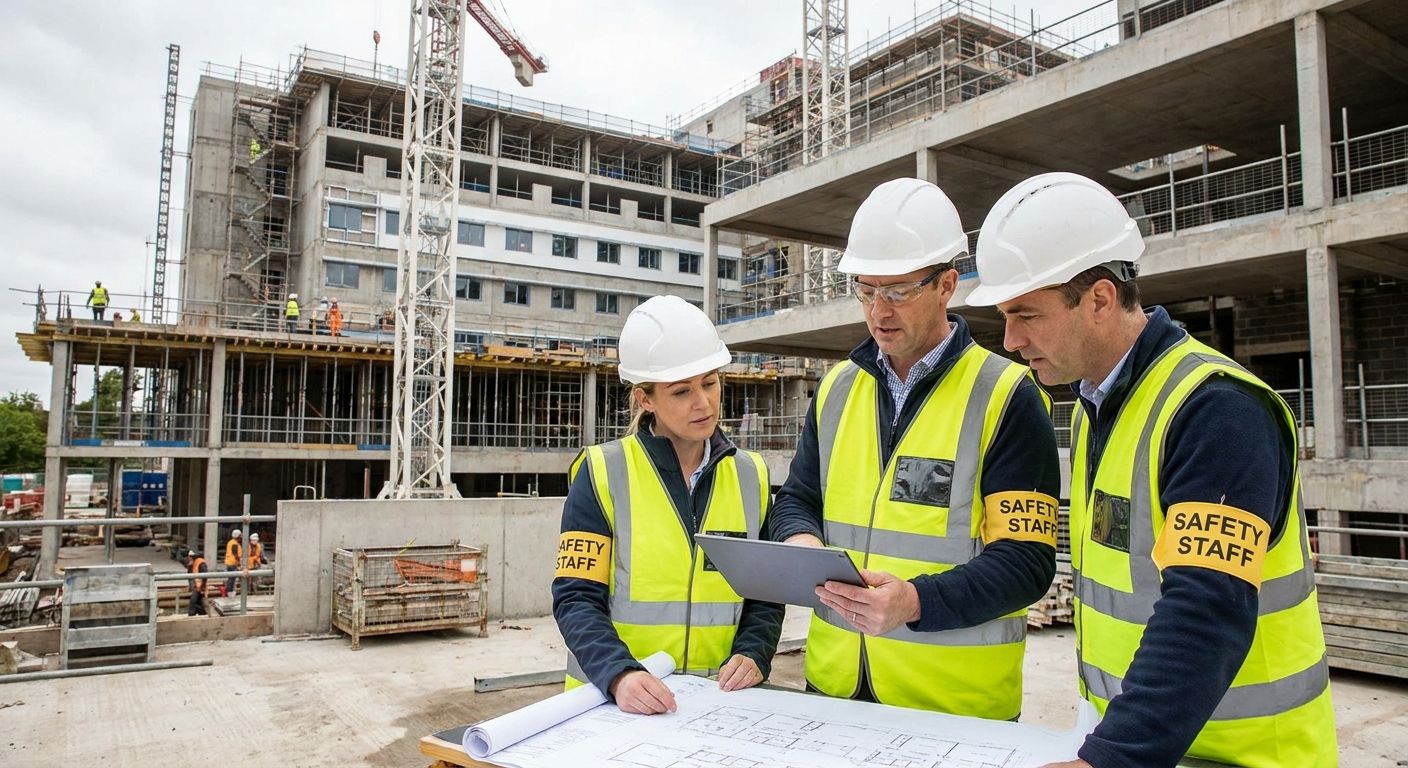
Hospital and healthcare construction projects run on tighter margins for error than almost any other build type — patients are still in the building, infection control inspectors are watching the dust barriers, and one missed ICRA permit can shut a floor down. This guide breaks down what to look for in healthcare construction safety staffing and which staffing models actually hold up on an occupied hospital job site in 2026.
- Direct-hire safety managers with ICRA Class III/IV experience are the safe pick for multi-phase hospital builds — Buy.
- Generalist temp agencies without hospital credentialing turnaround under 5 days are a Skip for fast-track jobs.
- Fire watch coverage tied to Interim Life Safety Measures (ILSM) is non-negotiable on any hot work near patient corridors.
- Healthcare construction safety staffing in 2026 means vetting for both OSHA compliance and infection control training, not one or the other.
Who this is for
This is written for general contractors, construction managers, and facilities directors running renovation or new-build work inside or adjacent to active hospitals, surgical centers, or long-term care campuses. If your project touches an occupied patient care area, needs ICRA permitting, or requires Interim Life Safety Measures documentation, this applies to you. It's not written for someone staffing a standalone medical office building with no active patient population next door — that's a lighter lift.
Why this matters
A hospital under construction is still a hospital. Infection control surveyors, The Joint Commission, and state health departments all expect documented safety oversight that goes beyond a standard OSHA 30 card. Staff the wrong person — someone who's never worked an ICRA permit or doesn't know what a negative air machine test looks like — and you're looking at project delays, citations, or worse, an infection outbreak traced back to your dust containment. Healthcare construction safety staffing isn't a line item you shop on price alone. It's the difference between a project that closes on schedule and one that gets shut down mid-phase.
What to look for in healthcare construction safety staffing
ICRA class experience
Most hospital renovation work falls under ICRA Class II, III, or IV depending on how close it is to patient care areas and how invasive the work is. A safety professional who's only worked Class I retail or office jobs won't know how to set up a negative air machine, seal a containment barrier, or document daily infection control rounds. Ask for specific project history, not just a certification card.
Interim Life Safety Measures (ILSM) fluency
When construction blocks an exit route or disables a fire alarm zone, hospitals require documented ILSM compensating measures — fire watch, temporary signage, alternate egress. A safety officer who can write and manage an ILSM plan protects your project from a Joint Commission finding during survey week.
Credentialing and badging turnaround
Hospitals require background checks, TB tests, and facility-specific orientation before anyone steps on the floor. If your staffing partner can't turn a candidate's paperwork around in 48-72 hours, you're losing days on a schedule that's already tight.
Direct hire vs. temporary flexibility
A phased hospital build might need a permanent safety manager for the 18-month duration and a temporary fire watch crew for two weeks of hot work. Your staffing partner needs both models under one roof, not a forced choice.
Confined space and hot work coordination near patient areas
Mechanical rooms, crawl spaces, and rooftop equipment work in a hospital setting carry extra risk because evacuation routes and smoke control systems interact with the rest of the building. Staff needs experience coordinating with facilities engineering, not just a confined space ticket.
Speed to fill without cutting corners
Fast-track healthcare projects — a new imaging suite, an ER expansion — don't have six weeks to wait on a candidate search. The right partner has a bench of pre-vetted, ICRA-experienced professionals ready to deploy, not a cold-start recruiting process.
Top picks for healthcare construction safety staffing
The long-term anchor — Direct-hire safety managers For multi-phase hospital builds running 12 months or longer, a permanent safety manager who knows the facility, the surveyors, and the subcontractors pays off fast. One dropped ICRA inspection can cost a project weeks of rework. Direct-hire recruiting for safety managers places candidates with documented ICRA Class III/IV project history, not just a resume line. Buy if your project runs past a single quarter and needs continuity through survey cycles.
The ILSM safeguard — Fire watch staffing for hot work permits Any welding, cutting, or hot work near a patient corridor triggers a hot work permit and, often, a dedicated fire watch attendant. Miss this and you risk a stop-work order the moment a surveyor walks the floor. Fire watch staffing for hot work permits covers exactly this gap with attendants trained on hospital-specific fire watch logs. Buy for any hot work scope inside an occupied wing.
The on-site medic — First aid and EMT staffing Construction injuries near a hospital still need documented first response, and having an EMT on-site cuts response time before a patient-adjacent incident becomes a bigger liability. First aid and EMT staffing for job sites fills this for crews of 20 or more working extended shifts. Consider for larger crews or projects running nights and weekends; Skip if your crew is under 10 and near an existing hospital ED.
What to avoid
- Generalist temp agencies with no ICRA training records. A safety badge from a warehouse job doesn't translate to a hospital dust barrier inspection — ask for project-specific references, not just certifications.
- Staffing partners who quote a 2-3 week fill time. Fast-track healthcare projects in 2026 need candidates on-site within days, not weeks, especially for fire watch and confined space coverage.
- Anyone who treats OSHA compliance and infection control as separate hires. On a hospital job, the same safety professional usually owns both. Splitting the role adds coordination overhead you don't need.
Need vetted safety staff on-site this week?
ResponsAble Staffing places ICRA-experienced safety professionals for hospital and healthcare builds nationwide.
Verdict comparison
| Staffing solution | Best for | Turnaround | Verdict |
|---|---|---|---|
| Direct-hire safety manager | 12+ month hospital builds | Weeks (permanent search) | Buy for long-term continuity |
| Fire watch staffing | Hot work near patient corridors | 48-72 hours | Buy for any ILSM-triggered scope |
| First aid/EMT staffing | Crews of 20+, extended shifts | 48-72 hours | Consider for larger crews |
| Generalist temp labor (no ICRA background) | Non-clinical, standalone builds only | Varies | Skip for occupied hospital work |
FAQ
What is healthcare construction safety staffing?
Healthcare construction safety staffing places safety professionals with ICRA and infection control experience on hospital renovation and new-build projects. It covers direct-hire safety managers, fire watch attendants, and confined space teams trained for occupied healthcare facilities.
What is an ICRA permit and why does it matter for staffing?
An Infection Control Risk Assessment (ICRA) permit classifies construction work by infection risk to patients, from Class I to Class IV. Safety staff without ICRA-specific training often miss containment and negative air requirements that hospitals require before work starts.
How fast can a safety staffing agency fill a hospital construction role?
Credentialed candidates for fire watch or confined space roles should be badged and on-site within 48-72 hours once background checks and TB screening clear. Direct-hire safety manager searches take longer, typically several weeks, given the permanent nature of the role.
Do hospital construction projects require a dedicated fire watch attendant?
Yes, any hot work permit issued near an occupied patient care area typically requires a dedicated fire watch attendant under Interim Life Safety Measures. This is separate from general OSHA hot work requirements and is enforced during Joint Commission surveys.
Is direct hire or temporary staffing better for hospital safety managers?
Direct hire works better for hospital projects running 12 months or longer because the safety manager builds relationships with facilities engineering and surveyors. Temporary staffing fits shorter, defined scopes like a single phase or hot work window.
What certifications should a healthcare construction safety officer have?
Look for OSHA 30, documented ICRA Class III/IV project experience, and confined space or hot work certifications relevant to the scope. A certification card alone doesn't confirm hospital-specific experience, so ask for project references.
How much does healthcare construction safety staffing cost in 2026?
Costs vary by role, region, and whether the placement is temporary or direct hire, so get a project-specific quote rather than relying on a national average. Fire watch and EMT roles are typically billed hourly, while direct-hire safety managers carry a placement fee structure.
One last thing
The hospitals that avoid mid-project shutdowns in 2026 aren't the ones with the biggest safety budget — they're the ones who staffed for ICRA experience before the first wall came down, not after a surveyor flagged the containment barrier. Healthcare construction safety staffing works best when it starts at the pre-construction meeting, not the week the first hot work permit gets pulled.