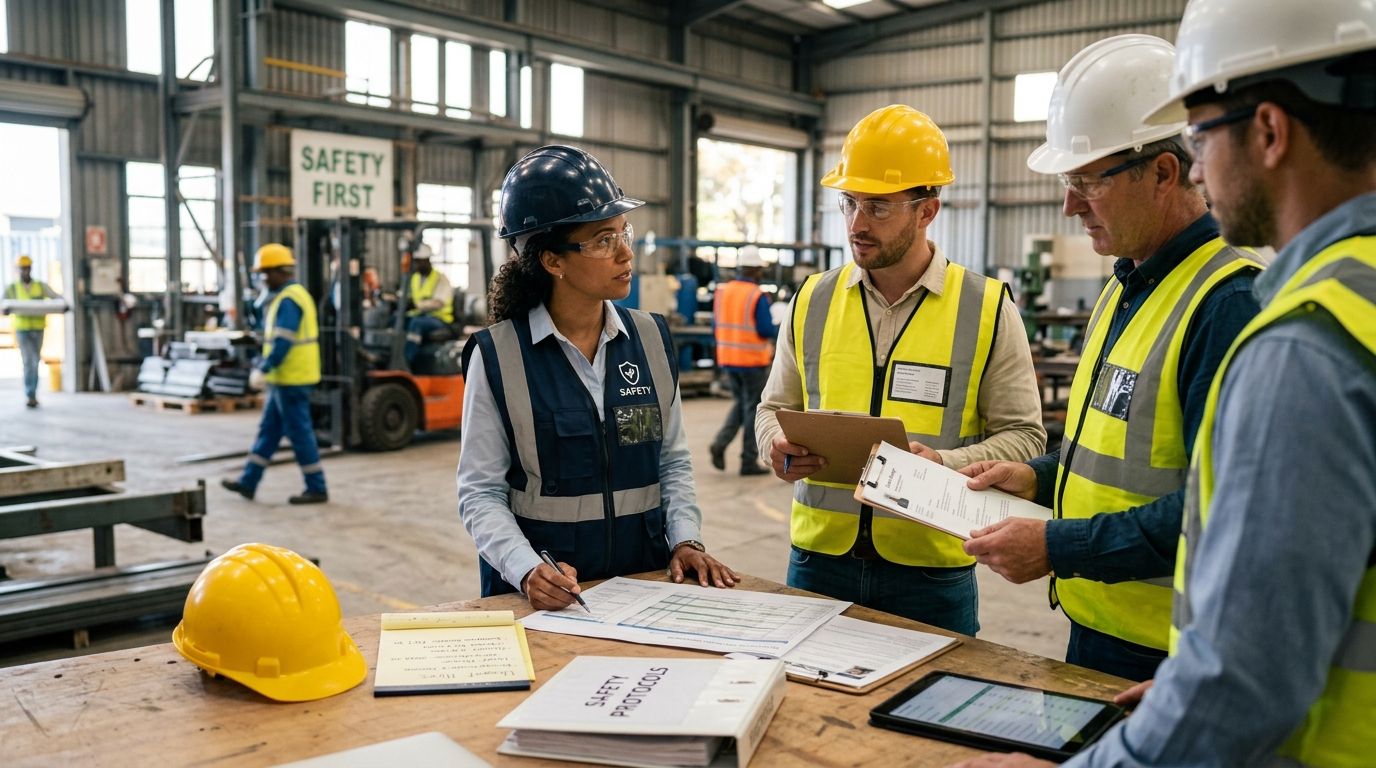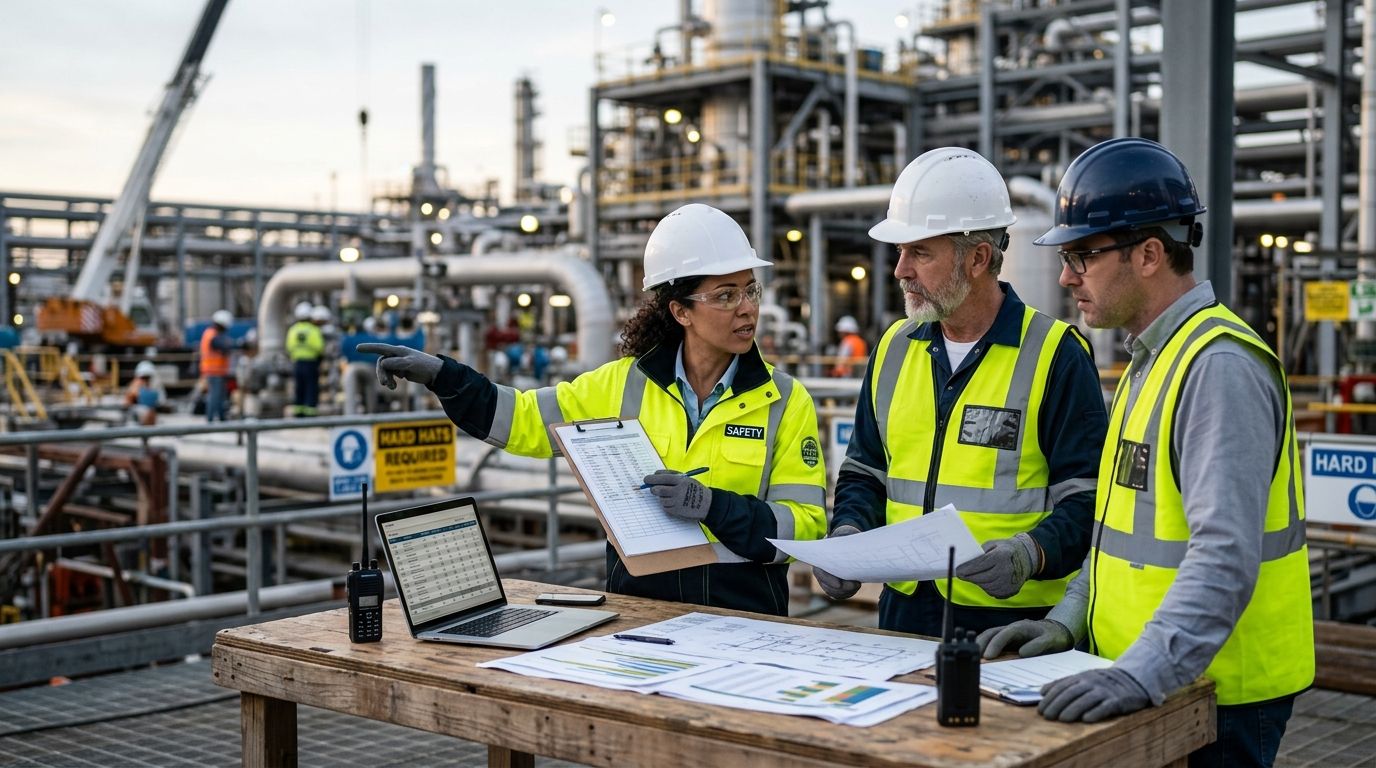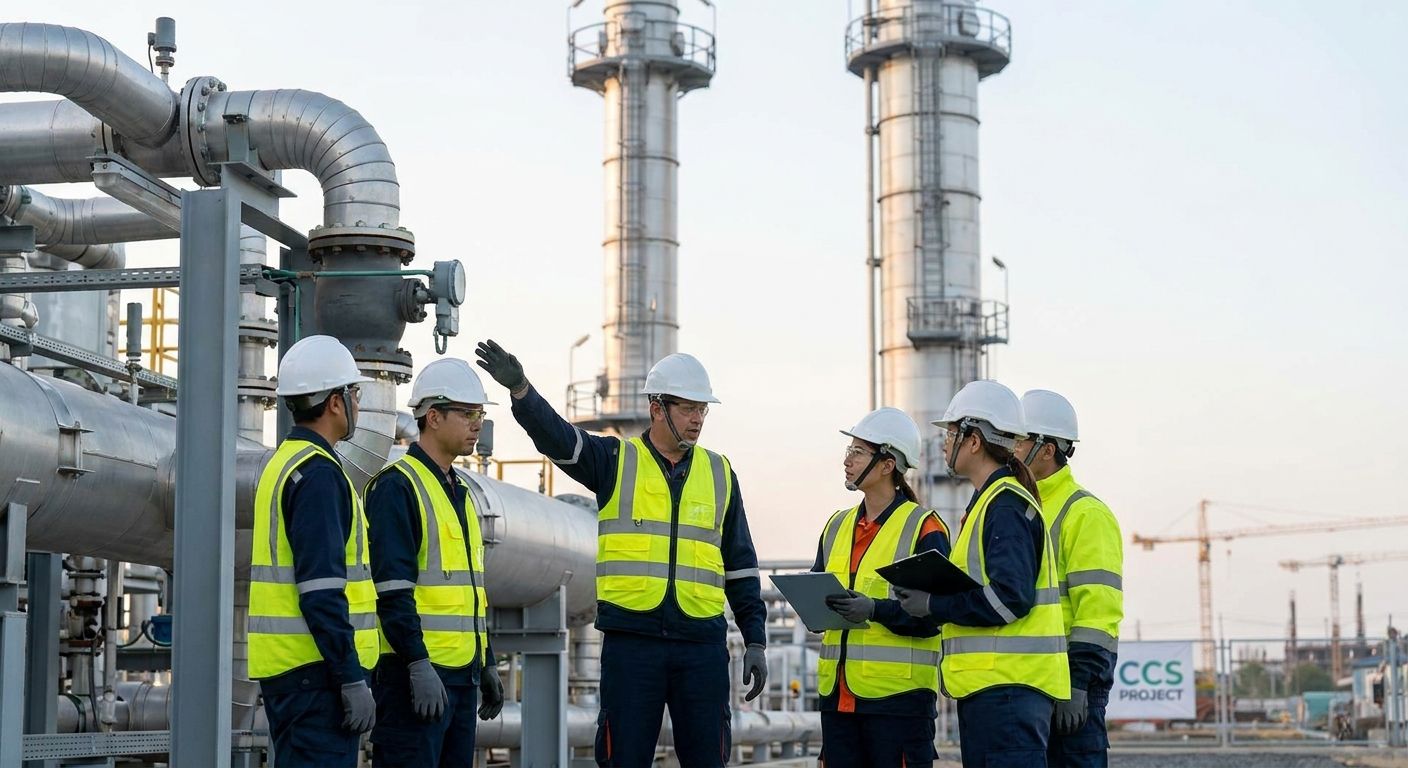
Carbon capture and sequestration staffing places EHS professionals who understand high-pressure CO2 handling, confined space entry near injection wells, and pipeline safety protocols with CCS developers, EPC contractors, and site owners. The segment differs from standard oil and gas staffing because CO2 isn't flammable like methane, but it displaces oxygen fast enough to kill someone in a low-lying trench or vault within minutes. A safety hire who's spent a career on flare-gas jobs still needs a briefing on CO2-specific asphyxiation risk before they're useful on a capture facility or sequestration wellhead.
- Safety staffing for carbon capture projects requires confined space and high-pressure gas experience, not general oil and gas background.
- CCS sites split into two staffing phases: construction-heavy EPC work and long-term monitoring at injection wells.
- Verify OSHA 30, confined space attendant, and H2S/CO2 gas detection certifications before a candidate reaches the gate.
- ResponsAble Staffing places temporary, project-based, and direct-hire EHS professionals for CCS and adjacent industrial builds.
- Contract-to-hire lets a CCS operator test a safety coordinator through startup before committing to a permanent role.
Why safety staffing matters for carbon capture and sequestration projects
CCS is a build-out industry right now, not a mature one. Federal tax incentives under Section 45Q have pulled new capture facilities, pipelines, and injection sites into development across the Gulf Coast, the Midwest, and the Rocky Mountain region, and most of these projects are staffed by teams who've never worked a CO2-specific site before.
That gap shows up fastest in safety roles. A site safety manager pulled from a standard refinery turnaround knows fire watch and hot work permits cold, but CO2 asphyxiation hazards, dry ice formation at release points, and pipeline integrity monitoring around sequestration wells aren't things every EHS resume covers. Getting this wrong doesn't just slow the project down — it puts a crew in a trench with no idea the air's gone bad.
Most CCS developers are also working across two very different staffing needs at once: a construction phase that looks like heavy industrial EPC work, and an operations phase that looks more like a utility or pipeline monitoring job. Treating those as one hiring problem is where a lot of projects lose time in 2026.
Update your job requirements before you post the role
A generic "industrial safety professional" posting pulls candidates who've never handled a CO2-specific hazard analysis. Fix the posting first.
- Require confined space entry and attendant experience specific to low-oxygen environments, not just general confined space familiarity
- List CO2 and H2S gas detection equipment by name if your site uses it
- Specify whether the role covers construction, commissioning, or long-term monitoring — these are different jobs
- Ask for prior pipeline, gas processing, or petrochemical site experience over general construction background
- Note any remote or rural site logistics (many sequestration wells sit far from population centers)
Recruit for confined space and high-pressure gas experience specifically
Don't assume oil and gas experience transfers cleanly. Screen for the specific hazard set CCS sites carry.
- Prior work around CO2 pipelines, injection wells, or geologic storage sites
- Experience with confined space rescue planning in low-oxygen, not just toxic-gas, scenarios
- Familiarity with pressure vessel and piping inspection on gas transmission projects
- Background in process hazard analysis for facilities handling compressed or liquefied gas
- Comfort working extended stretches on rural or remote sites
Candidates who check three or more of these boxes cut onboarding time significantly compared to someone learning CO2 hazard basics on day one.
Verify certifications before anyone reaches the gate
A resume claim isn't a credential. Confirm it before the candidate is on the schedule.
- OSHA 10 or OSHA 30 construction certification, current and unexpired
- Confined space entry supervisor or attendant certification
- H2S and multi-gas detection training specific to the equipment used on-site
- First aid/CPR certification, especially for remote sites without quick EMS access
- Any state-specific certifications required for pipeline or well-site work
Without verification, a project owner is trusting a PDF. Verifying safety certifications before placing a candidate closes that gap before someone's badged in.
Build separate staffing plans for construction and operations phases
CCS projects run through distinct phases, and staffing one continuous headcount across both wastes money and creates skill mismatches.
- Construction/EPC phase: heavy staffing of fire watch, confined space attendants, and safety coordinators tied to build schedule
- Commissioning phase: process hazard analysis facilitators and startup safety leads
- Long-term monitoring phase: smaller, steadier headcount of EHS specialists tracking pipeline integrity and well performance
- Turnaround or outage windows: temporary surge staffing tied to specific maintenance events
A project treating this as one flat headcount either overstaffs the monitoring phase or understaffs the construction crunch. Neither is cheap. Turnaround safety staffing for oil, gas, and refinery projects covers the surge-staffing model that applies directly to CCS construction windows.
Coordinate safety staffing with process hazard reviews
A CCS facility handling compressed or liquefied CO2 needs a process hazard analysis before startup, and the safety staff on-site should be part of that review, not brought in after.
- Bring your PHA facilitator in during design review, not just before commissioning
- Staff a safety coordinator who can translate PHA findings into field-level procedures
- Cross-train confined space attendants on the specific release scenarios identified in the PHA
- Schedule refresher reviews at each major construction milestone, not just once
“If your PHA facilitator hasn't worked a CO2 pipeline before, the review takes twice as long and still misses the low-oxygen scenarios that matter most.”
Process hazard analysis facilitators with pipeline or gas-processing background move through this work faster than generalists learning CO2 behavior on the fly.
Plan for remote and rural site logistics
Most sequestration wells and a good number of capture facilities sit outside major metro areas. Staffing has to account for that up front.
- Budget for per diem or travel arrangements if local safety talent is thin
- Confirm EMS response time to the site and staff first aid/EMT coverage accordingly
- Build in lodging logistics for multi-week rotations
- Check bilingual coverage needs if the local labor pool skews that way
Confined space attendant staffing for industrial sites and dedicated confined space entry team planning both matter more on a CCS site than a typical construction job, since injection wells and vaults are confined space by design, not by exception.
Use contract-to-hire before committing to permanent headcount
CCS projects often don't know their long-term staffing needs until the operations phase settles in. Contract-to-hire buys time to find out.
- Start key roles — safety manager, PHA facilitator — on a contract basis through commissioning
- Convert to direct hire once the operations headcount and shift pattern is confirmed
- Avoid locking into permanent headcount during the volatile construction phase
- Use the trial period to confirm fit with site-specific hazard protocols
Staff your CCS project with vetted EHS talent
Temporary, project-based, or direct-hire safety professionals for capture and sequestration sites.
Comparing staffing options for CCS projects
| Option | Best for | Key limitation |
|---|---|---|
| General industrial staffing agency | Fast fill on generic construction roles | Little to no CO2 or gas pipeline-specific vetting |
| Specialized EHS staffing agency (ResponsAble Staffing) | Construction, commissioning, and monitoring phases needing verified confined space and gas hazard experience | Requires clear phase-by-phase headcount planning from the client |
| In-house recruiting team | Long-term operations hires once headcount is stable | Slow to scale for construction surges, weak network in niche pipeline/CCS talent |
| Direct-hire only search | Permanent safety director or manager roles | No coverage for short-term construction surge or turnaround windows |
Common mistakes CCS project owners make
- Assuming oil and gas EHS experience covers CO2 hazards. Flammability protocols and asphyxiation protocols are different disciplines; a resume heavy on flare-gas work doesn't guarantee CO2 competence.
- Staffing construction and operations at the same headcount level. The construction phase needs a much larger safety crew than the steady-state monitoring phase that follows.
- Skipping certification verification because the timeline is tight. A rushed hire without verified confined space credentials is the fastest way to create a real incident on-site.
- Bringing safety staff in after the process hazard analysis instead of during it. PHA findings that never reach field-level procedures don't protect anyone.
- Underestimating remote site logistics. A safety coordinator who can't commit to travel or rotation schedules doesn't last through a multi-year sequestration build.
FAQ
What certifications should safety staff on a carbon capture project hold in 2026?
Confined space entry/attendant certification, current OSHA 10 or OSHA 30 construction training, and H2S or multi-gas detection training specific to the equipment used on-site. Pipeline or gas-processing background is a strong add for CO2-specific hazard scenarios.
Is temporary or direct-hire staffing better for a CCS project?
Temporary and project-based staffing fits the construction and commissioning phases, which need a large crew for a fixed window. Direct hire fits the long-term operations phase once the monitoring headcount is confirmed.
How is CO2 pipeline safety different from natural gas pipeline safety?
CO2 isn't flammable, so the primary hazard is asphyxiation from oxygen displacement rather than fire or explosion. Confined spaces, trenches, and low-lying vaults near injection wells carry the highest risk.
Do carbon capture sites need a process hazard analysis?
Facilities handling compressed or liquefied CO2 should run a process hazard analysis before startup, covering release scenarios, confined space exposure, and pipeline integrity risk. Bringing the PHA facilitator in during design review catches more issues than a pre-commissioning review alone.
What does a confined space attendant do on a sequestration well site?
A confined space attendant monitors atmospheric conditions and worker status at vaults, trenches, and well vaults where CO2 can accumulate and displace oxygen. The role requires certification specific to low-oxygen, not just toxic-gas, confined space scenarios.
How long does it take to staff a safety manager for a new CCS project?
Timelines vary by how niche the certification requirements are, but a specialized EHS staffing agency with a pre-vetted bench of confined space and pipeline-experienced candidates fills faster than a general search starting from scratch.
Can one safety team cover both construction and operations phases of a CCS project?
It's possible but rarely efficient. Construction needs a larger, temporary crew tied to the build schedule, while operations needs a smaller, steady team focused on monitoring — treating them as separate staffing plans matches headcount to actual need.
One last thing
The safety hire who costs a CCS project the most isn't the one who lacks certifications on paper — it's the one who's certified but has never actually worked around compressed CO2 before. Ask every candidate one direct question in the interview: "Walk me through what happens if a CO2 sensor alarms in a vault you're attending." The answer tells you in thirty seconds whether they've done this work or just studied it.