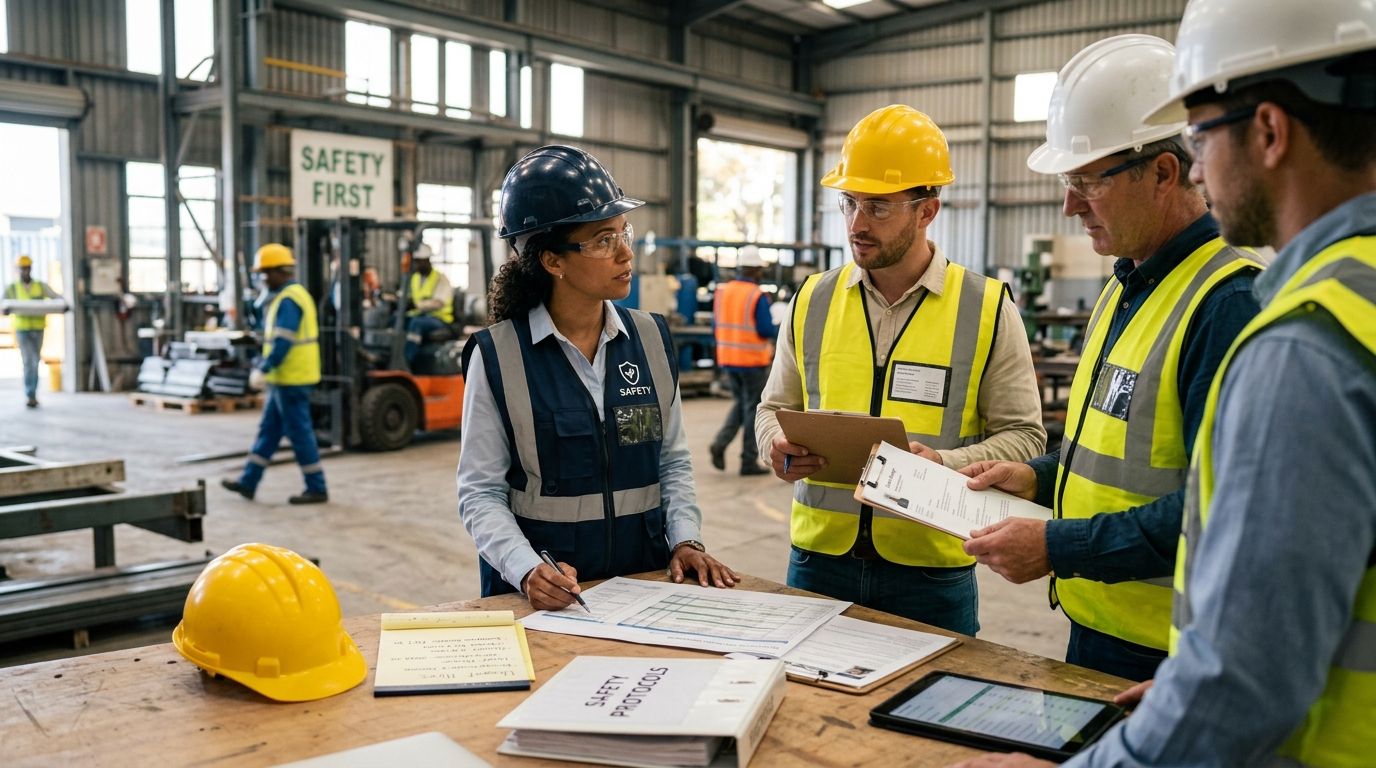
A behavior-based safety coach only earns their keep on a job site if the crews trust them, and finding someone who can coach observation habits instead of just policing checklists is the actual hiring problem here.
- Direct-hire placement wins for behavior based safety coach staffing when the program is permanent — buy for retention.
- Contract-to-hire on 30/60/90-day terms fits pilot BBS rollouts before a company commits to headcount.
- An HSE advisor engagement covers coaching cadence without adding a full-time seat — consider for multi-site audits.
- Skip candidates whose only credential is a classroom OSHA course with zero logged field observation hours.
Why this matters
Behavior-based safety programs fail for one reason more than any other: the person running observations doesn't have the field credibility to get honest reporting from crews. A coach who spent five years behind a desk auditing paperwork isn't the same hire as one who has stood on a scaffold deck coaching a rigger through a near-miss conversation. In 2026, with incident-rate pressure rising across construction, oil and gas, and manufacturing, the gap between those two hires shows up fast in your TRIR numbers.
Staffing this role wrong costs you twice — once in the hire, again in the credibility the program loses when workers stop taking the coach seriously. Getting it right starts with knowing what to screen for before you post the job.
Who this is for
This guide is for safety directors, EHS managers, and operations leaders at construction firms, refineries, manufacturing plants, and energy projects who are building or scaling a behavior-based safety program and need to staff the coaching role — whether that's one coordinator on a single site or a bench of coaches across a multi-site rollout. If you're vetting candidates through ResponsAble Staffing or comparing agencies, the criteria below apply whether you're hiring direct or bringing someone on for a defined project window.
What to look for in a behavior-based safety coach
Logged field observation hours, not just classroom hours
A coach's value comes from time spent actually observing crews, not sitting in a training room. Ask for a number — candidates with fewer than a couple years of documented field observation work tend to struggle reading real conditions versus textbook scenarios. This matters more in 2026 than it did five years ago, because clients are asking for observation logs as part of contractor prequalification.
OSHA outreach credential level
The OSHA 10-hour outreach course covers basics; the OSHA 30-hour goes deeper into hazard recognition and is the baseline most serious industrial clients expect from anyone coaching safety behavior on-site. A coach holding only the 10-hour card is fine for smaller commercial jobs, not for a refinery turnaround or a multi-crew construction site.
Coaching skill over auditing skill
Behavior-based safety is a conversation discipline, not a clipboard discipline. The best coaches ask questions that get workers to self-correct instead of issuing citations. Interview for this directly — ask a candidate to walk through how they'd approach a worker skipping a lockout step, and listen for whether they default to coaching or to write-ups.
Industry-specific behavior taxonomy
The at-risk behaviors that matter on a pipeline crew look nothing like the ones that matter on an automotive assembly line. A coach who's built taxonomies for confined space entry teams or scaffolding crews brings a head start that a generalist doesn't. If your operation is highly specific — LNG terminal construction, semiconductor fabrication, pharmaceutical manufacturing — ask for direct experience in that setting.
Data and BBS software literacy
Most behavior-based safety programs run on some form of observation-tracking software now. A coach who can pull trend data and present it to plant leadership adds more value than one who fills out paper cards. Ask what platforms they've used and whether they can produce a sample trend report.
Fit for your engagement model
Some coaches want permanent ownership of a program; others prefer project-based work moving between sites. Neither is wrong, but mismatching the two creates turnover. Know which one you're hiring for before you start screening.
Top picks: engagement models for staffing this role
The foundation pick — direct-hire safety manager placement. When a BBS program is permanent infrastructure, not a pilot, a direct hire gives you continuity a rotating contractor can't. Look for candidates with at least 3-5 years running observation programs and a track record of trend reporting to leadership. Direct hire recruiting for safety managers is the right lane when the role is a permanent seat on the org chart. Verdict: Buy if the program is staying for years, not months.
The field pick — direct-hire safety coordinator. For companies that need someone doing daily observations and coaching on the ground rather than managing the program from an office, a coordinator-level hire is the better fit and typically comes at a lower cost basis than a full manager role. Direct hire recruiting for safety coordinators covers this exact profile. Verdict: Buy for single-site, hands-on coaching needs.
The flexible pick — HSE advisor or consultant staffing. If you need coaching cadence and audit rigor across multiple sites without adding permanent headcount at each one, an advisor-model engagement covers periodic visits and program design without a full-time seat. This works well for companies still deciding whether BBS is a permanent fixture. Verdict: Consider if you're testing the program before committing to a hire.
The bridge pick — contract-to-hire on a 30/60/90-day term. This is the standard staffing structure for companies that want to see a coach work a site before extending a permanent offer. It de-risks the hire for both sides and is common for fast-track construction jobs where the safety needs are urgent but the long-term headcount plan isn't finalized. Verdict: Consider for pilot programs; Skip if you already know you need permanent ownership — go direct hire instead and save the transition friction.
What to avoid
- A classroom-only trainer with no field hours. Someone who's great at delivering the OSHA 30-hour course to a room isn't automatically good at coaching behavior on a live job site — those are different skill sets.
- A generalist safety hire stretched into a BBS role. A candidate hired for general compliance work who gets handed observation duties as a side task rarely has the coaching depth the role needs.
- Skipping agency vetting on a fast timeline. Urgency is real, but a rushed placement without reference checks or observation-log verification is how programs end up with a coach the crews don't respect. Before signing with any agency, run through how to vet a safety staffing agency before signing a contract — it applies whether you're staffing a BBS coach or any other safety role.
Need a vetted BBS coach candidate?
Get a shortlist matched to your industry and site conditions.
Verdict comparison
| Engagement model | Field coaching depth | Program ownership | Cost commitment | Verdict |
|---|---|---|---|---|
| Direct-hire safety manager | High | Full | Highest, ongoing | Buy for permanent programs |
| Direct-hire safety coordinator | High | Site-level | Moderate, ongoing | Buy for single-site coaching |
| HSE advisor/consultant | Moderate, periodic | Advisory | Lower, flexible | Consider for multi-site oversight |
| Contract-to-hire (30/60/90-day) | Varies by candidate | Trial basis | Lowest upfront | Consider for pilots, skip if program is already committed |
FAQ
What is a behavior-based safety coach?
A behavior-based safety coach observes worker behavior on job sites and coaches at-risk actions before they lead to incidents, rather than only auditing paperwork after the fact. The role blends field observation with direct communication skill.
Is a BBS coach the same as a safety manager?
No, a safety manager typically owns the broader compliance program while a BBS coach focuses specifically on daily observation and coaching conversations. Some companies combine both into one role at smaller sites.
Should you hire a BBS coach direct or on contract?
Hire direct when the program is permanent infrastructure for the company; use contract-to-hire on 30/60/90-day terms when you're piloting the program before committing to headcount. Direct hire gives you continuity that rotating contractors can't match.
What certifications should a BBS coach hold?
The OSHA 30-hour outreach card is the baseline most industrial clients expect, with the OSHA 10-hour acceptable only for lower-risk commercial settings. Additional credentials in the specific hazard category — confined space, fall protection, process safety — add value depending on your site.
How long does it take to fill a BBS coaching role?
Fill time depends on how specialized your site conditions are; a general manufacturing coach fills faster than one needing LNG terminal or refinery turnaround experience. Contract-to-hire terms of 30/60/90 days are standard for bridging the gap while a permanent search runs.
Can one BBS coach cover multiple job sites?
Yes, in an advisory or consultant model a single HSE advisor can rotate through multiple sites on a set cadence rather than sitting full-time at one location. This works best when observation volume per site is moderate rather than continuous.
What's the difference between OSHA 10-hour and 30-hour outreach training?
The OSHA 10-hour course covers basic hazard awareness while the 30-hour goes deeper into hazard recognition, avoidance, and prevention across a wider range of conditions. Most industrial BBS coaching roles expect the 30-hour minimum.
How much field experience should a BBS coach have?
Look for at least 3-5 years of logged field observation work rather than classroom-only experience. Coaches with fewer logged hours tend to struggle reading real site conditions compared to trained scenarios.
One last thing
The candidates who look best on paper — heavy on certifications, light on logged field hours — are usually the ones crews stop listening to within a month. Ask every finalist for a specific example of a behavior conversation that changed an outcome on site, not a policy they enforced. If they can't give you one, that's the tell.