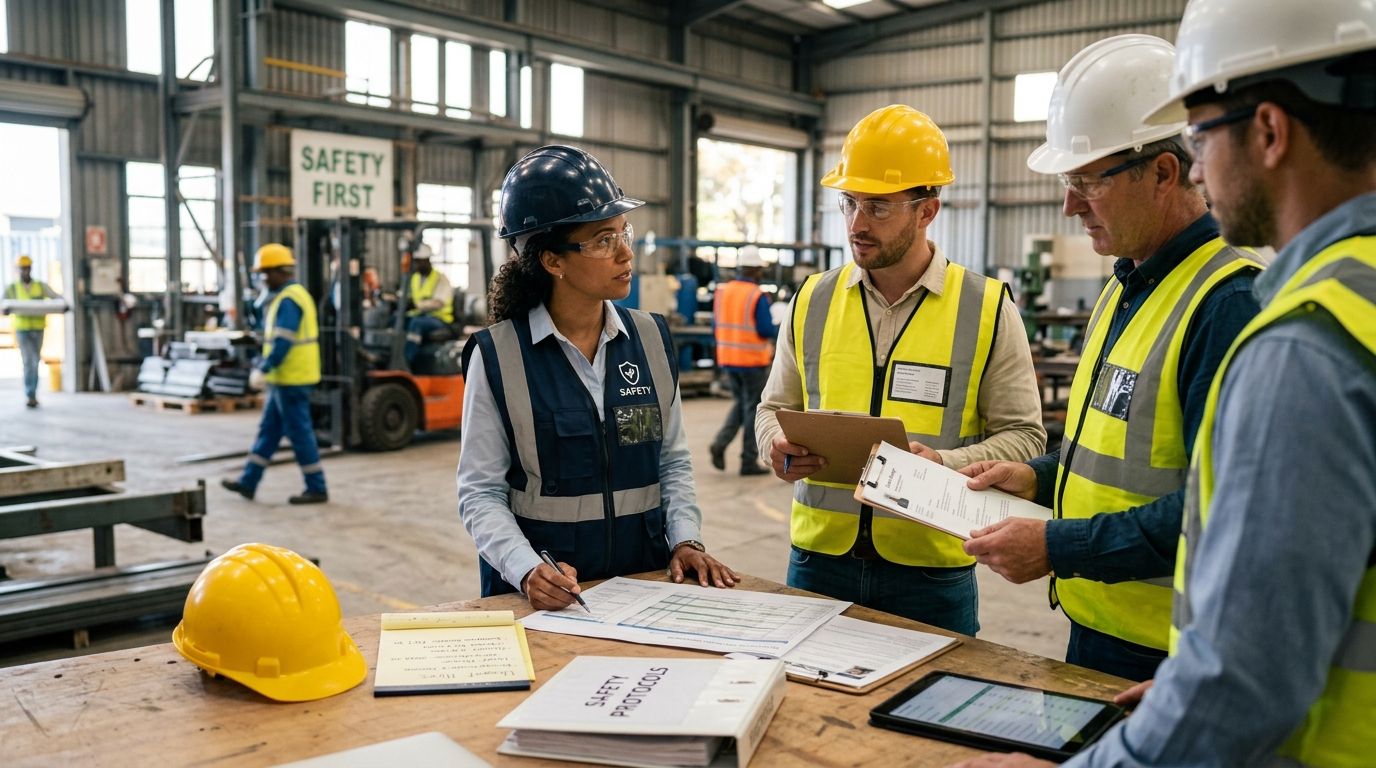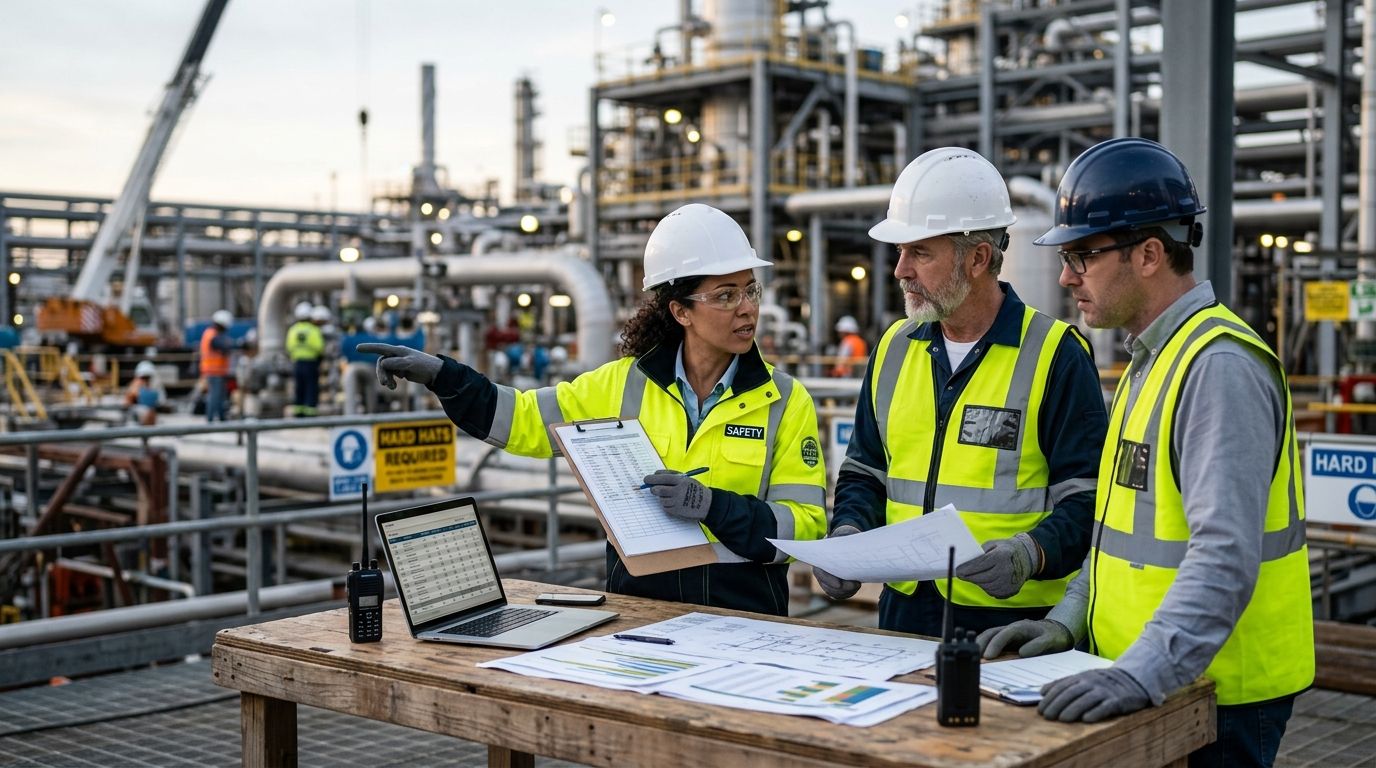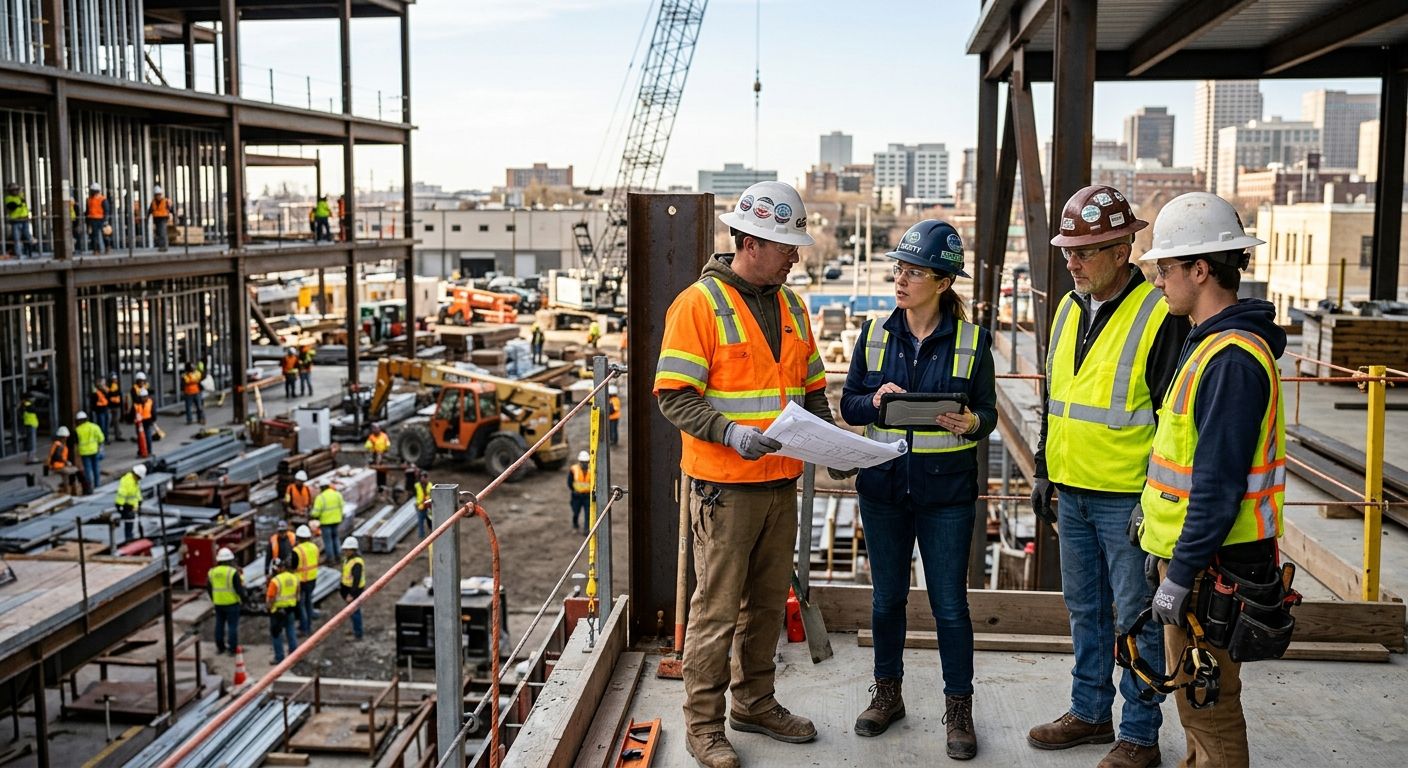
General contractors juggling multiple active sites don't need a lecture on why safety matters — they need the right safety staffing for general contractors model for the phase they're actually in right now. This guide ranks five staffing approaches used across construction, oil and gas, and industrial build-outs in 2026, and tells you which one fits your site today.
Best overall: contract and temporary safety staffing for general contractors who need certified coverage on an active site within days. Best for permanent leadership: direct-hire recruiting for safety managers. Best low-commitment option: contract-to-hire safety staffing, where a professional works the job before you decide on a full-time offer.
- Contract and temporary safety staffing for general contractors wins when an active site needs coverage fast in 2026.
- Direct-hire recruiting for safety managers fits a permanent leadership seat, not an urgent gap.
- Contract-to-hire safety staffing lets a general contractor test fit before committing to a full-time offer.
- In-house safety hiring only works when a GC already runs a deep internal recruiting bench.
- MSP/VMS-compatible safety staffing matters most for multi-state general contractors managing dozens of sites.
Why this matters
A vacant safety seat on a job site is not a paperwork problem — it's a liability sitting in plain sight. General contractors that lean on generic staffing firms often get warm bodies without verified certifications, and the gap shows up during an incident, not before one.
Specialized safety recruiting companies for construction firms exist for exactly this reason: they vet OSHA 10-hour and 30-hour outreach cards, confined space competency, and fall protection experience before a candidate ever reaches your site. That distinction matters more in 2026 than it did five years ago, as project timelines compress and enforcement scrutiny tightens.
Citations, project delays, and rising insurance premiums follow a coverage gap faster than most general contractors expect. The five models below aren't competing for the same job — match the model to the situation, not the sales pitch.
What makes the best safety staffing solution
- Verified certifications — OSHA 10-hour/30-hour cards, confined space and fall protection competency confirmed before placement, not after
- Speed to deploy — how fast a vetted safety professional can be on-site once you make the call
- Scope match — whether the model fits a short project gap, a permanent seat, or an enterprise-wide program
- Track record transparency — whether the staffing partner will show you incident history and placement outcomes
- Contract flexibility — options to extend, convert, or end an assignment without a rigid multi-year lock-in
- Multi-site and multi-state fit — whether the model scales across job sites without duplicated vendor management
Safety staffing solutions for general contractors: at a glance
| Staffing model | Best for | Standout feature | Key limitation |
|---|---|---|---|
| Contract & temporary safety staffing | Fast coverage during a ramp-up or turnaround | Vetted safety professionals placed in days, not weeks | Not designed for permanent succession planning |
| Direct-hire recruiting for safety managers | Filling a permanent safety director or manager seat | Full search and credential vetting before an offer | Longer timeline than a temporary placement |
| Contract-to-hire safety staffing | Testing fit before committing to a full-time hire | Working trial period ahead of conversion | Needs a defined conversion window set upfront |
| MSP/VMS-compatible safety staffing | Multi-state general contractors running vendor programs | Fits inside existing vendor management systems | Adds process overhead for a single-site GC |
| In-house safety hiring | GCs with a mature internal recruiting team already | Full control over sourcing and culture fit | Slower time-to-fill for niche certifications |
1. Contract and Temporary Safety Staffing: best safety staffing for general contractors facing a fast ramp-up
Contract and temporary safety staffing places a certified safety professional on your site for the length of a project phase — a turnaround, a ramp-up, or coverage while you search for a permanent hire. ResponsAble Staffing handles the vetting, the certification checks, and the paperwork before the person shows up.
Contract staffing pros:
- Coverage lands on-site in days, not weeks
- No long-term headcount commitment
- Works for one site or several running in parallel
Contract staffing cons:
- Not built for a permanent leadership seat
- Requires a clear scope of work upfront to avoid mid-project confusion
Best for: general contractors with an active site and no time to run a full search. Verdict: Buy.
2. Direct-Hire Recruiting for Safety Managers: best safety staffing solution for permanent leadership roles
When you need a permanent safety director or site safety manager, not a temporary fix, direct-hire recruiting for safety managers runs a full search against your requirements, not just whoever is available this week.
Direct-hire pros:
- Candidates vetted for long-term fit, not just immediate availability
- Full background and certification verification before an offer goes out
- Better alignment with company culture and long-term safety strategy
Direct-hire cons:
- Takes longer than a contract placement
- Doesn't solve an urgent, immediate coverage gap
Best for: general contractors ready to build a permanent safety leadership bench in 2026. Verdict: Buy — but only when the seat is permanent.
3. Contract-to-Hire Safety Staffing: best safety staffing solution for testing fit before a permanent offer
Contract-to-hire safety staffing puts a professional on the job first, then converts them to a permanent employee once both sides confirm the fit. It splits the difference between speed and commitment.
Contract-to-hire pros:
- You see the person work your site before you offer full-time employment
- Lower risk than a cold direct-hire decision
- Conversion terms are set upfront, so there's no ambiguity later
Contract-to-hire cons:
- Needs a defined conversion window or it drags on indefinitely
- Costs more over the trial period than a straight contract placement
Best for: GCs unsure whether a role should be permanent yet. Verdict: Hold for GCs still defining the seat; Buy once the scope is clear.
4. MSP/VMS-Compatible Safety Staffing: best safety staffing solution for multi-state general contractors
Enterprise and multi-state general contractors often run safety staffing through a vendor management system already covering other labor categories. MSP and VMS safety staffing programs plug into that existing infrastructure instead of adding a separate vendor to track.
MSP/VMS pros:
- Consolidates safety staffing under existing procurement and reporting
- Scales across dozens of active sites without duplicated vendor management
- Easier compliance reporting for enterprise EHS programs
MSP/VMS cons:
- Adds process steps that slow things down for a single-site GC
- Only pays off once you're managing staffing at scale
Best for: multi-state general contractors already running an MSP or VMS program. Verdict: Buy for enterprise GCs; Skip for single-site contractors.
5. In-House Safety Hiring: best safety staffing alternative for GCs with an established team
Some general contractors already run a strong internal recruiting function and prefer to hire safety staff the same way they hire everyone else. In-house safety hires vs a staffing agency is a real option, not a fallback — but it's the slowest of the five models when the role requires a niche certification.
In-house hiring pros:
- Full control over sourcing, interviewing, and culture fit
- No staffing agency markup on the placement
- Works well for GCs with steady, predictable hiring volume
In-house hiring cons:
- Time-to-fill runs longer for confined space, radiation safety, or process safety specialists
- Internal recruiters rarely have a pre-vetted bench for a same-week gap
- No outside benchmark for whether your safety hiring bar matches the industry
Best for: GCs with a mature internal team and no urgent coverage gap. Verdict: Hold — fine as a long-term strategy, risky as your only plan.
How we ranked these safety staffing solutions
Every model above gets judged against the same six criteria: verified certifications, speed to deploy, scope match, track record transparency, contract flexibility, and multi-site fit. Contract and temporary staffing ranks first because it satisfies the criteria that matter most for the largest share of general contractors in 2026 — an open seat, a live job site, and a deadline that doesn't move.
Direct-hire and contract-to-hire rank next because they solve a real but different problem: building a permanent department instead of covering a gap. MSP/VMS and in-house hiring sit at the bottom of most GCs' priority list not because they're weak options, but because they only pay off at a specific scale.
“A vacant safety seat isn't a paperwork problem — it's a liability sitting in plain sight on an active job site.”
Which safety staffing solution should you choose?
If your job site has an open safety seat right now, contract and temporary safety staffing is the default answer — it gets a vetted professional on-site fastest with the least commitment. If you're building a permanent safety department, start with direct-hire recruiting instead of hoping a temp placement turns into something long-term.
Multi-state and enterprise general contractors managing staffing at scale should route everything through an MSP/VMS-compatible program before it turns into five separate vendor relationships to track. GCs with a strong internal team can keep hiring in-house, but they should still have a contract staffing partner on standby for the week the internal pipeline runs dry — and in 2026, it usually does.
FAQ
What's the best safety staffing solution for general contractors in 2026?
Contract and temporary safety staffing is the best fit for most general contractors in 2026 because it places a vetted safety professional on an active site within days. Direct-hire recruiting works better when the role is permanent.
Is direct-hire recruiting better than contract staffing for a safety manager?
Direct-hire recruiting for safety managers is better when the role is permanent and you're building a long-term safety department, not filling an urgent gap. Contract staffing is faster but isn't built for succession planning.
How much does safety staffing cost for a general contractor?
Cost depends on certification level, project duration, and location, so check current rates directly with a safety staffing partner. Contract-to-hire and direct-hire pricing structures differ because they cover different commitment lengths.
What certifications should a safety staffing agency verify before placement?
OSHA 10-hour and 30-hour outreach cards, confined space competency, and fall protection experience should be verified before a candidate reaches your site. Skipping this step is the most common failure point in general safety staffing.
Is contract-to-hire safety staffing a good fit for a general contractor?
Contract-to-hire works well when a general contractor is unsure whether a safety role should be permanent, letting the person work the job before conversion. It only works cleanly with a defined conversion window set upfront.
Should a general contractor hire safety staff in-house or use an agency?
In-house hiring works for general contractors with a mature internal recruiting team and no urgent coverage gap, but it runs slower for niche certifications like confined space or radiation safety. A staffing agency fills the gap faster when the seat is open now.
What is MSP/VMS-compatible safety staffing?
MSP/VMS-compatible safety staffing plugs into a general contractor's existing vendor management system instead of adding a separate vendor to track. It matters most for multi-state and enterprise general contractors managing staffing at scale.
How fast can a general contractor get safety staffing coverage?
Contract and temporary safety staffing typically places a vetted professional on-site within days once certifications are confirmed, faster than a direct-hire search. Direct-hire searches take longer because they're built for permanent, long-term roles.
One last thing
The riskiest stretch on any job site isn't the day an incident happens — it's the gap between a safety manager leaving and a replacement starting. That's exactly the window contract and temporary safety staffing is built to close, and it's why general contractors that plan for turnover in 2026 keep a staffing partner on standby before they need one, not after.