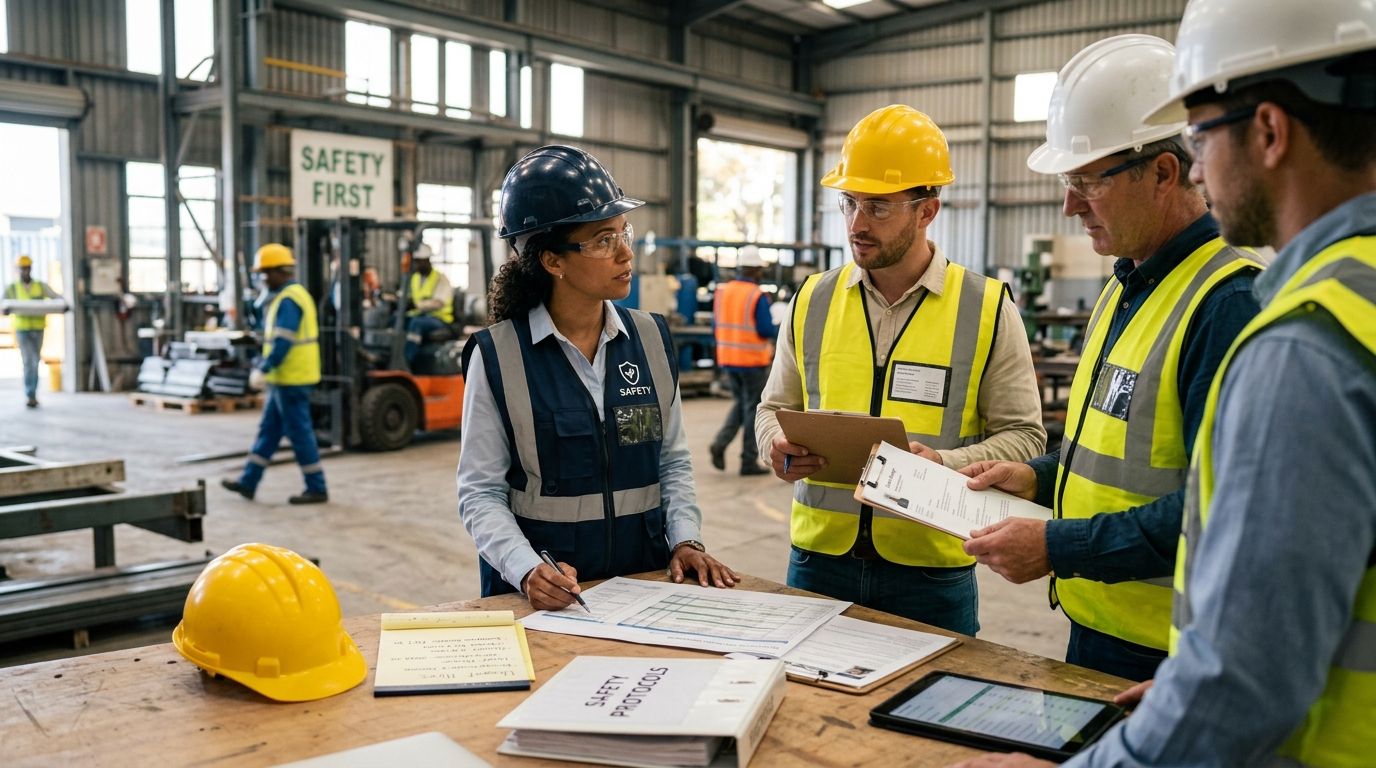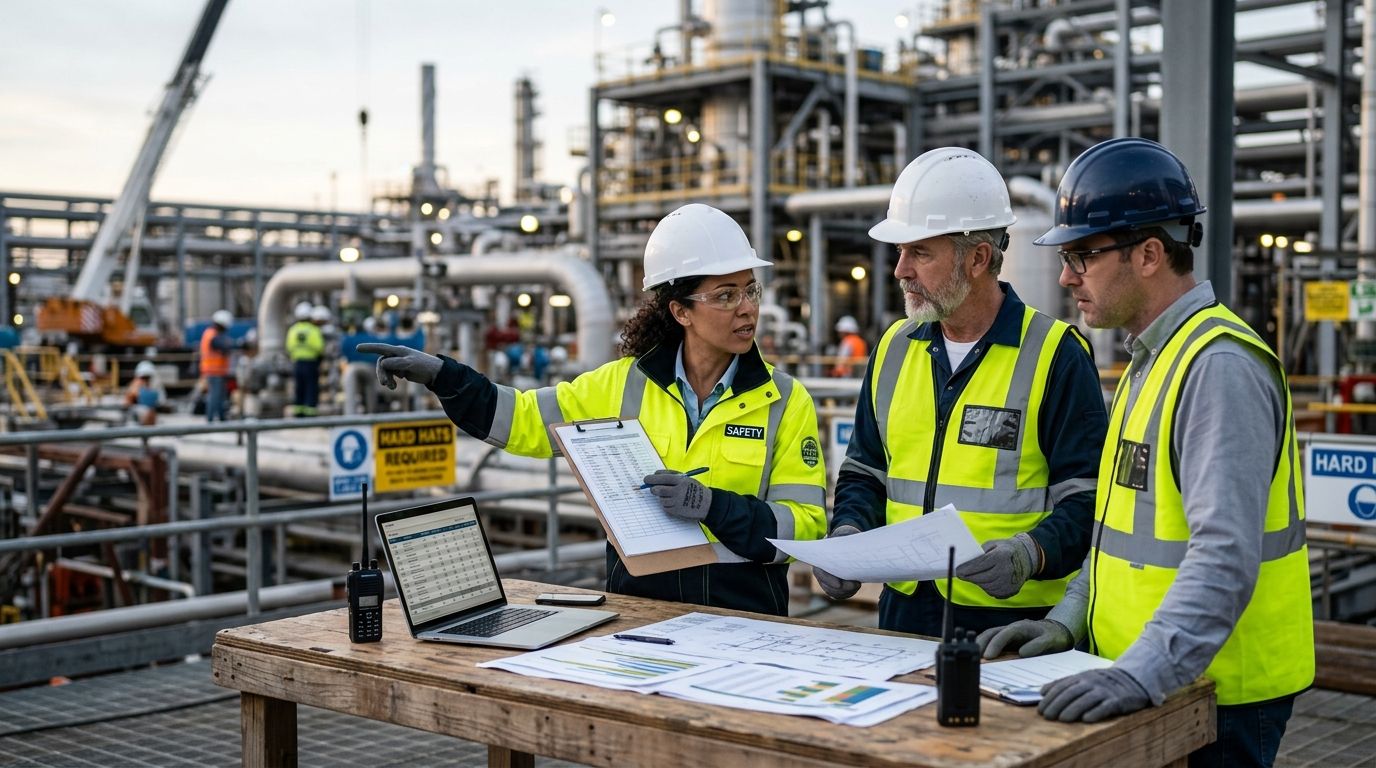
Choosing between in-house safety hires and a staffing agency comes down to one question: how predictable is your safety workload? Get this wrong in 2026 and you either carry idle headcount through slow quarters or scramble for OSHA-credentialed staff mid-project when a stop-work order is already on the table.
- In-house safety hires win when workload is steady and compliance needs stay stable year-round.
- A staffing agency like ResponsAble Staffing wins for project spikes, turnarounds, and hard-to-find certifications.
- Contract-to-hire lets you trial a safety professional before converting to a permanent in-house role.
- Multi-site or multi-state contractors usually need a blended model, not an all-or-nothing decision.
Why this matters
Safety headcount isn't a line item you adjust every quarter the way you would office supplies. A construction site without a site safety officer, or a plant missing a qualified confined-space attendant, is a stop-work order waiting to happen — and OSHA citations under 29 CFR 1926 and 1910 don't wait for your next hiring cycle.
The real decision isn't "in-house versus agency" in the abstract. It's matching your staffing model to how predictable your safety needs actually are across the next 12 to 24 months. ResponsAble Staffing places both temporary safety professionals and direct-hire safety managers, which is exactly why employers ask this question before committing to either path in 2026.
How do you choose between in-house safety hires and a staffing agency?
If your safety staffing need is permanent and predictable, hire in-house. If it swings with project cycles, use a staffing agency. That's the short version — the table below breaks down why.
| Factor | In-house hire | Staffing agency |
|---|---|---|
| Time to fill an opening | Full recruiting cycle — sourcing, interviews, background checks | Pre-vetted candidates ready to deploy on short notice |
| Cost structure | Salary, benefits, and payroll taxes run year-round | Bill rate covers the role only while the project needs it |
| Compliance risk | You own every certification check and renewal | Agency verifies OSHA cards, CSP/CHST credentials, and site-specific licenses before placement |
| Flexibility | Low — layoffs are slow and costly | High — scale headcount up or down with the project schedule |
| Best for | Single-site, ongoing safety programs | Project surges, turnarounds, seasonal peaks, multi-state work |
Both models have real downsides. In-house hires give you cultural fit and institutional knowledge, but you're stuck paying full salary through slow months and rebuilding from scratch every time someone leaves. Agency staffing gets you certified people fast, but the bill rate carries a premium over a comparable salary, and a rotating roster means less day-to-day investment in your specific site culture.
When in-house safety hiring wins
Best for: employers with one or two fixed sites and a safety workload that doesn't change month to month.
If your headcount need is stable — one EHS manager overseeing a single manufacturing plant, for example — building the role in-house makes sense. You get someone who learns your equipment, your culture, and your near-miss history instead of relearning it every rotation.
The tradeoff is speed and risk. A single bad hire in a safety-critical role can sit unaddressed for months while you go through a formal termination and rehire process. Employers who want the in-house model without doing the sourcing themselves often use direct-hire recruiting for safety managers to get a permanent employee vetted by specialists in safety credentials, rather than a general recruiter who doesn't know the difference between a CHST and a CSP.
When a staffing agency wins
Best for: turnarounds, fast-track construction, seasonal production spikes, and multi-state contractors who need certified people fast.
When the work is project-based — a refinery turnaround, a solar buildout, a plant startup — hiring someone permanently to cover a six-month need doesn't make financial sense. A staffing agency lets you bring on confined-space attendants, fire watch personnel, or a full site safety team for the duration of the job and release them when the project closes out.
The catch: not every agency actually vets what it claims to vet. Before signing with anyone, check how to evaluate a staffing agency's track record — credential verification, incident history, and reference checks matter more in safety roles than in almost any other staffing category, because a bad placement here isn't a productivity problem, it's a liability problem.
When a hybrid model wins
Best for: employers who want to test a candidate in the role before making a permanent offer, or who run both steady-state operations and periodic project surges.
Many employers in 2026 aren't choosing one model exclusively — they're running a core in-house team and layering agency staff on top during surges, or using a contract-to-hire arrangement to trial someone in a safety role for a defined period before converting them to a permanent employee. This works especially well for site safety manager and EHS coordinator roles, where cultural fit only becomes clear after a few months on-site.
Why the right choice varies
There's no single formula, but the factors that actually move the decision are consistent across industries:
- Project duration — a two-week turnaround and a five-year plant operation call for opposite staffing models.
- Geographic footprint — multi-state contractors face different licensing and certification rules in every jurisdiction, which favors an agency with a national bench.
- Certification specificity — roles like radiation safety officer or process hazard analysis facilitator have small talent pools that agencies reach faster than a standalone job posting.
- Budget cycle — capital-project budgets often prefer a bill-rate line item over adding permanent headcount to overhead.
- Internal EHS bench strength — a company with a deep safety department can absorb one open role; a company with a single EHS manager cannot.
- Headcount volatility — seasonal manufacturing surges and disaster response work are the clearest cases for temporary staffing over permanent hiring.
“Treat safety headcount like a project cost when the work is project-based, not like a permanent job you have to justify keeping.”
Is it cheaper to hire safety staff in-house or through an agency?
It depends on how long the role is needed — in-house hiring is cheaper over a multi-year, single-site timeline, while an agency is cheaper for anything shorter than a full hiring-and-retention cycle. Salary and benefits accrue whether or not there's work to justify them; a bill rate stops the moment the project ends.
Can you convert an agency safety hire to a full-time employee?
Yes — contract-to-hire arrangements are built for exactly this, letting you evaluate a safety professional on-site before extending a permanent offer. This avoids the risk of a bad in-house hire sitting in a safety-critical role for months before you can address it.
How fast can a staffing agency place a certified safety professional compared to an in-house search?
A staffing agency places from an already-vetted bench, which is consistently faster than running a from-scratch in-house search that includes sourcing, credential verification, and background checks from zero. That speed advantage is the main reason turnarounds and fast-track jobs default to agency staffing over direct hiring.
Talk to a safety staffing specialist
Compare in-house, temporary, and direct-hire options for your 2026 project calendar.
FAQ
What's the best staffing model for a multi-state contractor?
A hybrid model works best for multi-state contractors: a lean in-house EHS core supported by agency staffing for state-specific certifications and project surges. This avoids maintaining full-time headcount in every jurisdiction you operate in.
Is a staffing agency better than in-house hiring for a plant startup?
Yes, for the startup phase specifically, because plant startups need a full safety team fast and only for a defined ramp-up period. Converting to in-house hires once operations stabilize is a common next step.
How much does it cost to keep an unfilled safety role open?
The cost isn't just the missing salary — it's the compliance exposure of running a site without required safety coverage, which can trigger OSHA citations or stop-work orders. That risk is why many employers bridge the gap with temporary safety staffing while an in-house search runs.
Do staffing agencies verify OSHA certifications before placement?
A reputable safety staffing agency verifies OSHA outreach cards, CSP, CHST, and other role-specific credentials before placing anyone on-site. Ask any agency directly how they verify certifications before signing a contract.
Can you use both in-house safety staff and a staffing agency at the same time?
Yes, this is the most common model in 2026 for employers with both steady-state operations and periodic project surges. A permanent in-house core handles daily compliance while agency staff cover turnarounds, seasonal peaks, and specialized short-term roles.
Is direct-hire recruiting different from temporary safety staffing?
Direct-hire recruiting places a candidate as your permanent employee from day one, while temporary staffing keeps the worker on the agency's payroll for the length of the assignment. Contract-to-hire sits between the two, letting you convert a temporary placement to permanent later.
What safety roles are hardest to fill in-house?
Roles with small talent pools — radiation safety officers, process hazard analysis facilitators, confined-space attendants for specialized environments — are consistently the hardest to fill through a standalone in-house job posting. These are also the roles where agency benches shorten time-to-fill the most.
One last thing
The employers who get burned in 2026 aren't the ones who pick the wrong model — they're the ones who never revisit the decision after the first hire. A safety staffing need that was project-based in January can turn into a permanent need by summer, and the reverse happens just as often when a project scope shrinks. Before signing a multi-year contract with any agency, check their safety incident track record directly rather than taking a sales pitch at face value.