Multi-location retail chains lose more time chasing safety compliance across stores than almost anywhere else in the business, because the risk profile changes with every zip code. This guide ranks the five EHS staffing solutions that actually work for chains running 20, 50, or 200+ locations, and tells you which one fits your situation right now.
- Enterprise EHS Program Staffing wins overall for retail chains coordinating safety across 20+ locations in 2026.
- MSP/VMS-Compatible Safety Staffing fits chains that already run procurement through a vendor management system.
- Multi-Site Expansion Staffing is the right call when you're opening several stores in a single quarter.
- Seasonal Surge Safety Staffing solves the holiday and back-to-school coverage gap without a full-time hire.
- Retail Build-Out Construction Safety Staffing covers remodels and new-store construction, a different risk category than day-to-day operations.
Why This Matters
A single-location retailer can get away with one safety coordinator wearing three hats. A chain with stores in ten states cannot — OSHA general industry standards under 29 CFR 1910 still apply store by store, but incident patterns, state-level rules, and staffing gaps look completely different in a Texas distribution hub than in a Midwest strip-mall location.
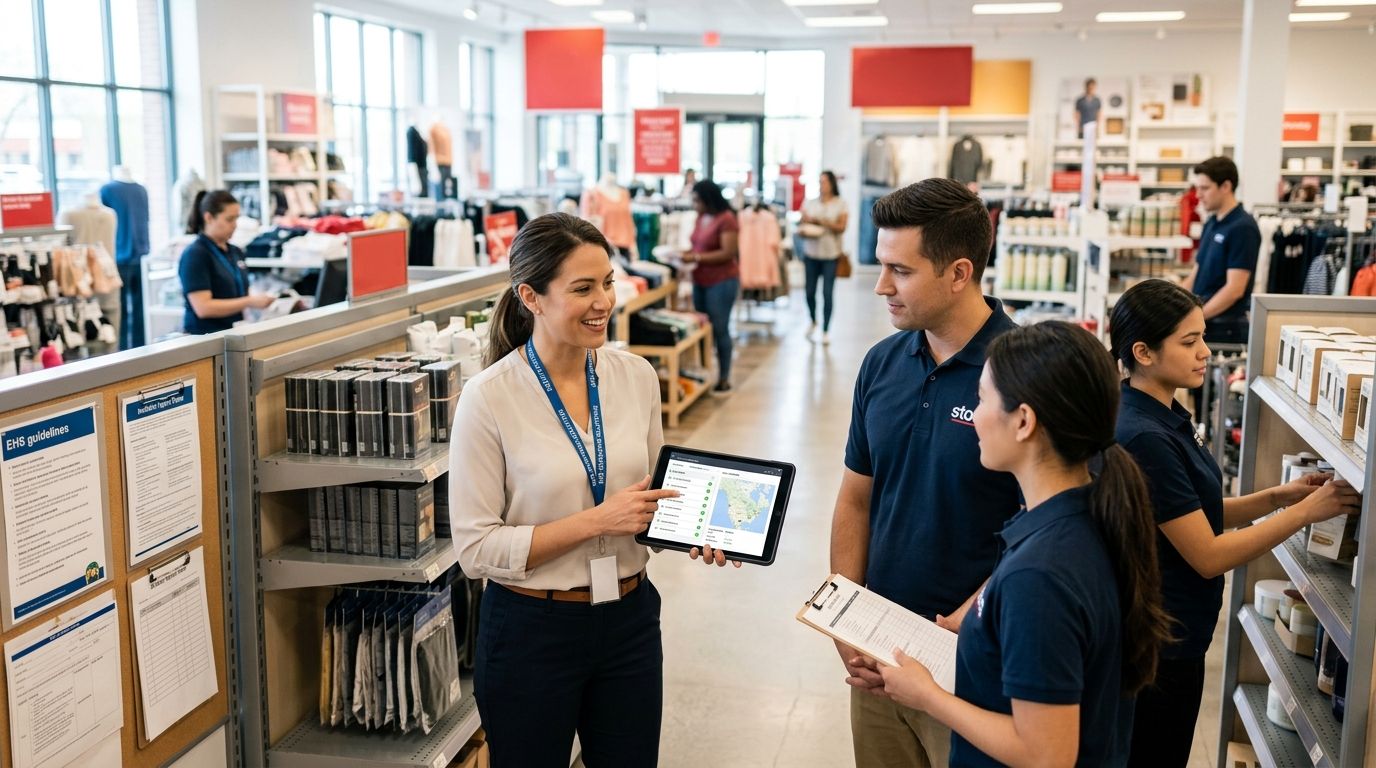
That's the gap enterprise EHS staffing programs are built to close: one point of coordination, credentialed people placed at the store or regional level, and a system that scales as the chain adds locations. Growing beyond a single store means growing beyond gut-instinct safety management — the chains that handle 2026's labor market well build the function on a clear structure, not on crisis response after an incident report lands on a VP's desk.
The Quick Verdict
Best overall: Enterprise EHS Program Staffing through ResponsAble Staffing, built for chains coordinating safety across 20 or more stores. Best for procurement-driven organizations: MSP/VMS-Compatible Safety Staffing, for chains that already route contractor spend through a vendor management system. Best for rapid growth: Multi-Site Expansion Staffing, for chains opening multiple locations in the same quarter and needing safety coverage before doors open.
What Makes the Best EHS Staffing Solution for Retail Chains
- Multi-state credential verification — safety professionals need current OSHA 10/30, first aid/CPR, and any state-specific certifications validated before day one, not after
- Time-to-fill speed — a single-store vacancy is an inconvenience; a regional safety manager gap across six stores is a liability
- Scalability without re-negotiation — the staffing model should flex from 3 stores to 30 without a new contract every time
- Incident data visibility — leadership needs one dashboard, not six regional binders, to see where injuries and near-misses are clustering
- Contract-to-hire flexibility — some roles need to convert to full-time; others are genuinely temporary, and the solution should support both
- EHS software compatibility — the placed professional should be able to work inside whatever safety data or incident-reporting system the chain already runs
At a Glance: EHS Staffing Solutions Compared
| Solution | Best For | Standout Feature | Key Limitation |
|---|---|---|---|
| Enterprise EHS Program Staffing | Chains with 20+ locations | Centralized coordination across regions | Requires upfront mapping of every site's risk profile |
| MSP/VMS-Compatible Safety Staffing | Procurement-managed organizations | Fits existing vendor management workflows | Adds an administrative layer smaller chains don't need |
| Multi-Site Expansion Staffing | Chains opening several stores per quarter | Pre-opening safety coverage before staff onboarding | Timeline pressure means less lead time to vet candidates |
| Seasonal Surge Safety Staffing | Holiday and back-to-school peaks | Fast ramp-up and ramp-down without headcount commitment | Shorter assignments mean less institutional knowledge per hire |
| Retail Build-Out Construction Safety Staffing | Remodels and new-store construction | Construction-specific safety expertise, not retail-floor expertise | Doesn't cover ongoing store operations once construction wraps |
1. Enterprise EHS Program Staffing: best overall for chains with 20+ locations
This model places a coordinated team of safety professionals across a retail chain's footprint, reporting into one program structure instead of scattered regional hires. It's built for organizations that need consistent incident tracking, uniform certification standards, and one vendor relationship instead of a dozen local staffing shops.
Enterprise EHS Program Staffing pros:
- One point of contact for placements across every region
- Consistent credential vetting standard, so a store in Ohio and a store in Arizona meet the same bar
- Easier to roll incident data into a single company-wide view
Enterprise EHS Program Staffing cons:
- Setup takes longer than a single-store hire because the program has to map every location's risk factors first
- Less useful for a chain under 15-20 locations, where the coordination overhead outweighs the benefit
Best for: retail chains with 20 or more locations that need one safety staffing structure instead of a patchwork of local hires. Verdict: Recommended for any chain past the 20-store mark in 2026.
2. MSP/VMS-Compatible Safety Staffing: best for procurement-managed retail organizations
Some retail chains route every contractor and staffing spend through a managed service provider or vendor management system, and the safety staffing partner has to plug into that workflow without breaking it. MSP/VMS-compatible safety staffing programs are built specifically to sit inside that procurement structure.
MSP/VMS-Compatible Safety Staffing pros:
- Fits inside procurement approval chains without a separate onboarding process
- Gives finance and HR a consolidated view of contractor spend
- Works well for chains that already manage other categories of labor this way
MSP/VMS-Compatible Safety Staffing cons:
- Adds a layer of process that slower-moving chains may not need
- Requires upfront alignment between the staffing partner and the VMS platform's reporting fields
Best for: retail organizations where procurement, not operations, owns the vendor relationship. Verdict: Recommended if your chain already runs an MSP for other staffing categories.
3. Multi-Site Expansion Staffing: best for chains opening several stores per quarter
Opening five stores in one quarter creates a safety staffing problem that a single hiring manager can't solve on a normal timeline. Multi-site expansion staffing is structured around pre-opening coverage — safety professionals placed before the doors open, not after an incident forces the issue.
Multi-Site Expansion Staffing pros:
- Covers new locations before they're operational, closing the compliance gap at launch
- Scales up and down with the actual store opening schedule, not a fixed headcount
- Reduces the risk of a new store operating without safety coverage during its first weeks
Multi-Site Expansion Staffing cons:
- Tight opening timelines mean less lead time to interview and select candidates
- Works best when the chain gives at least 30-45 days of notice per opening
Best for: retail chains adding multiple locations in the same quarter, particularly during a growth year like 2026. Verdict: Recommended, with earlier notice producing better placements.
4. Seasonal Surge Safety Staffing: best for holiday and peak-season coverage
Retail safety incidents don't spread evenly across the calendar — the weeks around major holidays and back-to-school season see traffic and labor spikes that permanent headcount wasn't built for. Seasonal safety staffing exists to cover exactly that window without a year-round commitment.
Seasonal Surge Safety Staffing pros:
- Ramps up fast ahead of known peak periods
- Ends cleanly when the surge is over, with no layoff process to manage
- Costs stay tied to actual peak demand instead of a fixed annual headcount
Seasonal Surge Safety Staffing cons:
- Shorter assignments mean less institutional knowledge of your specific stores
- Requires planning at least a few weeks ahead of the peak window to get the right candidates
Best for: retail chains managing predictable seasonal traffic spikes. Verdict: Situational — strong fit for holiday windows, unnecessary the rest of the year.
5. Retail Build-Out Construction Safety Staffing: best for remodels and new-store construction
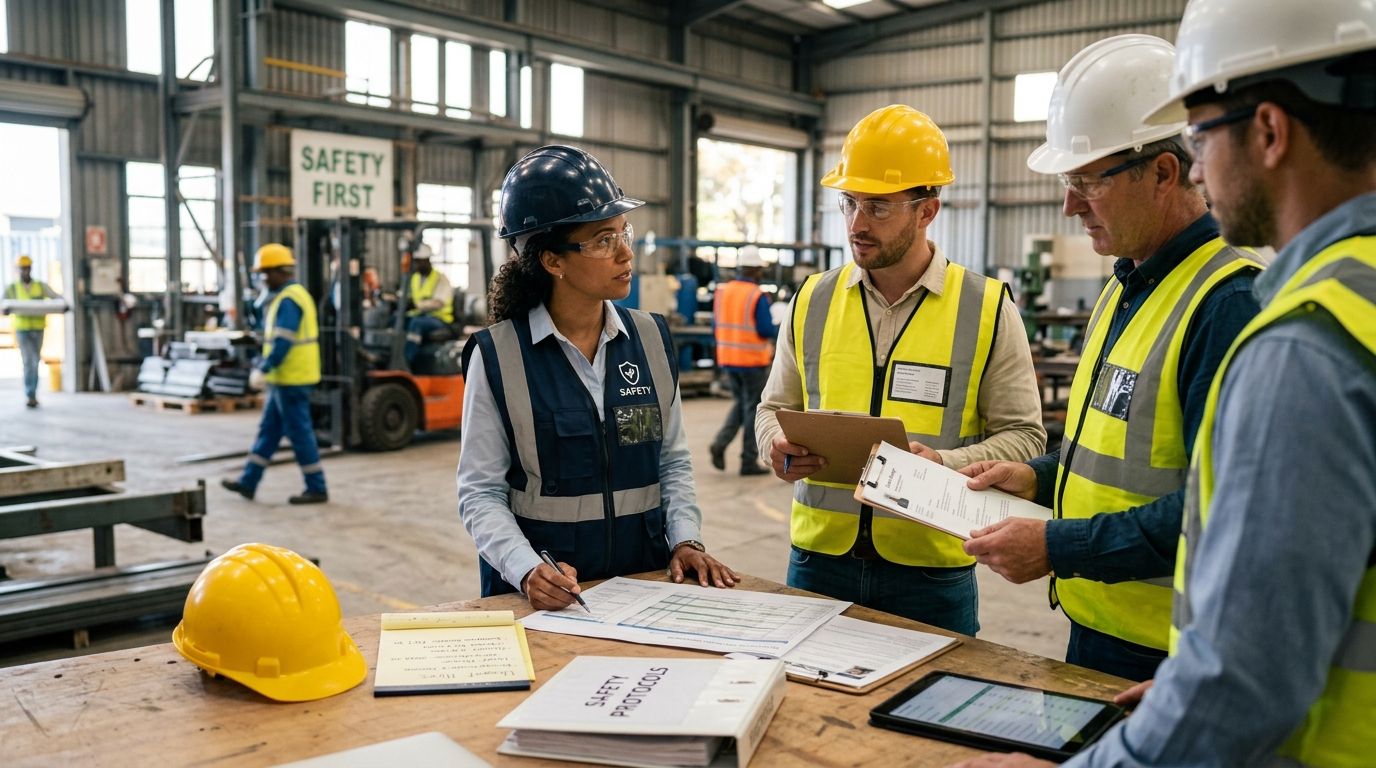
A store under construction or mid-remodel is a completely different risk environment than a store open for business, and it needs a different kind of safety professional. Retail and commercial build-out safety staffing covers that construction-specific window.
Retail Build-Out Construction Safety Staffing pros:
- Matches candidates with construction-site experience, not retail-floor experience
- Covers the highest-risk phase of a store's lifecycle — the build itself
- Runs in parallel with expansion staffing when a chain is opening and remodeling at once
Retail Build-Out Construction Safety Staffing cons:
- Coverage ends once construction wraps, so it has to hand off to an operations safety plan
- Requires coordination with general contractors on-site, which adds a scheduling layer
Best for: chains actively remodeling stores or building new locations from the ground up. Verdict: Recommended for the construction window specifically, not as a year-round solution.
How We Ranked These
Each solution is scored against the six criteria above: credential verification, time-to-fill, scalability, incident data visibility, contract flexibility, and software compatibility. Enterprise EHS Program Staffing ranks first because it's the only model built to hold all six across an entire multi-location footprint at once — the other four are strong picks for a specific situation, not a general-purpose replacement.
Which EHS Staffing Solution Should You Choose?
If your chain has crossed 20 locations and safety data lives in six different spreadsheets, start with Enterprise EHS Program Staffing — it's the model built to unify that. If procurement owns the vendor relationship, go MSP/VMS-compatible. If you're opening stores faster than you're hiring for them, Multi-Site Expansion Staffing closes that specific gap.
A chain rarely needs just one of these in 2026 — a fast-growing retailer might run Multi-Site Expansion Staffing for new openings, Seasonal Surge Staffing every November, and Build-Out Staffing whenever a remodel is underway, all under one Enterprise EHS Program umbrella.
Talk Through Your Store Footprint
Get a plan matched to how many locations you're staffing safety for in 2026.
FAQ
What is the best EHS staffing solution for retail chains in 2026?
Enterprise EHS Program Staffing is the best overall fit for chains with 20 or more locations because it centralizes credential verification and incident data across regions. Smaller chains or those with a specific need, like a seasonal spike or new-store opening, should look at a narrower solution first.
How is EHS staffing for retail chains different from single-site safety staffing?
Retail chain staffing has to account for varying state rules, inconsistent risk profiles across store types, and coordination across multiple hiring timelines at once. A single-site hire only has to solve for one location's compliance picture.
Is contract safety staffing better than direct hire for a retail chain?
Contract staffing works better for temporary needs like seasonal surges or new-store openings, while direct hire fits ongoing regional safety manager roles. Most multi-location chains use both models depending on the specific role.
How far in advance should a retail chain staff safety for a new store opening?
Give at least 30-45 days of notice ahead of a store opening to allow time for credential verification and candidate selection. Tighter timelines are possible but reduce the pool of qualified candidates available.
Can one staffing partner cover both construction and operational safety roles?
Yes, but the roles require different expertise, so the partner needs to place construction-experienced professionals during a build-out and operations-focused professionals once the store is running. Enterprise EHS Program Staffing coordinates that handoff.
Does MSP/VMS-compatible staffing cost more than a direct staffing relationship?
The staffing model itself doesn't add cost by design, but the procurement layer adds administrative steps that smaller organizations may not need. Chains already running an MSP for other categories typically see it as a net time-saver, not an added cost.
What certifications should retail chain safety staff have?
OSHA 10 or 30-hour general industry training and current first aid/CPR certification are the baseline for most retail safety roles, with additional state-specific requirements depending on location. Verification should happen before placement, not after.
One Last Thing
The chains that struggle most aren't the ones without a safety budget — they're the ones treating every location's staffing as a separate fire to put out. The fix isn't more headcount; it's one coordinated structure that flexes as the store count changes, which is exactly what separates Enterprise EHS Program Staffing from a pile of one-off local hires.