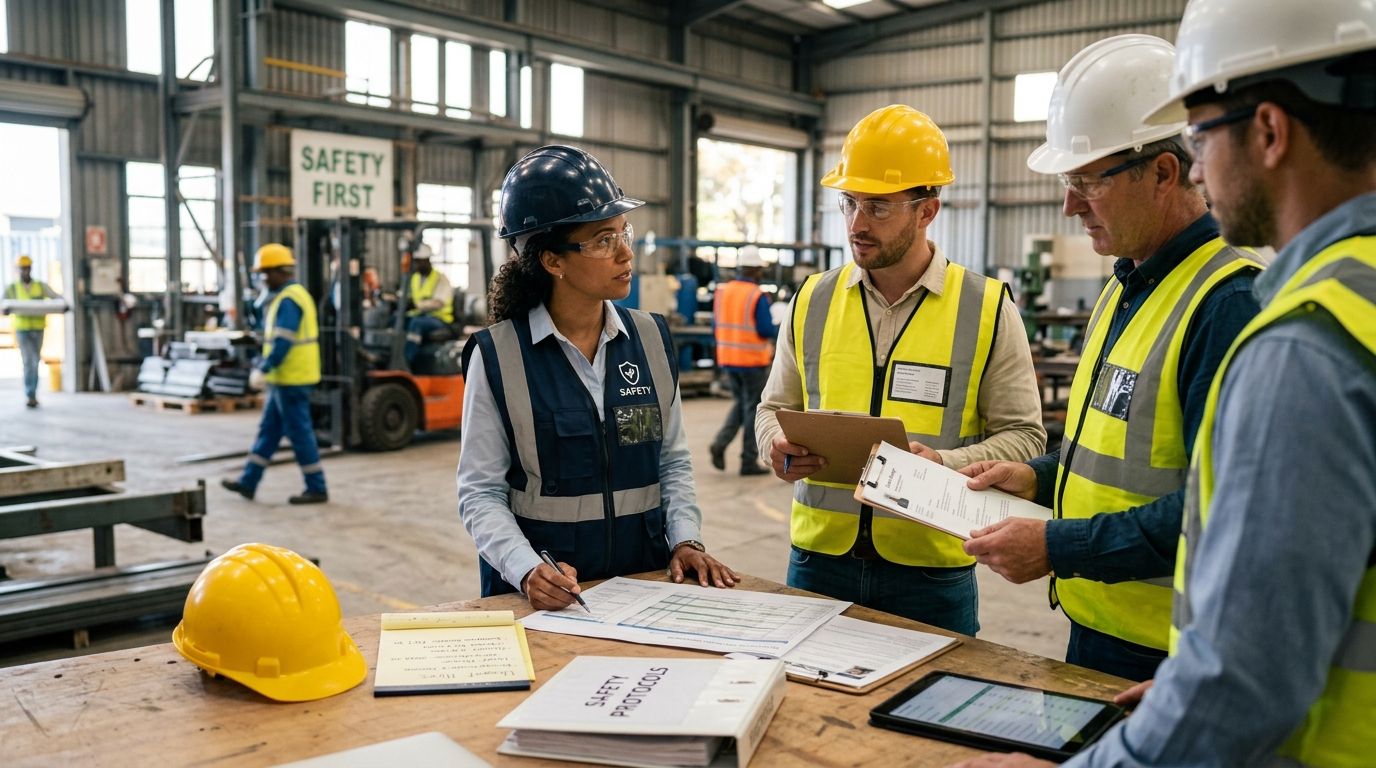
Enterprise EHS programs juggle multi-site headcount, OSHA compliance deadlines, and safety-critical roles that can't sit open for weeks. The best safety staffing for enterprise EHS programs in 2026 isn't one agency or one hire type — it's matching the right staffing model to the risk in front of you, and this guide ranks six of them against each other so you can pick fast.
- Contract-to-hire safety staffing wins overall for enterprise EHS programs de-risking permanent hires in 2026.
- MSP and VMS-managed staffing fits multi-site operators consolidating vendors across several facilities.
- Per diem and travel safety staffing covers turnarounds and outages that can't wait on a search.
- Direct-hire recruiting is the right call for permanent safety director and manager seats.
- Seasonal surge and third-party audit staffing solve narrower, time-boxed problems well.
Why this matters
An enterprise EHS leader rarely has one staffing problem — they have four or five running at once: a permanent safety manager search, a turnaround needing 15 field techs for six weeks, an ISO 45001 audit cycle, and a plant startup that needs coverage before the ink dries on the lease. Treating all of that as "staffing" and routing it through one generic vendor is how programs end up with unqualified fills and gaps in incident documentation.
Each staffing model below solves a different shape of that problem. Contract-to-hire safety staffing is the default most enterprise programs should reach for first in 2026, because it lets you verify a candidate on-site before committing to a permanent seat — but it's not the answer for a 45001 audit due in three weeks or a turnaround that starts Monday. Knowing which model fits which situation is the whole game.
What makes the best safety staffing solution
Every model on this list gets judged against the same six criteria:
- Certification depth — verified OSHA 30/40-hour HAZWOPER, confined space, and role-specific credentials before placement
- Speed to fill — how fast a safety-critical vacancy gets covered without cutting corners on vetting
- Compliance documentation — incident history, credential files, and audit trail that hold up under scrutiny
- Flexibility — ability to move a candidate between contract, contract-to-hire, and direct hire without restarting the search
- Multi-site and 24/7 capacity — bench depth across time zones and shift patterns, not just one region
- Vendor compatibility — how cleanly the model plugs into an existing MSP or VMS program
Safety staffing models at a glance
| Staffing model | Best for | Standout feature | Key limitation |
|---|---|---|---|
| Contract-to-hire safety staffing | De-risking permanent hires | On-site trial period before conversion | Slower than a straight temp fill |
| MSP/VMS-managed staffing | Multi-site enterprise consolidation | Single point of accountability across sites | Adds a vendor-management layer |
| Direct-hire recruiting | Permanent safety director/manager seats | Full-cycle search for leadership roles | Longest time-to-fill of the six |
| Per diem and travel staffing | Turnarounds and outages | Rapid mobilization across regions | Travel and lodging premiums apply |
| Seasonal surge staffing | Manufacturing production spikes | Scales up and down with the calendar | Not built for permanent headcount |
| Third-party audit staffing | ISO 45001 and OSHA VPP verification | Independent, arms-length review | Project-scoped, not ongoing coverage |
1. Contract-to-hire safety staffing: best for de-risking permanent EHS hires
Contract-to-hire places a vetted safety professional on assignment first, then converts them to your permanent headcount once both sides confirm fit. For an enterprise program adding a safety coordinator or EHS specialist, this removes the guesswork a resume and two interviews can't resolve.
Contract-to-hire pros:
- Candidate proves out on real job-site conditions before permanent commitment
- Reduces the cost of a bad permanent hire in a safety-critical role
- Conversion timeline is set upfront, so there's no ambiguity for either party
Contract-to-hire cons:
- Takes longer to reach full headcount than a temp-only fill
- Requires HR alignment on conversion terms before the assignment starts
Verdict: Buy. This is the default enterprise EHS programs should start with in 2026 unless the timeline or role type rules it out.
2. MSP/VMS-managed safety staffing: best for multi-site enterprise consolidation
When an enterprise runs safety staffing across five, ten, or twenty facilities, a staffing program built for MSP and VMS environments keeps rate cards, credential files, and compliance reporting standardized across every site instead of scattered across regional vendors.
MSP/VMS staffing pros:
- One set of bill rates and reporting standards across all locations
- Centralized credential and incident-history tracking
- Easier budget forecasting at the program level
MSP/VMS staffing cons:
- Adds an administrative layer between the site and the field professional
- Works best once you already have three or more active locations
Verdict: Buy for programs running multiple sites; Skip if you're staffing a single facility.
3. Direct-hire recruiting: best for permanent safety leadership seats
Direct-hire recruiting for safety managers is a full-cycle search built for roles you're not planning to backfill in six months — safety director, EHS manager, site safety lead. The search runs against a candidate's full career history, not just current availability.
Direct-hire pros:
- Matches long-tenure leadership candidates, not just available bodies
- No conversion clock — the hire starts as permanent from day one
- Better fit for roles that require plant-specific institutional knowledge
Direct-hire cons:
- Longest time-to-fill of any model on this list
- Not the right tool for a vacancy you need covered next week
Verdict: Buy for leadership roles; Wait if the seat needs to be filled inside two weeks.
4. Per diem and travel safety staffing: best for turnarounds and outages
A refinery turnaround or plant outage doesn't run on a normal hiring timeline. Per diem and travel safety staffing mobilizes certified field safety professionals across regions on short notice, covering the compressed window turnarounds actually run on.
Per diem/travel staffing pros:
- Mobilizes across state lines fast, without a local candidate pipeline
- Built for compressed, high-intensity project windows
- Scales bench size up for the outage, then back down after
Per diem/travel staffing cons:
- Travel and lodging costs stack on top of standard bill rates
- Not cost-effective for ongoing, non-project coverage
Verdict: Buy for turnarounds and outages; Skip for steady-state staffing needs.
5. Seasonal surge staffing: best for manufacturing production spikes
Seasonal safety staffing exists for the predictable spike — a manufacturing plant ramping production ahead of a demand cycle needs safety coverage that scales with the line, not a permanent headcount increase.
Seasonal surge staffing pros:
- Matches headcount to a known, time-boxed production window
- Avoids permanent headcount commitments for temporary volume
Seasonal surge staffing cons:
- Requires advance planning to have candidates ready when the surge hits
- Not designed for year-round or unpredictable demand
Verdict: Buy if your surge dates are known; Wait and use per diem staffing if the timing is still moving.
6. Third-party safety audit staffing: best for ISO 45001 and OSHA VPP verification
When a program needs an independent set of eyes for a compliance verification cycle, third-party audit staffing brings in professionals who aren't embedded in daily site operations — which is often what the certification body actually wants to see.
Third-party audit staffing pros:
- Independence strengthens the audit's credibility with certifying bodies
- Scoped to the audit window, no ongoing headcount commitment
Third-party audit staffing cons:
- Project-scoped only — doesn't cover day-to-day safety oversight
- Needs to be scheduled around the audit calendar, not on-demand
Verdict: Buy when a 45001 or VPP audit cycle is on the calendar; Skip for routine daily coverage.
Match your program to the right model
Talk through your site count, timeline, and role types with ResponsAble Staffing.
How this ranking was built
Each model was scored against the six criteria above: certification depth, speed to fill, compliance documentation, flexibility, multi-site capacity, and vendor compatibility. Contract-to-hire ranks first because it's the only model that scores well on flexibility and compliance documentation at the same time — it lets you verify credentials on the job before converting, which matters most in safety-critical roles. The other five models rank by how narrowly or broadly they solve one specific enterprise EHS problem in 2026, not by which one is "better" in the abstract.
Which safety staffing solution should you choose?
If you're standing up or expanding a permanent EHS team in 2026, start with contract-to-hire safety staffing — it's the model with the fewest downside scenarios for enterprise programs. If you're running more than three sites, layer in an MSP/VMS-managed program so reporting stays consistent. Turnarounds, outages, and audits are the exceptions: match those to per diem/travel staffing or third-party audit staffing specifically, and don't force a permanent-hire process onto a six-week project.
FAQ
What's the best safety staffing solution for enterprise EHS programs in 2026?
Contract-to-hire safety staffing is the strongest default for enterprise EHS programs in 2026 because it verifies a candidate on the job before permanent conversion. Programs running multiple sites should pair it with an MSP/VMS-managed staffing structure.
Is direct-hire recruiting better than contract-to-hire for safety roles?
Direct-hire recruiting is better for permanent leadership seats like safety director or EHS manager, since there's no conversion clock. Contract-to-hire is better when you want to verify fit on-site before committing to a permanent hire.
How fast can a safety staffing agency fill a turnaround role?
Per diem and travel safety staffing is built specifically for compressed turnaround and outage timelines, mobilizing certified field professionals across regions on short notice. Straight direct-hire searches are not designed for that speed.
What is MSP/VMS-managed safety staffing?
MSP/VMS-managed safety staffing consolidates staffing vendors, bill rates, and compliance reporting under one structure across multiple facilities. It's built for enterprise operators running three or more sites, not single-location employers.
Do enterprise EHS programs need third-party audit staffing?
Third-party audit staffing is worth it when a program is preparing for ISO 45001 certification or OSHA VPP review, since an independent reviewer carries more credibility with certifying bodies. It's project-scoped and doesn't replace day-to-day safety oversight.
What's the difference between seasonal staffing and per diem staffing?
Seasonal staffing matches headcount to a known, recurring production spike, while per diem and travel staffing responds to short-notice, high-intensity project windows like turnarounds. Seasonal staffing needs advance planning; per diem staffing is built for fast mobilization.
Can a contract safety professional convert to a permanent hire?
Yes — that's the core mechanic of contract-to-hire safety staffing. The professional works the assignment first, and both sides confirm fit before the conversion to permanent headcount happens.
One last thing
The programs that get burned most often in 2026 aren't the ones that pick the wrong staffing model — they're the ones that pick one model and force every problem through it. A plant startup, a 45001 audit, and a permanent safety director search are three different problems with three different clocks. Match the model to the clock, not the other way around.