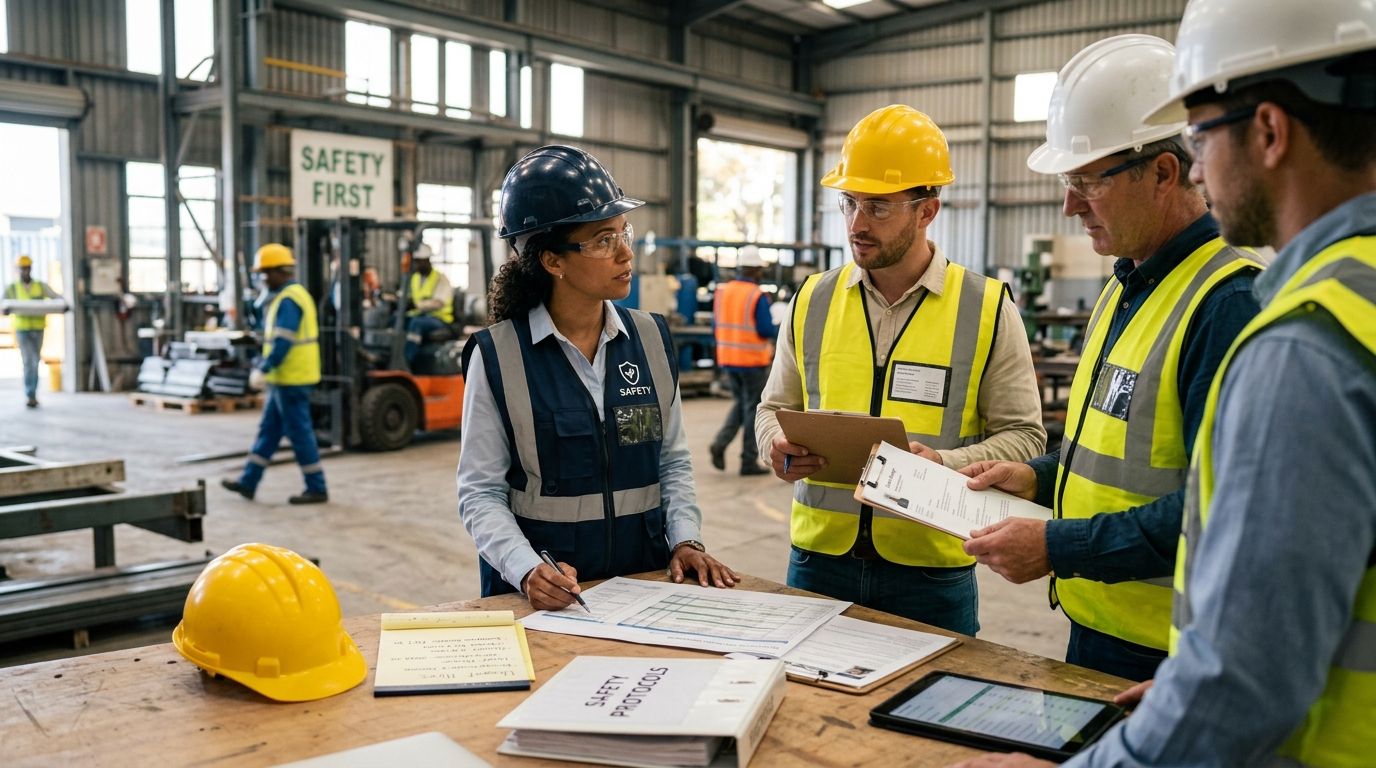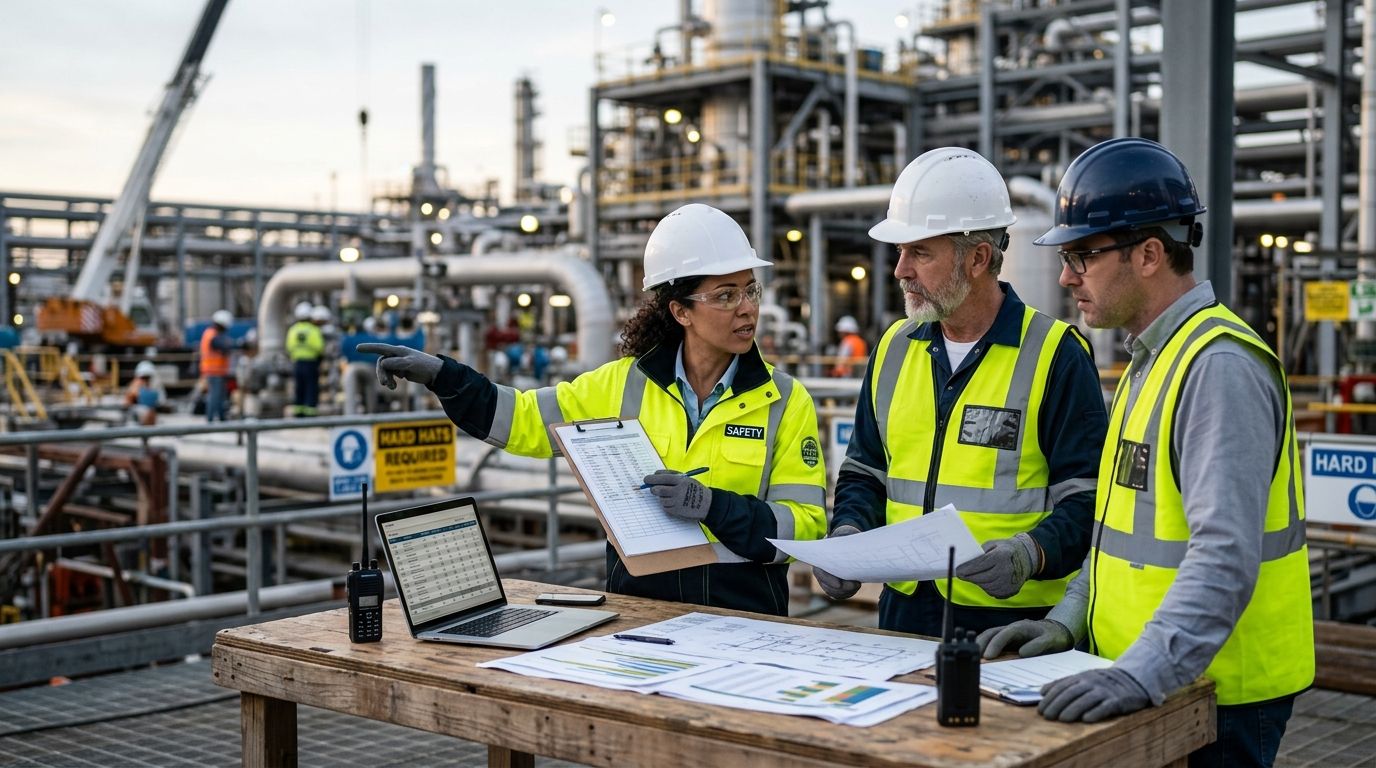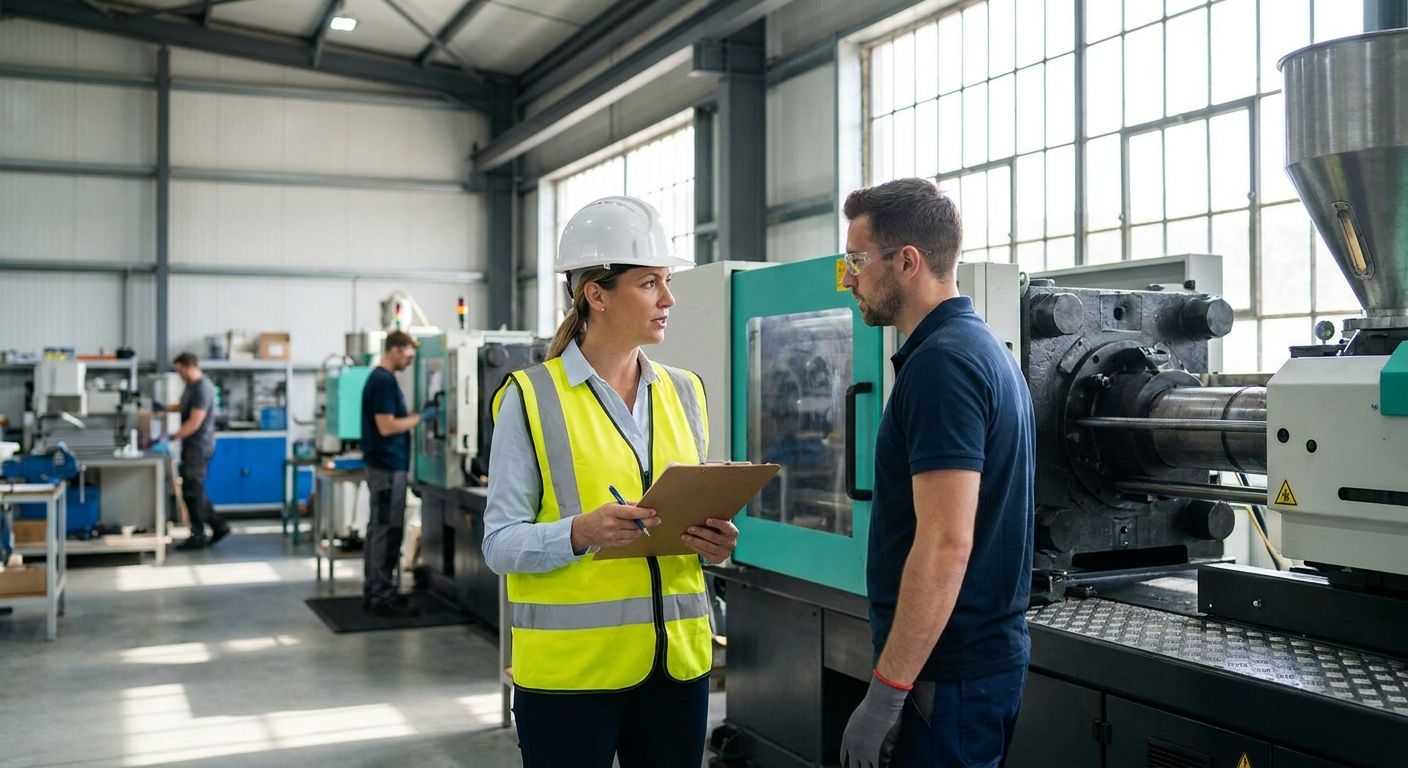
Injection molding plant safety staffing places EHS professionals — safety coordinators, industrial hygienists, machine guarding specialists, and site safety managers — into plastics manufacturing operations on a temporary, project, or direct-hire basis so production doesn't stop while you look for the right person. Injection molding brings hazards that generic manufacturing safety hires often miss: hydraulic press pinch points, hot runner burns, robotic work-cell interlocks, and resin off-gassing that falls under hazard communication rules. A safety hire who's only worked warehouses or assembly lines won't catch half of it.
- Safety staffing for injection molding plants works best when candidates are vetted for press-specific hazards, not generic manufacturing safety.
- ResponsAble Staffing places EHS professionals into plastics plants on temp, contract-to-hire, or direct-hire terms nationwide.
- Verify 1910.212 machine guarding and 1910.147 lockout/tagout knowledge before an offer, not after an incident.
- Night and weekend shift coverage is the most common gap plants report when running 24/7 press schedules in 2026.
- Contract-to-hire is the right call for new line startups; direct hire suits a permanent safety director role.
Why safety staffing matters for injection molding plants
A plastics plant running three shifts a day has three separate windows where a safety gap can turn into a recordable incident. Hydraulic presses, robotic pick-and-place arms, and granulators don't pause because the second-shift safety coordinator called out sick.
The hazards are also specific enough that a generalist hire is a real liability. Machine guarding under 29 CFR 1910.212, lockout/tagout under 29 CFR 1910.147, and hazard communication for resin additives under 29 CFR 1910.1200 all apply directly to injection molding floors — and a safety professional who's never worked a molding environment usually needs weeks to catch up on all three. ResponsAble Staffing vets candidates against those exact standards before they ever reach a plant manager's desk.
Most plants come to safety staffing after one of two triggers: a new line startup that needs coverage before commissioning, or a surge period — holiday packaging runs, automotive tooling changeovers — where headcount has to flex fast without lowering the bar on certifications.
How to build safety staffing for injection molding plants
Audit machine-specific hazard exposure before you post the req
Don't write a generic "EHS Coordinator" job description and hope it attracts the right person. Map the actual floor first.
- List every press type on the floor (two-plate, hot runner, vertical clamp) and its specific pinch and burn points
- Note where robotic work cells interface with human traffic
- Flag any granulator, dryer, or regrind area with dust or heat exposure
- Identify which lines require confined-space entry for mold changes or hopper cleaning
- Check whether resin additives on-site trigger additional hazcom training requirements
Source safety professionals who know plastics, not just general manufacturing
A safety resume heavy on food and beverage or warehousing doesn't automatically transfer to injection molding. The hazard profile is different enough that ramp-up time matters.
- Ask candidates to describe a specific press-related incident they responded to, not just training completed
- Prioritize experience with robotic interlocks and machine guarding audits over general "safety walk" experience
- Screen for hands-on lockout/tagout application on hydraulic equipment, not just classroom certification
- Look for exposure to resin hazcom programs (SDS management, VOC monitoring)
- If you're short on internal bandwidth to screen for this, a staffing partner that specializes in industrial safety, like ResponsAble Staffing, pre-screens for exactly these gaps
Verify certifications before you extend an offer
A certificate on a resume isn't the same as a valid, current credential. Verification takes an afternoon; a bad hire costs a lot more.
- Confirm OSHA 10-hour or 30-hour outreach card completion dates directly with the training provider
- Check first aid/CPR expiration dates, not just "certified" claims
- Verify any confined space entry or fall protection certifications against the issuing body
- Call at least one prior employer to confirm the role actually included hands-on machine guarding or LOTO work
- Document the verification, since it's the first thing an OSHA investigator asks for after an incident
Build contract-to-hire pipelines for changeover and new-line startups
New injection molding lines and major tooling changeovers need safety coverage before commissioning starts, not after the first near-miss.
- Start the safety hire search 60-90 days ahead of a planned line startup
- Use a contract-to-hire arrangement so you can evaluate fit on the actual floor before committing to a full-time offer
- Build the onboarding checklist around the specific equipment going live, not a generic plant orientation
- Keep a short list of pre-vetted candidates so a delayed startup date doesn't leave you scrambling
Cover night and weekend shifts without burning out your bench
Most plants running 24/7 press schedules report the third shift as their weakest safety coverage point.
- Rotate contract safety staff across shifts instead of asking one person to cover nights indefinitely
- Pay shift differentials that actually reflect the added risk exposure of unsupervised night operations
- Cross-train at least two people per shift on lockout/tagout so one absence doesn't leave a gap
- Bring in night shift safety staffing support during ramp-up periods rather than stretching day-shift staff thin
Use seasonal staffing for peak production runs
Holiday packaging demand, automotive model-year tooling, and consumer goods seasonality all push injection molding plants into surge production windows.
- Forecast peak production dates at least one quarter out so staffing has lead time
- Use seasonal safety staffing for manufacturing surge periods rather than pulling safety coverage from other lines
- Keep surge staff on the same certification bar as permanent hires — don't relax standards under deadline pressure
- Debrief after each surge period to fix gaps before the next one
Track incident and near-miss data by shift and press line
If you can't tell which shift or which press line generates the most near-misses, you can't staff against the actual risk.
- Log near-misses by press ID and shift, not just plant-wide totals
- Review the data monthly with whoever owns safety staffing decisions
- Flag any press line with repeat near-misses for a targeted safety staffing review, not just retraining
- Use the data to justify budget for additional coverage where the numbers actually point
Get injection molding safety coverage
Talk through your shift gaps and certification needs with a specialist.
Comparing your options for injection molding plant safety staffing
| Option | Best for | Key limitation | Verdict |
|---|---|---|---|
| In-house EHS hire | Plants with stable, single-shift headcount | Long hiring cycles, no flex for changeover surges | Hold |
| General staffing agency (no safety specialization) | Fast fills on general labor roles | Rarely screens for machine guarding or resin hazcom knowledge | Skip |
| Specialized safety staffing agency (ResponsAble Staffing) | Plants needing verified EHS credentials on temp, contract-to-hire, or direct-hire terms | Requires lead time to source niche certifications | Buy |
| Independent EHS consultant | One-time audits or incident investigations | No bench depth for ongoing shift coverage | Wait |
“If your safety hire can't tell you the difference between a two-plate mold and a hot runner system, they'll miss the pinch points that actually hurt people.”
Common mistakes injection molding plants make with safety staffing
- Hiring for "manufacturing experience" instead of plastics-specific experience. A safety coordinator from an automotive stamping plant hasn't necessarily seen a hydraulic clamp unit or hot runner system.
- Treating night shift as an afterthought. Third-shift coverage gets the newest or least-experienced hire by default, right when supervision is thinnest.
- Skipping certification verification under time pressure. A rushed new-line startup is exactly when plants skip the phone call to confirm an OSHA card is real.
- Not budgeting lead time for surge staffing. Waiting until the peak production week starts to look for safety coverage guarantees a gap.
- Relying on one person to cover multiple press lines. Spreading a single safety hire across three lines during a surge period is how near-misses turn into recordables.
FAQ
What does safety staffing for injection molding plants actually cover?
It covers placing safety coordinators, industrial hygienists, and site safety managers into plastics plants on temporary, contract-to-hire, or direct-hire terms. The focus is press-specific hazards: machine guarding, lockout/tagout, and resin hazard communication.
Is a general staffing agency good enough for plastics plant safety roles?
No, a general staffing agency rarely screens for machine guarding or lockout/tagout knowledge specific to injection molding equipment. A specialized safety staffing agency verifies those credentials before a candidate reaches your plant manager.
How fast can a plant fill a safety role during a new line startup?
Starting the search 60-90 days ahead of commissioning gives enough lead time to verify certifications properly. Waiting until the week before startup usually means skipping verification steps that matter after an incident.
What certifications should an injection molding safety hire have?
OSHA 10-hour or 30-hour outreach training is standard, along with hands-on lockout/tagout experience on hydraulic equipment. Confined space entry certification matters for plants doing mold changes or hopper cleaning.
Should injection molding plants use contract-to-hire or direct hire for safety staff?
Contract-to-hire fits new line startups and changeovers where you want to evaluate fit on the actual floor first. Direct hire fits a permanent safety director role where continuity matters more than flexibility.
How do plants staff safety coverage for night and weekend shifts?
Rotating contract safety staff across shifts prevents burnout on any single person covering nights long-term. Plants running 24/7 press schedules report third shift as the most common coverage gap.
What's the biggest safety staffing mistake plastics plants make?
Hiring for general manufacturing experience instead of plastics-specific experience with hydraulic presses and hot runner systems. The hazard profile is different enough that a generalist hire needs weeks to catch up.
Does seasonal production affect safety staffing needs?
Yes, peak production runs during holiday packaging or model-year tooling changeovers push plants into surge staffing windows. Forecasting those dates a quarter out gives staffing enough lead time to maintain certification standards.
One last thing
The plants that get burned in 2026 aren't the ones without a safety hire — they're the ones who filled the role with someone whose only manufacturing exposure was warehousing or food production. Machine guarding under 1910.212 and lockout/tagout under 1910.147 look the same on paper across industries; they don't apply the same way on a hydraulic press as they do on a conveyor belt. Verify plastics-specific experience before the offer goes out, not after the first near-miss report.