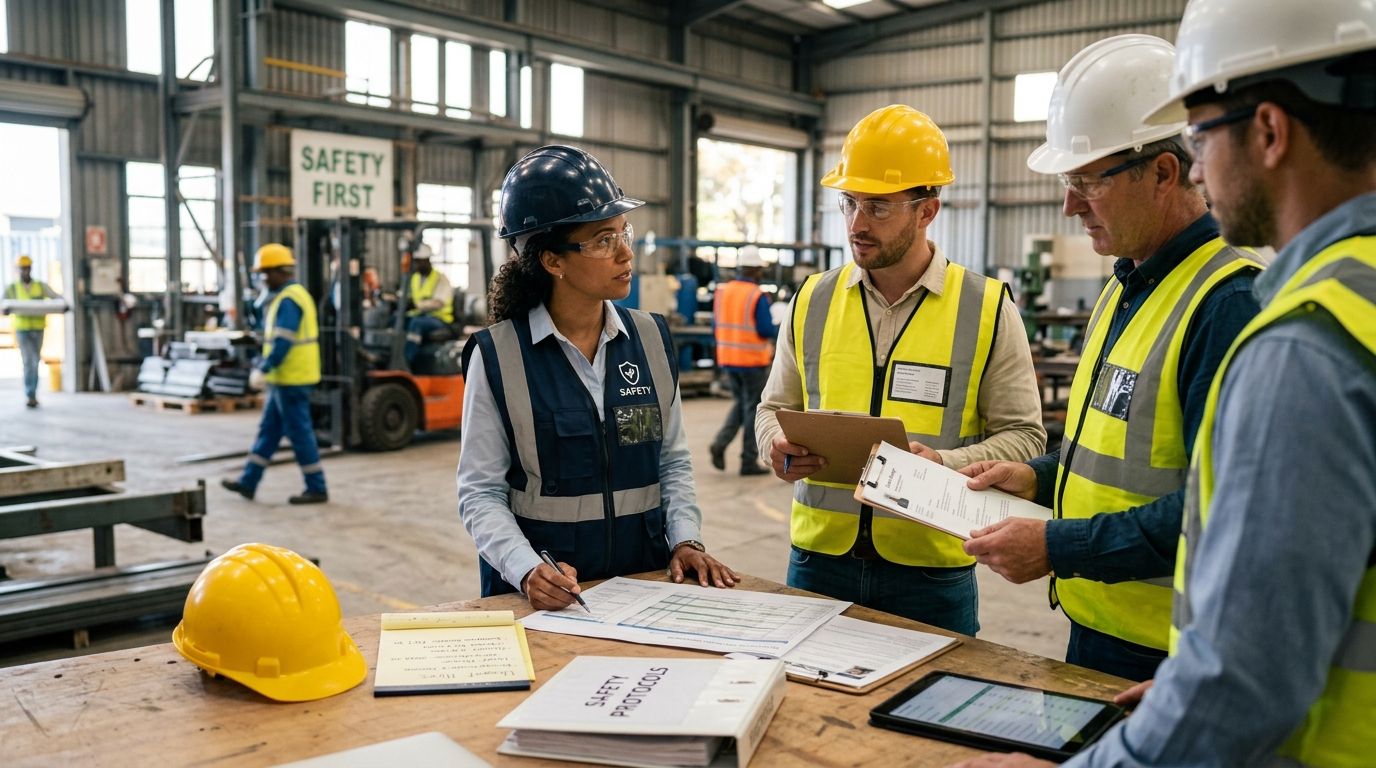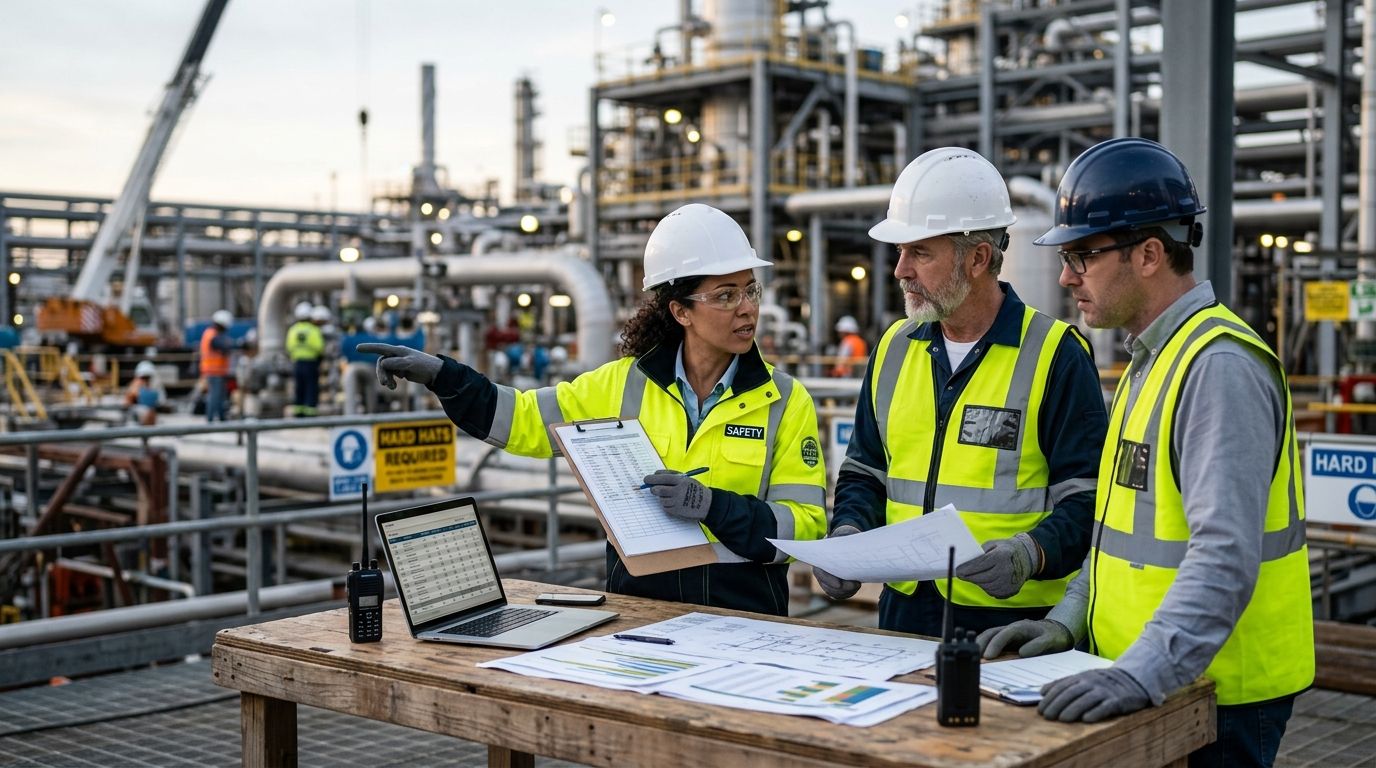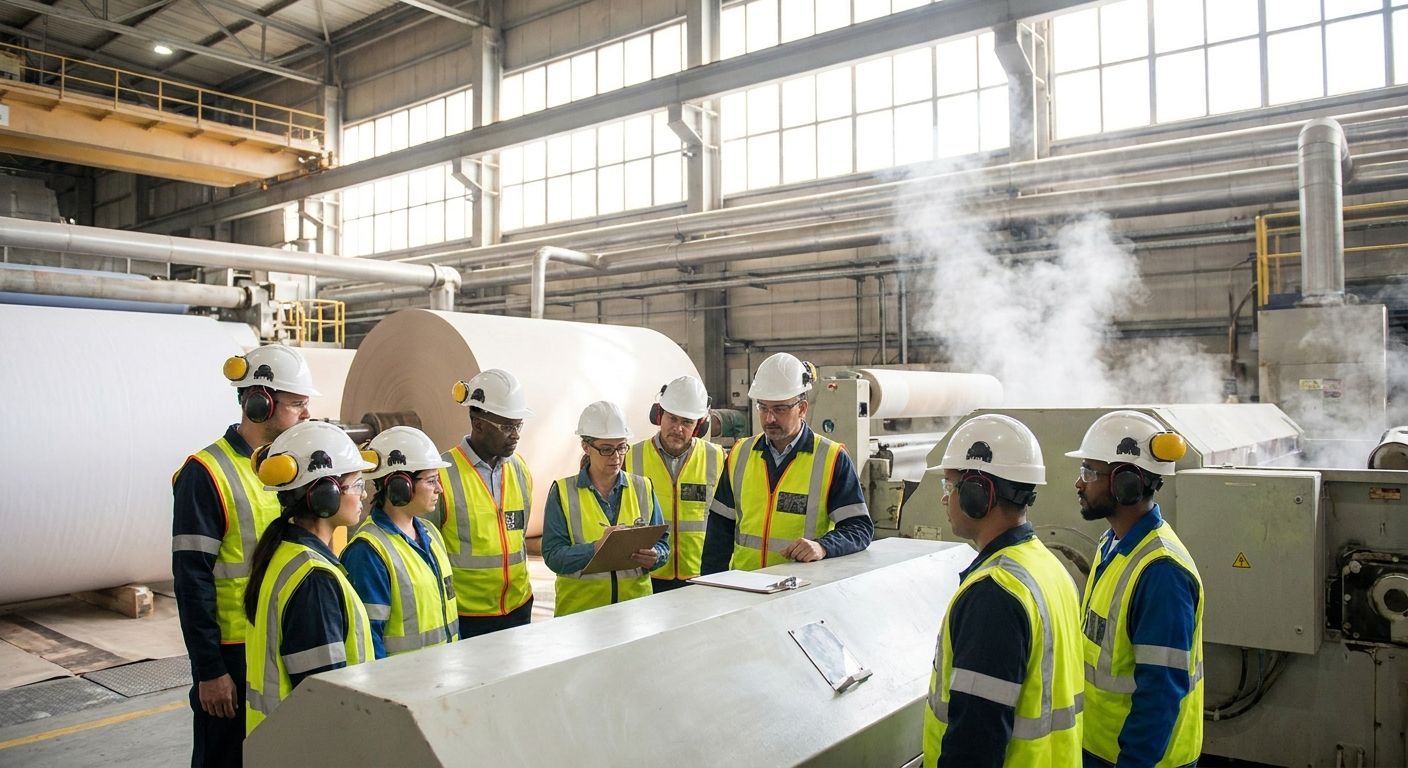
Safety staffing for paper and pulp mills means placing OSHA 1910.261-trained EHS professionals into confined space, process safety, and outage roles inside a continuous-process operation that never fully shuts down. A pulp mill runs digesters, recovery boilers, and bleach plants around the clock, so the safety hire you place has to handle chemical exposure, confined space entry, and rotating equipment on day one, not week three.
- Safety staffing for paper and pulp mills requires OSHA 1910.261 familiarity, not generic manufacturing safety experience.
- Recovery boiler outages and digester relines need surge staffing planned 60-90 days out, not a rush post the week of.
- Confined space attendant staffing for industrial sites covers digesters and chip bins, but certs must be verified before placement, not after.
- Direct hire fits permanent safety manager roles; contract and contract-to-hire fit outage coordinators and confined space attendants.
- PSM-covered mills using chlorine dioxide or sulfuric acid need EHS hires with process safety management exposure, not just general construction safety.
Why safety staffing matters for paper and pulp mills
Pulp and paper mills sit under a standard most other manufacturing safety hires have never touched: OSHA 1910.261, the pulp, paper, and paperboard mills regulation. It covers pulpwood handling, chip storage, digesters, bleaching, and paper machine operation as one connected hazard chain. A safety coordinator who's only worked general industry or construction sites doesn't automatically know what that standard requires.
Add in recovery boilers, which carry a well-documented explosion risk when water contacts molten smelt, and the stakes for getting the hire right go up fast. Mills also run chlorine dioxide generation and sulfuric acid handling that can trigger OSHA's Process Safety Management standard (1910.119) once threshold quantities are met. That's a different skill set than a warehouse safety generalist brings, and it's why generic staffing agencies routinely mis-place candidates in this segment.
ResponsAble Staffing builds pulp and paper placements around three checkpoints: confined space competency for digesters and chip bins, PSM familiarity for chemical-handling areas, and outage readiness for scheduled boiler and equipment shutdowns. Miss any one of those and the placement fails inside the first outage, not the first year.
How to staff EHS roles for a paper or pulp mill
Map your mill's high-hazard zones before you post the job
A pulp and paper facility isn't one hazard profile, it's five or six stacked together. Before writing a job description, get specific about which zone the hire will actually cover.
- Recovery boiler area (smelt-water explosion risk, high heat, confined access points)
- Digesters and chip bins (confined space entry, atmospheric hazards)
- Bleach plant (chlorine dioxide, sulfuric acid, chemical PPE)
- Paper machine floor (nip point lockout/tagout, rotating rolls)
- Wood yard and chip handling (mobile equipment, noise, combustible wood dust)
- Wastewater and effluent treatment (biological and chemical exposure)
Match candidates to OSHA 1910.261 and PSM requirements
General manufacturing safety experience doesn't transfer cleanly to pulp and paper. Screen for direct exposure to the standards that actually govern the mill floor.
- Working knowledge of OSHA 1910.261 (pulp, paper, and paperboard mills)
- PSM exposure (1910.119) if the mill runs chlorine dioxide generation above threshold quantities
- Chemical handling training for sulfuric acid, sodium hydroxide, and black liquor
- NFPA 664 awareness for combustible wood dust control
- Documented hearing conservation program experience (mills run high ambient noise continuously)
Vet confined space and LOTO experience specific to pulp and paper equipment
A confined space certification from a warehouse job doesn't prepare someone for entering a digester or chip bin. Verify the experience is equipment-specific, not just paper-certified.
- Confirmed digester and chip bin entry experience, not just tank or vessel entry
- Lockout/tagout competency on paper machine nip points and rolls
- Atmospheric monitoring equipment familiarity (H2S, oxygen deficiency, combustible gas)
- Rescue plan participation history for confined space teams
- Comfort working inside a recovery boiler during outage cleaning
Confined space attendant staffing for industrial sites is one of the highest-volume requests from pulp mills specifically because digester and chip bin entries happen on a recurring schedule, not as one-off events.
Staff for outage and turnaround surges, not steady-state headcount
Recovery boiler outages and digester relines spike safety staffing needs well past normal headcount. Planning for average demand instead of peak demand is the single most common gap.
- Start sourcing 60-90 days before a planned recovery boiler outage
- Budget for 2-4x normal EHS headcount during multi-week turnarounds
- Bring on confined space attendants and fire watch staff as a package, not separately
- Line up a per diem or travel-ready bench for outages that pull from a regional labor pool
- Confirm outage-specific certifications (hot work permits, confined space rescue) before mobilization
Build a bilingual, shift-ready bench for 24/7 operations
Pulp and paper runs three shifts, seven days a week. A safety staffing plan that only covers day shift leaves nights and weekends exposed.
- Recruit for night and weekend shift coverage specifically, not as an afterthought
- Screen for bilingual capability in wood yard and general labor crews where it's common
- Build a rotating bench so vacation and turnover don't leave a shift uncovered
- Confirm candidates understand shift-specific hazards (reduced visibility, fewer support staff overnight)
Verify certifications before the candidate steps on site
A resume claim isn't a verified credential. Confirm every certification against the issuing body before day one, not after an incident forces the question.
- Confined space entrant/attendant/supervisor certifications, verified against issuing records
- Fall protection and elevated work certifications for catwalks and structures
- HAZWOPER certification if remediation or spill response is part of the role
- Forklift and rigging certifications for wood yard and material handling positions
- PSM-specific training records for chemical-handling area assignments
Mills that skip this step are the ones that discover a lapsed certification mid-outage, when there's no time to fix it.
Decide between temp, contract-to-hire, and direct hire for each role type
Not every EHS role on a pulp mill needs the same employment structure. Match the hiring model to how long and how critical the role is.
- Temporary/contract for outage-specific confined space attendants and fire watch staff
- Contract-to-hire for safety coordinators where fit needs proving before commitment
- Direct hire for the permanent safety manager or EHS director role
- MSP/VMS structures for mills managing safety staffing across multiple facilities
“If a candidate hasn't worked a confined space entry inside a digester, don't put them on a boiler outage crew.”
Temp, contract-to-hire, or direct hire: which fits your mill
| Option | Best for | Key limitation |
|---|---|---|
| Temporary/contract staffing | Outage surges, confined space attendants, fire watch | Ramp-up time if sourced too close to the outage date |
| Contract-to-hire | Safety coordinators where cultural fit matters | Longer evaluation window before conversion |
| Direct hire | Permanent safety manager or EHS director roles | Longer search cycle for niche pulp/paper experience |
| MSP/VMS program | Multi-site mill operators standardizing vendors | Requires upfront program setup and vendor alignment |
Verdict: ResponsAble Staffing works best for mills that need confined space and PSM-literate EHS staff fast, whether that's a two-week outage attendant or a permanent safety director search.
Staff your next mill outage right
Get confined space and PSM-ready EHS staff before your next scheduled outage.
Common mistakes paper and pulp mills make when staffing safety roles
- Treating a recovery boiler outage like routine maintenance staffing. The severity of a smelt-water explosion demands specialists, not general labor filled by whoever's available.
- Skipping confined space cert verification for digester work. A lapsed or generic certification surfaces at the worst possible time: mid-entry.
- Ignoring PSM training when chlorine dioxide or sulfuric acid handling is involved. A safety hire without PSM exposure can miss process hazard triggers a mill can't afford to miss.
- Under-resourcing bilingual coverage in the wood yard. General labor and chip handling crews often need bilingual safety communication, and mills that skip this create a compliance gap.
- Waiting until the outage schedule goes public to start sourcing. Niche pulp and paper EHS talent doesn't sit idle waiting for a job posting; sourcing needs a 60-90 day head start.
FAQ
What is safety staffing for paper and pulp mills?
Safety staffing for paper and pulp mills is sourcing and placing EHS professionals trained on OSHA 1910.261, confined space entry, and process safety into pulp mill and paper mill operations. It covers temporary, contract-to-hire, and direct hire placements for roles from confined space attendant through safety director.
Do pulp mill EHS staff need OSHA 1910.261 training?
Yes, OSHA 1910.261 is the specific standard governing pulp, paper, and paperboard mills, covering pulpwood handling, digesters, bleaching, and paper machine operation. A safety hire without exposure to this standard needs additional ramp-up time before working independently.
How do you staff a recovery boiler outage?
Start sourcing confined space attendants, fire watch staff, and outage-specific EHS coordinators 60-90 days before the scheduled outage date. Recovery boiler outages typically need 2-4x normal EHS headcount for the duration of the shutdown.
Can a staffing agency provide confined space attendants for digesters?
Yes, confined space attendant staffing for industrial sites is a standard request from pulp mills, but verify the candidate's certification is specific to digester and chip bin entry, not just general tank entry.
Is direct hire or contract staffing better for a pulp mill safety manager?
Direct hire fits a permanent safety manager or EHS director role best because the position needs long-term continuity across the mill's full hazard profile. Contract or contract-to-hire fits outage-specific and coordinator-level roles better.
How fast can you fill a safety coordinator role for a paper mill?
Fill speed depends on how niche the role's certification requirements are, but sourcing 60-90 days ahead of a known outage or hiring need consistently beats reactive, last-minute searches.
Do paper mill safety staff need process safety management experience?
Mills that generate chlorine dioxide on-site or handle sulfuric acid above threshold quantities fall under OSHA's PSM standard, 1910.119, and safety staff in those areas need PSM-specific training and experience.
What certifications should a pulp mill safety hire have?
At minimum: confined space entrant/attendant certification specific to digester or tank entry, fall protection training, lockout/tagout competency for paper machine equipment, and PSM training if the role touches chemical-handling areas.
One last thing
The outage window is where most mills lose ground on safety staffing in 2026, not the day-to-day operation. A mill that runs clean for eleven months can still get burned by a two-week recovery boiler outage staffed with generalists who've never worked inside one. Build the outage bench before the outage schedule gets published, not after.