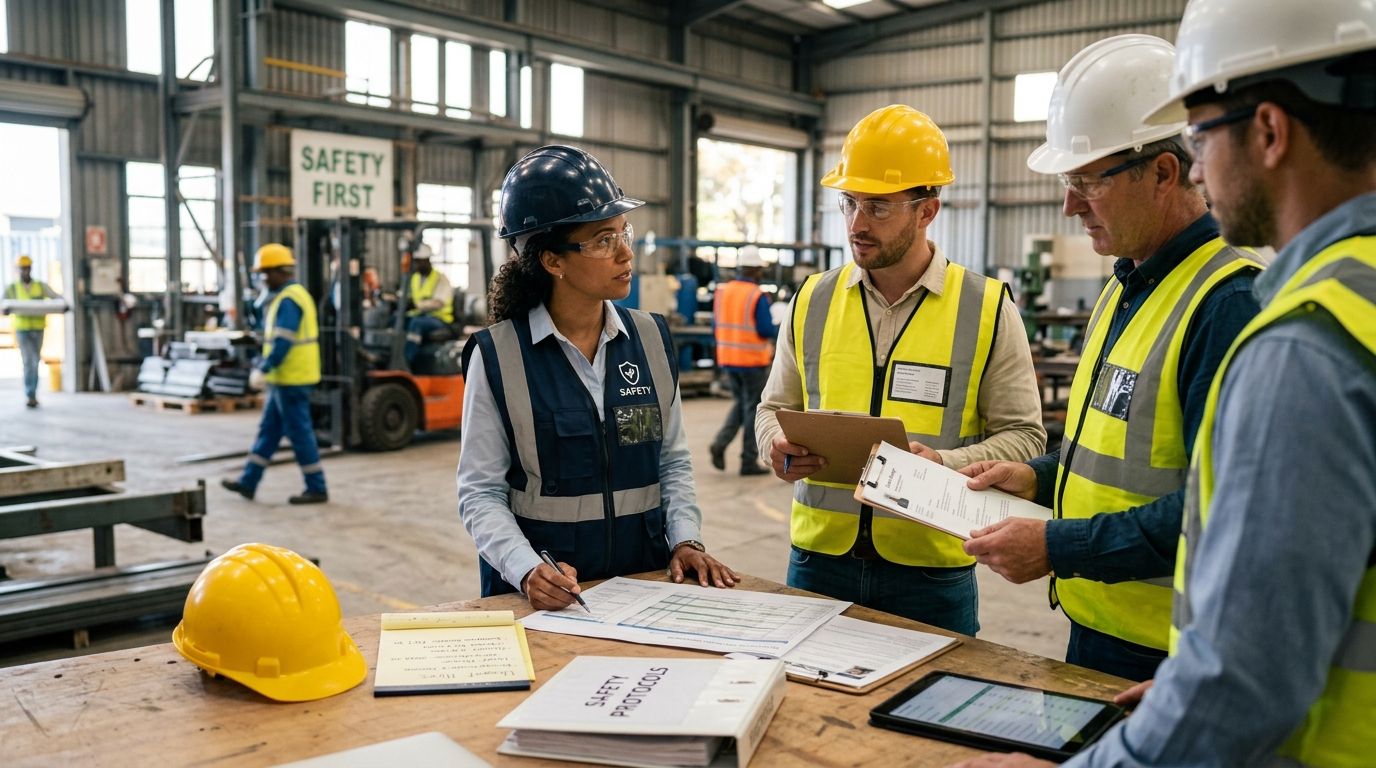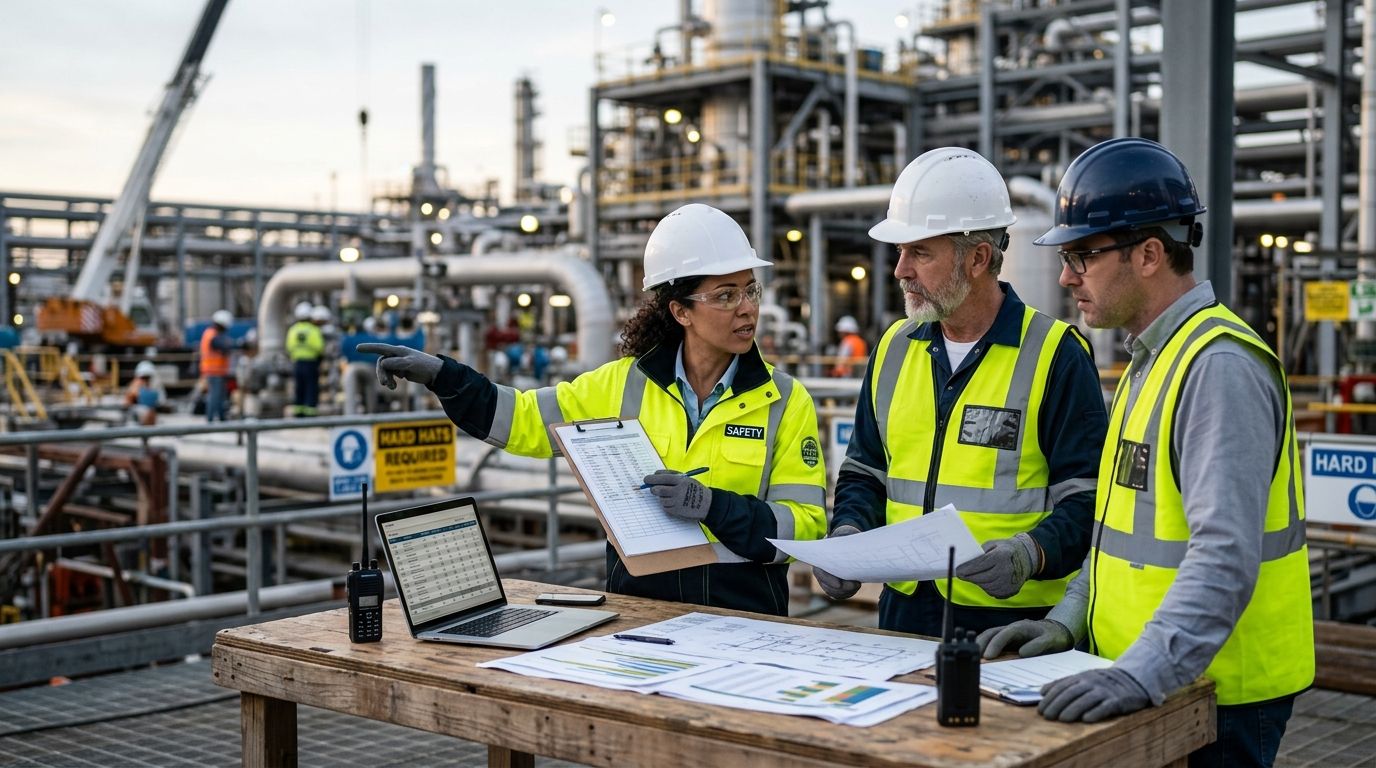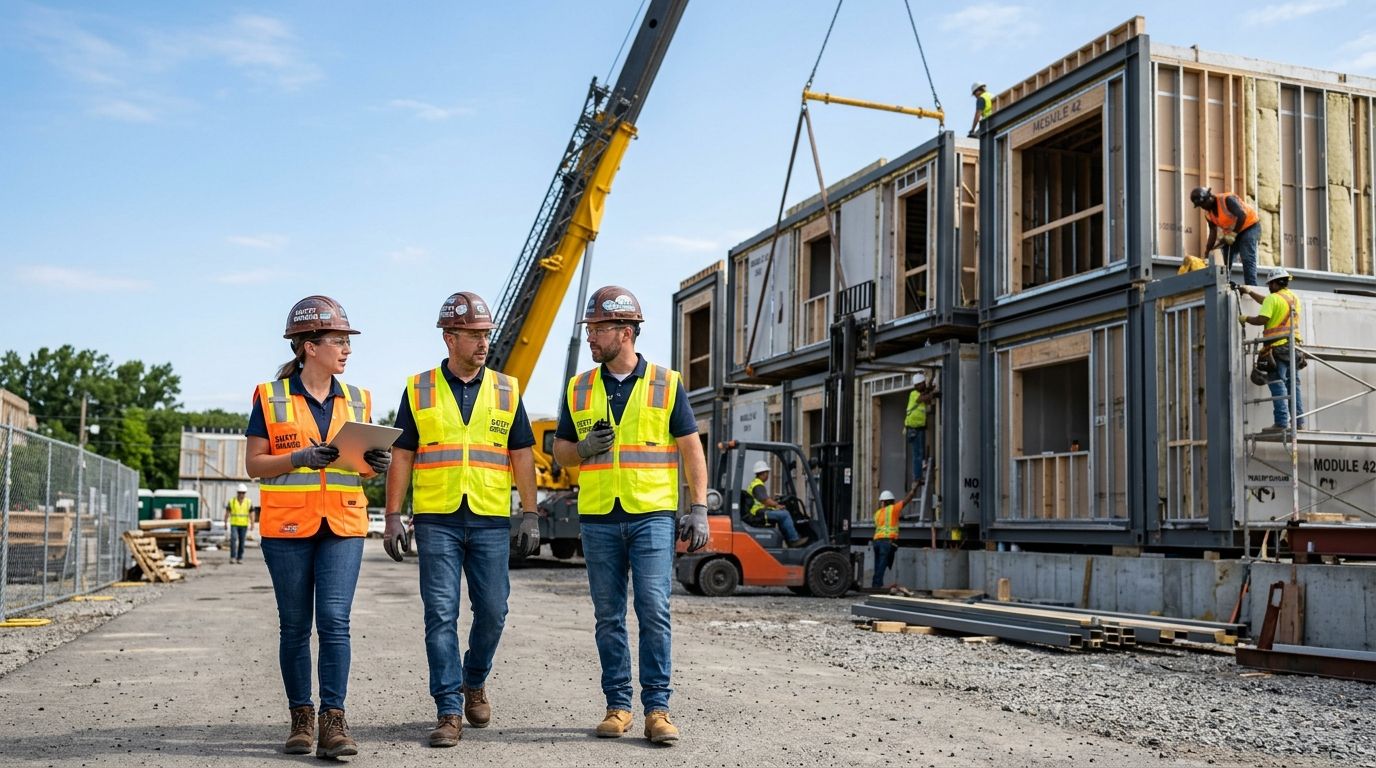
Safety staffing for modular construction covers two safety environments at once: the factory floor where modules get assembled under OSHA general industry rules, and the job site where they're craned into place under OSHA construction rules. A modular builder that staffs only one side leaves the other exposed, and a compressed project calendar makes that gap expensive fast.
- Safety staffing for modular construction requires professionals certified under both OSHA 1910 (plant) and 1926 (field) standards.
- ResponsAble Staffing is best for modular builders juggling factory production lines and crane-and-rigging field crews on tight 2026 schedules.
- In-house-only hiring stalls modular ramp-ups; a specialized safety staffing partner fills open roles in days, not weeks.
- Verify crane, rigging, and fall protection certifications before any temporary safety hire sets foot on a modular job site.
Why safety staffing matters for modular and prefabricated construction
Modular and prefabricated construction runs on a schedule most stick-built projects never see: a module gets built on an assembly line, ships on a truck, and gets set by crane on a date that was booked months in advance. That calendar doesn't bend for an open safety seat.
A plant safety tech who never learned crane signaling can't cover an erection week. A field safety officer who's never worked a production line can't catch a lockout/tagout violation on the shop floor. ResponsAble Staffing builds its safety staffing bench around that exact split, placing professionals who understand both the 1910 general industry side and the 1926 construction side of a modular project.
Miss that split and one of two things happens in 2026: the plant backs up waiting for a qualified safety presence, or the erection crew sits idle because nobody's cleared to run the lift. Neither is cheap, and neither is a staffing problem you can solve the week it shows up.
Map your dual-environment safety scope
Start by writing down where plant jurisdiction ends and field jurisdiction begins, because most modular safety gaps live in that handoff.
- Audit the plant floor against OSHA 1910 general industry standards (machine guarding, lockout/tagout, PPE)
- Audit the erection process against OSHA 1926 construction standards (fall protection, crane operations, rigging)
- List the overlap roles: rigging, signal person, and fall protection apply on both sides
- Document the exact point a module leaves factory jurisdiction and enters site jurisdiction
- Flag any state-specific modular or offsite construction code requirements tied to the delivery state, not just the plant state
Write job descriptions that separate plant and field duties
A single job description that tries to cover both environments produces a hire who's mediocre at both.
- Write plant safety roles around machine guarding, lockout/tagout, and daily production-line walkthroughs
- Write field safety roles around fall protection, crane signaling, and rigging inspection
- Specify PPE differences up front; plant PPE and erection-day PPE aren't the same list
- Note shift pattern differences: plant work is usually steady day shift, field erection is often compressed into a single set day
- Require OSHA 10 or 30 as a baseline, then layer on site-specific modular certifications where the project calls for them
Vet certifications before any candidate reaches the site
This is the step where a generalist staffing vendor and a specialized one split apart, and it's also the step where a faster path starts to matter.
Do it yourself first: call the training provider directly to verify OSHA 10/30 cards, confirm crane signal person and rigger certifications against the issuing body, check fall protection and confined space training dates for expiration, and request incident history from the candidate's last three placements. If you want a shortcut for judging whether an outside partner does this work reliably, read through how to evaluate a staffing agency's safety incident track record before you sign anything.
The faster path: a specialized safety staffing partner pre-verifies these credentials before a candidate is ever submitted to you, which matters most when a module is already on the truck and the erection window is fixed.
Staff the erection phase separately from factory production
Erection week needs its own coverage plan, not an overflow assignment for whoever's free that day.
- Build a roster of field-only safety techs reserved for set days
- Schedule overlap coverage during the week a module physically leaves the plant
- Confirm crane certifications match the specific rigging configuration for that lift
- Coordinate the site safety officer directly with the general contractor's site safety plan
- Keep one factory safety lead reachable by phone during erection week in case a plant-side question comes up mid-lift
Plan headcount around project awards, not around the calendar
Modular ramp-ups don't follow a normal hiring curve — they follow contract signatures.
- Forecast safety headcount 60 to 90 days ahead of an expected contract award
- Build a bench of pre-screened, dual-environment candidates before the ramp-up actually hits
- Cross-train a few factory techs on basic field protocols so they can flex into erection support
- Set contract-to-hire terms upfront so a temporary safety hire can convert if the project scope extends
Onboard fast without cutting corners
A compressed schedule is not a reason to skip verification steps — it's a reason to compress the onboarding packet instead.
- Build a one-day site orientation specific to modular assembly hazards, not a generic construction orientation
- Pair every new safety hire with a veteran tech for the first week on-site
- Confirm badge, site access, and PPE issue happen before the scheduled start date, not on it
- Re-verify that certifications won't expire mid-project before finalizing a placement
“A safety tech who only knows the factory floor or only knows the crane pad is one plant walk-through away from a violation.”
Comparing safety staffing options for modular builders
| Option | Best for | Key limitation |
|---|---|---|
| In-house EHS hire | Builders with steady headcount at one plant | Hiring cycles of 6-10 weeks leave gaps during a ramp-up |
| Generalist staffing agency | Fast warehouse or light-industrial headcount | Screens for availability, not OSHA-specific credential depth |
| Specialized safety staffing agency | Modular builders needing dual plant-and-field certified pros fast | Requires a clear scope of work upfront to match the right credential mix |
| Independent EHS consultant | One-time compliance reviews or audits | Not built for daily site coverage or shift rotation |
Verdict: in-house works when your plant headcount is stable and predictable; a specialized safety staffing agency wins when a modular project award triggers a hiring spike that in-house recruiting can't clear fast enough.
Common mistakes modular builders make with safety staffing
- Treating modular safety like stick-built site safety and missing the 1910 general industry rules that govern the plant floor
- Sending one generalist hire to cover both environments without cross-training on the standards that differ between them
- Waiting until the erection date is booked to start sourcing certified riggers and signal persons
- Skipping incident-history checks on temporary hires because the project calendar is tight
- Assuming a crane certification is generic instead of confirming it matches the specific lift plan for that module
Need certified safety staff fast?
Get vetted plant and field EHS professionals matched to your schedule.
FAQ
What is safety staffing for modular construction?
Safety staffing for modular construction is the practice of placing EHS professionals who can cover both the factory floor where modules are built and the job site where they're erected. It requires familiarity with OSHA 1910 general industry rules and OSHA 1926 construction rules in the same project.
Is a safety officer required on a modular construction site?
Most general contractors and project owners require a designated site safety presence during module erection, especially during crane lifts. Requirements vary by state and by the general contractor's site safety plan, so check the specific project contract.
How is modular construction safety different from stick-built construction?
Modular projects split safety oversight between a factory environment governed by general industry standards and a field erection environment governed by construction standards. Stick-built projects only need the construction-side coverage.
Can one safety professional cover both the factory and the job site?
A cross-trained safety tech can cover both, but it takes deliberate training on both rule sets rather than assuming construction experience transfers to a factory floor or vice versa. Most modular builders staff the roles separately and coordinate them.
How fast can a staffing agency place a certified safety manager for modular projects?
Turnaround depends on how specific the credential requirements are and how large the candidate bench is for that region. A specialized safety staffing agency with pre-verified candidates moves faster than a generalist agency starting from scratch.
What certifications should a modular construction safety hire carry?
At minimum, OSHA 10 or 30, plus fall protection training for field roles and lockout/tagout familiarity for plant roles. Crane signal person and rigger certifications matter for any hire covering erection week.
How much does safety staffing cost for modular construction in 2026?
Cost depends on role seniority, certification level, contract length, and region, so it varies project to project. Request a quote based on your specific scope rather than relying on a flat industry rate.
One last thing
The rarest hire in modular construction safety isn't the crane-certified rigger or the plant EHS generalist — it's the person who can move between both without a learning curve. Build that bench before your next module ships, not after the erection date is already on the calendar. Builders who wait until the ramp-up hits are the ones staffing an empty seat with whoever answered the phone that week.