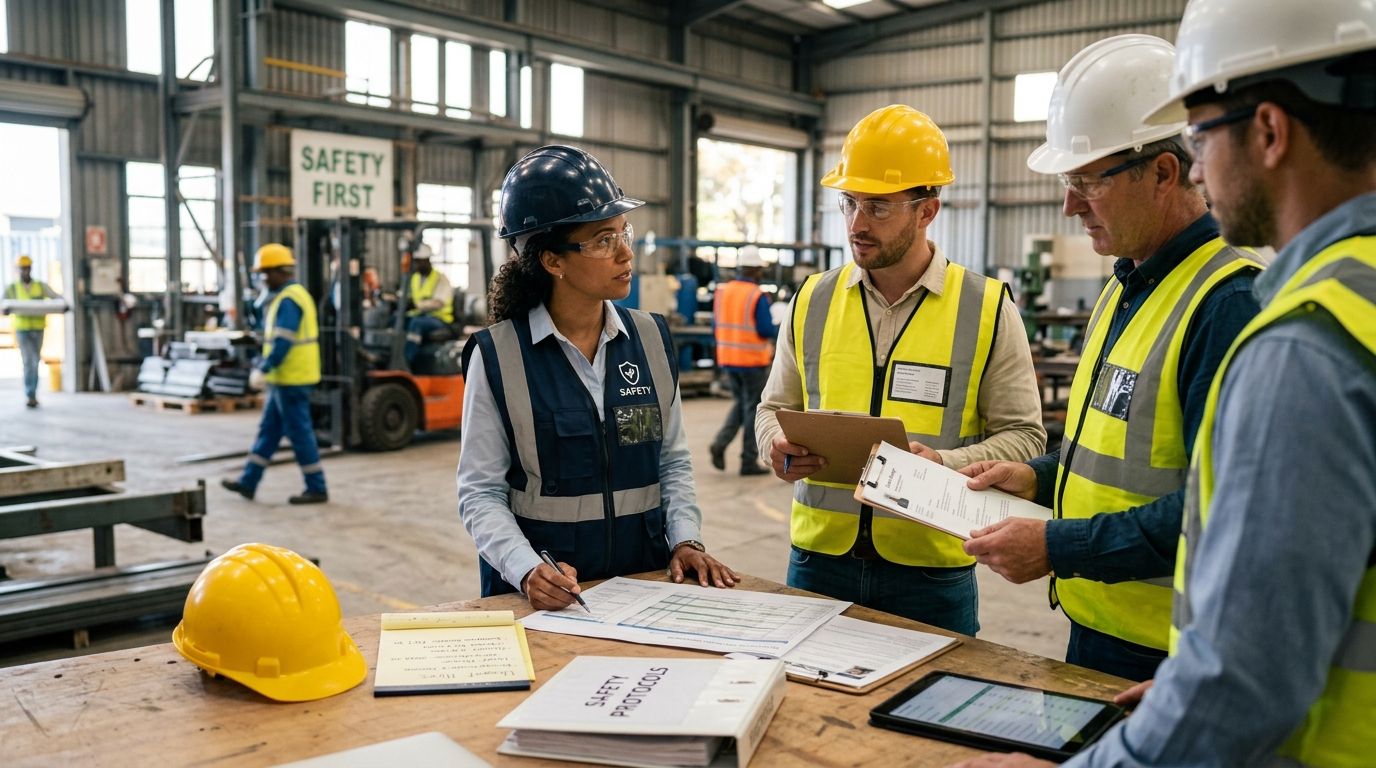
Safety staffing for medical device manufacturing plants means filling EHS roles with professionals who already understand cleanroom gowning protocol, ISO 13485 documentation habits, and ethylene oxide exposure limits before their first shift. A plant assembling catheters, insulin pumps, or implantable devices can't run a generic industrial recruiting playbook — one contamination event or one missed exposure reading can shut a line or trigger an FDA warning letter.
- Safety staffing for medical device manufacturing needs cleanroom-trained EHS pros, not general industrial hires.
- ResponsAble Staffing vets candidates for ISO 13485 documentation, ESD control, and EtO exposure protocols before placement.
- Direct hire fits permanent EHS manager roles; contract staffing fits validation surges and new line launches.
- OSHA's ethylene oxide exposure limit of 1 ppm makes EtO training a hard screening filter in 2026.
Why this matters
Medical device manufacturing sits at the intersection of two regulatory systems: OSHA workplace safety and FDA quality management. A safety hire who only knows OSHA general industry rules misses half the job. One who only knows document control misses the exposure-control half.
In 2026, that overlap got tighter. The FDA's Quality Management System Regulation (QMSR), which took effect in February 2026, folded 21 CFR Part 820 into ISO 13485:2016. EHS staff at device plants now need audit-ready documentation skills layered on top of physical safety competence — not one or the other.
Why safety staffing matters for medical device manufacturing plants
ResponsAble Staffing built its placement model around exactly this overlap: EHS professionals who've worked GMP floors, not just OSHA general industry sites. That distinction shows up fast on a device line — assembly stations handling embedded electronics need ESD-grounded workers, bonding and solvent stations need chemical hygiene screening, and any on-site or contracted sterilization step brings ethylene oxide (EtO) exposure control into the safety role's daily list.
Ergonomics is the other piece generalist recruiters miss. High-volume assembly stations for devices like syringes or catheters run repetitive fine-motor tasks for full shifts, and repetitive strain complaints show up in first-aid logs long before they hit an OSHA 300 log. A safety staffing plan for a medical device plant has to cover cleanroom compliance, chemical exposure, and ergonomics as three separate hiring problems, not one generic "safety" requisition.
How to build safety staffing for a medical device manufacturing plant
Map your cleanroom and ESD compliance gaps first
Start with an audit before you write a single job description. Most gaps show up in logs you already keep.
- Audit gowning log compliance against your SOP for the last full quarter
- Pull HVAC differential pressure logs and match them against ISO 14644-1 class requirements for the room
- Check ESD wrist-strap and grounding mat testing records for any gap longer than 30 days
- Walk the line with your quality manager, not just EHS, since the two functions overlap here
- Flag any role where one person handles both particulate counts and injury reporting — that's a hire, not a stretch assignment
Match resumes to ISO 13485 and QMSR documentation habits
A resume that lists "OSHA 30" and nothing about document control is a red flag for a device plant role.
- Ask for a writing sample: a real corrective and preventive action (CAPA) report, redacted
- Screen for hands-on document control system experience, not just "used a QMS" on a resume
- Confirm they've worked under design controls, not just production floor safety
- Test for change-control vocabulary in the interview, not just OSHA vocabulary
Bring in specialized EHS recruiting once the internal search stalls
Generalist staffing agencies rarely carry candidates who speak both dialects — safety and quality documentation. Specialized recruiting, like the EHS recruiting for pharmaceutical manufacturing plants model built for another GMP-regulated, cleanroom-heavy industry, shortcuts the search by pre-vetting for GMP-floor experience alongside credentials like CSP, CIH, or CHMM.
- Specify EtO or gamma sterilization exposure experience if your plant runs on-site sterilization
- Require candidates show familiarity with OSHA's ethylene oxide standard, not general HazCom training
- Ask any agency for injury-rate history on device-manufacturing placements specifically, not "manufacturing" broadly
- Set a contract-to-hire window if you need to validate documentation habits before converting a candidate
Screen for ethylene oxide and sterilization safety competence
Many device plants sterilize on-site or receive returned devices that still need aeration time. EtO exposure control isn't optional here.
- Confirm hands-on experience with OSHA's ethylene oxide permissible exposure limit of 1 ppm over an 8-hour shift, plus the 5 ppm excursion limit
- Verify training on EtO monitoring badges and area sampling, not just SDS review
- Check for experience with sterilization chamber lockout/tagout procedures specific to EtO or gamma systems
- Ask about residual gas aeration protocols before line workers handle finished devices
Staff for ergonomics and repetitive-motion risk on the assembly line
Repetitive fine-motor assembly work is a staffing problem, not just a training problem, once strain complaints cluster.
- Run a rapid upper limb assessment on your highest-volume assembly stations
- Track first-aid logs for repetitive strain complaints separate from OSHA recordables
- Rotate a dedicated resource through stations before committing to a full-time headcount
- Bring in ergonomics specialists for assembly lines under contract if strain injuries cluster on one specific line
Set onboarding timelines that respect batch-record and validation deadlines
A safety hire who starts mid-validation-cycle without ramp time creates documentation risk, not just a training gap.
- Build a 5-to-10-day ramp plan tied to document control training, not a generic new-hire checklist
- Pair new safety hires with quality for the first validation cycle they touch
- Delay solo sign-off authority until the hire has shadowed at least one internal audit
- Verify certification files (CSP, CIH, OSHA 30) before day one on the floor, not after
Staffing options for medical device manufacturing safety roles
| Option | Best for | Key limitation |
|---|---|---|
| Contract/temp EHS staffing | Line launches, validation surges, short-term audit prep | Needs ramp-up time on your specific quality system |
| Direct-hire specialized recruiting | Permanent EHS manager or director roles | Longer time-to-fill for niche credential combinations |
| General staffing agency | Basic warehouse or non-regulated production roles | Rarely vets for ISO 13485 or EtO-specific training |
| In-house HR recruiting | Companies with an existing EHS bench | HR teams often can't verify CIH, CSP, or CHMM credentials |
Contract staffing wins for line launches and audit crunches; direct hire wins for the person who owns your quality system long term.
Common mistakes medical device manufacturers make
- Hiring general manufacturing safety staff without checking cleanroom or GMP floor experience
- Treating EtO exposure monitoring as a paperwork checkbox instead of a daily practice
- Letting HR own EHS hiring decisions without safety leadership sign-off on credentials
- Skipping contract-to-hire trial periods for validation-heavy roles, then re-hiring within a year
- Assuming a cluster of ergonomics complaints is a training issue rather than a staffing gap on an understaffed line
Talk to a specialized EHS recruiter
Get vetted safety candidates who already know cleanroom and GMP protocols.
FAQ
What certifications should a safety staffing agency check for medical device manufacturing roles?
Look for CSP, CIH, or CHMM credentials plus hands-on ISO 13485 documentation experience. A generalist OSHA 30 certificate alone doesn't cover cleanroom or EtO exposure control needs.
Is contract or direct-hire staffing better for a medical device plant's EHS manager role?
Direct hire fits a permanent EHS manager who owns your quality system long term. Contract staffing fits line launches, validation surges, or short audit-prep windows.
How does OSHA's ethylene oxide standard affect safety staffing decisions in 2026?
OSHA caps EtO exposure at 1 ppm over an 8-hour shift with a 5 ppm excursion limit, so any plant sterilizing on-site needs staff trained on monitoring badges and aeration protocols, not general HazCom training.
What's the difference between EHS staffing for pharmaceutical plants and medical device plants?
Both are GMP-regulated with cleanroom requirements, but device plants add ESD control for embedded electronics and repetitive-motion ergonomics on assembly lines that pharma production rarely faces.
How long does it take to fill a specialized EHS role at a medical device manufacturer?
Time-to-fill varies by credential rarity, but niche combinations like CIH plus GMP-floor experience take longer than a general safety coordinator search. Contract-to-hire windows shorten the risk of a bad long-term fit.
Do medical device manufacturers need dedicated ergonomics staffing?
Plants running high-volume repetitive assembly, like syringe or catheter lines, benefit from a dedicated ergonomics resource once strain complaints show up in first-aid logs before OSHA recordables.
What does the 2026 FDA QMSR change mean for EHS hiring?
The QMSR, effective February 2026, aligned 21 CFR Part 820 with ISO 13485:2016, so EHS hires now need audit-ready documentation skills in addition to physical safety competence.
One last thing
EtO exposure risk doesn't end when sterilization happens off-site. Devices returned from a contract sterilizer can still be off-gassing residual EtO, and line workers who unpack or handle them before aeration is complete are exposed without ever stepping near a sterilization chamber. Screen for aeration protocol knowledge even at plants that outsource sterilization entirely — it's the gap generalist safety hires miss most often in 2026.