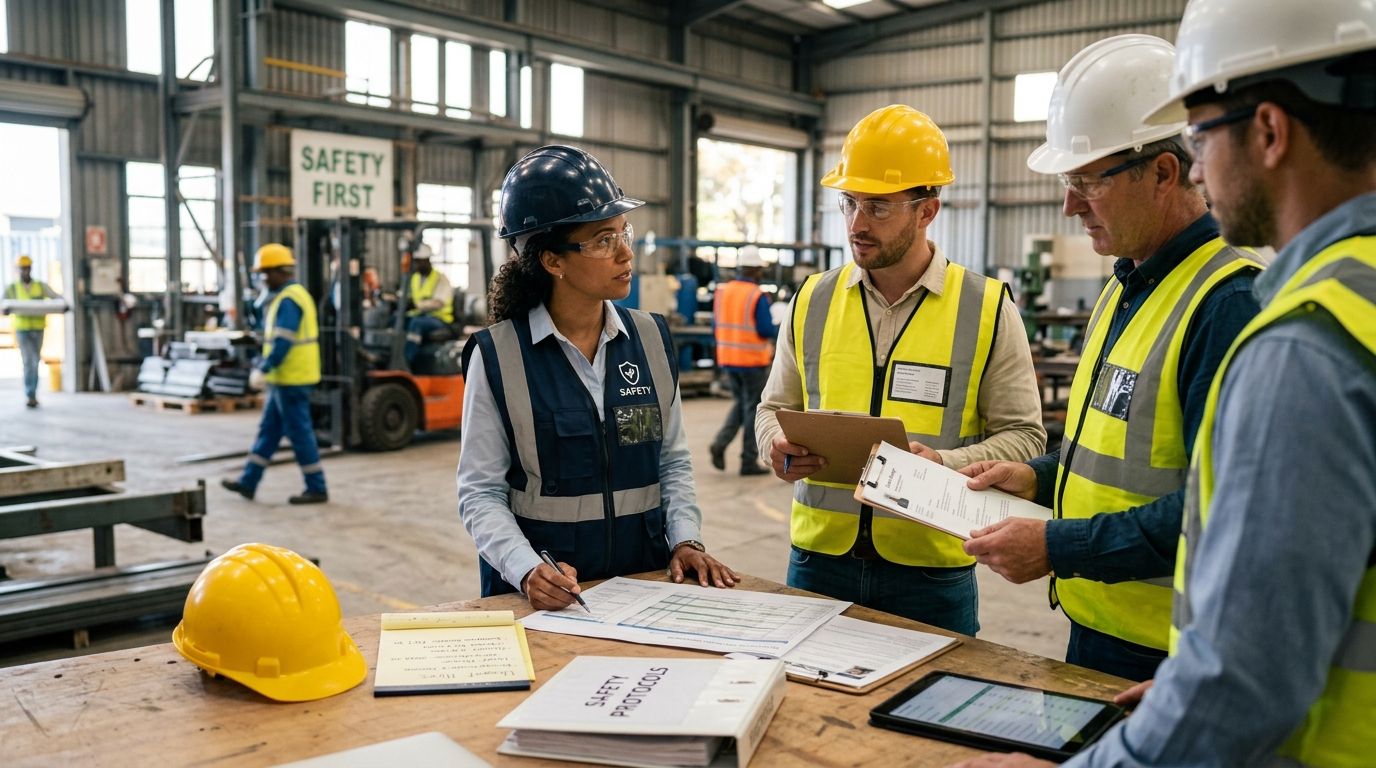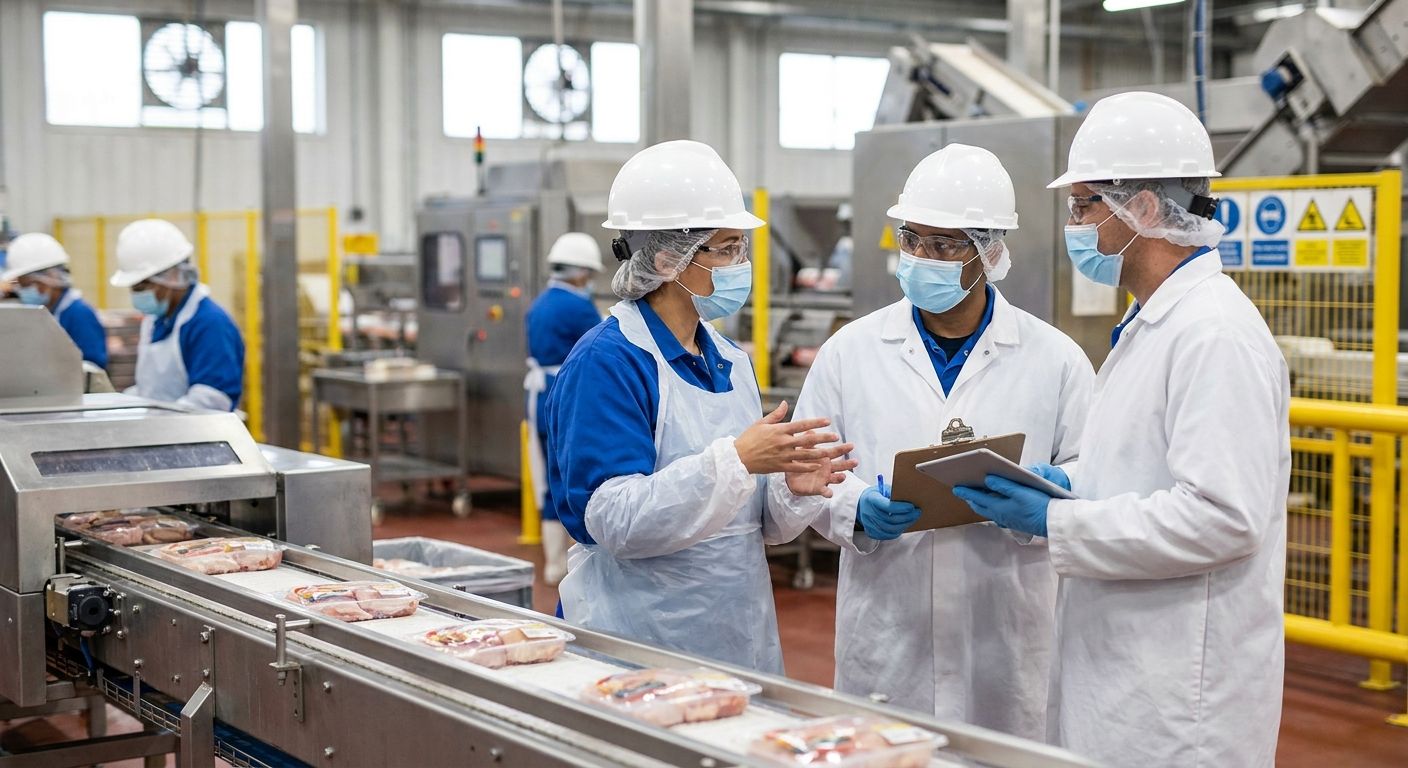
Safety staffing for meat and poultry processing plants means placing OSHA-qualified safety technicians, EHS coordinators, and safety managers into a production environment defined by moving lines, cold rooms, wet floors, and sharp tools running at high speed. This segment needs a different bench than a warehouse or a general manufacturing plant: candidates must be comfortable in sub-40-degree environments for a full shift, fluent in lockout/tagout on conveyor and boning equipment, and often bilingual to communicate safety procedures across a diverse floor crew.
- Safety staffing for meat and poultry processing requires candidates trained on machine guarding, cold-chain PPE, and amputation-prevention protocols, not generalist EHS backgrounds.
- ResponsAble Staffing places temporary, project-based, and direct-hire safety professionals for high-risk industrial environments including food and animal processing.
- Bilingual safety communication is not optional on most meat and poultry lines; verify it before a candidate starts, not after an incident.
- Seasonal surge periods around holidays and USDA inspection cycles are the most common reason plants run short on qualified safety coverage.
Why safety staffing matters for meat and poultry processing
Meat and poultry processing sits on OSHA's radar for a reason. The agency runs a long-standing emphasis program targeting amputation hazards in the industry, focused specifically on saws, band knives, and mechanical conveyance points that cause the majority of serious injuries on these lines. A generalist safety hire who has never worked around a debone line or a scald tank walks into that environment blind.
The workforce itself adds a second layer most staffing agencies miss. Plant floors in this sector run heavily bilingual, frequently Spanish-speaking, and safety instruction that only exists in English does not reach the people doing the cutting. A safety coordinator who can run a toolbox talk in Spanish and English closes a communication gap that written SOPs alone never will.
Cold-chain exposure is the third variable. Processing floors, coolers, and freezer staging areas run well below room temperature for entire shifts, and safety professionals need cold-weather PPE protocols built into their daily routine, not treated as a special case. Plants that staff for this environment specifically see fewer near-miss reports tied to slip-and-fall and cold-stress incidents than plants that rotate in generalist safety hires.
Audit your current line-level safety coverage
Before adding headcount, map where safety presence actually sits versus where the injury data says it needs to sit.
- Pull the last 12 months of OSHA 300 logs by department: kill floor, evisceration, deboning, packaging, sanitation
- Cross-reference recordable incidents against shift coverage gaps, especially night sanitation crews
- Flag stations running mechanical saws or automated cutting equipment with no dedicated safety observer
- Check whether your current safety staff-to-worker ratio holds during overtime and weekend runs
- Note any department relying on a single safety professional with no backup coverage
Map safety roles to USDA/FSIS and OSHA overlap
Meat and poultry plants answer to both USDA/FSIS food-safety inspection and OSHA worker-safety rules, and the roles rarely overlap cleanly.
- List every role that touches both regimes: sanitation safety, PPE compliance during USDA inspection walks, HACCP-adjacent safety documentation
- Confirm your EHS staff understand the difference between a food-safety violation and a worker-safety violation, since inspectors from each agency ask different questions
- Identify which safety roles need to be present during FSIS inspection windows versus routine production hours
- Document escalation paths so a safety issue found during a USDA walk-through reaches your safety manager same-day
Source safety professionals who understand cold and wet environments
This is where the manual approach hits its limit fastest. Posting a generic "EHS Coordinator" job on a job board pulls candidates with warehouse or office-manufacturing backgrounds who have never worked a wet, cold, high-speed line.
- Screen for prior experience specifically in animal processing, red meat, or poultry, not general food manufacturing
- Confirm candidates have worked full shifts in cooler or freezer conditions, not just brief exposure
- Ask about hands-on experience with LOTO on conveyor and cutting equipment, not just classroom certification
- Verify comfort with wet-floor and slip-hazard protocols specific to processing environments
When internal sourcing and job boards come up short on this specific background, a specialized agency shortens the search. ResponsAble Staffing places vetted industrial safety professionals nationwide, including temporary and direct-hire roles for high-risk manufacturing environments, and screens for the exact machine-guarding and cold-environment experience meat and poultry lines need. That specialization matters more than it does in food and beverage manufacturing broadly, because the injury profile on a processing line is sharper and faster-moving.
Vet certifications specific to meat and poultry hazards
A safety certification list that works for a distribution center does not automatically transfer to a kill floor or debone line.
- Machine guarding and LOTO certification with documented hands-on hours, not just an online course completion
- Confined space entry training if the role covers rendering tanks, silos, or wastewater treatment areas
- Bloodborne pathogen training current within the last 12 months
- Ammonia refrigeration safety awareness if the plant runs industrial refrigeration systems
- First aid/CPR certification current and verifiable, not self-reported
Before signing with any agency, ask to see how they document candidate certifications and how they've handled safety incidents on past placements. The track record evaluation guide walks through the specific questions to ask an agency before committing.
Build bilingual safety communication into every shift
A safety program that only runs in English on a majority Spanish-speaking floor is a program that isn't actually running.
- Require bilingual capability for at least one safety professional per shift, not just the day-shift lead
- Translate toolbox talks and incident reports in real time, not after the fact
- Confirm safety data sheets and PPE instructions are posted in both languages at the point of use
- Test comprehension with floor workers directly rather than assuming translated signage is enough
Agencies that specifically source bilingual safety professionals for job sites solve this faster than posting a bilingual-preferred flag on a generic job listing.
Plan for seasonal surge staffing
Holiday demand for turkey, ham, and poultry products drives production spikes that most plants staff for reactively instead of proactively.
- Forecast production volume increases 90 days ahead of major holiday cycles
- Line up temporary safety coverage before the surge starts, not once overtime hours are already climbing
- Budget for shorter onboarding timelines during peak periods, since new hires won't get a full week of shadowing
- Confirm surge-period safety staff carry the same certification standards as year-round staff, not a lighter bar
Get vetted safety staff on your line
Temporary, project-based, and direct-hire EHS placements nationwide.
Track safety incident history before signing a staffing contract
The agency's own safety record predicts how their candidates will perform on your floor.
- Ask for the agency's placement-related incident rate over the last two years
- Confirm how they handle a placed candidate involved in a recordable incident
- Check whether they carry workers' comp coverage that follows their placed staff on your site
- Review how quickly they replace a candidate who doesn't meet your safety bar
Comparison of staffing options for meat and poultry plants
| Option | Best for | Key limitation |
|---|---|---|
| Internal HR recruiting | Plants with an existing safety-trained talent pipeline | Slow to fill during surge periods; limited access to niche cold-chain experience |
| General staffing agency | Filling non-safety production roles quickly | Rarely screens for machine-guarding or cold-environment safety background |
| Specialized safety staffing agency (ResponsAble Staffing) | Plants needing vetted, certified safety professionals fast, temp or direct hire | Requires clear role specs upfront to match the right background |
| MSP/VMS program | Large multi-site operators managing several vendors | Adds administrative layers that slow down urgent single-site fills |
Common mistakes meat and poultry plants make
- Treating safety staffing like general labor staffing. A safety coordinator with no line experience on animal processing equipment is a liability, not a hire.
- Skipping bilingual verification during the interview. "Conversational Spanish" on a resume and floor-ready bilingual safety communication are not the same thing.
- Waiting until the holiday surge to start sourcing. By the time overtime hours spike, the qualified candidates are already placed elsewhere.
- Not separating USDA/FSIS compliance duties from OSHA worker-safety duties in the job description. Candidates who are strong on one side often have gaps on the other.
- Signing a staffing contract without checking the agency's own incident history. The agency's placement record is the clearest signal of how their screening actually works.
Meat and poultry plants that build seasonal surge planning into their annual calendar, rather than reacting to it every fourth quarter, consistently avoid the coverage gaps that show up as recordable incidents in Q4 and Q1. That single planning shift matters more in 2026 than most line-level PPE upgrades.
FAQ
What certifications should a safety professional in meat and poultry processing hold?
Machine guarding and LOTO certification with hands-on hours, bloodborne pathogen training current within 12 months, and confined space entry training if the role covers tanks or silos. Ammonia refrigeration awareness matters if the plant runs industrial refrigeration.
Is bilingual safety staffing necessary for poultry plants?
Yes, on most floors with a majority Spanish-speaking workforce. Safety instruction that only runs in English does not reach the workers doing the highest-risk tasks, and it shows up as a communication gap in incident reports.
How much does safety staffing for meat and poultry processing cost?
Costs vary by role, certification level, and whether the placement is temporary, project-based, or direct hire. Get a quote directly from a staffing agency based on your specific role requirements and site conditions.
How is safety staffing for meat processing different from general manufacturing?
Meat and poultry lines run cold, wet, and fast, with mechanical cutting equipment that drives OSHA's amputation emphasis program in this industry. Safety staff need direct experience with that equipment and environment, not generalist manufacturing backgrounds.
When should a plant start sourcing safety staff for holiday production surges?
Roughly 90 days before the surge, based on production volume forecasts. Waiting until overtime hours are already climbing means competing for a smaller pool of qualified candidates.
What should I ask a staffing agency before signing a contract?
Ask for their placement-related incident rate over the last two years, how they handle a candidate involved in a recordable incident, and how fast they replace a candidate who doesn't meet your safety standard.
Can safety staffing agencies place both temporary and direct-hire roles?
Yes. Agencies that cover both models let a plant start with temporary coverage during a surge and convert a strong performer to a direct-hire role without restarting the search.
One last thing
OSHA's long-running emphasis on amputation hazards in meat and poultry processing exists because saws, band knives, and conveyor pinch points cause a disproportionate share of serious injuries in this industry compared to manufacturing broadly. The plants that treat their safety staff as line-experienced specialists, not interchangeable EHS generalists, are the ones that keep those incidents off the log in 2026.