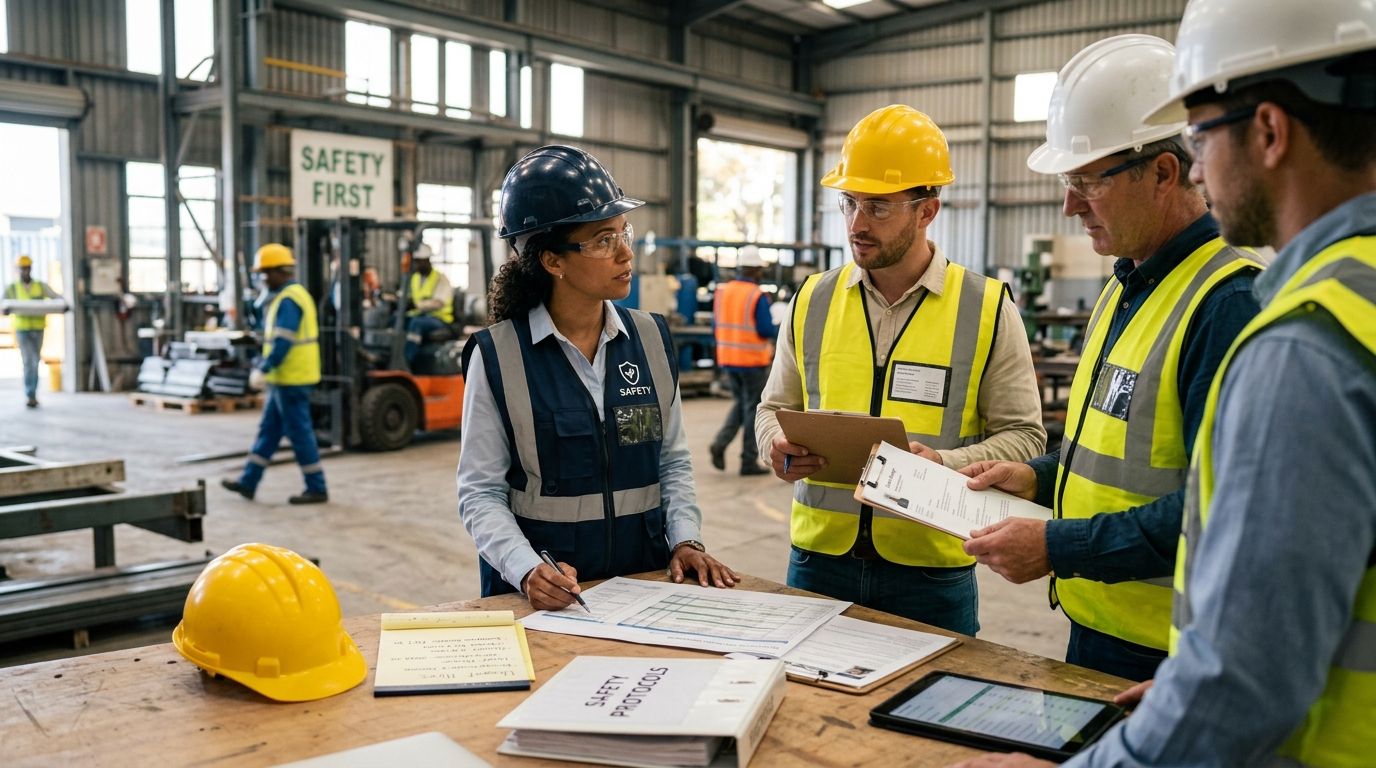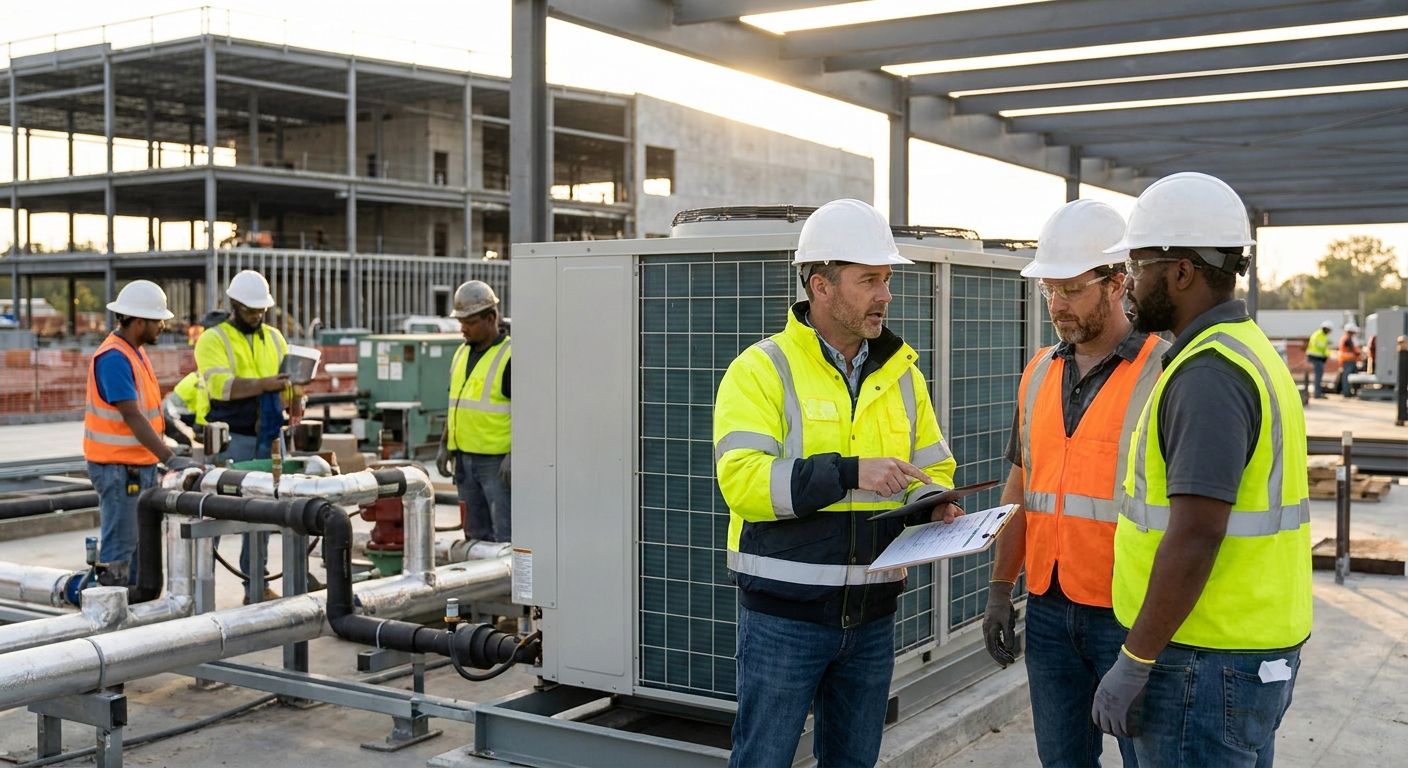
HVAC and mechanical contractor safety staffing is the practice of placing vetted, certified EHS professionals — confined space attendants, fire watch techs, EPA Section 608 refrigerant handlers — on commercial and industrial mechanical jobsites, with the goal of covering seasonal surge periods and multi-trade hazards without slowing installs or service calls. Unlike a typical construction safety hire, HVAC and mechanical crews split their day between tight mechanical rooms, rooftop equipment access, and hot work brazing — three hazard categories that rarely overlap on a single job site and rarely get covered by one generalist safety tech.
- Safety staffing for HVAC contractors pairs certified techs with seasonal surge and multi-trade jobsite demands in 2026.
- ResponsAble Staffing places confined space attendants, fire watch monitors, and EPA 608-certified staff on contract or direct hire.
- Generalist staffing agencies often skip HVAC-specific hazards like brazing hot work and rooftop confined space entry.
- Contract safety staff cost less upfront than a full-time hire but still need certification checks before day one.
Why safety staffing matters for HVAC and mechanical contractors
Mechanical contractors run leaner crews than general contractors, which means one safety gap — a missing fire watch attendant during a brazing job, an unmonitored confined space entry into a rooftop curb — stops the whole crew, not just one trade. ResponsAble Staffing exists to close that gap without asking a contractor to hire a full-time safety manager for a three-week install.
HVAC work also runs in cycles that generalist staffing agencies don't plan for well: a summer AC surge, a fall retrofit season, a winter heating push. A safety staffing partner that understands mechanical trades staffs to that rhythm instead of treating every request the same way a warehouse racking job gets treated.
The hazards are specific too. Refrigerant handling falls under EPA Section 608, confined mechanical room and duct entry falls under OSHA's confined space standard, 29 CFR 1926.1203, and brazing or soldering copper line sets is hot work requiring a permit and a dedicated fire watch. None of those three overlap cleanly with the training a residential HVAC tech gets.
Assess your current jobsite hazard exposure
Start by mapping where your crews actually work, not where your safety program assumes they work. Most HVAC safety gaps trace back to a hazard nobody flagged on the pre-job walk.
- Rooftop unit access hatches and curb entries treated as confined spaces
- Brazing and soldering points near combustible roofing or insulation
- Refrigerant recovery and handling stations under EPA Section 608
- Electrical lockout/tagout on rooftop and mechanical room equipment
- Ladder and fall protection exposure on steep-slope or parapet-adjacent rooftops
- Multi-trade coordination hazards on jobsites shared with electricians and plumbers
Staff to the seasonal surge, not the average month
An HVAC contractor's safety staffing need in July looks nothing like January. Building a plan around a flat headcount wastes budget in slow months and leaves crews exposed during surge.
- Forecast peak install and service-call months against last year's schedule
- Line up contract safety staff two to four weeks ahead of the seasonal push
- Build a bench of pre-vetted techs who can start with less than a week's notice
- Set a minimum coverage floor for confined space and hot work jobs, even in slow months
- Flag multi-site projects that need coverage across more than one crew simultaneously
This is where a specialized partner earns its place over a do-it-yourself hiring push. ResponsAble Staffing keeps a bench of safety professionals already vetted for confined space attendance, fire watch, and refrigerant handling, so a surge order doesn't turn into a three-week job req.
Vet certifications specific to HVAC hazards
A generalist safety staffing agency checks OSHA 10/30 and calls it done. HVAC and mechanical work needs a tighter list.
- EPA Section 608 refrigerant handling certification, matched to the equipment type on the job
- Confined space entry and attendant training under 29 CFR 1926.1203
- Hot work and fire watch certification for brazing, soldering, and welding
- Fall protection training specific to rooftop and parapet work
- Lockout/tagout competency on the electrical systems the crew will actually touch
Before signing with any staffing partner, vet a safety staffing agency before signing a contract against these five items specifically — a clean incident history on paper doesn't tell you whether the agency has ever placed a fire watch tech on a brazing job.
Build a staffing plan across multiple sites and trades
Mechanical contractors rarely work one site at a time. A plan built for a single jobsite breaks the moment a second contract lands.
- Standardize a safety onboarding packet that travels with the tech, not the site
- Assign one point of contact per multi-site project for safety escalations
- Track certification expiration dates across every active placement, not just new hires
- Build a rapid-swap process for a tech who can't finish a project mid-stream
- Set clear expectations with the staffing partner on notice periods for scaling up or down
Track incident data across every contract safety placement
A safety staffing arrangement that doesn't feed incident data back to the contractor is a black box. You should know within a day if a placed tech logs a near-miss or a recordable.
- Require daily or weekly incident reporting from every placed safety professional
- Fold contract staff incidents into your OSHA 300 log tracking, not a separate system
- Ask the staffing agency for its own placement incident history before signing
- Review near-miss trends by hazard type, not just by site
Budget for contract versus direct-hire safety coverage
The math changes depending on whether the need is a six-week install or a year-round program. Before locking in a structure, calculate the ROI of contract safety staffing against what a full-time safety manager would cost in salary, benefits, and ramp time.
- Map project duration against the break-even point for a direct hire
- Factor in the cost of a stop-work order or OSHA citation avoided by proper coverage
- Account for training and certification costs an in-house hire would need upfront
- Weigh the flexibility of scaling contract staff up or down against surge periods
Get certified safety staff on your next HVAC job
Confined space, fire watch, and EPA 608-certified techs, staffed to your project timeline.
Comparison: safety staffing options for HVAC and mechanical contractors
| Option | Best for | Key limitation |
|---|---|---|
| In-house safety hire | Contractors with year-round, multi-site volume | Slow to scale for seasonal surge; full salary and benefits cost regardless of workload |
| Generalist staffing agency | One-off general labor or basic OSHA 10/30 coverage | Rarely vets HVAC-specific hazards like brazing hot work or EPA refrigerant handling |
| Independent EHS consultant | Short audits or a single compliance review | Not built for daily jobsite presence across multiple crews |
| ResponsAble Staffing (specialized safety staffing) | Contractors needing confined space, fire watch, or refrigerant-certified staff fast | Best value shows up on multi-week or repeat placements, not single-day jobs |
ResponsAble Staffing wins for HVAC and mechanical contractors who need certified confined space attendants, fire watch coverage, or EPA 608-trained techs on short notice without carrying a full-time safety manager year-round.
Common mistakes HVAC contractors make with safety staffing
- Treating refrigerant handling as an EPA-only checkbox. EPA Section 608 covers the refrigerant; OSHA hazard communication and confined space rules still apply to the space the tech works in.
- Assuming a residential-trained tech is ready for commercial mechanical rooms. Commercial rooftop and basement mechanical spaces carry confined space and lockout/tagout exposure a residential job never sees.
- Skipping a fire watch on brazing jobs because "it's just a small torch." Fire watch staffing for hot work permits exists precisely because small hot work jobs cause a disproportionate share of jobsite fires.
- Hiring safety coverage reactively after the summer surge already started. By the time a contractor notices the gap, the qualified techs are already placed elsewhere for the season.
- Skipping confined space attendant coverage on rooftop access hatches. Confined space attendant staffing for industrial sites applies to rooftop curb entries just as much as it does to underground vaults.
“If your crew brazes copper line sets without a hot work permit and a dedicated fire watch, you're one spark away from a stop-work order.”
FAQ
What is safety staffing for HVAC contractors?
Safety staffing for HVAC contractors places certified EHS professionals — confined space attendants, fire watch techs, EPA 608-certified refrigerant handlers — on mechanical jobsites for a defined project or ongoing coverage. It covers hazards specific to mechanical work that a generalist construction safety hire usually isn't trained for.
Do HVAC technicians need confined space attendant coverage?
Yes, whenever techs enter rooftop curb access points, mechanical rooms, or duct spaces that meet OSHA's confined space definition under 29 CFR 1926.1203. Many contractors miss this because rooftop equipment doesn't look like a traditional confined space.
Is a specialized safety staffing agency better than a generalist for HVAC work?
For HVAC-specific hazards, yes — a specialized agency vets EPA 608 refrigerant certification, hot work fire watch training, and confined space competency, which most generalist staffing firms don't screen for. A generalist agency works fine for basic OSHA 10/30 labor but falls short on mechanical trade hazards.
How fast can a safety staffing agency place a certified tech on an HVAC jobsite?
Placement speed depends on the agency's bench of pre-vetted talent for the specific certification needed, such as confined space attendance or EPA 608 handling. Contractors get the fastest turnaround by lining up surge coverage two to four weeks ahead of peak season instead of requesting it the week a project starts.
What certifications should HVAC contractor safety staff carry in 2026?
Look for EPA Section 608 refrigerant handling, confined space entry/attendant training under 29 CFR 1926.1203, hot work and fire watch certification, and fall protection training specific to rooftop work. Lockout/tagout competency on the equipment types your crew services matters just as much.
Can safety staffing agencies handle multi-state HVAC projects?
Agencies built for multi-site placement can staff safety coverage across states, though state-specific OSHA plan requirements vary and should be confirmed before a multi-state project starts. A standardized onboarding packet that travels with the tech, not the site, makes multi-state coverage easier to manage.
How much does HVAC safety staffing cost compared to a full-time hire?
The comparison depends on project duration: contract safety staffing avoids the salary and benefits cost of a year-round hire but carries a bill rate premium per assignment. Calculating the break-even point against project length, not against a single day rate, gives the clearer answer.
One last thing
The HVAC contractors who avoid stop-work orders in 2026 aren't the ones with the biggest safety budget — they're the ones who staffed the fire watch attendant before the brazing torch got lit, not after an inspector asked where the permit was. That's a scheduling decision, not a spending decision, and it's the one most contractors get backwards during surge season.