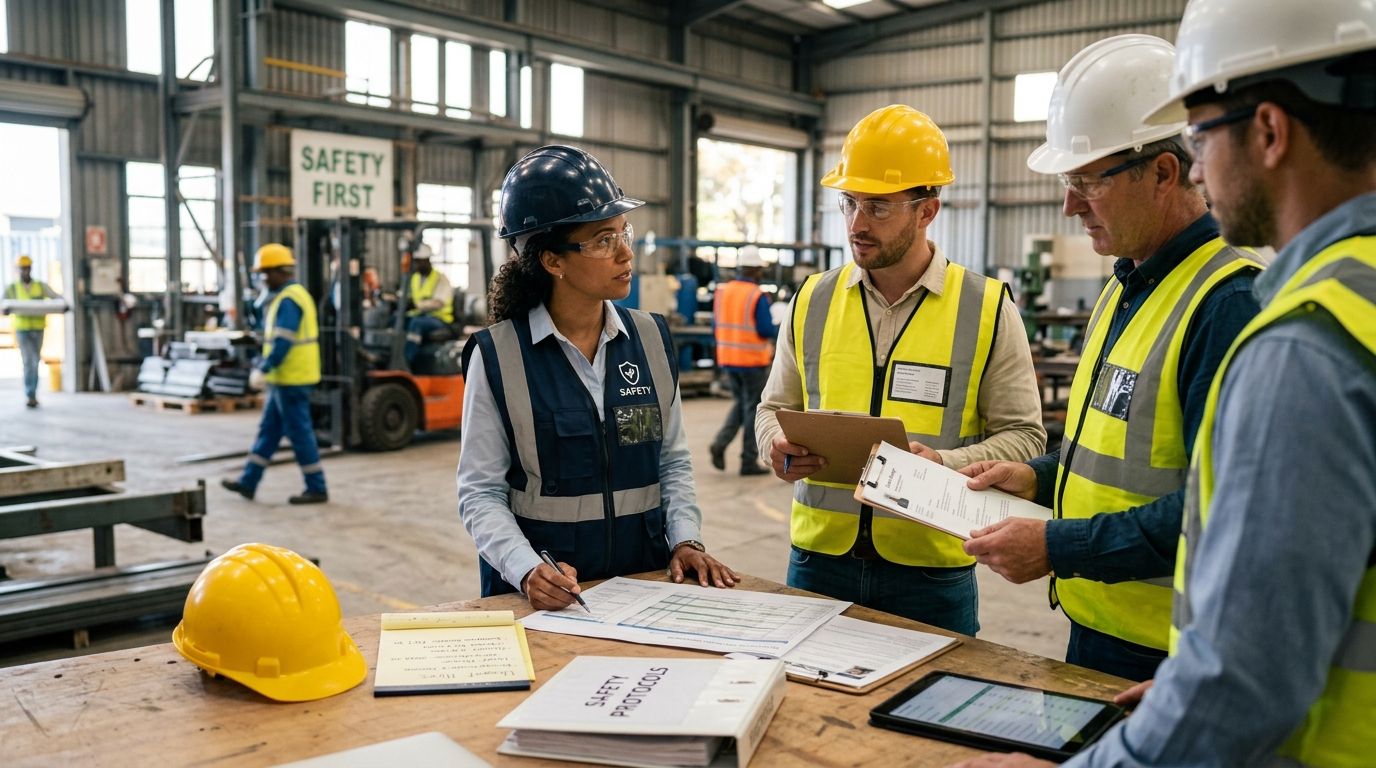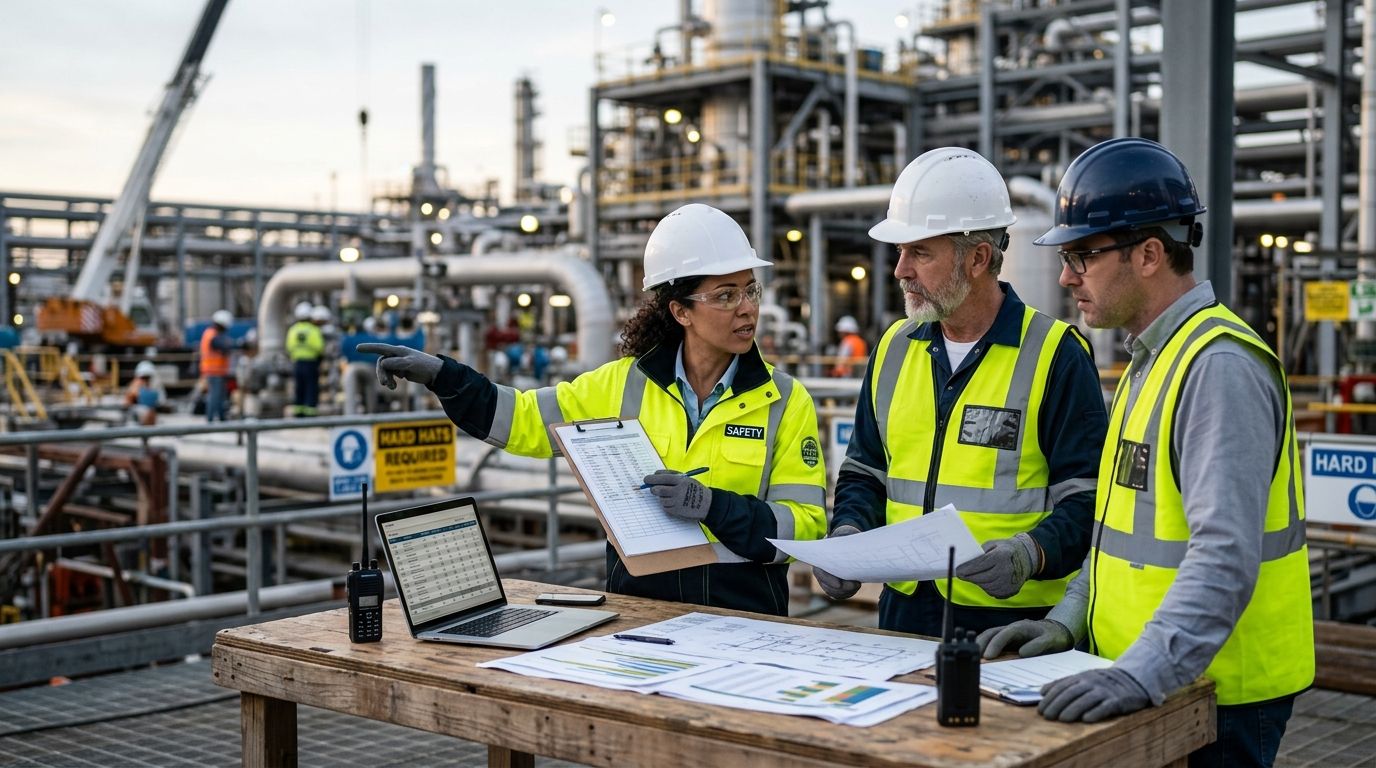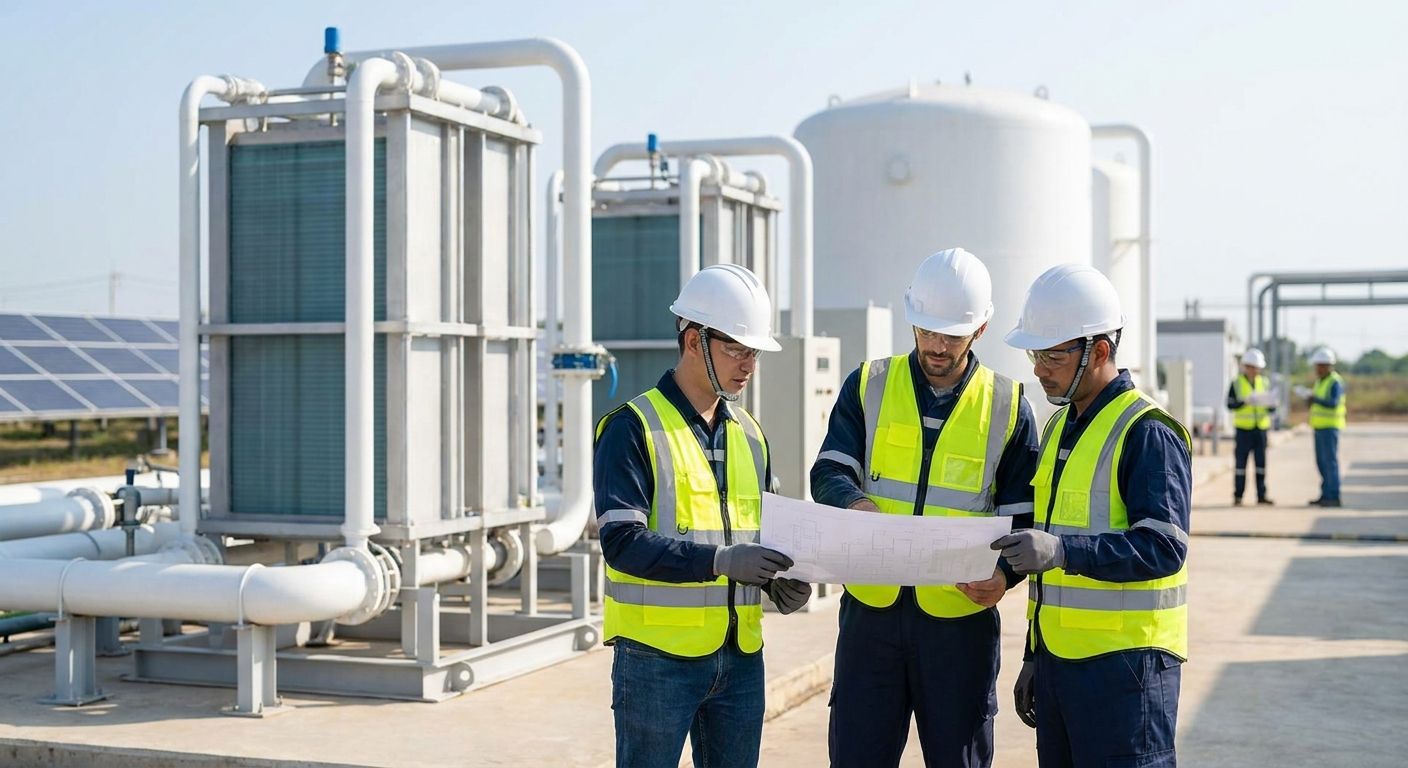
Green hydrogen production facilities run electrolyzer stacks, compressors, and cryogenic storage at pressures and volumes that turn a standard EHS hire into a liability. This guide breaks down what safety staffing for green hydrogen production facilities actually requires in 2026 — which roles matter, what certifications to check, and where a generalist safety hire falls short.
- Safety staffing for green hydrogen production facilities means confined space, PHA, and PSM-trained hires — generalists fall short. Buy specialized.
- Hydrogen crosses OSHA's 1,000-lb PSM threshold (29 CFR 1910.119) fast; verify PSM-covered process experience before signing a contract.
- Confined space entry teams need three certified roles minimum — entrant, attendant, entry supervisor — under 1910.146.
- Fire watch after hot work near hydrogen piping runs 30 minutes minimum under NFPA 51B; staff for it, not around it.
- Direct-hire safety managers make sense once a facility moves past commissioning into steady 2026 operations.
Why This Matters
Green hydrogen production is scaling fast in 2026, driven by DOE-backed hydrogen hub projects and the 45V production tax credit. Every new electrolysis facility, ammonia synthesis loop, and refueling terminal coming online carries hazard profiles closer to a chemical plant than a factory floor.
Hydrogen has a flammability range of roughly 4% to 74% by volume in air, burns with a nearly invisible flame, and causes hydrogen embrittlement in piping and welds over time. Liquid hydrogen storage runs near -253°C, and compressed hydrogen systems in newer fueling infrastructure commonly reach pressures in the thousands of psi. None of that shows up on a generic manufacturing safety resume.
The staffing problem is supply, not willingness. Most EHS professionals with PSM-covered process experience come from oil and gas, refining, or petrochemical backgrounds — few have touched a green hydrogen facility specifically, because most of these plants are less than five years old.
Who This Is For
This guide is for EHS directors, plant managers, and project executives standing up new electrolysis facilities, hydrogen hub sites, or ammonia and methanol synthesis loops tied to hydrogen feedstock. It applies whether the facility is mid-construction, entering commissioning, or already running steady-state production. ResponsAble Staffing places safety professionals into exactly this kind of high-risk buildout, so the criteria below reflect what actually gets checked before a candidate lands on a hydrogen site.
What to Look For in Safety Staffing for Green Hydrogen Production Facilities
Confined Space Entry Certification for Electrolyzer Stacks and Storage Vessels
Electrolyzer stacks, gas separators, and bulk storage vessels commonly qualify as permit-required confined spaces under 29 CFR 1910.146. Entry teams need three certified roles minimum — entrant, attendant, and entry supervisor — and a single generalist safety tech can't cover that requirement alone. Confined space attendant staffing built around 1910.146 compliance is the first thing to verify with any staffing partner before a site opens.
Process Hazard Analysis Experience Specific to Hydrogen
Once a facility exceeds the 1,000-lb hydrogen threshold, 1910.119 Process Safety Management applies, and that means a documented PHA before startup. A facilitator without hydrogen-specific PHA experience misses failure modes unique to electrolysis: embrittlement of piping, backflow between the hydrogen and oxygen streams, and static ignition in dry gas lines. Process hazard analysis facilitators with PSM-covered process history catch those scenarios a generic facilitator never sees.
Hot Work and Fire Watch Coverage
Welding, cutting, and grinding near hydrogen piping or storage require fire watch coverage under NFPA 51B, and that watch has to hold for a minimum of 30 minutes after the work stops. Staff this wrong and either the job stalls waiting on a qualified attendant, or the crew skips the watch and creates a real ignition risk. Fire watch attendants for hot work need to be on the schedule before the welding crew shows up, not after.
PSM-Covered Process Experience, Not Generic Manufacturing Safety
A safety hire who's spent a career on general manufacturing floors hasn't necessarily touched a PSM-covered process. Hydrogen production sits closer to chemical plant and refinery risk than to a typical assembly line, so look for candidates with prior placement in petrochemical, refining, or LNG environments — not just manufacturing broadly.
Cryogenic and High-Pressure Gas Handling Background
Liquid hydrogen storage runs near -253°C, and compressed gaseous hydrogen infrastructure operates at pressures far above what most industrial safety hires have ever monitored. A candidate without cryogenic or high-pressure gas experience will miss the specific PPE, leak-detection, and venting protocols these systems demand.
Flexibility Between Contract, Project-Based, and Direct Hire
Commissioning spikes labor needs for a few months; steady-state operations need one or two safety leaders on payroll long-term. A staffing partner locked into one contract structure forces a facility to either overstaff during startup or scramble once commissioning ends.
Top Picks for Green Hydrogen Safety Staffing
Confined Space Attendants and Entry Supervisors — the non-negotiable hire. Spec: OSHA 1910.146 permit-required confined space certification, three-person minimum team. No green hydrogen facility with electrolyzer stacks or bulk storage vessels should run entries without this coverage from day one. Verdict: Buy.
PHA Facilitators for Hydrogen-Specific HAZOP Reviews — the technical specialist. Spec: HAZOP/What-If facilitation on PSM-covered processes, with direct exposure to the 1,000-lb hydrogen threshold under 1910.119. A hydrogen-blind facilitator will miss embrittlement and backflow scenarios entirely. Verdict: Buy ahead of any startup review.
Fire Watch Attendants for Hot Work Near Hydrogen Systems — the site-specific hire. Spec: NFPA 51B-compliant coverage with a 30-minute minimum post-work watch. Necessary during construction and maintenance turnarounds, less urgent once welding wraps for steady-state operations. Verdict: Consider based on project phase.
Direct-Hire Safety Managers for Post-Commissioning Operations — the long-term investment. Spec: full-time EHS leadership once a facility moves past startup into continuous production. Verdict: Buy for facilities scaling past a single production line in 2026; Wait if startup is still 12-plus months out.
Industrial Hygienists for Electrolyzer Off-Gas Monitoring — the overlooked role. Spec: exposure monitoring for oxygen off-gas and trace contaminant streams from PEM or alkaline electrolysis. Most facilities under-staff this role until an incident forces the issue. Verdict: Consider adding it before commissioning, not after.
Build your hydrogen safety team
Vetted confined space, PHA, and fire watch specialists, contract or direct hire.
What to Avoid
- Generalist safety staffing without hydrogen-specific hazard training. Looks qualified on paper, misses embrittlement and backflow risks in practice.
- Agencies that can't document PSM-covered placement history. Ask for it before signing — if they can't name the process types, they haven't placed for them.
- One-size contract structures. A partner that won't flex between a commissioning surge and steady-state headcount will either overstaff you in month one or leave you short in month twelve.
Verdict Comparison
| Role | Best For | Certification Focus | Verdict |
|---|---|---|---|
| Confined Space Attendant | Electrolyzer stack & vessel entry | 1910.146 permit-required entry | Buy |
| PHA Facilitator | Pre-startup HAZOP/What-If review | 1910.119 PSM | Buy |
| Fire Watch Attendant | Hot work near hydrogen piping | NFPA 51B | Consider |
| Direct-Hire Safety Manager | Post-commissioning operations | Full-time EHS leadership | Buy (post-startup) |
| Industrial Hygienist | Off-gas & exposure monitoring | Electrolyzer off-gas sampling | Consider |
FAQ
What is safety staffing for green hydrogen production facilities?
It's the practice of placing EHS professionals — confined space attendants, PHA facilitators, fire watch, industrial hygienists — who have hydrogen-specific process experience, not just general manufacturing safety backgrounds. Green hydrogen sites combine electrolysis, high-pressure gas, and sometimes cryogenic storage, which calls for a narrower skill set than a typical factory hire.
Do green hydrogen facilities fall under OSHA PSM (1910.119)?
Yes, once a facility stores more than 1,000 lbs of hydrogen, 1910.119 Process Safety Management applies. That triggers requirements for a documented process hazard analysis, operating procedures, and mechanical integrity programs before startup.
How many people are required for confined space entry at an electrolyzer facility?
OSHA 1910.146 requires a minimum of three certified roles for permit-required confined space entry: an entrant, an attendant, and an entry supervisor. Electrolyzer stacks and storage vessels commonly meet the confined space definition.
What certifications should a hydrogen safety hire have?
Look for confined space entry certification under 1910.146, PHA facilitation experience tied to 1910.119 PSM-covered processes, and NFPA 51B fire watch qualifications for hot work. Cryogenic and high-pressure gas handling experience matters for facilities with liquid hydrogen storage.
Is direct hire or contract staffing better for a new hydrogen plant?
Contract staffing fits the commissioning surge, when labor needs spike for a few months. Direct hire makes more sense once a facility moves into steady-state operations and needs a permanent safety leader on payroll.
How long does fire watch need to run after hot work near hydrogen systems?
NFPA 51B requires a minimum 30-minute fire watch after hot work stops. That coverage has to be staffed and scheduled before welding, cutting, or grinding begins near hydrogen piping or storage.
What's the difference between hydrogen safety staffing and general manufacturing safety staffing?
Hydrogen safety staffing requires PSM-covered process experience, confined space certification for vessel entry, and familiarity with a gas that has a flammability range of 4% to 74% by volume. General manufacturing safety staffing rarely touches any of those requirements.
How fast can a staffing agency place confined space attendants for a hydrogen project?
Contract placements for confined space attendants generally move faster than direct-hire searches for safety managers, since the candidate pool with 1910.146 certification is broader than the pool with hydrogen-specific PHA or PSM experience. Timelines vary by location and project urgency.
One Last Thing
Most first-time green hydrogen projects budget safety staffing for the hydrogen side and forget the oxygen side entirely. Electrolysis produces oxygen as a co-product, and that stream needs its own exposure monitoring and hazard analysis — a detail that slips through when a project team is focused entirely on the more obviously dangerous gas. Build the industrial hygienist role into the plan before commissioning, not after the first near-miss.