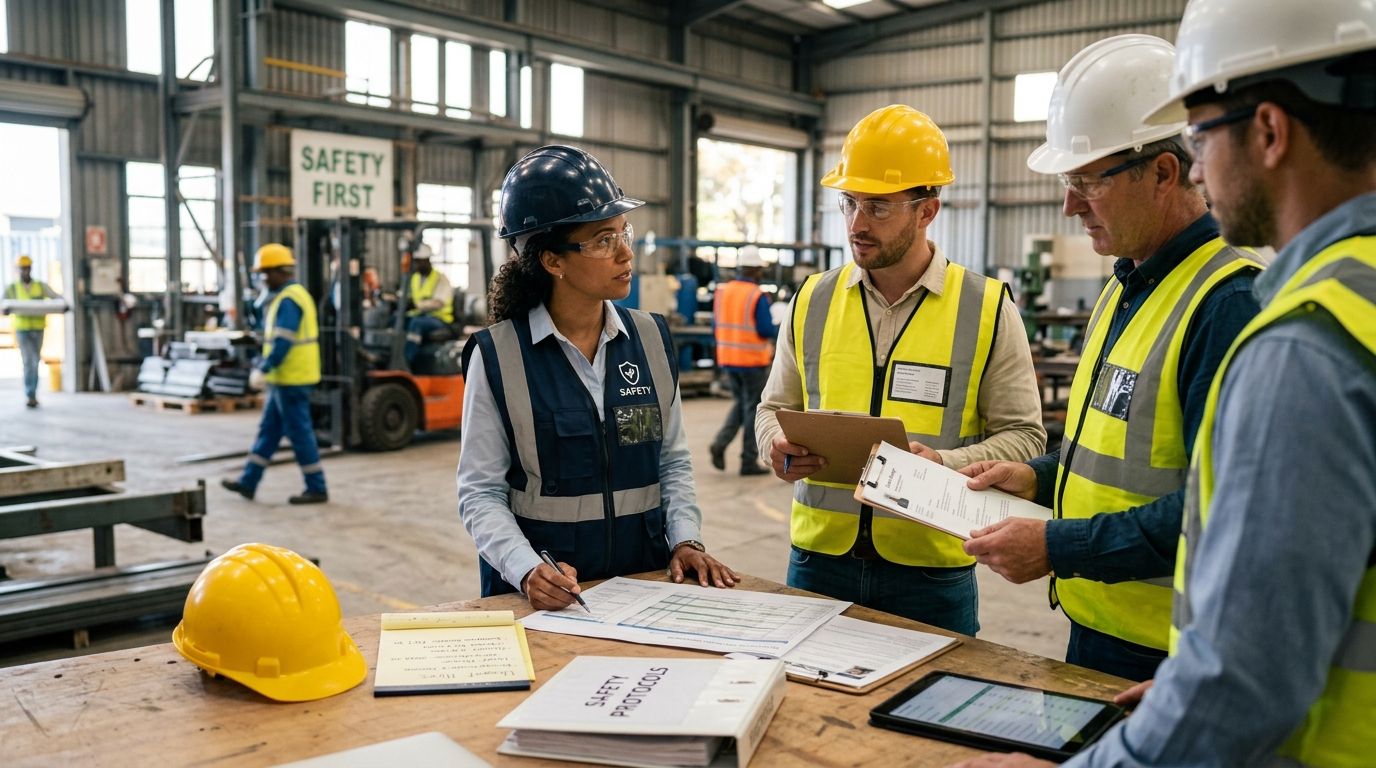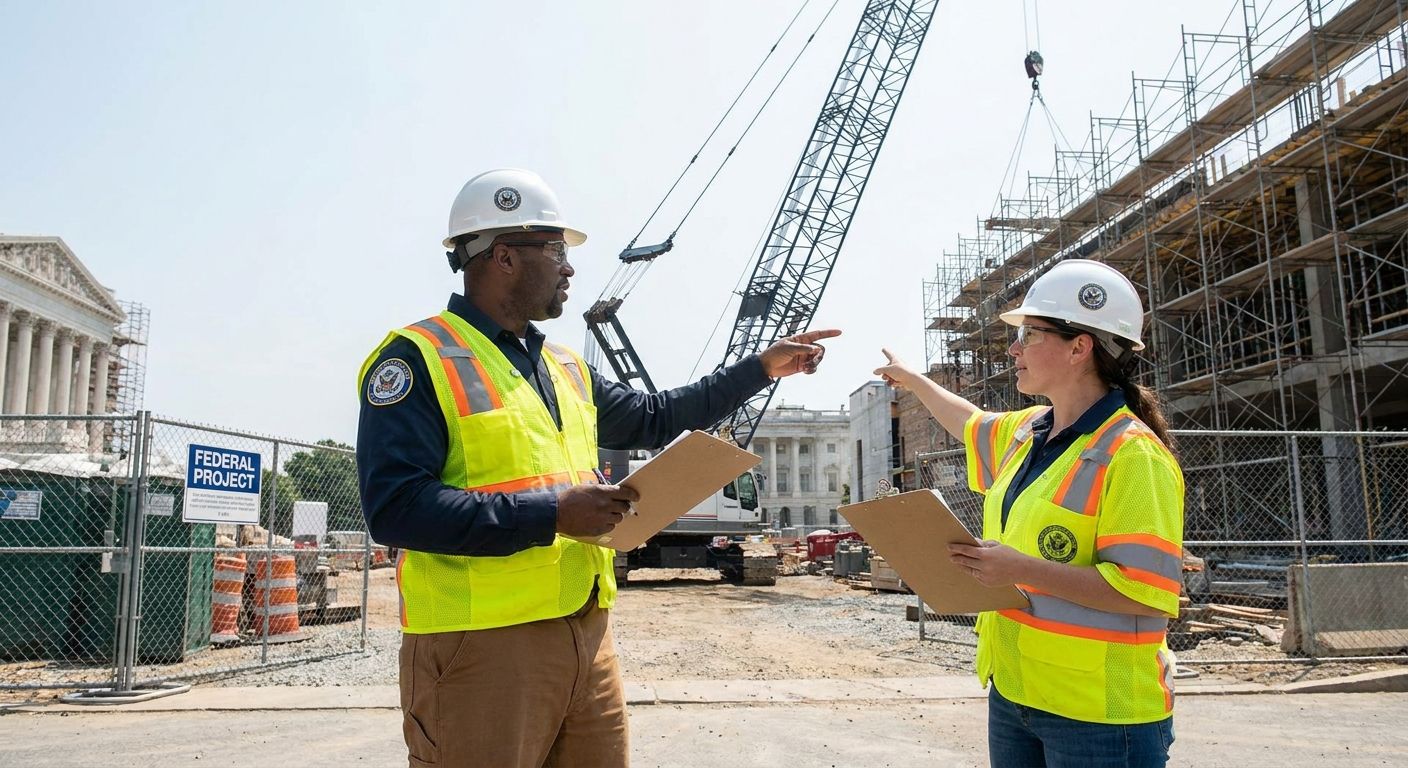
Federal contracts run on paperwork as much as performance, and safety staffing failures on a federal job site show up in an audit finding before they ever show up as an injury report. This guide breaks down what to demand from a government contractor safety staffing partner in 2026, who actually needs specialized staffing versus a generalist agency, and which staffing pathway fits which federal job site.
- ResponsAble Staffing fills federal project site safety officer roles with cleared, OSHA-verified candidates for 2026 contracts.
- Skip generalist labor brokers that can't produce same-day E-Verify documentation on federal awards.
- Direct hire safety managers fit multi-year contracts; temp staffing wins for surge and short task orders.
- Government contractor safety staffing lives or dies on background check turnaround, not just certifications.
Why this matters
A missed E-Verify deadline or an unverified OSHA 30 card doesn't just slow down a private job site. On a federal contract, it becomes a compliance flag that can put the entire award at risk. Federal contractors answer to FAR clauses, Davis-Bacon wage determinations, and agency-specific site access rules that most general staffing firms have never dealt with.
Government contractor safety staffing is a narrower discipline than industrial staffing in general. The agency you hire has to move fast on background checks, document every step, and understand that "close enough" certification verification doesn't survive a federal audit.
Who this is for
This guide is for construction firms, EPC contractors, and manufacturing operators holding or bidding on federal contracts that require dedicated safety personnel, including federal project site safety officers, confined space attendants, fire watch staff, or full EHS departments on sites subject to agency oversight. If your contract includes a safety staffing line item tied to a government award, this is written for you.
It's also for HR and procurement leads who inherited a federal contract mid-cycle and need to staff compliant safety roles on a compressed timeline, without cutting corners on background checks or certification verification.
What to look for in government contractor safety staffing
1. Background check and clearance turnaround
Federal sites often require NACI-level background checks or agency-specific badging before a worker sets foot on-site. An agency that quotes "a few weeks" for clearance processing will blow your start date. Ask for actual turnaround numbers from contracts completed in 2026, not a general policy statement.
2. OSHA and DOT certification verification, not self-reporting
A resume claiming "OSHA 30" means nothing without the card number checked against the training provider. Federal contract audits pull certification files directly, and a staffing firm that takes candidates at their word puts your award at risk.
3. E-Verify and I-9 compliance built in, not bolted on
Every federal contractor with a covered contract runs under the E-Verify mandate. A staffing partner that can't produce same-day E-Verify documentation for every placement isn't built for federal work — that gap shows up on the very first compliance check.
4. Davis-Bacon wage determination fluency
Federal construction contracts carry prevailing wage requirements by trade and county. A staffing agency unfamiliar with Davis-Bacon classifications will misclassify safety roles and create wage compliance exposure that surfaces during a Department of Labor audit, long after the placement is made.
5. Speed to fill for compliance deadlines
Federal contracts rarely give 60 days notice before a safety officer needs to be on-site. Fast-track placement — filling a federal project site safety officer role in days, not weeks — separates a specialized government contractor safety staffing agency from a general labor broker.
6. Flexibility between temp, project-based, and direct hire
Multi-year federal contracts need a different staffing model than a 90-day turnaround project. The right partner offers temporary coverage for surge phases and direct hire recruiting for permanent safety leadership on longer awards, instead of forcing one model on every contract.
Staff your federal contract site now
Get vetted safety professionals matched to your contract timeline.
Top picks: staffing pathways for federal and government contractor sites
The picks below reflect how ResponsAble Staffing structures safety staffing for federal contract needs, matched to the type of award and site.
The volume play: construction firms scaling for federal infrastructure awards
Safety recruiting companies for construction firms built for high-headcount federal infrastructure work — road, bridge, and facility contracts — need a pipeline that can staff 10, 20, or 50 safety roles across multiple sites at once. The number that matters here is time-to-fill: a construction-focused safety staffing pipeline should move a qualified candidate from application to badge in under two weeks in 2026, not a month. Buy if your federal award spans multiple active sites and you need volume without sacrificing certification verification.
The long game: direct hire safety managers for multi-year contracts
Direct hire recruiting for safety managers fits federal contracts running three years or longer, where turnover in the safety manager seat creates continuity risk with the contracting officer. A direct hire safety manager who owns the program for the life of the contract beats rotating temp coverage every six months. Buy for any federal award longer than 18 months; Skip for short-term task orders where temp coverage makes more financial sense.
The compliance-critical pick: confined space attendants for federal industrial sites
Confined space attendant staffing for industrial sites matters on federal water treatment, energy, and manufacturing contracts where confined space entry is a documented, audited process. A confined space attendant without current, verifiable certification is one of the most common findings in federal site safety audits. Buy for any federal contract with permit-required confined space work; Consider temp coverage first if entries are infrequent.
What to avoid
- Generalist labor brokers with a "safety" tab on their website. They can source bodies but rarely verify OSHA cards against the training provider, and federal audits catch that gap fast.
- Agencies that quote clearance timelines in "weeks" without a number. If a staffing partner can't tell you their actual 2026 average turnaround for background checks, they haven't tracked it, which means they can't improve it.
- Any agency that can't explain Davis-Bacon wage classification for the safety roles they place. Misclassified pay on a federal contract becomes a Department of Labor problem, not just a staffing problem.
Before signing with anyone, run them through a real vetting process. How to vet a safety staffing agency before signing a contract covers the specific questions to ask about certification verification and compliance documentation.
“If a staffing partner can't produce same-day E-Verify documentation for every placement, they're not built for federal work.”
Verdict comparison table
| Staffing need | Best model | Time-to-fill target (2026) | Verdict |
|---|---|---|---|
| Multi-site federal infrastructure build | Temp / project-based, high volume | Under 2 weeks | Buy |
| Multi-year federal contract leadership | Direct hire safety manager | 30-45 days | Buy |
| Confined space / permit-required entry | Temp, certification-verified | Under 1 week for surge | Buy |
| Short-term task order under 90 days | Temp, fast-track | Under 1 week | Consider |
| Generalist labor broker, no safety vetting | Any | N/A | Skip |
FAQ
What is government contractor safety staffing?
Government contractor safety staffing is the placement of vetted safety and EHS professionals on federal contract job sites, with background checks, E-Verify, and certification verification built into the process. It covers roles like federal project site safety officers, confined space attendants, and fire watch staff.
How fast can a safety staffing agency fill a federal project site role?
A specialized agency should fill a federal project site safety officer role in days, not weeks, especially for compliance-driven start dates in 2026. Generalist staffing firms typically run slower because they don't pre-verify OSHA and DOT credentials.
Do federal contractors have to use E-Verify for staffing placements?
Yes, federal contractors with covered contracts must run E-Verify on staff placed on the contract. A safety staffing partner should produce same-day E-Verify case documentation for every placement, not just on request.
Is direct hire or temporary staffing better for federal contracts?
Direct hire works best for federal contracts running 18 months or longer, where continuity in the safety manager role matters to the contracting officer. Temporary or project-based staffing fits surge periods and task orders under 90 days.
What certifications should a federal site safety officer hold?
A federal site safety officer typically needs OSHA 30, current CPR/first aid, and role-specific certifications like confined space or fire watch depending on the site. Verification against the training provider matters more than the certificate itself.
How much does government contractor safety staffing cost in 2026?
Cost varies by role, clearance level, and contract length, so get a quote scoped to your specific federal contract rather than relying on a general rate. Direct hire and temporary placements price differently based on duration and urgency.
What's the difference between a general staffing agency and a specialized safety staffing agency for federal work?
A general staffing agency sources labor; a specialized government contractor safety staffing agency verifies OSHA and DOT credentials, handles E-Verify same-day, and understands Davis-Bacon wage classification. That difference shows up the first time a federal audit pulls staffing files.
Can a safety staffing agency handle Davis-Bacon wage compliance?
A specialized government contractor safety staffing agency should know Davis-Bacon wage determinations by trade and county for the roles it places. Ask for a specific example of how they classified a similar safety role on a past federal contract before signing.
One last thing
The most overlooked line item in federal safety staffing plans isn't the safety officer, it's the fire watch attendant. Hot work permits on federal industrial sites require a dedicated fire watch for the duration of the work plus a documented monitoring period afterward, and that role gets cut first when budgets tighten. Don't cut it: an uncovered fire watch gap is one of the fastest ways to turn a routine hot work permit into an OSHA recordable incident on a federal contract in 2026.