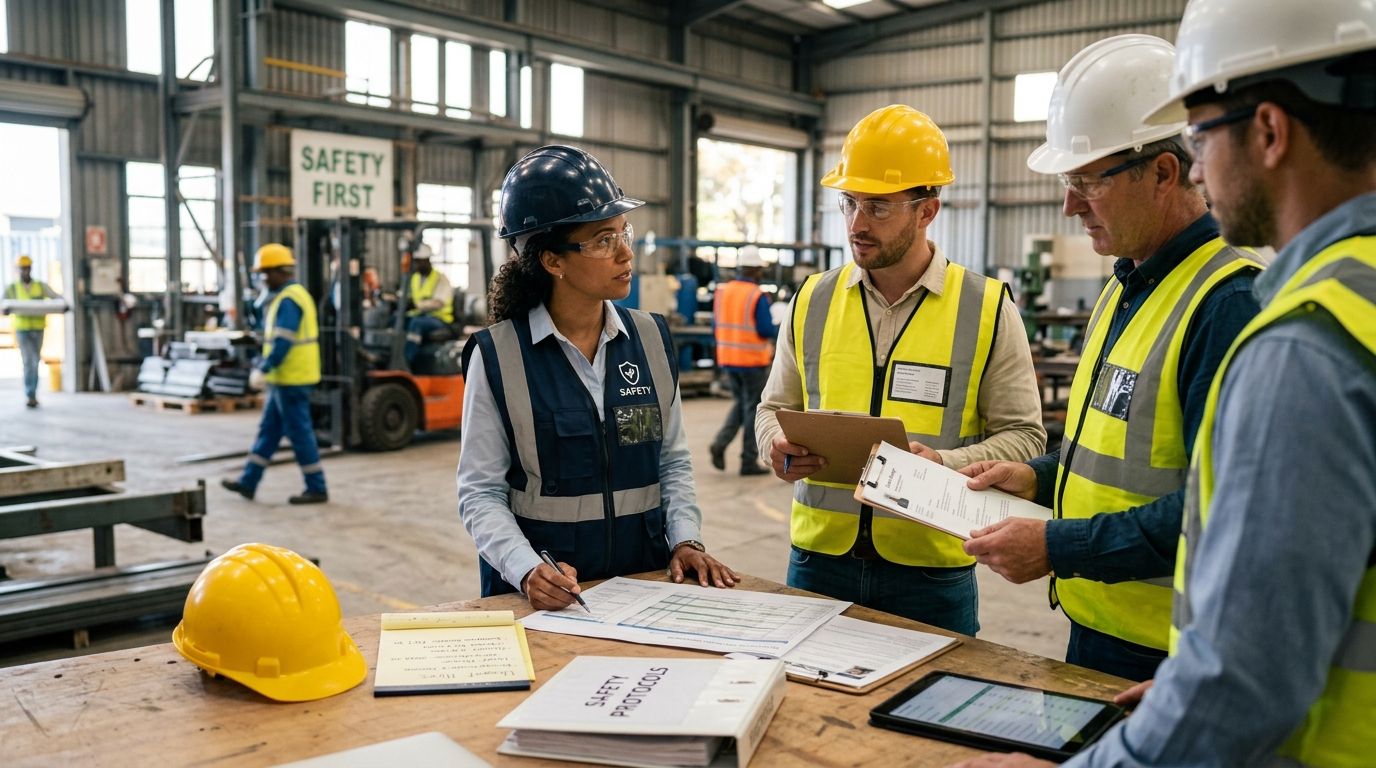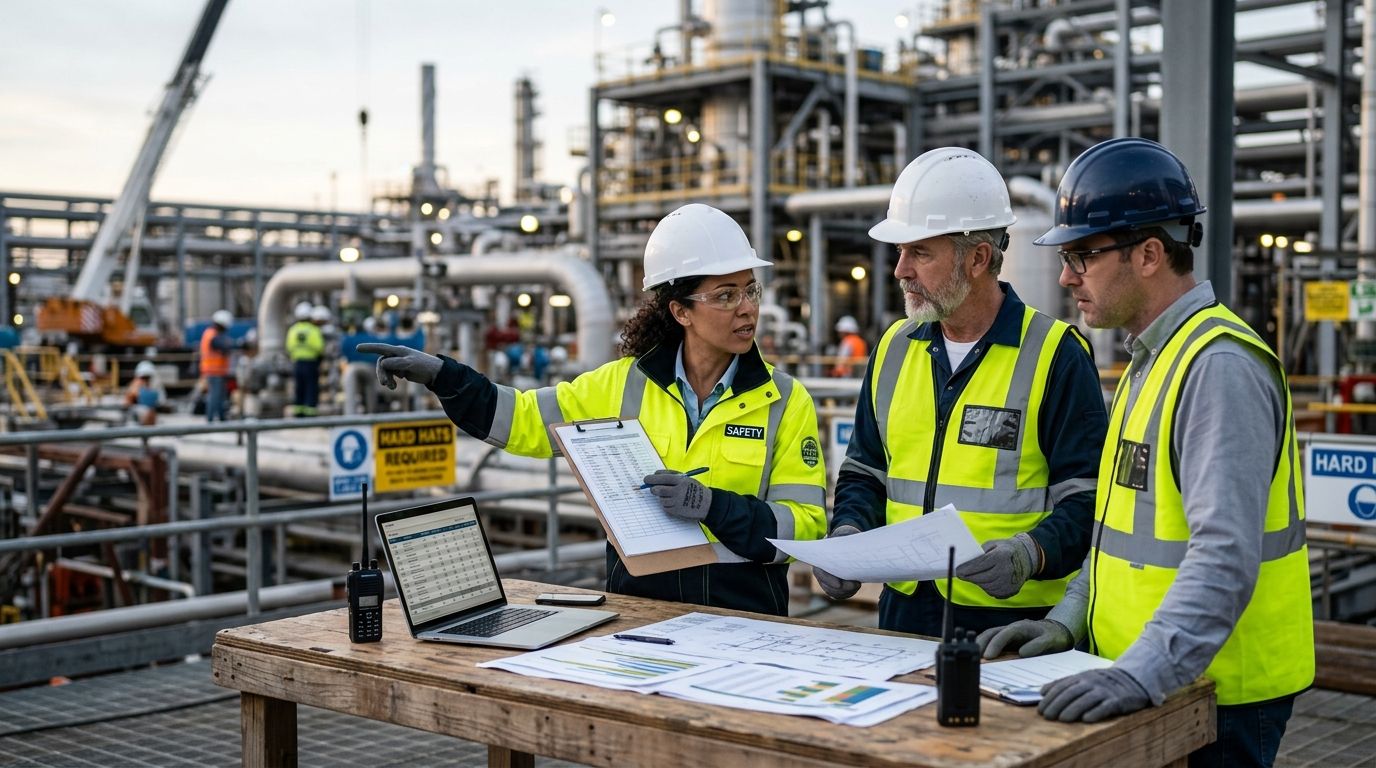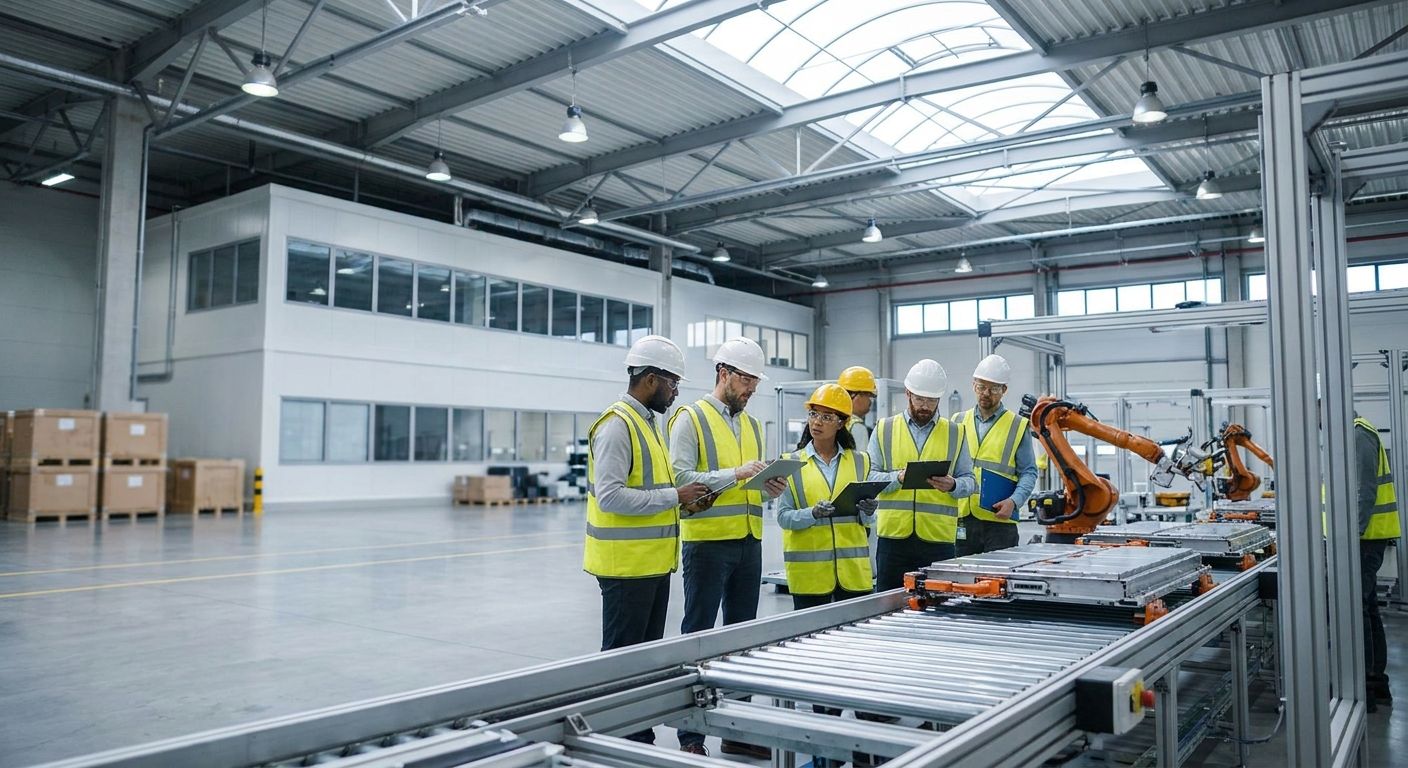
Gigafactories run on chemistry most staffing agencies have never touched, and the safety hires you make in the first 90 days of a build-out set the tone for every OSHA inspection that follows. This guide breaks down what to look for in safety staffing for EV battery gigafactories, which roles matter most, and which staffing habits will cost you a shutdown.
- Safety staffing for EV battery gigafactories starts with lithium hazard depth, not headcount speed — buy for chemistry expertise first.
- Confined space attendant coverage is non-negotiable in dry-room cell assembly areas through 2026.
- Fire watch staffing during hot work construction phases prevents thermal-event delays on gigafactory build-outs.
- Generic light-industrial staffing agencies without HAZWOPER-trained EHS staff are a skip for battery plant ramps.
Why this matters
A gigafactory is a chemical plant wearing an automotive badge. Electrode coating lines run flammable solvents, dry rooms strip humidity to single-digit percentages to protect lithium cells, and cell assembly floors mix robotics with hot work during construction — sometimes in the same building, at the same time. Generic industrial staffing doesn't map to that risk profile.
Most agencies that place safety professionals for warehouses or general manufacturing have never staffed a facility governed by NFPA 855 or handled the confined-space classifications inside a dry room. Safety staffing for EV battery gigafactories in 2026 requires people who already know 29 CFR 1910.146 permit-required confined space rules cold, not people learning them on your site.
Who this is for
This guide is for plant managers, EHS directors, and construction leads staffing a battery gigafactory build-out or production ramp — whether you're standing up a greenfield cell plant, staffing a module assembly line, or scaling a shift from single to triple crew coverage. If you're managing a project where lithium and critical minerals handling sits next to a hot-work construction zone, this is written for your headcount problem specifically, not for general manufacturing staffing.
What to look for in safety staffing for EV battery gigafactories
Lithium and thermal hazard fluency
Safety staff who haven't worked around lithium-ion cell chemistry will miss the early signs of thermal runaway and mishandle electrolyte spill response. Ask candidates directly about UN 38.3 transport classifications and dry-room atmosphere monitoring — if they can't speak to either, they haven't worked a battery site before.
Confined space and dry-room certification depth
Dry rooms and cell manufacturing enclosures often qualify as permit-required confined spaces under 1910.146, and the entry protocols differ from a typical tank or vault. A safety hire who's only worked traditional confined space entries will underestimate the humidity and static risks specific to battery assembly.
Ramp speed and surge scheduling
Gigafactory headcount rarely moves in a straight line — construction crews peak, then production ramp brings a different mix of EHS roles online within weeks. The staffing partner needs contract-to-hire flexibility that can flex headcount up or down without a 60-day notice period stalling your line.
Fire watch and hot work coverage
Welding, cutting, and grinding during the construction phase run concurrently with commissioning on most gigafactory timelines. A staffing partner that can put certified fire watch attendants on-site within days, not weeks, protects your hot work permits and your schedule.
Multi-site compliance recordkeeping
Most gigafactory operators run more than one site by year two. The staffing partner should already run OSHA recordkeeping and certification tracking across multiple locations, not build that system for the first time on your project.
“A safety team that can't scale with the line is a safety team that becomes the bottleneck.”
Top picks for safety staffing for EV battery gigafactories
The chemistry pick. Lithium and critical minerals plant safety staffing covers cathode and anode material handling, lithium dust exposure, and electrolyte hazard response — the core risk set inside a gigafactory. This is the staffing category that determines whether your EHS team actually understands the cells they're protecting. Buy.
The systems pick. EHS recruiting for battery storage and grid projects matters once your gigafactory output starts feeding grid-scale storage or interconnection work downstream. It bridges plant-floor safety with the energy-systems oversight that NFPA 855 expects. Buy if your output ties into storage or grid delivery.
The compliance backbone. Confined space attendant staffing for industrial sites covers dry-room entries and enclosed cell-assembly spaces where atmosphere monitoring is constant. Skip this and you're relying on production staff to self-monitor confined space risk, which is how citations happen. Buy.
The hot work pick. Fire watch attendant staffing for hot work jobs keeps welding and cutting permits compliant during the construction overlap with commissioning. Most gigafactory delays tied to safety stop-work orders trace back to unmonitored hot work. Buy through the entire construction phase, then reassess once commissioning ends.
The ramp-up pick. Manufacturing plant startup safety staffing solutions cover the surge in EHS headcount that hits between commissioning and full production. It's the category most operators underbudget for, then scramble to fill in month three. Consider it early rather than reactively.
What to avoid
- Generic light-industrial staffing agencies that place warehouse safety monitors but have never handled lithium battery hazard classifications — they look cheaper on the invoice and cost more in stop-work orders.
- Direct-hire-only agencies with no contract-to-hire bench. Gigafactory ramps need headcount that flexes weekly, not staffing that locks you into a 12-month search for one role.
- Agencies that treat dry rooms like standard confined spaces. The humidity and static controls are specific to battery manufacturing, and a generalist attendant will miss both.
Verdict comparison
| Staffing category | Best for | Certification depth needed | Verdict |
|---|---|---|---|
| Lithium and critical minerals staffing | Cell and electrode floors | UN 38.3, hazard communication | Buy |
| Battery storage and grid EHS recruiting | Downstream storage integration | NFPA 855 familiarity | Buy if grid-tied |
| Confined space attendant staffing | Dry rooms, cell enclosures | 1910.146 permit entry | Buy |
| Fire watch attendant staffing | Construction hot work overlap | Hot work permit protocol | Buy through construction |
| Manufacturing startup safety staffing | Commissioning to full ramp | Multi-role surge coverage | Consider early |
Plan your gigafactory safety headcount
Talk through your build-out timeline and staffing gaps before the ramp hits.
FAQ
What is safety staffing for EV battery gigafactories?
It's the placement of EHS professionals — confined space attendants, industrial hygienists, fire watch staff, and safety managers — who understand lithium-ion cell hazards, dry-room protocols, and gigafactory-scale build-out timelines. Generalist industrial safety staffing usually lacks this hazard-specific depth.
How fast can a staffing agency scale headcount for a gigafactory ramp?
A staffing partner with an existing bench of certified EHS professionals can typically fill construction-phase roles like fire watch within days, not weeks. Ramp-to-production roles that require deeper hazard certification take longer to source and should be planned months ahead, not requested at the last minute.
Is confined space training required for battery cell manufacturing?
Yes — dry rooms and cell assembly enclosures frequently qualify as permit-required confined spaces under 29 CFR 1910.146. Attendants need entry-specific training beyond a standard confined space card because of the humidity and static controls unique to battery production.
Can a staffing agency provide fire watch for hot work during gigafactory construction?
Yes, and it's one of the most requested roles during the construction-to-commissioning overlap common on gigafactory timelines. Certified fire watch attendants protect hot work permits while welding and cutting continue near cell assembly areas.
What certifications should safety staff have for lithium battery plants?
Look for HAZWOPER training, familiarity with UN 38.3 lithium battery transport classifications, and confined space entry certification specific to dry-room atmospheres. Staff without at least two of these three should not be placed in cell assembly areas unsupervised.
Is direct hire or contract staffing better for gigafactory EHS roles?
Contract-to-hire works best during construction and ramp phases when headcount needs shift weekly. Direct hire fits permanent leadership roles like plant safety director once the production schedule stabilizes.
How do dry rooms affect safety staffing needs in battery manufacturing?
Dry rooms run at very low humidity to protect lithium cells, which changes both the confined space classification and the personal protective equipment required. Staff working these areas need training specific to dry-room atmosphere monitoring, not standard confined space protocols.
What's the biggest safety staffing mistake on a gigafactory build-out?
Treating the construction phase and the production ramp as one staffing plan. Hot work fire watch needs drop off after commissioning while process safety and confined space roles increase — planning for both phases separately keeps headcount and budget aligned.
One last thing
Most gigafactory safety staffing plans budget for the construction phase and forget the ramp. The stop-work orders that actually delay production in 2026 tend to hit in month three or four, after fire watch needs drop but before confined space and process safety coverage catches up to full production volume. Build the staffing plan for both phases before ground breaks, not after the first citation.