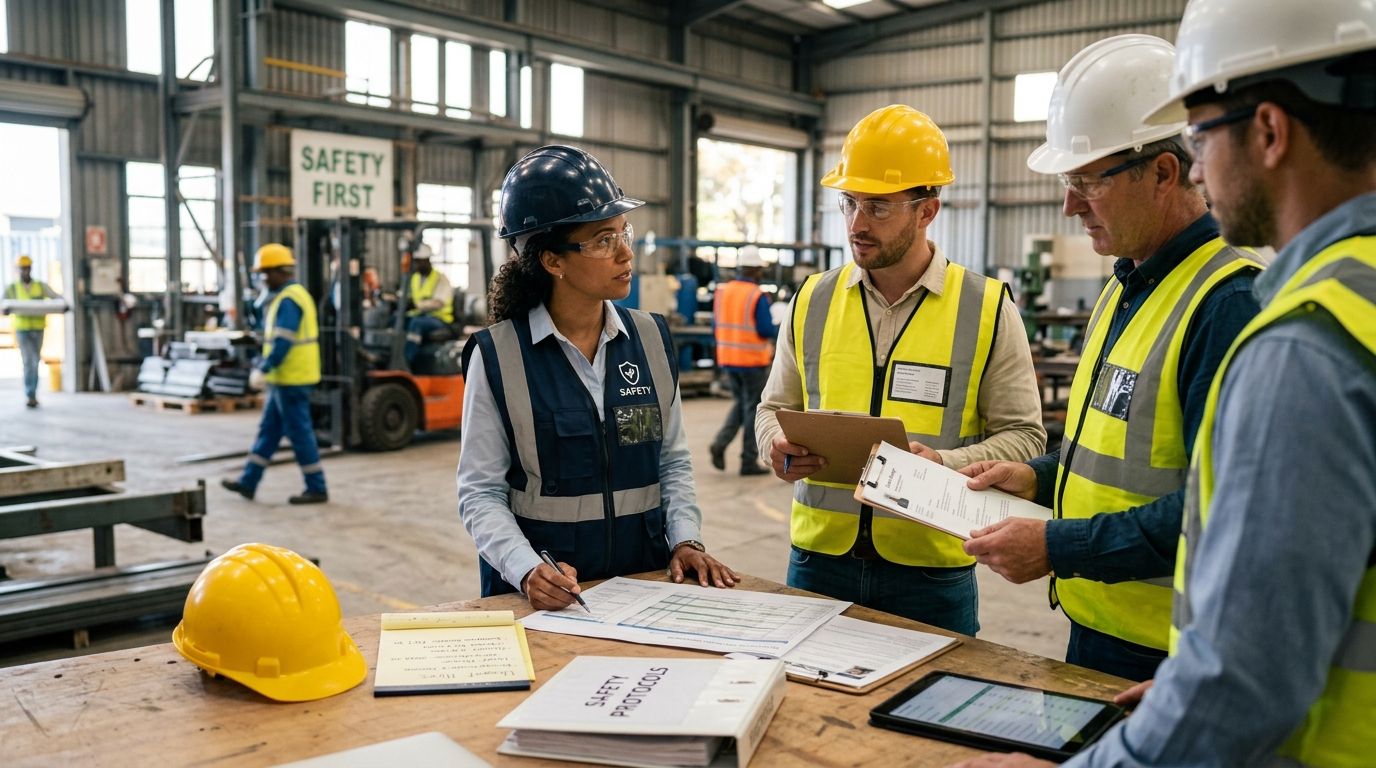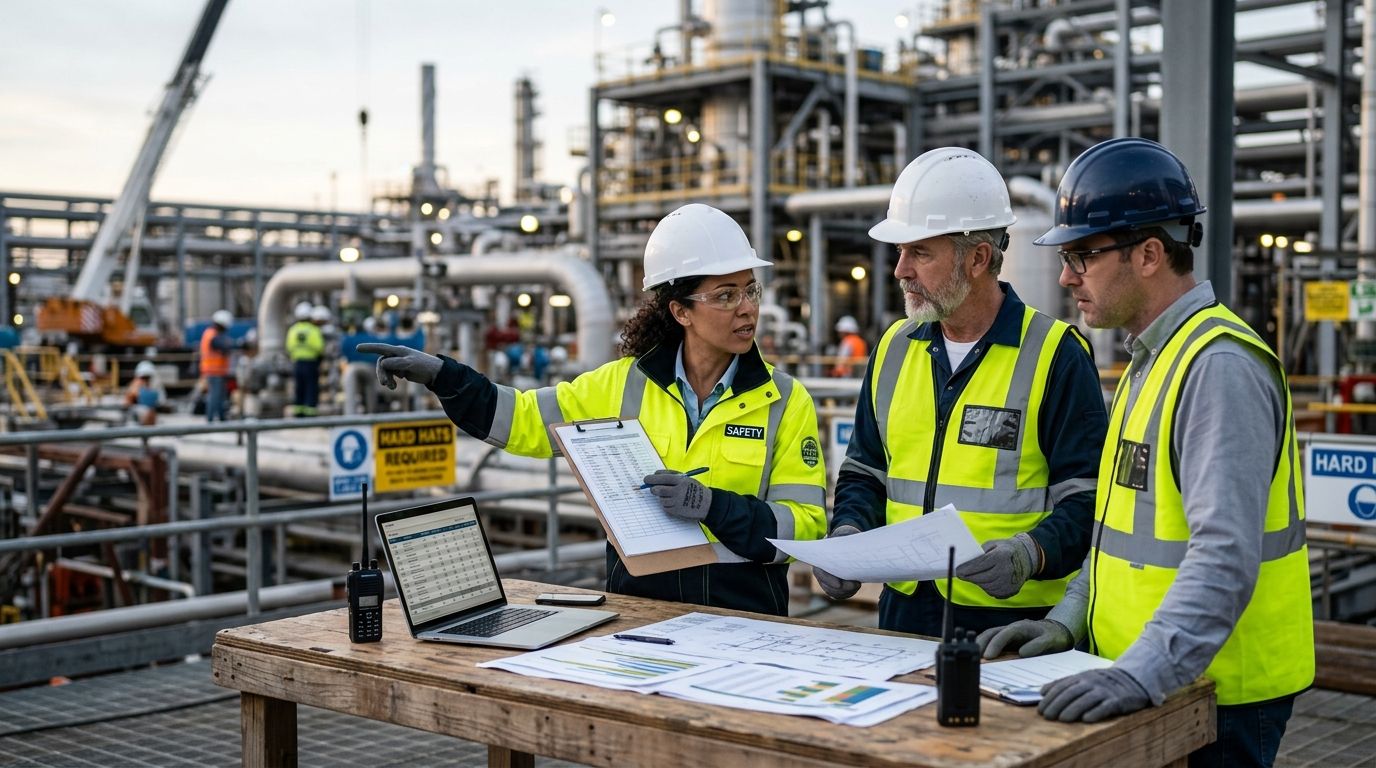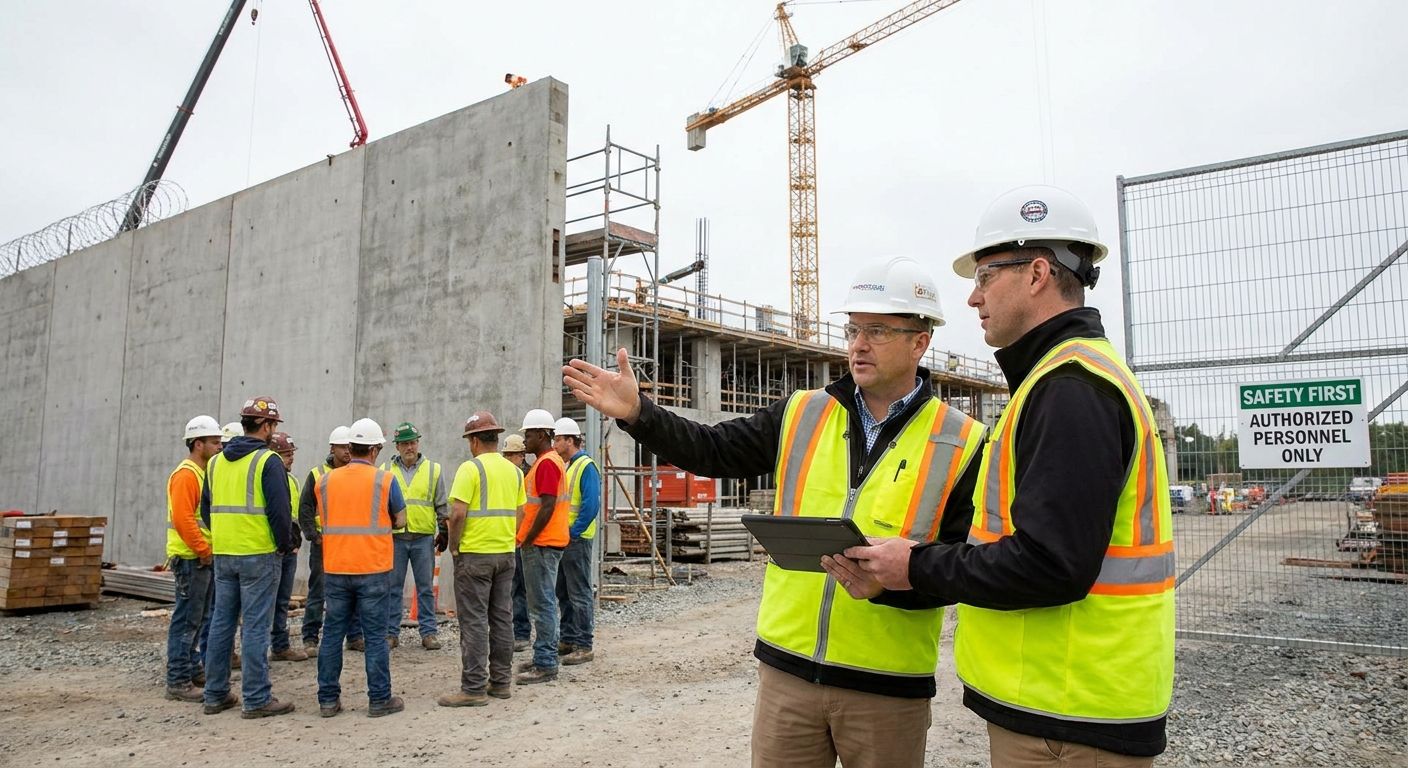
Correctional facility construction runs on tighter security rules, faster funding windows, and higher liability than almost any other government build — get the safety staffing wrong and you lose weeks you don't have. This guide covers what correctional facility construction safety staffing actually requires, which roles to prioritize first, and where general industrial staffing falls short on a Department of Corrections or federal site.
- Correctional facility construction safety staffing starts with a Federal Project Site Safety Officer holding OSHA-30 minimum — Buy.
- Confined space attendant staffing is mandatory, not optional, on sites with utility tunnels or below-grade holding areas — Buy.
- Direct-hire safety managers outperform rotating temps on builds running 24 months or longer — Consider.
- Skip in-house OSHA outreach training on fast-track corrections jobs; a certified outreach trainer cuts re-work risk.
Why this matters
Correctional facility builds don't run like a warehouse expansion. Perimeter security stays active while crews work, funding often arrives in phased releases tied to state DOC bond cycles or federal Bureau of Prisons contracts, and a single background-check delay can stall a crew for days. In 2026, general contractors bidding on DOC and BOP work are finding that the safety staffing piece — not the concrete or the steel — is what slips the schedule.
Pull safety staff from a general industrial labor pool without corrections-site screening protocols built in, and you're gambling on clearance timelines you don't control. That gamble shows up as idle crews, OSHA citations, or a shutdown notice from the facility warden's office.
Who this is for
This is written for general contractors, construction managers, and EHS directors staffing new-build or renovation projects for state Departments of Corrections, federal BOP facilities, county detention centers, or private prison operators. If you're staffing a 12-to-36-month build where perimeter access, confined space entry, and hot work permits all overlap on the same site, this applies to you directly. A safety staffing agency that already understands corrections-site clearance protocols saves you the learning curve most general contractors pay for on their first DOC job.
What to look for in correctional facility construction safety staffing
Background-check and clearance readiness
Every safety professional walking a corrections site needs to clear a facility-specific background check before day one, and turnaround time varies by state and by facility type. Ask any staffing partner how long their clearance process runs before you sign — not after your first candidate gets bounced at the gate.
Confined space and elevated-work certification
Correctional sites carry utility tunnels, below-grade holding areas, and elevated catwalks that general commercial builds rarely have. A safety tech with a generic OSHA-10 card isn't the same as a candidate certified for permit-required confined space entry — confirm the specific certification, not just the OSHA card level.
Government contract documentation experience
Federal and state-funded corrections builds run on certified payroll, prevailing wage compliance, and RFP-specific reporting. Safety staff who've worked government contracts before file the paperwork correctly the first time; staff who haven't cost you rework on every certified payroll cycle.
Speed to onboard for fast-track funding windows
DOC funding often releases in phases, which means your safety staffing needs can shift from zero to full crew coverage in under two weeks. A staffing partner with bench depth fills that gap; one without it leaves you short-staffed during the exact window inspectors show up.
Direct-hire versus temporary flexibility
Site prep and structural phases need different safety coverage than commissioning and occupancy phases. Builds running 24 months or longer usually need at least one direct-hire safety manager for continuity, layered with temporary or project-based staff for phase-specific certifications like fire watch or confined space attendants.
Staff your correctional build correctly
Get vetted safety professionals cleared and onsite before your next funding release.
Top picks for correctional facility construction safety staffing
Federal Project Site Safety Officer — the compliance backbone
Most DOC and BOP-funded builds require a dedicated site safety officer with OSHA-30 as the floor, not the ceiling, plus documented experience on government contracts. This role owns the daily safety log, the incident reporting chain, and the interface with the facility's own security staff. Buy — this is the one role every correctional build needs filled before mobilization, and Federal Project Site Safety Officer staffing is built specifically for this.
Confined Space Attendant staffing — the tunnel and utility corridor specialist
Correctional facilities run extensive below-grade utility corridors connecting housing units, and renovation projects frequently open holding tanks and crawlspaces that qualify as permit-required confined spaces under OSHA 1910.146. A general laborer standing watch here is a liability, not a safeguard. Buy — confined space attendant staffing for industrial sites covers exactly this scope, and it's non-negotiable once permits are pulled.
Fire Watch Attendant — the welding and torch-cutting safeguard
Retrofit and expansion projects on occupied corrections sites run structural steel work and pipe welding inside or near active perimeter fencing, which means hot work permits and a dedicated fire watch attendant for the duration of the work plus a mandatory post-work monitoring period. Consider — fire watch staffing for hot work permits fits builds with active welding phases; skip it only if your project has zero hot work scope, which is rare on a corrections retrofit.
Direct-hire safety manager — the long-term anchor
On builds running past 24 months, a rotating cast of temporary safety officers creates gaps in institutional knowledge — new hires relearn the facility's security protocols every time a temp rotates out. A direct-hire safety manager placed for the life of the project keeps that knowledge in one seat. Consider for multi-year builds; Skip for anything under 12 months where a temporary placement covers the same ground for less commitment.
In-house OSHA outreach training — the one it's tempting to cut
Some general contractors try running OSHA-10 and OSHA-30 outreach training themselves to save a line item, without a DOL-authorized outreach trainer on staff. On a fast-track corrections job where inspectors show up on short notice, uncertified in-house training is the fastest way to fail an audit. Skip doing it yourself — bring in a certified outreach trainer instead.
What to avoid
- Generalist industrial staffing with no clearance protocol. If the staffing agency can't tell you their background-check turnaround time before you ask twice, that's your answer.
- Any OSHA card treated as equivalent. A 10-hour general industry card is not confined space certification, and a safety tech without the specific credential shouldn't be near a permit-required space, full stop.
- Single-vendor staffing with no bench depth. DOC funding releases in phases; a staffing partner who can only fill roles on a 4-to-6-week lead time leaves you exposed the moment funding accelerates.
Verdict comparison
| Role | Best for | Certification to confirm | Verdict |
|---|---|---|---|
| Federal Project Site Safety Officer | DOC/BOP-funded new builds | OSHA-30 plus government contract experience | Buy |
| Confined Space Attendant | Utility tunnels, below-grade holding areas | Permit-required confined space entry training | Buy |
| Fire Watch Attendant | Hot work near occupied perimeter | Fire watch / hot work permit training | Consider |
| Direct-Hire Safety Manager | Builds running 24+ months | 5+ years corrections or federal site experience | Consider |
| In-house OSHA Outreach Training | Fast-track schedules under 12 months | DOL-authorized outreach trainer credential | Skip |
FAQ
What certifications does a safety officer need for correctional facility construction?
A site safety officer on a DOC or BOP-funded correctional build typically needs OSHA-30 as a floor, plus documented experience on government contracts. Confined space and hot work certifications get added depending on the project's specific scope.
How fast can a safety staffing agency place a site safety officer on a DOC project?
Placement speed depends on how deep the agency's bench is for corrections-cleared candidates, not just general industrial staff. Ask for a specific turnaround commitment in 2026, not a general estimate, before you sign.
Is direct hire or temporary staffing better for a multi-year correctional build?
Direct hire works better for safety managers on builds running 24 months or longer, since continuity matters more than flexibility at that length. Temporary staffing fits phase-specific roles like fire watch or confined space attendants that come and go with the schedule.
Do correctional facility construction sites require background-checked safety staff?
Yes, every safety professional entering a corrections site clears a facility-specific background check before starting work. Turnaround time varies by state and facility type, so confirm the process with your staffing partner before mobilization.
What's the cost difference between temp and direct-hire safety staffing in 2026?
Temporary safety staffing carries a markup built into the bill rate but no long-term commitment, while direct hire involves a placement fee against annual salary. Which one costs less depends entirely on how long the role needs to be filled.
Can one staffing agency cover confined space, fire watch, and site safety officer roles at once?
Yes, agencies specializing in industrial and government safety staffing typically cover all three role types under one vendor relationship. That consolidation simplifies onboarding and clearance tracking versus juggling three separate vendors.
How does prevailing wage affect safety staffing on federal correctional projects?
Federal and state-funded correctional builds require certified payroll and prevailing wage compliance for safety staff just like the trades. Staff without government contract experience frequently file this paperwork incorrectly on the first cycle, which delays payment approval.
What happens if a safety officer fails a background check mid-project?
The facility typically revokes site access immediately, leaving the safety role uncovered until a replacement clears the same process. This is exactly why bench depth and clearance turnaround time matter more on corrections builds than on standard commercial sites.
One last thing
The fastest-moving correctional builds in 2026 don't lose time on concrete or steel — they lose it on background-check turnaround for safety staff. Lock in your staffing partner's clearance process before the site opens, not after the first candidate gets turned away at the gate.