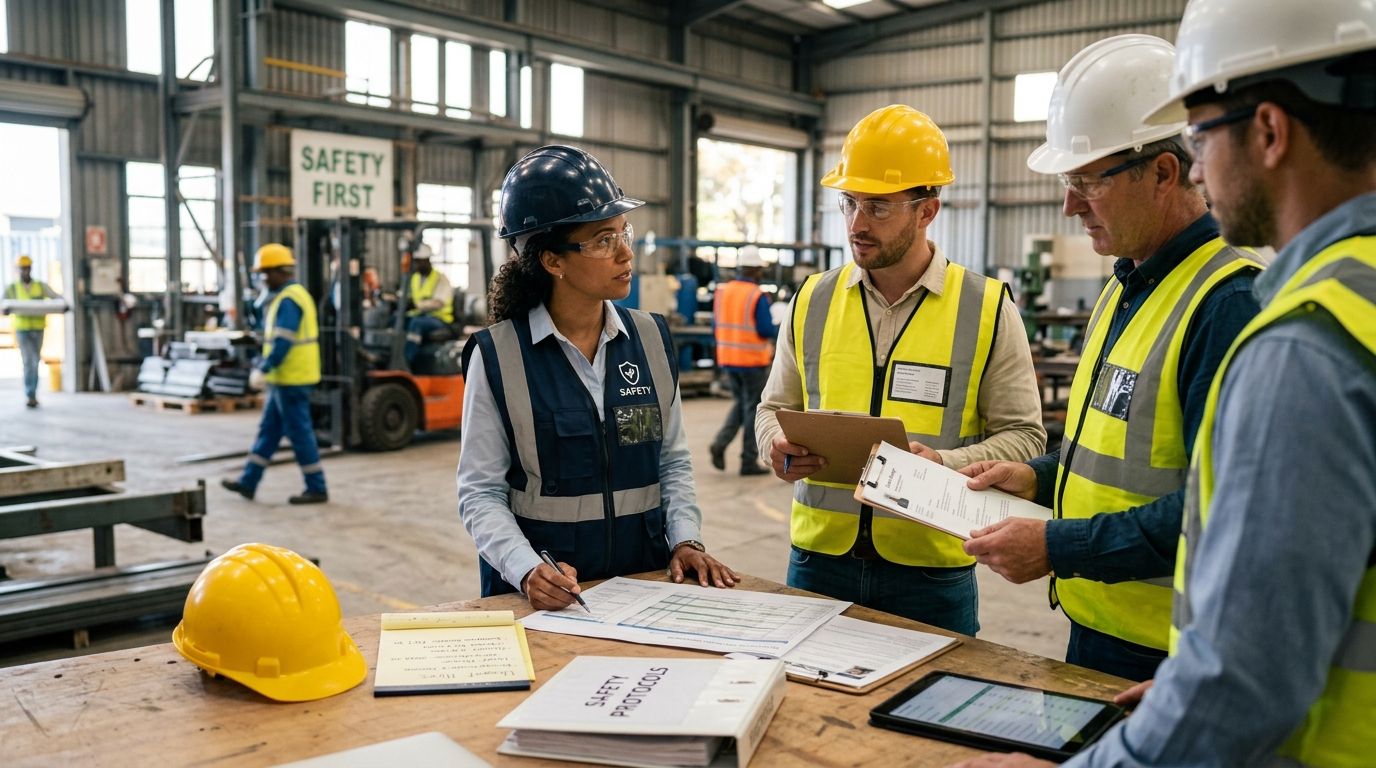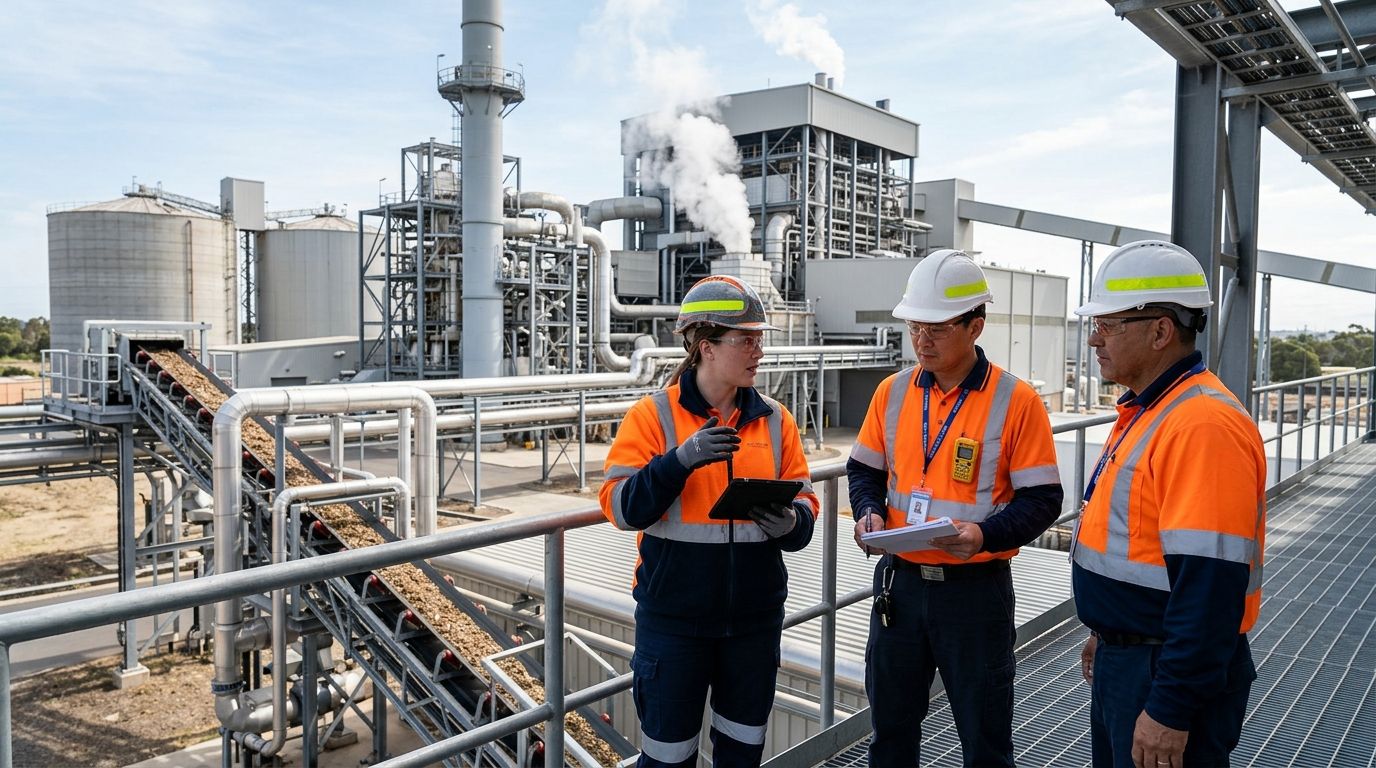
Safety staffing for waste-to-energy plants and biomass facilities puts OSHA-certified safety professionals — confined space attendants, combustion safety technicians, industrial hygienists — on-site to cover turnarounds, permitting audits, and daily combustion operations at plants that burn municipal solid waste, biomass, or refuse-derived fuel for power. These facilities run combustion processes around the clock and require entry into boilers, ash pits, and digester vessels, so the safety hires need certifications a generalist staffing agency rarely screens for before placement.
- Safety staffing for waste-to-energy plants works best through agencies that vet confined space and combustion certifications, not generalists.
- ResponsAble Staffing places OSHA-certified confined space attendants and combustion safety techs nationwide for turnarounds and daily operations.
- In-house hiring timelines lag behind outage schedules; contract-to-hire safety staff fill boiler shutdown gaps faster.
- 29 CFR 1910.146 permit-required confined space rules govern most boiler and digester entries at these plants.
- Verify certifications before a candidate steps on a tipping floor, not after the incident report is written.
Why safety staffing matters for waste-to-energy and biomass plants
Waste-to-energy and biomass combustion plants combine two hazard categories most industrial sites don't: permit-required confined spaces (boilers, ash handling vessels, digesters) and continuous combustion exposure. A crew member entering a cooled boiler for inspection falls under 29 CFR 1910.146. A tech handling fly ash or biomass dust falls under 1910.1200 hazard communication and often 1910.134 respiratory protection. Miss either credential on a placement and the plant carries the liability, not the staffing vendor.
ResponsAble Staffing places vetted safety professionals into high-risk industrial environments nationwide, and waste-to-energy plants sit squarely in that category because the combustion floor and the confined spaces beneath it never really stop running. A plant that can't staff a confined space attendant for a scheduled boiler outage in 2026 either delays the outage or runs it out of compliance — neither option is cheap.
Verdict: waste-to-energy and biomass plants need safety staffing built around confined space entry and combustion hazard screening, not a generic industrial labor pool.
How to staff a safety team for a waste-to-energy plant
Map your combustion and confined space hazards first
Before posting a single job req, walk the plant and list every space and process that needs dedicated safety coverage. This is free and it's the step most plants skip.
- Boiler interiors, ash pits, and clinker removal areas classified under 1910.146
- Tipping floor and fuel handling areas with combustible dust exposure
- Digester or gasification vessels requiring atmospheric monitoring before entry
- Hot work zones needing a dedicated fire watch
- Ash and residue handling requiring respiratory protection under 1910.134
Build a compliant confined space entry team
A confined space team at a waste-to-energy plant isn't one person — it's an entrant, an attendant, and a supervisor, each with documented training. Doing this in-house means tracking certification renewal dates manually across every hire.
- Confirm current confined space entry training for every team member, not just the supervisor
- Assign a dedicated attendant who never leaves the entry point during a live entry
- Document atmospheric monitoring equipment calibration before each shift
- Cross-train at least one backup attendant per shift rotation
- Bring in confined space attendant staffing when your in-house bench can't cover a 24/7 rotation without gaps
Plan staffing around turnarounds and outages
Boiler outages and scheduled turnarounds create a short window where safety headcount needs spike hard, then drop. In-house hiring cycles rarely match that curve.
- Build a staffing calendar tied to the outage schedule, not the fiscal year
- Identify which roles need coverage only during the outage window versus year-round
- Confirm contractor safety orientation requirements before the outage start date
- Set a headcount buffer for no-shows during multi-week turnarounds
- Use contract or project-based safety staff for the outage spike and keep permanent headcount lean the rest of the year
Vet certifications before a candidate reaches the tipping floor
A resume that says "confined space certified" means nothing without a document to back it up. This step gets skipped under deadline pressure, which is exactly when it matters most.
- Request original certification documents, not a summary from the candidate
- Confirm OSHA 10/30 or equivalent training dates against current requirements
- Check for site-specific combustion safety or hazmat endorsements relevant to biomass fuel handling
- Call the issuing training provider directly when a certificate looks recently issued or inconsistent
- Ask for a reference from a prior waste-to-energy or biomass placement, not just any industrial site
Onboard temporary safety staff without slowing the schedule
A safety hire who spends their first three days on paperwork instead of the plant floor isn't covering anything. Speed matters here as much as vetting.
- Pre-load site orientation materials before the candidate's first shift
- Pair new safety staff with an existing team member for the first rotation
- Confirm PPE sizing and issuance before the start date, not on it
- Set a 30-day check-in to catch gaps early rather than at the next audit
- Onboard temporary safety professionals through a partner that pre-verifies documentation before day one
Structure a pilot before committing to a multi-year contract
Don't sign a multi-year staffing agreement based on a sales call. Run a bounded test first.
- Pilot a single role or shift before expanding the contract
- Set a defined 60-90 day review window with measurable fill-time and retention targets
- Track incident and near-miss reports during the pilot separately from baseline data
- Compare pilot performance against your current in-house or generalist staffing costs
- Renegotiate terms based on pilot results before locking in a multi-year rate
Comparing safety staffing options for waste-to-energy plants
| Option | Best for | Key limitation |
|---|---|---|
| In-house direct hire | Stable, year-round headcount needs | Slow to fill during outages; niche combustion certs are a small talent pool |
| Generalist staffing agency | Fast fill for general labor roles | Rarely verifies confined space or combustion-specific credentials |
| Specialized safety staffing agency (ResponsAble Staffing) | Turnaround surges, confined space teams, temp-to-hire | Requires lead time to source niche combustion safety certifications |
| Contract-to-hire | Testing a candidate before a permanent offer | Adds a cost layer if the plant converts the hire quickly |
Verdict: generalist agencies work for warehouse or general labor fill; waste-to-energy plants running confined space entries and combustion operations need a specialized safety staffing partner or an in-house team with dedicated certification tracking.
“If your confined space team can't produce a current entry permit before a shift starts, you don't have a safety program — you have an incident report waiting to be written.”
Common mistakes waste-to-energy plants make with safety staffing
- Treating combustion safety techs like general maintenance hires. Combustion floor work and biomass dust exposure need role-specific training, not a general industrial safety background.
- Staffing confined space entries with a single certified person. OSHA 1910.146 requires an entrant, attendant, and supervisor — a plant running with one qualified person on a boiler entry is out of compliance the moment that person steps away.
- Waiting until the outage is scheduled to start recruiting. Combustion safety and confined space certifications take time to verify; starting the search two weeks before a turnaround guarantees a scramble.
- Skipping reference checks specific to waste-to-energy or biomass experience. A safety professional who's only worked general construction hasn't seen a tipping floor or an ash handling system.
- Locking into a multi-year staffing contract without a pilot. Committing before testing fill-time and retention on a real rotation leaves the plant stuck with a mismatched vendor through 2026 and beyond.
Staff your next boiler outage right
Confined space attendants and combustion safety techs, vetted before placement.
FAQ
What's the best safety staffing option for waste-to-energy plants in 2026?
A specialized safety staffing agency that vets confined space and combustion certifications is the best fit for waste-to-energy plants in 2026, since generalist agencies rarely screen for these credentials. In-house hiring works for stable, year-round roles but lags during outage-driven surges.
Is a specialized safety staffing agency better than a generalist for biomass plants?
Yes, for confined space and combustion-heavy roles a specialized agency is better because it verifies certifications like 29 CFR 1910.146 training before placement. Generalist agencies fill headcount fast but skip the documentation checks that matter most on a biomass combustion floor.
How much lead time does confined space attendant staffing need for a boiler outage?
Lead time depends on how niche the required certifications are, but starting the search only when the outage date is set is too late. Building a staffing calendar tied to the outage schedule, months ahead, avoids the scramble.
What certifications should a combustion safety tech at a waste-to-energy plant hold?
Look for confined space entry training under 1910.146, respiratory protection under 1910.134, and hazard communication training under 1910.1200 at minimum. Site-specific combustion or biomass fuel handling endorsements add further confidence.
How does temporary safety staffing work during a scheduled plant turnaround?
Temporary or project-based safety staff cover the short window where headcount needs spike during a turnaround, then roll off once the outage ends. This keeps permanent headcount lean while the plant stays compliant during the surge.
Can a staffing agency place safety staff on short notice for an emergency outage?
Agencies with a pre-vetted bench of confined space and combustion-certified professionals can move faster than an in-house recruiting cycle, but short notice still limits which certifications are available. A standing relationship with a specialized agency shortens that gap.
What OSHA standards apply most to waste-to-energy and biomass facilities?
29 CFR 1910.146 governs permit-required confined space entry into boilers and digesters, 1910.1200 covers hazard communication for combustible dust and ash, and 1910.134 covers respiratory protection. All three typically apply on a single combustion floor.
How do you vet a safety staffing agency's incident track record before signing?
Ask for documented placement history and incident data specific to combustion or confined space environments, not general industrial placements. A plant should confirm this before signing any multi-year staffing agreement.
One last thing
The plants that get burned in 2026 aren't the ones that can't find safety staff — they're the ones that find staff fast and skip the certification call to the training provider. A confirmed 1910.146 entry team costs a few extra days upfront and saves the incident report later. Run the pilot, check the paperwork, and let the outage schedule drive the staffing calendar instead of the other way around.