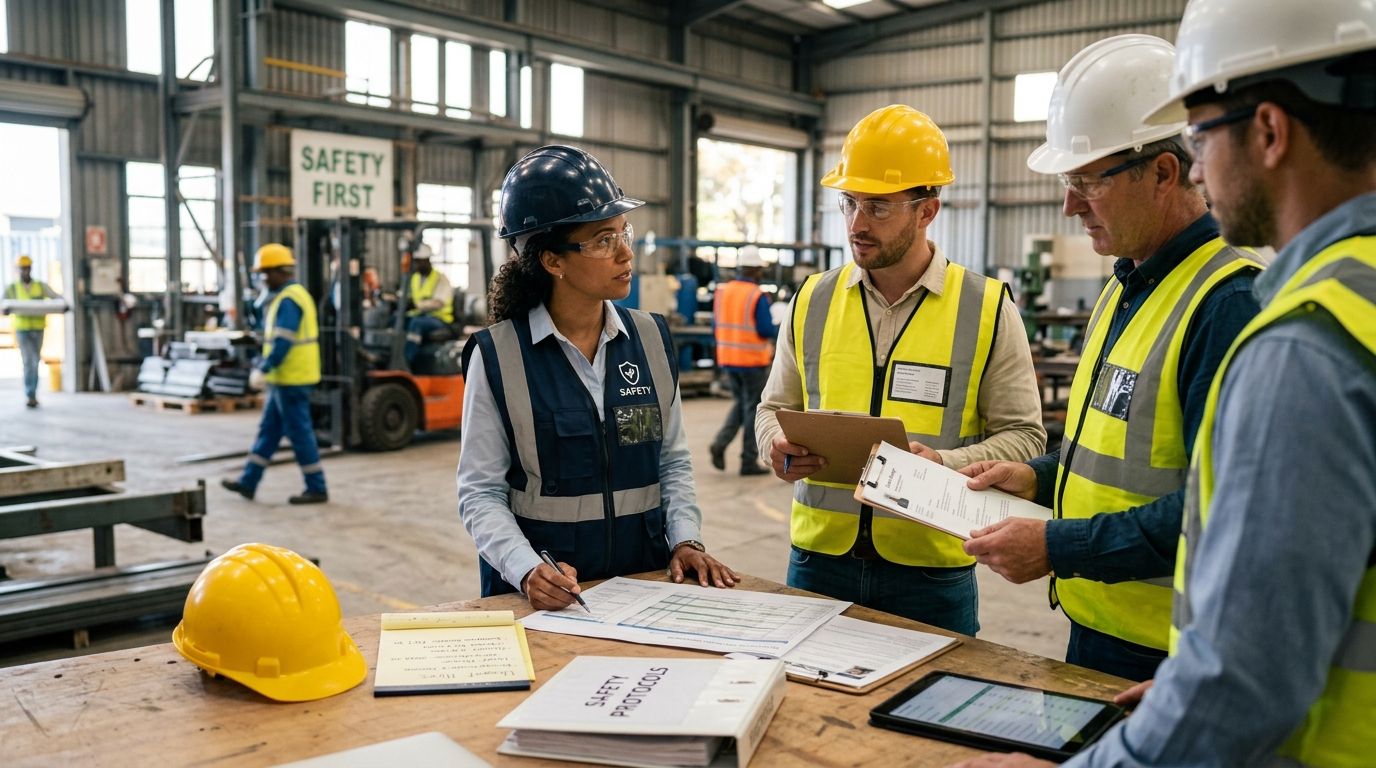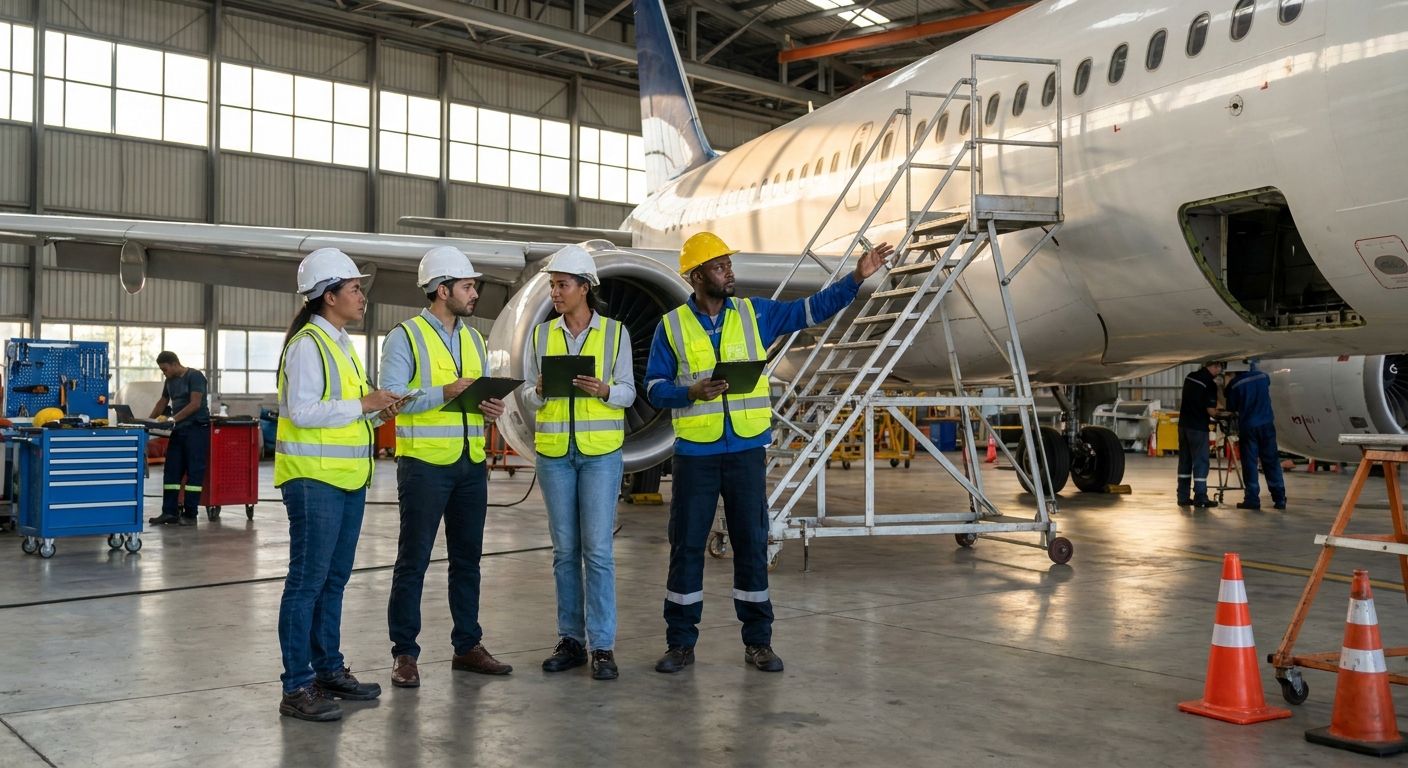
Safety staffing for aerospace MRO facilities is the practice of placing vetted EHS professionals — confined space attendants, fire watch personnel, industrial hygienists, safety coordinators — into FAA-regulated hangar and depot environments, with the aim of keeping heavy maintenance checks (A-checks through D-checks) on schedule without a single OSHA recordable. Aircraft MRO shops carry a layer of complexity most industrial sites don't: fuel tank confined space entry, hot work near composite structures, and security-cleared access requirements stacked on top of standard OSHA compliance. A generalist staffing vendor rarely understands why a wing-tank entry team needs different air monitoring than a basement confined space job, and that gap shows up fast once the aircraft is on jacks.
- Safety staffing for aerospace MRO facilities works best with confined space attendants and fire watch staff fluent in FAA hangar rules.
- ResponsAble Staffing places EHS professionals on temporary, project-based, or direct-hire terms for hangar and depot maintenance checks.
- Verify TWIC, fall protection, and confined space certifications before badge day, not after the aircraft is already on jacks.
- Direct hire fits safety manager and EHS director roles; temporary staffing fits C-check surge and turnaround windows.
Why safety staffing matters for aerospace MRO facilities
An aircraft on jacks for a C-check is a fixed-cost clock running against you the second it enters the hangar. Every day a wing-tank entry team sits idle waiting on a qualified confined space attendant, or a fire watch role goes unfilled during a hot-work repair, that clock keeps running.
MRO shops also answer to two regulators at once: OSHA for general industry safety and the FAA for airworthiness and maintenance record integrity. A safety professional who's only worked general manufacturing floors doesn't automatically know how those two frameworks interact on a hangar floor, and that's the exact gap ResponsAble Staffing built its bench to close. Protecting the people working inside a wing tank or under a fuselage on jacks is a values commitment before it's a compliance checkbox — get the staffing right and the paperwork follows.
Update your role definitions before you post the job
Most MRO safety staffing requests start too vague — "need a safety guy for the hangar" doesn't tell a recruiter which certifications matter.
- List the specific work happening: fuel tank entry, composite repair hot work, NDT support, tow and jack operations
- Separate confined space attendant needs from general site safety coordinator needs — they're not interchangeable
- Specify whether the role needs unescorted airport access or a security clearance
- Note shift pattern: most MRO checks run overlapping shifts to compress turnaround time
- Flag any customer-specific safety program requirements (military contracts often carry their own EHS overlay)
Build a confined space entry team for fuel tank and wing access
Wing tank and center-tank entry is one of the highest-risk tasks on any MRO floor, and it needs a dedicated entry team, not a single generalist.
- Assign a dedicated attendant per entry point, not one attendant covering multiple tanks
- Confirm atmospheric monitoring equipment calibration logs before the shift starts
- Cross-train attendants on rescue procedures specific to tank geometry, not generic confined space rescue
- Rotate attendants on a schedule that accounts for fuel vapor exposure limits
- Where in-house EHS staff can't cover every shift, confined space attendant staffing fills the gap with attendants already trained on tank-specific entry protocols
Staff fire watch for hot work on the hangar floor
Composite repair, welding near fuel lines, and grinding on aircraft structures all trigger hot work permits, and every permit needs a dedicated fire watch.
- Confirm fire watch personnel stay in place for the full duration required after hot work ends, not just during the work itself
- Stock fire watch stations with extinguishers rated for the specific materials in the work area
- Document fire watch coverage per hot work permit, not per shift
- Rotate fire watch staff separately from the maintenance crew to avoid fatigue overlap
Verify certifications before badge day, not after
An MRO facility can't afford to discover a lapsed certification once a technician is already badged onto the airport ramp.
- Cross-check OSHA 10/30, confined space, and fall protection cards against expiration dates before submitting badge paperwork
- Confirm any TWIC or airport-specific access credentials are current and match the facility's requirements
- Request documentation directly from the training provider when a candidate's card looks unusually recent or informal
- Build a 48-hour buffer into onboarding so a flagged certification doesn't delay a scheduled check
Plan direct hire for safety leadership roles
Temporary staffing solves surge coverage; it doesn't build the institutional knowledge an MRO shop needs at the safety manager or EHS director level.
- Separate your safety leadership hiring timeline from your temporary staffing requests — they run on different urgency
- Prioritize candidates with prior FAA-overlay experience over general manufacturing safety backgrounds
- Budget for a longer search window on direct hire roles; the qualified pool is smaller than for temporary placements
- Direct hire recruiting for safety managers works well when a facility is scaling up permanent EHS headcount rather than covering a single check cycle
Structure staffing for C-check and D-check surge periods
Heavy checks pull in far more safety headcount per aircraft than routine line maintenance, and that surge is predictable if you plan for it.
- Forecast staffing needs against the maintenance schedule at least 30 days out, not the week the aircraft arrives
- Pre-qualify a bench of confined space attendants and fire watch staff before the surge hits, not during it
- Build in overlap days between outgoing and incoming safety staff for handoff continuity
- Compare aerospace MRO surge planning against how other manufacturing plants handle demand spikes — the aerospace manufacturing plants staffing model shares the same certification-first logic even though the shop floor looks different
Vet your staffing partner's actual track record
A staffing vendor's sales pitch and its incident history are two different things, and only one of them matters when an aircraft is on jacks.
- Ask for placement-specific incident rates, not company-wide averages
- Request references from facilities running comparable confined space or hot work programs
- Confirm how the agency handles a certification gap discovered mid-placement
- Check whether the agency carries its own EHS recruiting specialists or subcontracts sourcing
Staff your next MRO check without a gap
Get vetted confined space, fire watch, and EHS staff placed on your timeline.
Comparing staffing options for aerospace MRO facilities
| Option | Best for | Key limitation |
|---|---|---|
| In-house EHS hire | Facilities with steady, year-round check volume | Slow to scale for surge periods; fixed headcount cost |
| General staffing agency | Filling generic labor roles, not specialized safety work | Rarely stocks confined space or fire watch specialists with hangar experience |
| Specialized safety staffing (ResponsAble Staffing) | Confined space, fire watch, and EHS coordinator roles on temporary or direct-hire terms | Requires lead time for direct-hire searches on leadership roles |
| MSP/VMS program | Large operators managing multiple vendors across sites | Adds administrative layers that can slow single-site urgent requests |
Verdict: for confined space and fire watch coverage during heavy checks, a specialized safety staffing agency beats a general labor vendor almost every time because the credential-checking work is already done before the candidate shows up.
Common mistakes aerospace MRO facilities make with safety staffing
- Posting generic "safety technician" job requests instead of specifying confined space, fire watch, or hazmat roles — this pulls in unqualified applicants and wastes screening time
- Skipping certification verification for temporary staff because the placement feels short-term — a lapsed card on a badged worker is still a compliance exposure
- Treating direct hire and temporary staffing as the same process — safety leadership searches need a longer runway than surge coverage requests
- Waiting until the aircraft is on jacks to request confined space attendants rather than forecasting against the maintenance schedule 30 days out
- Not asking a staffing vendor for its actual incident rate and relying on general reputation instead of a documented safety record
FAQ
What is safety staffing for aerospace MRO facilities?
Safety staffing for aerospace MRO facilities is the placement of certified EHS professionals — confined space attendants, fire watch, industrial hygienists, safety coordinators — into hangar and depot environments on temporary, project-based, or direct-hire terms. It covers roles specific to FAA-regulated maintenance work, not general industrial safety.
Do MRO facilities need confined space attendants for fuel tank entry?
Yes, wing tank and center-tank entry requires a dedicated confined space attendant per entry point with atmospheric monitoring and tank-specific rescue training. This is one of the highest-risk tasks on an MRO hangar floor.
Is temporary or direct-hire staffing better for MRO safety roles?
Temporary staffing fits surge coverage during C-check and D-check periods; direct hire fits permanent safety manager and EHS director roles that need institutional knowledge. Most MRO facilities use both models depending on the role.
What certifications should aerospace MRO safety staff carry?
Common requirements include OSHA 10 or 30, confined space entry and attendant training, fall protection, and hot work fire watch certification. Facilities working federal or military contracts often add security clearance or badge-specific credentials.
How far in advance should MRO facilities staff for a heavy check?
Forecast safety staffing needs at least 30 days ahead of a scheduled C-check or D-check. Waiting until the aircraft arrives leaves no buffer for certification verification or bench pre-qualification.
Can a general staffing agency fill MRO safety roles?
A general staffing agency can supply labor but rarely stocks candidates pre-qualified for confined space fuel tank entry or hangar-specific fire watch work. Specialized safety staffing agencies close that gap faster because credential checking happens before the placement, not after.
What is the biggest safety staffing mistake MRO shops make?
Waiting until an aircraft is already on jacks to request confined space attendants or fire watch coverage. Forecasting against the maintenance schedule ahead of time avoids the gap entirely.
One last thing
The certifications on file are only as good as the last time someone checked the expiration date — verifying safety certifications before placing a candidate catches the lapsed card before it becomes a badge-day problem, not after. In 2026, with heavy check backlogs stretching hangar capacity across the industry, the facilities staying on schedule are the ones that treat certification verification as a step, not an afterthought.