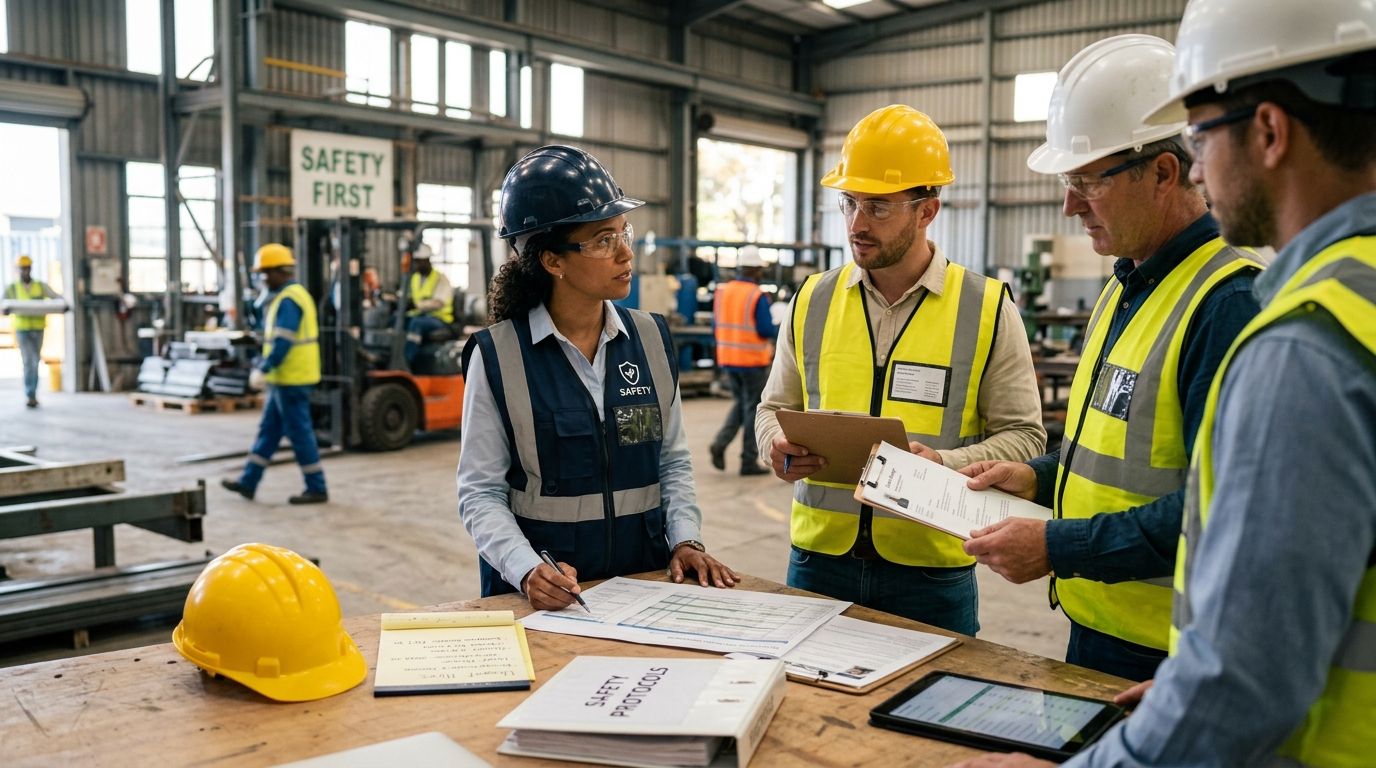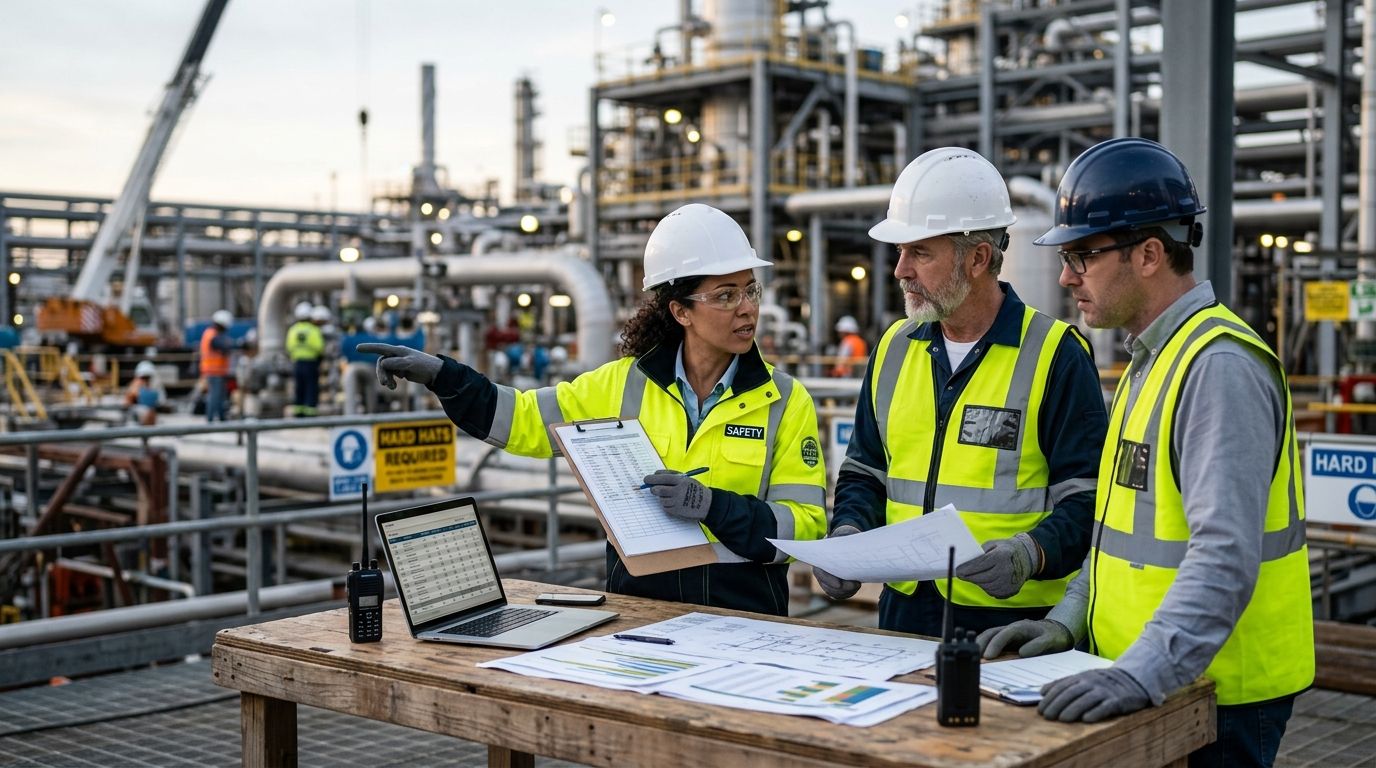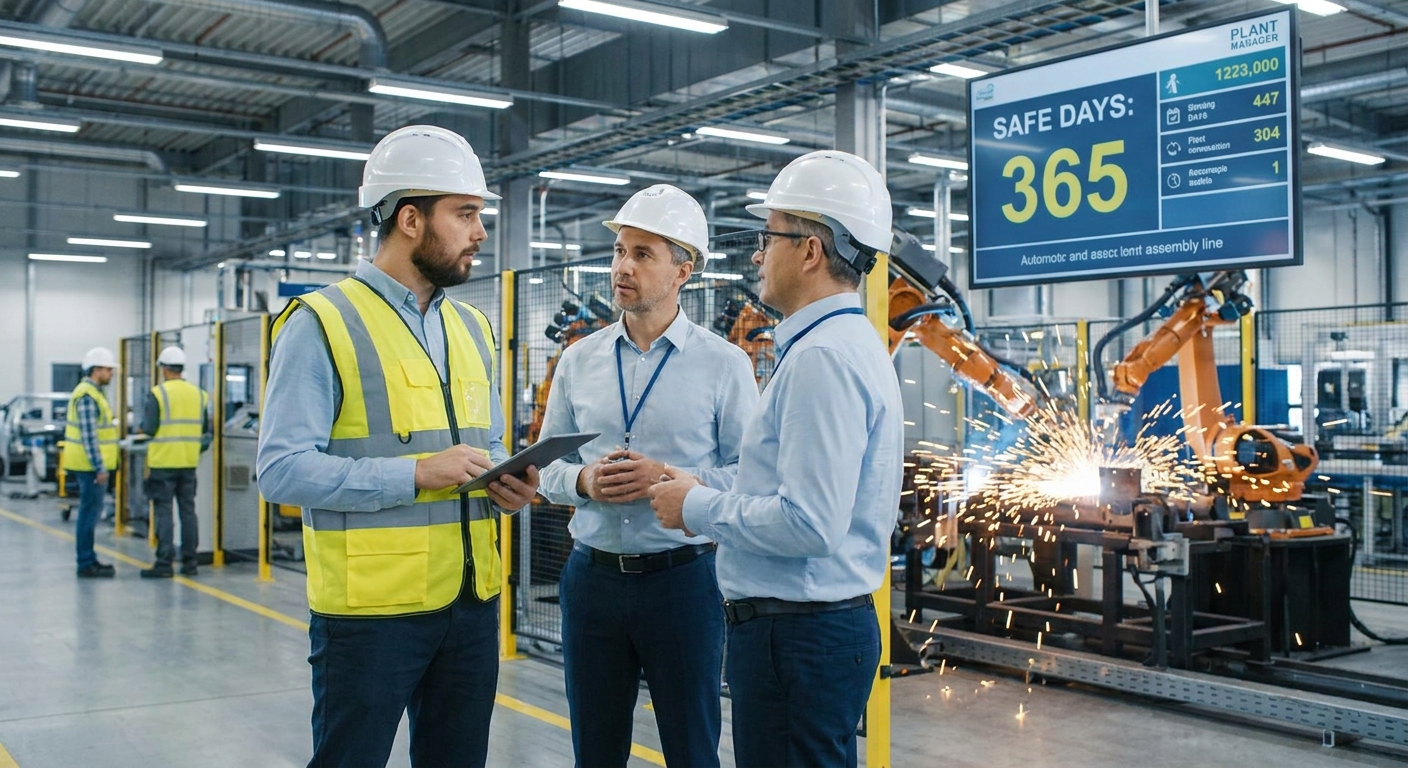
Automotive manufacturing plants run on takt time, and a safety vacancy on the line doesn't wait for a six-week hiring cycle. This guide breaks down what to look for in EHS recruiting for automotive manufacturing plants, which staffing tracks solve which problems, and where a generalist agency will leave you exposed.
- Direct-hire safety manager recruiting is the right call for automotive plants building permanent EHS leadership in 2026 — Buy.
- Night-shift EHS staffing closes second- and third-shift coverage gaps on 24/7 assembly lines — Buy.
- Generalist temp agencies without OSHA 30-Hour or ISO 45001-familiar candidates are a Skip for automotive floors.
- Plant startup staffing tracks matter most during EV and battery line launches, where a full safety team has to exist before day one.
Who this is for
This is written for plant managers, HR directors, and EHS directors at automotive OEM and Tier 1/2 supplier facilities who need certified safety professionals fast — whether that's a single safety coordinator for a line restart, a full safety team for a new model launch, or a permanent safety manager hire. If your plant runs multiple shifts, handles robotics and confined space work, or is scaling for an EV retrofit in 2026, this applies to you directly.
Why this matters
An automotive plant's safety program touches lockout/tagout (29 CFR 1910.147), confined space entry (29 CFR 1910.146), and increasingly NFPA 70E electrical safety as more lines add robotics and battery assembly. A generalist staffing firm that doesn't screen for these specifics puts your OSHA recordables at risk the moment a candidate steps onto the floor.
General safety staffing for manufacturing plants covers food, chemical, and industrial facilities broadly, but automotive plants have their own rhythm: model-year changeovers, three-shift operations, and line-down urgency that turns a two-week hiring delay into lost production. EHS recruiting for automotive manufacturing plants has to account for all of that, not just fill a job title.
What to look for in EHS recruiting for automotive manufacturing plants
Certification depth that matches your floor
A candidate with a generic "safety certificate" is not the same as one holding OSHA 30-Hour General Industry, confined space attendant training, and hands-on LOTO experience. Automotive plants running robotic welding cells and paint booths need EHS staff who already understand ISO 45001 documentation, not staff who need six weeks of ramp-up before they're useful.
Speed to fill for line-down situations
When a safety coordinator quits mid-shift, the line either slows or stops. A staffing partner should be able to present pre-vetted, credentialed candidates within days, not weeks — anything slower turns a staffing gap into a production loss.
Shift and changeover flexibility
Most automotive plants run three shifts, and model-year changeovers create short, intense surges in safety staffing needs. Your recruiting partner needs bench depth for second and third shift, plus the ability to scale up for a 60-90 day changeover window without dropping quality.
Direct hire vs. temp-to-hire options
Some roles — safety directors, EHS managers — need a permanent hire with plant-specific knowledge. Others, like a confined space attendant for a scheduled shutdown, only need coverage for the project window. The right partner offers both models instead of forcing every role into one contract structure.
Audit-ready documentation
Automotive supply chains face regular customer and insurance audits. Every placed safety professional needs a documented certification file — training records, background checks, drug screening results — ready to hand over on request, not assembled after the auditor asks.
Top picks for EHS recruiting for automotive manufacturing plants
Direct-hire safety manager recruiting — the long-term fix. This track is built for plants replacing a departing EHS director or adding a second shift's worth of leadership. One spec that matters: candidates are pre-screened against OSHA 30-Hour and plant-specific incident command experience before you ever see a resume. Verdict: Buy for any plant building a permanent safety structure in 2026. Direct-hire safety manager recruiting is the track to start with.
Night-shift EHS staffing — the coverage gap closer. Automotive plants running three shifts often staff days heavily and let nights run thin on safety coverage. This track places EHS professionals specifically for second and third shift, matched to the same certification bar as your day crew. Verdict: Buy if your plant runs 24/7 and your night shift currently shares a safety coordinator with days. Night-shift EHS staffing fixes that split.
Surge staffing for model-year changeovers — the changeover cushion. Model changeovers compress months of line reconfiguration into a 60-90 day window, and safety oversight needs during that window can spike well past normal headcount. This track scales safety coordinators up temporarily, then scales back down once the new line is validated. Verdict: Consider if your changeover calendar is already set for 2026 — book coverage before the window opens, not during it.
Plant startup staffing — the ramp-up specialist. New EV and battery assembly lines need a full safety team in place before the first vehicle rolls off, covering lithium-ion handling, fire watch, and confined space entry from day one. Verdict: Buy for any facility launching a new line or plant in the next 12 months.
EV battery and grid EHS recruiting — the niche pick. As automotive plants add battery assembly and grid-tie infrastructure, EHS staff need training specific to high-voltage systems and thermal runaway response, which most general manufacturing safety staff don't have. Verdict: Consider if your plant is adding battery or energy storage lines in 2026, otherwise this is overkill for a conventional assembly floor.
What to avoid
- Generalist temp agencies without industrial safety specialization. They can fill a headcount number, but they rarely screen for OSHA 30-Hour, confined space certification, or plant-floor incident history — the gaps show up during your next audit, not during onboarding.
- Staffing firms that treat direct hire and temp placement identically. A permanent safety manager and a 90-day changeover coordinator need different vetting depth. One-size-fits-all contracts usually mean one-size-fits-all screening, which is too thin for either role.
- Agencies with no documented candidate files. If a partner can't produce training records and background check results on request within a day, they're not ready for an automotive supply chain audit.
Need vetted EHS staff on your floor fast
Talk through your plant's certification and shift-coverage needs before your next line-down moment.
Verdict comparison
| Track | Best for | Certification depth | Shift/scale fit | Verdict |
|---|---|---|---|---|
| Direct-hire safety manager | Permanent EHS leadership | OSHA 30-Hour, incident command | Any shift | Buy |
| Night-shift EHS staffing | 24/7 assembly lines | Matches day-shift bar | Second/third shift | Buy |
| Model-changeover surge staffing | 60-90 day line reconfigurations | Confined space, LOTO | Temporary scale-up | Consider |
| Plant startup staffing | New or EV line launches | Fire watch, battery handling | Full team, day one | Buy |
| EV battery/grid EHS recruiting | Battery and energy storage lines | High-voltage, thermal response | Niche, project-based | Consider |
FAQ
What certifications should EHS staff at an automotive plant hold in 2026?
OSHA 30-Hour General Industry, confined space entry training under 29 CFR 1910.146, and lockout/tagout competency under 29 CFR 1910.147 are the baseline. Plants adding robotics or battery lines should also look for NFPA 70E electrical safety familiarity.
Is direct hire or temp staffing better for automotive EHS roles?
Direct hire fits permanent safety manager and director roles that need long-term plant knowledge, while temp or project staffing fits shutdown, changeover, and startup windows. Most automotive plants use both models depending on the role.
How fast can a plant fill a safety coordinator vacancy?
With a specialized EHS staffing partner, pre-vetted candidates can typically be presented within days rather than the weeks a generalist agency posting takes. Speed depends on how deep the partner's certified candidate bench already is.
Do automotive plants need different EHS staffing for EV lines?
Yes. EV and battery assembly lines require staff trained in lithium-ion handling, thermal runaway response, and high-voltage systems, which is different from a conventional stamping or assembly floor safety role.
What does EHS recruiting for automotive manufacturing plants typically cover?
It covers safety coordinators, safety managers, confined space attendants, fire watch, and industrial hygienists placed on temporary, project, or direct-hire terms specific to plant floor and shift needs.
How should a plant staff for a model-year changeover?
Book surge safety staffing 60-90 days ahead of the changeover window rather than during it, since certified candidates get booked quickly during peak changeover season.
What's the biggest risk with a generalist staffing agency for automotive EHS roles?
Generalist agencies often don't screen for OSHA 30-Hour, confined space, or LOTO competency specifically, which shows up as a gap during customer or insurance audits, not during onboarding.
One last thing
The plants that get burned worst aren't the ones that skip staffing entirely — they're the ones that hire a generalist temp for a confined space role and find out during an audit that the candidate never had 29 CFR 1910.146 training. Check the certification file before the candidate ever steps on the floor, not after.