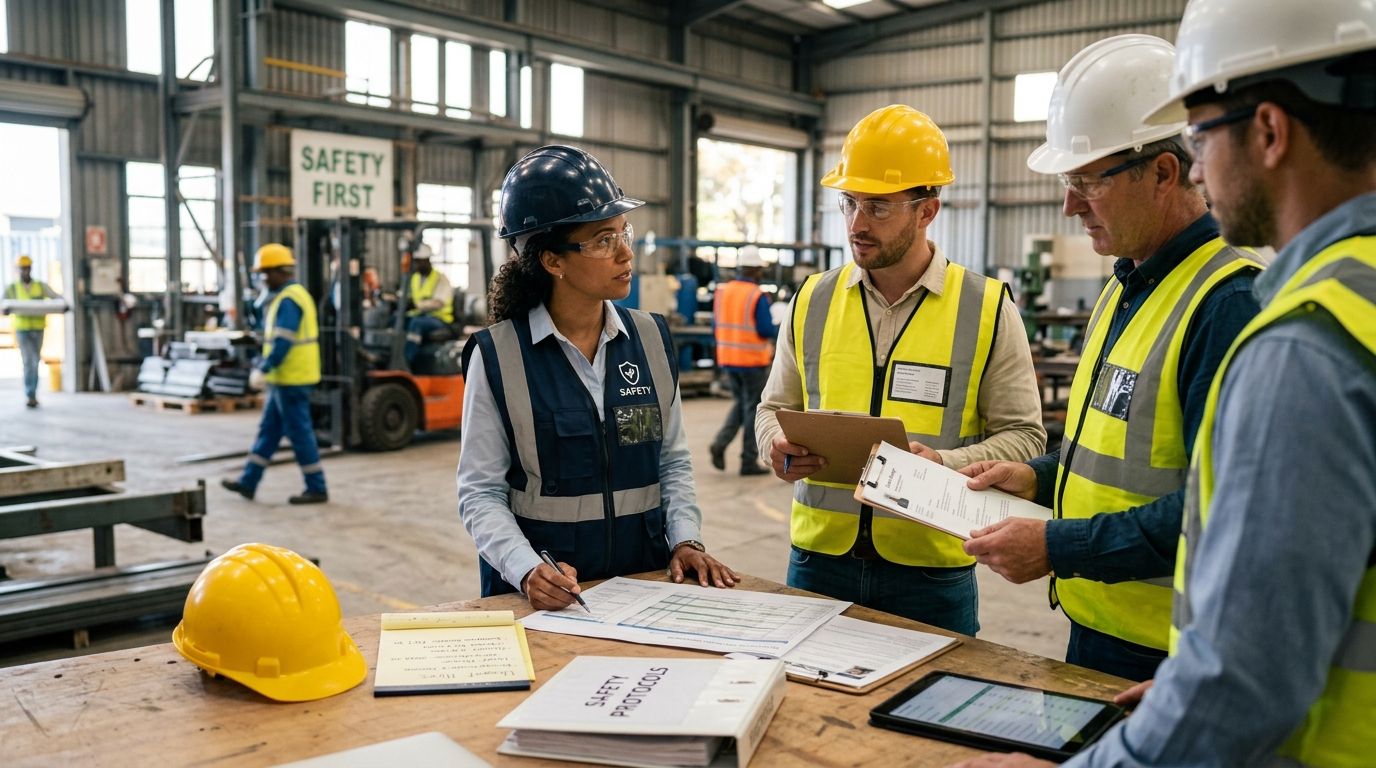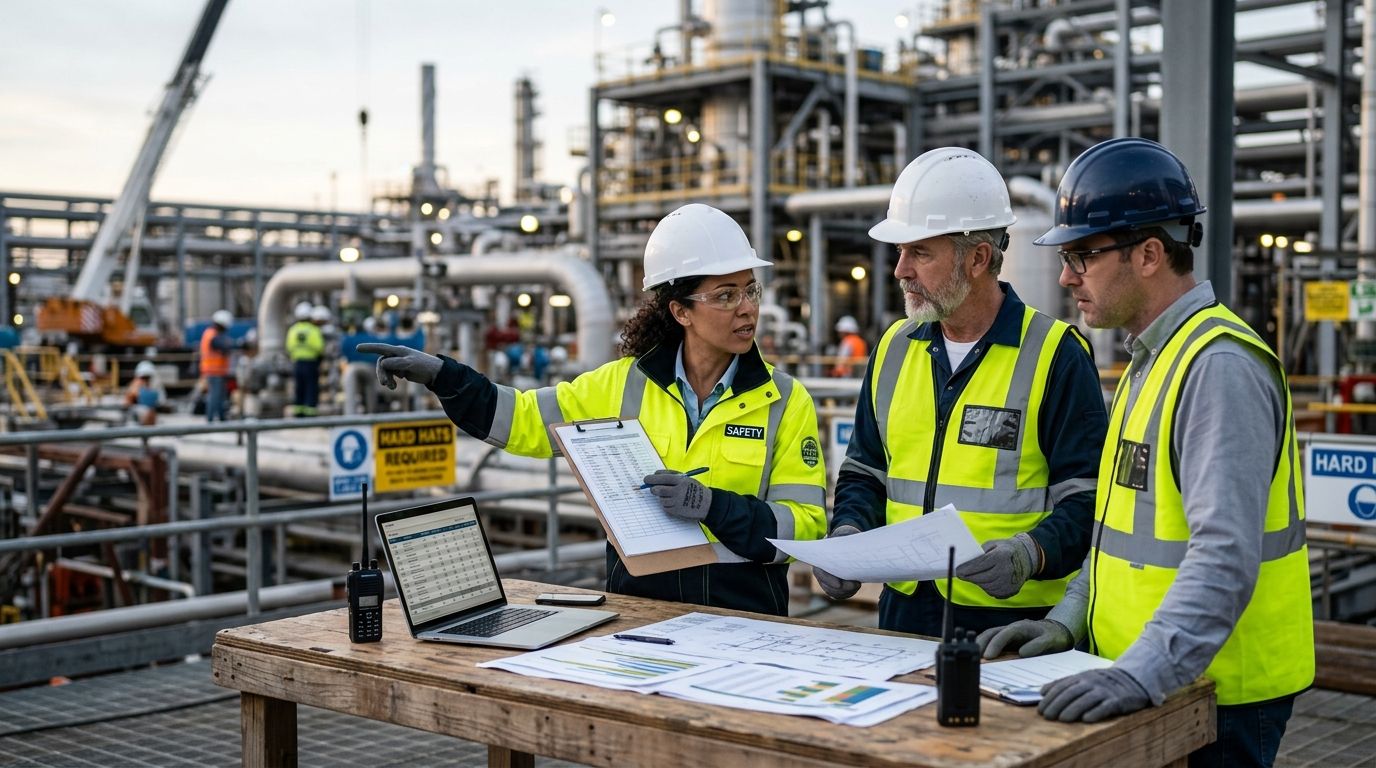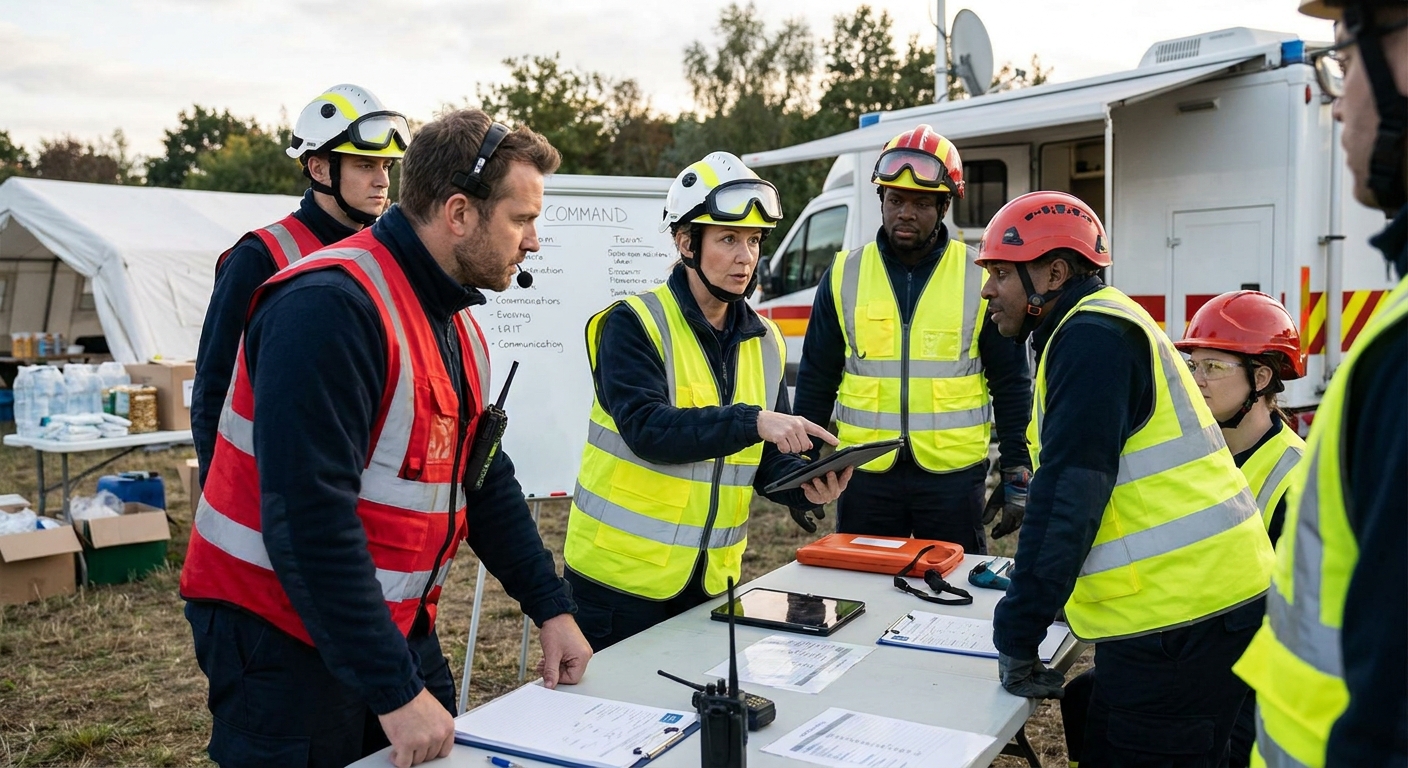
Disaster response work throws crews into flooded plants, storm-damaged refineries, and collapsed structures with days — not weeks — to get safety coverage in place, and the wrong staffing call turns a recovery job into a second incident.
- Rapid-deploy disaster and storm recovery staffing wins for 48-72 hour mobilization windows — Buy.
- Fire watch coverage for hot work during rebuilds is non-negotiable on any site running cutting or welding in 2026.
- Confined space attendant staffing matters most after flooding or structural collapse — don't substitute generalist labor.
- Night shift 24/7 coverage separates real disaster-response staffing from standard industrial temp agencies.
- Direct hire safety managers make sense after the first 90 days, not during the emergency phase.
Why this matters
A disaster response job doesn't wait for a normal hiring cycle. When a hurricane knocks out a Gulf Coast refinery or a tornado tears through a manufacturing plant, the safety staffing gap between "incident happened" and "crew is on site" is measured in hours, not weeks.
That gap is where most of the risk lives. Sites without a confined space attendant, a fire watch, or a first aid presence on day one see more recordable incidents during recovery than during normal operations — because debris, energized equipment, and compressed timelines stack on top of each other.
Rapid-deploy disaster and storm recovery staffing exists specifically to close that gap. The best solutions in 2026 combine speed, credential verification, and round-the-clock coverage — not just a resume database.
How this list was built
The ranking below weighs four things that actually matter on a disaster site: how fast a solution can put a body on the ground, whether the staffing model verifies OSHA and site-specific credentials before deployment (not after), whether it covers night and weekend shifts without a rate spike that kills the budget, and whether it scales from a single-site incident to a multi-state disaster declaration.
Solutions that only handle steady-state industrial staffing — no surge capacity, no after-hours dispatch — get marked down even if they're strong for routine plant work. Disaster response is a different discipline than filling a Tuesday shift.
The ranked list
1. Rapid-deploy disaster and storm recovery staffing — the safe pick
This is the default answer for anything triggered by a named storm, flood, or facility incident. It's built around mobilizing vetted safety professionals — confined space attendants, fire watches, safety technicians — inside a 48 to 72 hour window rather than the standard 1-2 week industrial staffing timeline.
The detail that matters: credentials get verified before dispatch, not on arrival. On a disaster site, finding out a candidate's confined space training lapsed after they're already standing at the entry point is too late.
Verdict: Buy. This is the entry point for almost every disaster response staffing need in 2026.
2. Fire watch and hot work staffing — the underrated pick
Rebuild phases mean cutting, welding, and grinding on structures that were just underwater or fire-damaged. Every one of those hot work permits requires a dedicated fire watch, and pulling that person from general labor is how secondary fires start.
Fire watch staffing for hot work permits needs someone who understands extinguisher placement, spark radius, and post-work monitoring — not just a warm body standing near a torch. Sites running multiple hot work permits per shift during a rebuild need this locked in before day one, not requested after a near-miss.
Verdict: Buy for any site with active cutting, welding, or grinding during recovery.
3. Confined space attendant staffing — the non-negotiable pick
Flooding and structural collapse push crews into tanks, vaults, and below-grade spaces that weren't confined space entries before the disaster. Confined space attendant staffing is the single most misjudged line item on a disaster recovery staffing plan — teams assume existing crew can cover it, then find out mid-entry that nobody on site holds current attendant certification.
The number that matters here: a confined space entry with an under-qualified attendant is one of the fastest paths to a multiple-fatality incident in industrial recovery work, because rescue delay compounds every other risk in the space.
Verdict: Buy. Never skip this line item to save a day of lead time.
4. First aid and EMT staffing on-site
Disaster sites run without the medical infrastructure a normal facility has — no on-site clinic, no established EMS response time, often no cell signal for a 911 call. Having a first aid or EMT-credentialed staffer on the crew closes the gap between injury and treatment when the nearest hospital is an hour away on damaged roads.
This matters most in the first two weeks of a response, before local EMS routes stabilize.
Verdict: Buy for the first phase of any multi-week response; Hold once local medical infrastructure comes back online.
5. Night shift and 24/7 safety staffing — the pick that separates real vendors from pretenders
Disaster recovery doesn't stop at 5pm. Night shift safety staffing for 24/7 operations is the line item that exposes which staffing partners actually built for emergency response versus which ones are running a standard day-shift industrial book.
The tell: ask a staffing agency directly whether they can staff a third shift confined space attendant inside 72 hours. Most standard industrial staffing shops can't — they're built around scheduled shift fills, not surge dispatch.
Verdict: Buy for any recovery running around-the-clock operations; Skip vendors who quote a week or more for night coverage.
6. Environmental remediation safety staffing
Once the emergency phase settles, disaster sites often shift into remediation — soil contamination, chemical release cleanup, water treatment restoration. Safety staffing for environmental remediation projects covers this phase, and it requires a different credential set than the initial rescue-and-stabilize work: hazmat handling, air monitoring, decontamination protocol.
Verdict: Consider once the site moves past the acute emergency into cleanup, typically weeks two through eight of a major response.
7. Fast-track construction safety staffing for the rebuild phase
Rebuilding damaged structures under compressed insurance and regulatory timelines needs safety coverage that can keep pace with an accelerated schedule. This solution fits once demolition and stabilization are done and actual reconstruction starts.
Verdict: Consider for the rebuild phase; Skip it for the first-response window — it's built for a different tempo.
8. Direct hire safety managers for long-term recovery command
Extended disaster recoveries — the kind that run 90 days or longer — eventually need a permanent safety manager owning the site rather than rotating temporary coverage. Direct hire recruiting for safety managers fits this later stage, not the initial response.
Verdict: Wait. Bringing this in too early wastes budget on a role that needs a stabilized site to actually manage.
Need safety staffing on short notice
Get confined space, fire watch, and EMT coverage moving inside 48-72 hours.
Comparison table
| Solution | Deployment speed | Best phase | Verdict |
|---|---|---|---|
| Disaster and storm recovery staffing | 48-72 hours | Day 1 emergency response | Buy |
| Fire watch and hot work staffing | 24-72 hours | Rebuild / hot work phase | Buy |
| Confined space attendant staffing | 48-72 hours | Flooding, collapse, tank entry | Buy |
| First aid and EMT staffing | 48-72 hours | First two weeks | Buy, then Hold |
| Night shift / 24-7 staffing | 72 hours or less | Round-the-clock operations | Buy |
| Environmental remediation staffing | 1-2 weeks | Cleanup phase | Consider |
| Fast-track construction staffing | 1-2 weeks | Rebuild phase | Consider |
| Direct hire safety manager | Weeks | 90+ day recoveries | Wait |
How to source it
- Ask for deployment timelines in writing, not verbally. A vendor who says "we'll try to have someone there fast" without a number is telling you they haven't done disaster response staffing before.
- Confirm credential verification happens before dispatch. Site-specific training and OSHA certifications need to be checked against the job requirements before a candidate leaves for the site, not after arrival.
- Check whether the vendor covers multi-state mobilization. Regional disasters often pull crews from outside the immediate area — a staffing partner that only sources locally runs out of candidates fast during a major event.
"A confined space entry with an under-qualified attendant is one of the fastest paths to a serious incident in disaster recovery work."
FAQ
What is the fastest way to get safety staffing for a disaster response site?
Rapid-deploy disaster and storm recovery staffing is the fastest route in 2026, typically mobilizing vetted safety professionals inside 48 to 72 hours. Standard industrial staffing timelines run 1-2 weeks and aren't built for emergency mobilization.
Do disaster response sites need confined space attendants even if the space wasn't confined before?
Yes — flooding, structural collapse, and debris can turn a normal space into a confined space entry that requires a certified attendant. Skipping this because the space wasn't classified before the disaster is one of the most common and dangerous shortcuts on recovery sites.
How much does disaster response safety staffing cost compared to standard industrial staffing?
Rates run higher than standard industrial temp staffing because of expedited mobilization, night and weekend premiums, and travel costs, but exact pricing depends on location, shift structure, and credential level. Get a scoped quote for the specific site and timeline rather than comparing generic day rates.
Is fire watch staffing required during disaster rebuild work?
Yes, any hot work permit — cutting, welding, grinding — on a rebuild site requires a dedicated fire watch. Structures damaged by storms or fires carry elevated secondary fire risk, which makes this coverage non-negotiable during reconstruction.
When should a disaster recovery bring in a direct hire safety manager instead of temporary staffing?
Direct hire safety managers make sense once a recovery stabilizes past the first 90 days and needs a permanent site owner rather than rotating temp coverage. Bringing one in during the acute emergency phase wastes budget on a role that needs a settled site to manage.
Can one staffing solution cover both the emergency phase and the rebuild phase?
No single solution covers both well — emergency response staffing prioritizes speed and surge capacity, while rebuild-phase staffing prioritizes sustained coverage under compressed construction schedules. Most disaster recoveries in 2026 shift staffing solutions as the site moves from stabilization to reconstruction.
What credentials should a disaster response safety staffing vendor verify before dispatch?
At minimum, OSHA 10/30 certification, confined space attendant training, and any site-specific hazmat or fire watch credentials should be verified before a candidate leaves for the site. Verifying after arrival costs hours a disaster site doesn't have.
Is night shift safety staffing harder to source than day shift during disaster response?
Yes, night and 24/7 coverage is the clearest differentiator between staffing partners built for disaster response and those running standard day-shift books. Ask any vendor directly whether they can staff third-shift confined space or fire watch coverage inside 72 hours before signing.
One last thing
The single most common failure point on disaster recovery sites isn't a missing credential — it's a staffing vendor that quotes a fast timeline and then can't actually cover the second and third shift once the initial crew arrives. Ask for the full-shift staffing plan before day one, not just the first dispatch.