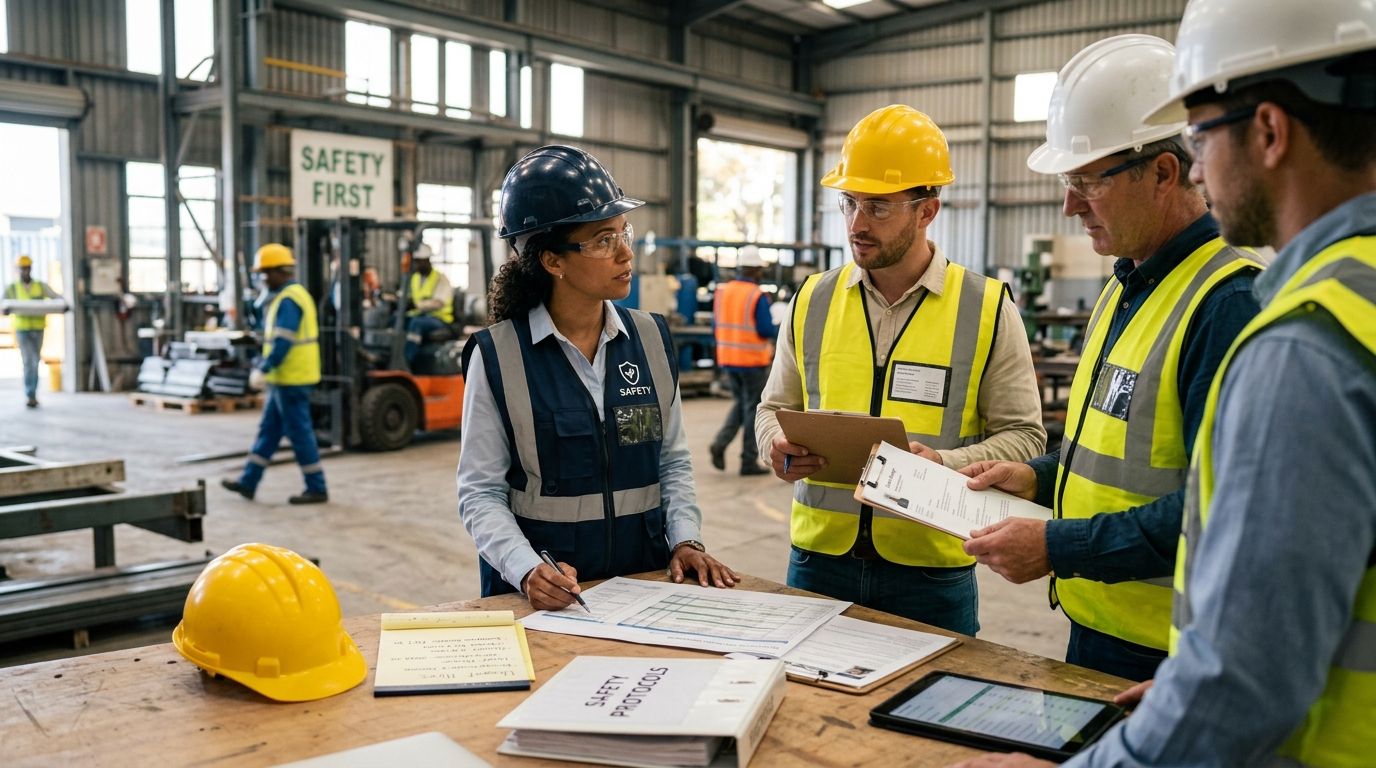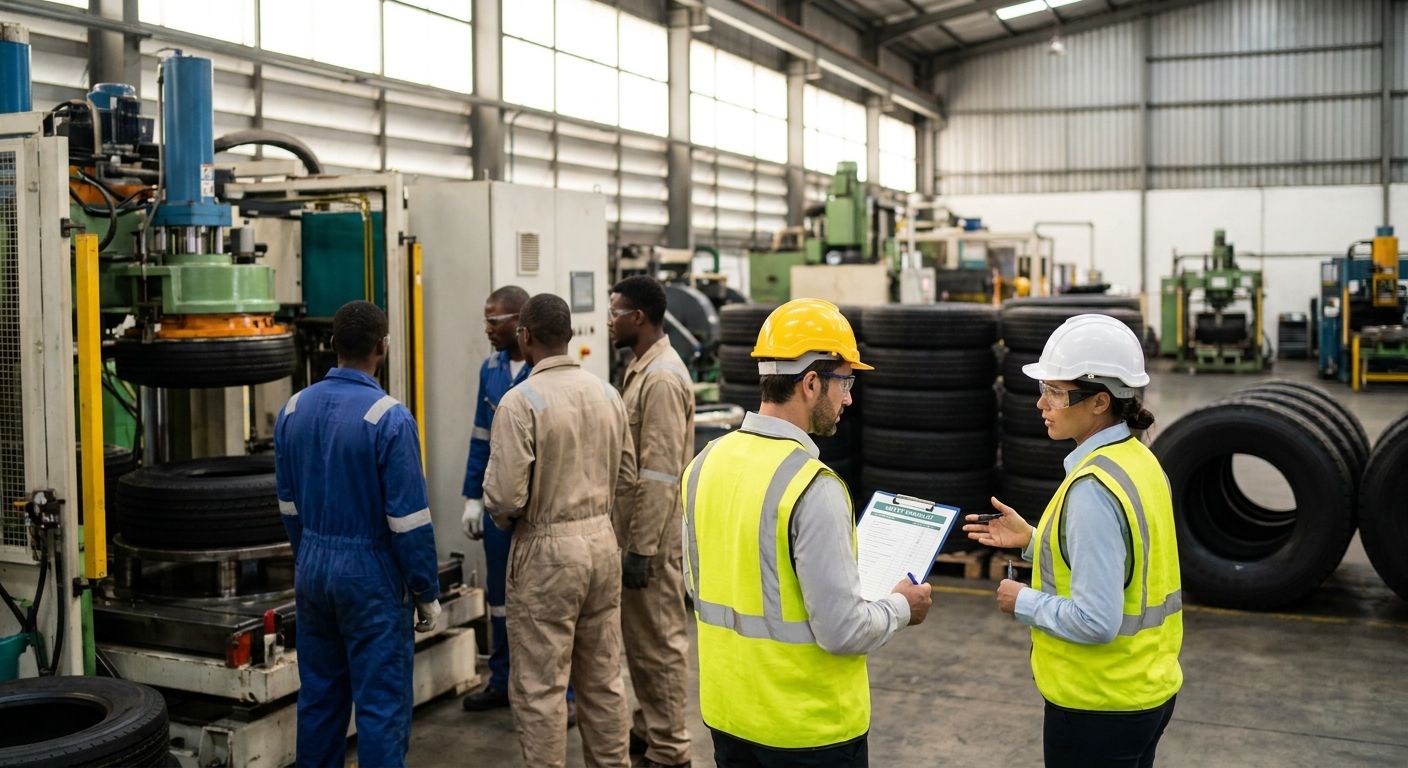
Safety staffing for tire and rubber manufacturing means sourcing certified EHS professionals — safety coordinators, industrial hygienists, confined space attendants, site safety managers — for curing, mixing, calendering, and extrusion operations, on temp, project, or direct-hire terms, so the plant stays OSHA-compliant without stopping the line. Tire and rubber facilities run a hazard mix most general industrial staffing desks aren't built to screen for: banbury mixers, hot curing presses, carbon black dust, and permit-required confined spaces inside autoclaves and mixing tanks.
- Safety staffing for tire and rubber manufacturing needs candidates screened for banbury, curing press, and confined space hazards specifically.
- ResponsAble Staffing places EHS professionals on temp, project, and direct-hire terms for tire and rubber plants nationwide.
- OSHA's amputation-focused enforcement in rubber and plastics manufacturing makes machine-guarding experience a non-negotiable screening filter in 2026.
- Verify confined space and respiratory certifications before placement — a bad match on a curing floor costs more than a vacancy.
Why safety staffing matters for tire and rubber manufacturing
Tire and rubber plants run some of the highest-hazard equipment in general manufacturing. Banbury mixers pull in hands and sleeves. Curing presses run hot, under pressure, and close fast. Calendering lines carry in-running nip points that OSHA's National Emphasis Program on Amputations has specifically targeted in rubber and plastics manufacturing since its 2019 update, which means machine-guarding knowledge isn't a nice-to-have on a resume — it's the screening filter.
Mixing rooms and extrusion lines regularly run above the 85 dBA action level under 29 CFR 1910.95. Any safety hire on that floor needs working knowledge of a hearing conservation program, not a certificate that just mentions one. Carbon black dust sits under OSHA's respirable exposure limit of 3.5 mg/m3 — a number every industrial hygienist candidate should explain without pausing, and one generalist staffing agencies rarely ask about.
Autoclaves and mixing tanks fall under permit-required confined space rules (1910.146). Curing presses on most tire lines run continuous, multi-shift schedules, which means safety coverage has to survive nights and weekends, not just the day shift. ResponsAble Staffing builds its bench around exactly this hazard profile instead of general industrial safety.
Step 1: Map your plant's hazard zones before you write the req
A single "safety coordinator" job posting can't cover a plant with five distinct hazard zones. Break the floor down first.
- Banbury and mixing room (machine guarding, dust, noise)
- Calendering and extrusion (nip points, burns)
- Curing press deck (heat, pressure, confined access panels)
- Confined space entries — autoclaves, mixing tanks, pits
- Chemical storage — accelerators, antioxidants, curatives
Step 2: Set certification requirements by zone, not by job title
Match the credential to the floor, not the title on the org chart.
- CSP or CIH for plant-wide EHS manager roles
- OHST or CHST for floor-level safety coordinators
- Confined space attendant or entry supervisor certification for autoclave and tank work
- Respiratory protection program administrator credential for carbon black areas
- Hearing conservation program experience for mixing and extrusion crews
A req that lists "general safety experience" pulls candidates who've never stood on a curing floor. Structuring the EHS job description around zone-specific hazards filters for people who already know the equipment before the interview starts.
Step 3: Source candidates through channels that reach plant-floor safety talent
Generic job boards return generalists. Plant-floor safety talent shows up elsewhere.
- BCSP and ASSP certification directories
- Union apprenticeship safety tracks
- Rubber and plastics manufacturing trade groups
- Referrals from current mixing or curing floor leads
- A specialized EHS staffing desk that already carries a manufacturing-vetted bench
Step 4: Verify certifications and incident history before you place anyone
A certificate that looks current on a resume isn't the same as one that's active. Confirm before signing anyone to a curing floor.
- Check active certification status directly with the issuing body
- Confirm OSHA 10 or OSHA 30 currency
- Request a reference from a prior mixing or curing floor supervisor, not HR
- Ask for documented incident and near-miss history, not just a "clean record" claim
- Confirm respirator fit-test and hearing test dates fall within the last 12 months
Verify safety certifications before a placement date is set, not after the person is already on the floor.
Step 5: Choose contract, project, or direct hire based on the gap you're filling
The hiring structure should match the reason for the vacancy, not the other way around.
- Temp coverage for a mixing floor safety coordinator out on leave
- Project-based hire for a plant expansion or new curing line startup
- Direct hire for a plant-wide EHS manager you need long-term
- Contract-to-hire when you want a trial period on a hazardous floor before committing
Step 6: Build onboarding that gets a hire floor-ready fast
A safety hire who isn't floor-authorized within the first week is a cost, not an asset.
- Plant-specific lockout/tagout walkthrough on day one
- PPE fit and respirator clearance before floor access
- Confined space entry drill if the role touches autoclaves
- Shadow shift with an existing safety lead for the first week
- Sign-off checklist before solo floor authority
Step 7: Plan coverage for night and weekend shifts
Curing presses in most tire plants run continuous. A day-shift-only safety plan leaves two-thirds of the schedule unwatched.
- Build a minimum one-hour shift overlap for handoffs
- Staff a dedicated night safety lead instead of stretching the day EHS manager
- Confirm confined space attendant coverage exists on every shift
- Budget separate contract staffing for planned turnarounds versus steady-state coverage
Staffing options for tire and rubber plants
| Option | Best for | Key limitation |
|---|---|---|
| In-house safety hire (direct) | Long-term plant EHS manager roles | Hiring cycles often run months; hard to flex for a surge |
| General staffing agency | Filling non-technical floor roles fast | Rarely screens for tire and rubber-specific hazard certifications |
| Specialized EHS staffing agency (ResponsAble Staffing) | Curing, mixing, confined space, and turnaround coverage on temp, project, or direct-hire terms | Works best when the plant defines hazard zones clearly upfront |
| Independent EHS consultant | Short audits or process hazard analysis reviews | Not built for ongoing floor coverage or shift staffing |
ResponsAble Staffing is best for plants that need hazard-zone-matched safety talent on temp, project, or direct-hire terms rather than a generalist filling a headcount line.
Common mistakes tire and rubber plants make
- Hiring a generalist "safety coordinator" without confined space attendant certification, then finding out mid-shift they legally can't staff an autoclave entry.
- Skipping hearing conservation program experience when mixing room readings sit above 85 dBA and the hire has never run one.
- Treating carbon black exposure like generic dust instead of screening for awareness of the 3.5 mg/m3 respirable limit.
- Under-staffing night shift EHS coverage on curing presses that run continuous, leaving one safety lead stretched across three shifts.
- Skipping incident-history verification, then discovering the hire's prior plant carried a machine-guarding citation tied to their area of responsibility.
Get vetted safety staff for your plant
Temp, project, or direct-hire EHS placements matched to curing and mixing floor hazards.
FAQ
What certifications should a tire plant safety hire have?
A tire or rubber plant safety hire should carry a credential matched to the floor zone — CSP or CIH for plant-wide EHS management, OHST or CHST for floor coordinators, and a confined space attendant certification for anyone touching autoclaves or mixing tanks. A generic OSHA 10 alone isn't enough for curing floor work.
Is temp or direct-hire better for tire and rubber manufacturing safety roles?
Temp or project-based staffing fits leave coverage, expansions, and new line startups; direct hire fits a long-term plant-wide EHS manager role. Most plants use both depending on the gap, not one exclusively.
How much does safety staffing for a tire plant cost?
Bill rates vary by role, shift, and contract length, so ask a safety staffing agency for a rate breakdown by hazard zone rather than a flat quote. Night shift and confined space roles typically carry different rates than day-shift generalist coverage.
How fast can a tire plant staff a confined space attendant?
Timeline depends on how quickly certifications can be verified with the issuing body and whether the candidate needs a plant-specific walkthrough before floor access. Agencies with an existing manufacturing bench place confined space attendants faster than a cold job posting.
What OSHA standards matter most for tire and rubber manufacturing safety staffing?
29 CFR 1910.146 (permit-required confined space), 1910.95 (hearing conservation), and the machine-guarding focus under OSHA's National Emphasis Program on Amputations all shape which certifications matter for tire and rubber plant hires in 2026.
Can a general staffing agency fill tire plant safety roles?
A general staffing agency can fill administrative or entry-level floor roles but usually doesn't screen for tire-specific hazards like carbon black exposure limits or curing press guarding. Specialized EHS staffing agencies vet against those hazard categories directly.
What's the difference between an EHS manager and a safety coordinator at a tire plant?
An EHS manager typically owns plant-wide compliance, audits, and program design, while a safety coordinator handles day-to-day floor enforcement in a specific zone like mixing or curing. Job descriptions should reflect that scope difference clearly.
Does ResponsAble Staffing place safety staff for tire and rubber manufacturing nationwide?
ResponsAble Staffing places vetted EHS professionals for tire and rubber manufacturing plants nationwide on temp, project-based, and direct-hire terms. Placements are matched to plant-specific hazard zones rather than a generic safety title.
One last thing
OSHA's National Emphasis Program on Amputations names rubber and plastics manufacturing NAICS codes directly, which means plants under that code face a higher audit probability tied to machine guarding on calendering and curing equipment. Keep a documented guarding sign-off in every safety hire's file from day one in 2026 — it's the first document an inspector asks for, and it's the easiest one to lose track of during a fast placement.