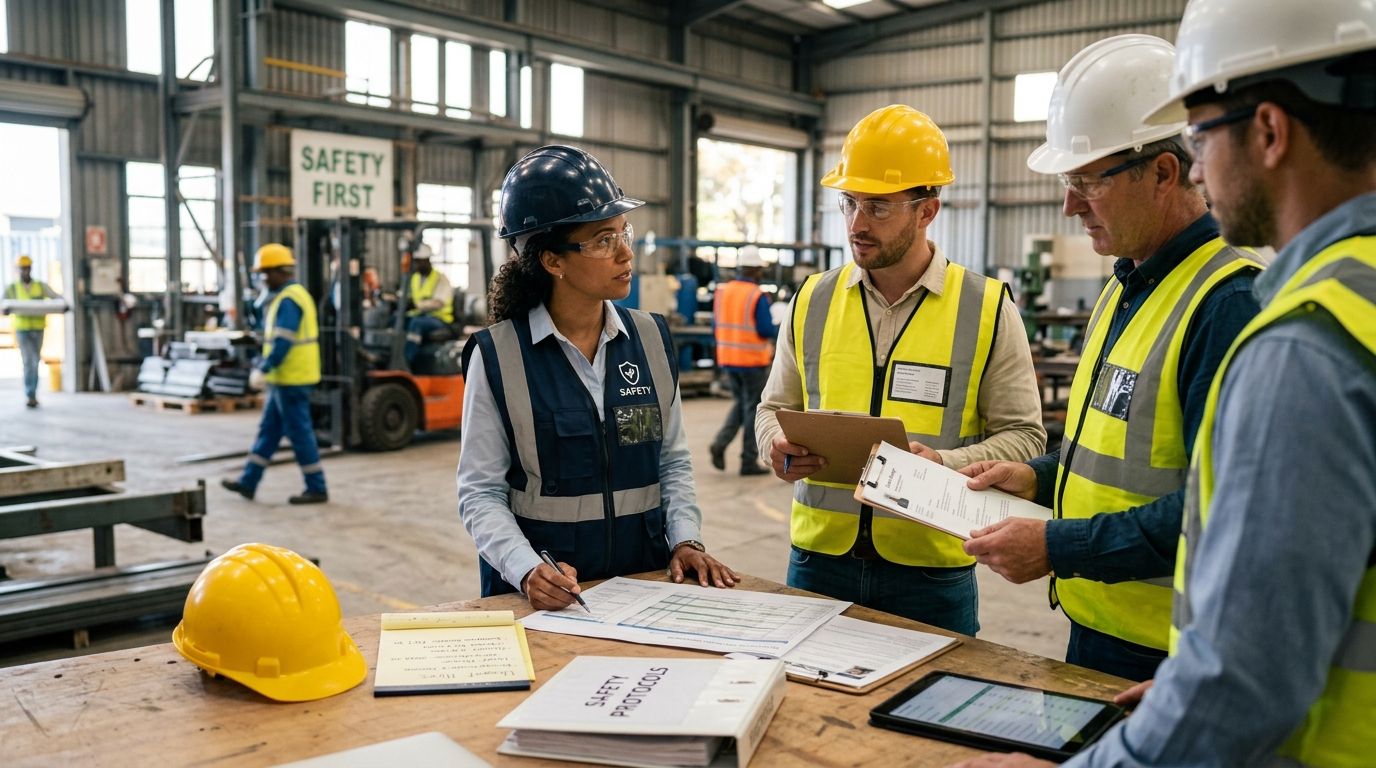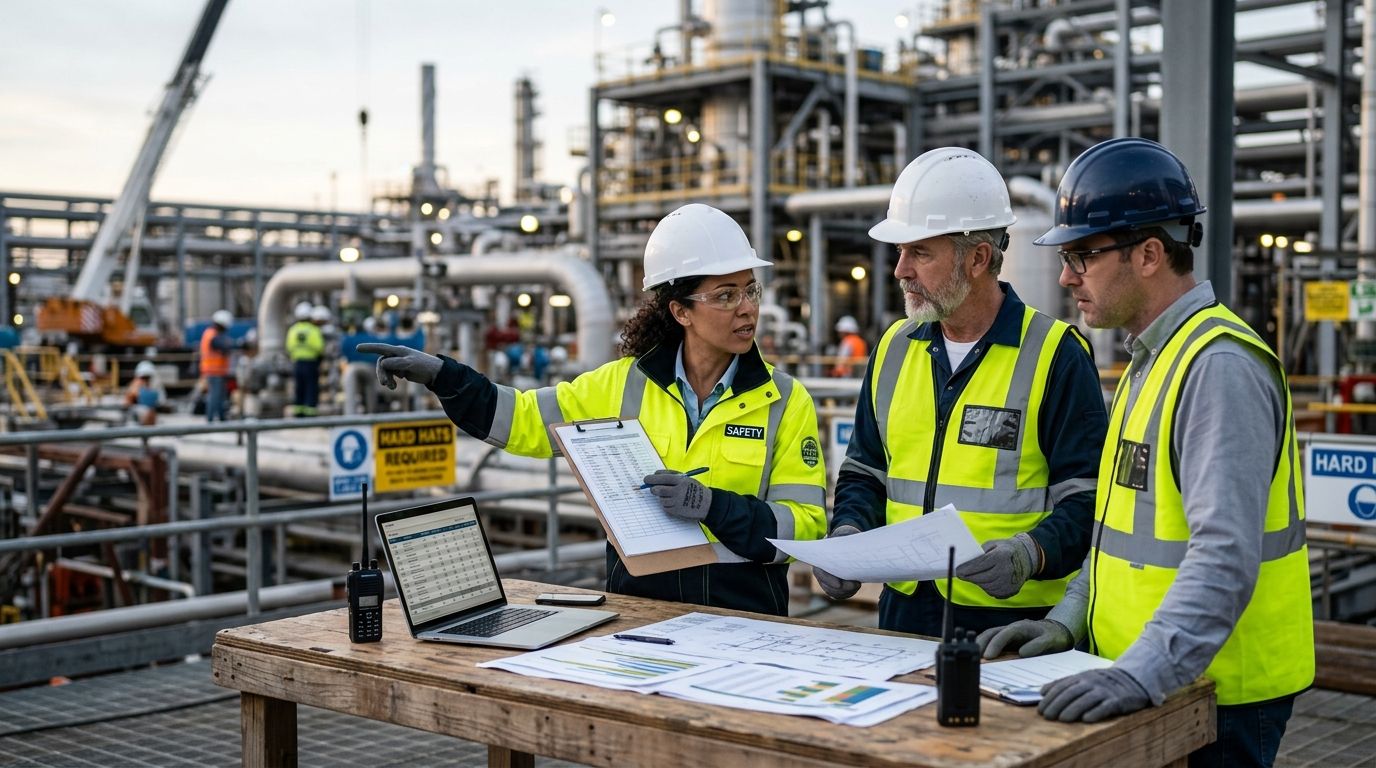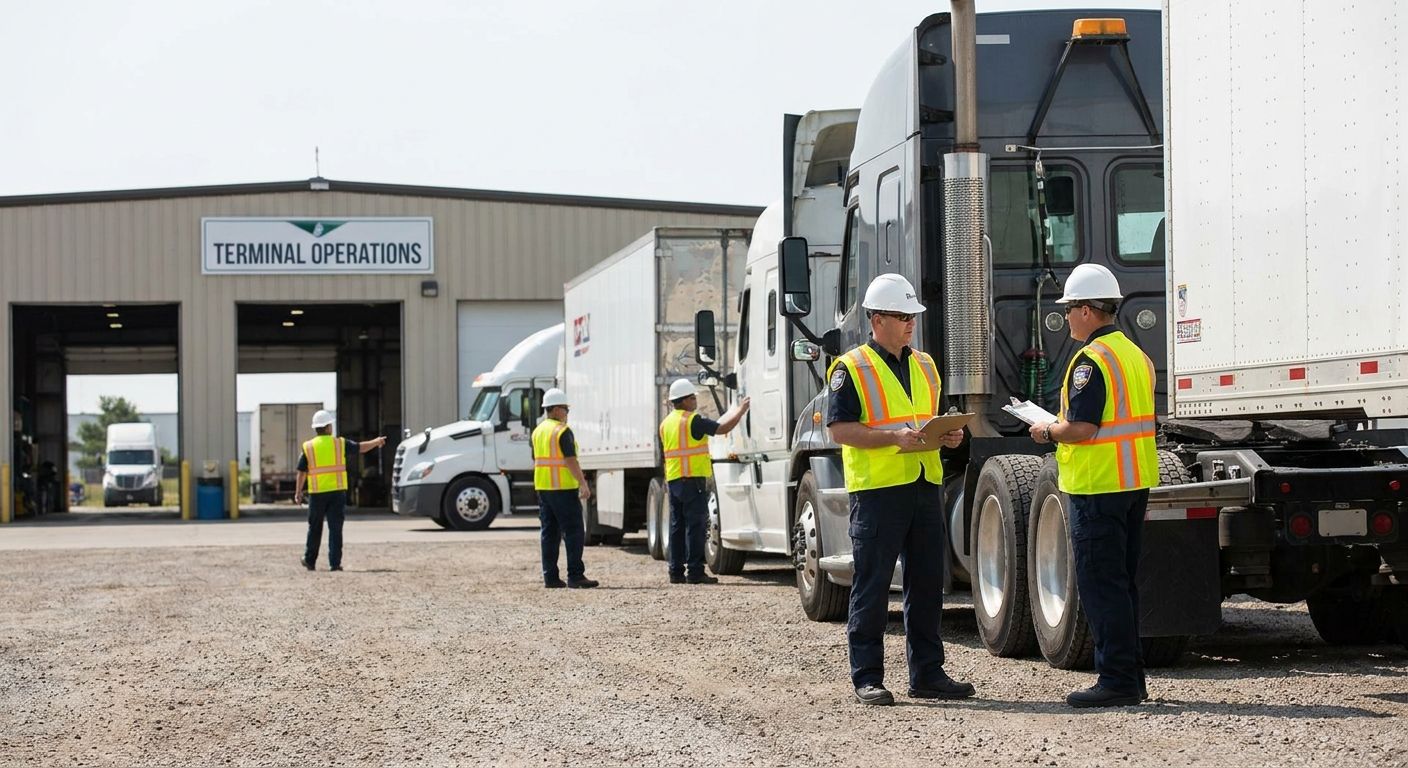
Interstate trucking terminals run on a schedule nobody controls: driver hours-of-service clocks, dock windows, and freight that doesn't wait for a shift change. Safety staffing for interstate trucking terminals means putting certified EHS professionals on-site who understand both OSHA yard hazards and DOT-regulated operations, on a schedule that matches how terminals actually run.
- ResponsAble Staffing places EHS professionals built for 24/7 terminal operations, not generalist temp fills.
- Night-shift and per-diem safety staffing cover multi-terminal networks without duplicating headcount at each site.
- Bilingual safety staff are a Buy for most terminals given OSHA's language-comprehension training requirement.
- Vet any agency's DOT and FMCSA fluency before signing — generalist staffing agencies often skip this entirely.
Why this matters
A trucking terminal isn't a factory floor with a fixed shift bell. FMCSA's 14-hour on-duty window pushes a large share of dock activity into the overnight hours, which means the safety staff watching forklift traffic, loading dock falls, and hazmat placarding have to be there when the trucks are, not just during a 9-to-5 window. Get this wrong in 2026 and you're either understaffed at 2 a.m. or paying overtime rates to cover a gap a properly built roster would have closed.
The agencies that treat this like standard industrial safety staffing miss the DOT layer entirely. ResponsAble Staffing builds terminal rosters around hours-of-service reality, not a generic 40-hour week.
Who this is for
This guide is built for terminal operations managers, regional safety directors, and 3PLs running multiple interstate freight terminals who need EHS coverage that matches dock hours, not office hours. If you're staffing one warehouse with a single shift, you don't need this level of complexity. If you're covering three terminals across two time zones with rotating dock schedules, keep reading.
What to look for in safety staffing for interstate trucking terminals
DOT and FMCSA fluency
A safety professional who only knows general industry OSHA (29 CFR 1910) will miss hazmat placarding checks, hours-of-service documentation gaps, and drug-and-alcohol consortium requirements that are specific to trucking. Terminal safety staffing without this layer is a liability waiting to surface at the next DOT audit.
24/7 and overnight coverage capability
Most interstate terminals load and unload well outside a standard business day. An agency that can only staff a day shift leaves your busiest, riskiest hours uncovered — exactly when forklift-pedestrian incidents and dock-plate falls spike.
Multi-terminal, multi-state scalability
If your network spans state lines, your staffing partner needs candidates who can move between terminals without a fresh onboarding cycle at every stop. One-location agencies force you to manage three or four separate vendor relationships instead of one.
Yard and dock hazard experience
Terminal risk looks different from a construction site or a plant floor: backing trucks, blind spots at dock doors, pinch points between trailers and dock plates. Safety staff need hands-on familiarity with yard traffic patterns, not just a certification card.
Language accessibility on the floor
OSHA requires safety training be delivered in a language and vocabulary employees can understand. Terminal workforces are frequently bilingual, and a safety professional who can't communicate directly with the crew can't actually reduce risk on that crew.
Speed to fill and flexible engagement models
Terminal safety needs spike around peak freight seasons, new lane openings, and driver surges. A staffing partner that only offers 12-month direct-hire searches can't respond to a terminal opening in six weeks.
Top picks for interstate trucking terminal safety staffing
The round-the-clock necessity: night-shift coverage
Overnight dock activity is where the highest share of terminal incidents happen, and it's also where safety coverage is thinnest across the industry. Night-shift safety staffing for 24/7 operations matches EHS professionals to the exact window your FMCSA-regulated drivers are on the clock, closing the gap between an 11-hour drive shift and a day-shift-only safety team. Verdict: Buy — this is the single highest-leverage move for terminals running true 24/7 dock schedules.
The multi-terminal fix: per diem and travel staffing
Running three interstate terminals shouldn't mean three separate hiring processes and three sets of onboarding paperwork. Best per diem and travel safety staffing solutions put certified safety professionals on rotation across your terminal network, filling coverage gaps as freight volume shifts between locations. Verdict: Buy for any operation spanning more than one state, Consider if you run a single fixed location.
The workforce reality: bilingual safety staff
A safety officer who can only brief half the dock crew in a language they understand is only doing half the job. Bilingual safety professionals for job sites close that gap directly, which matters more at a trucking terminal than almost anywhere else in industrial staffing given how mixed-language terminal crews commonly are. Verdict: Buy for any terminal with a bilingual workforce, which in 2026 describes most of them.
The due-diligence step: vetting the agency itself
Before you sign with any safety staffing partner, confirm they actually screen for DOT-specific credentials and not just general OSHA 10/30 cards. How to vet a safety staffing agency before signing a contract walks through the exact questions that separate a partner who understands trucking terminal risk from one who's repurposing a construction-site roster. Verdict: Buy the process before you buy the staffing hours — skipping this step is how terminals end up with safety staff who can't read a bill of lading.
Staff your terminal with certified EHS pros
Vetted safety professionals matched to your shift schedule, fast.
What to avoid
- Generalist industrial safety staffing with no DOT layer. A safety professional who can run a construction site walk-through but can't read a driver's hours-of-service log will miss the exact risks a trucking terminal carries.
- Single-location agencies for multi-terminal networks. If your safety staffing partner can only cover one dock, you're managing three vendor relationships when one would do — and losing consistency across sites in the process.
- Warm-body temp fills without certification verification. A staffed body on the dock floor isn't the same as a credentialed safety professional. In 2026, an uncertified placement is the fastest way to fail a DOT compliance review.
Verdict comparison: safety staffing options for interstate trucking terminals
| Option | Best for | 24/7 fit | Multi-state fit | Verdict |
|---|---|---|---|---|
| Night-shift safety staffing | Overnight dock activity | Strong | Moderate | Buy |
| Per diem and travel staffing | Multi-terminal networks | Moderate | Strong | Buy |
| Bilingual safety staffing | Mixed-language crews | Moderate | Moderate | Buy |
| Agency vetting process | Any new staffing contract | N/A | N/A | Buy (do first) |
| Single-location generalist temp staffing | One fixed terminal, low complexity | Weak | Weak | Skip for networks |
FAQ
What is safety staffing for interstate trucking terminals?
It's the practice of placing certified EHS professionals at trucking terminals to manage yard, dock, and hazmat risk on a schedule that matches FMCSA-regulated driver hours rather than a standard business day. ResponsAble Staffing builds these rosters around 24/7 dock activity, not fixed shifts.
Do trucking terminals need OSHA-certified safety staff or DOT-specific credentials?
Both. General OSHA training covers yard and dock hazards, but DOT-specific knowledge — hours-of-service documentation, hazmat placarding, drug-and-alcohol consortium rules — is what separates a terminal-ready safety professional from a general industrial hire.
Is temp staffing or direct hire better for terminal safety roles?
Temp and per diem staffing works best for seasonal freight surges and multi-terminal coverage gaps, while direct hire fits a fixed, high-volume terminal that needs a permanent safety director. Most networks in 2026 use a mix of both.
How much does safety staffing for a trucking terminal cost?
Costs vary by shift coverage, certification level, and whether the role is temporary, per diem, or direct hire, so terminals should request a rate breakdown by shift type rather than a flat quote.
What's the biggest safety risk at an interstate trucking terminal?
Dock-plate falls and backing-truck incidents during overnight loading windows carry the highest incident rates, largely because overnight shifts are the most commonly understaffed on the safety side.
Can one staffing agency cover multiple terminals across state lines?
Yes, provided the agency runs a per diem or travel staffing model built for multi-site rotation. Single-location agencies typically can't scale across a multi-state terminal network without onboarding delays at each stop.
Why does bilingual safety staffing matter for trucking terminals?
OSHA requires safety training be delivered in a language and vocabulary workers understand, and terminal crews are frequently bilingual. A safety professional who can't brief the full crew directly is only covering half the floor.
How fast can a terminal fill an urgent safety staffing gap?
Fill speed depends on how prepared the staffing partner's candidate pipeline is for DOT-specific roles, which is why vetting an agency's time-to-fill track record before signing matters more at a terminal than at a standard warehouse.
One last thing
The FMCSA's 14-hour on-duty window is the number most terminal operators plan freight around — and the number almost nobody plans safety staffing around. Build your EHS roster to that same clock in 2026, and the overnight incident gap that quietly costs most terminals the most money closes on its own.
Every pick above ties back to one principle: safety staffing for interstate trucking terminals only works when the roster matches the hours the trucks actually run, not the hours a typical office does. ResponsAble Staffing's model is built around that clock, which is why terminal operators keep coming back to it over generalist industrial staffing.