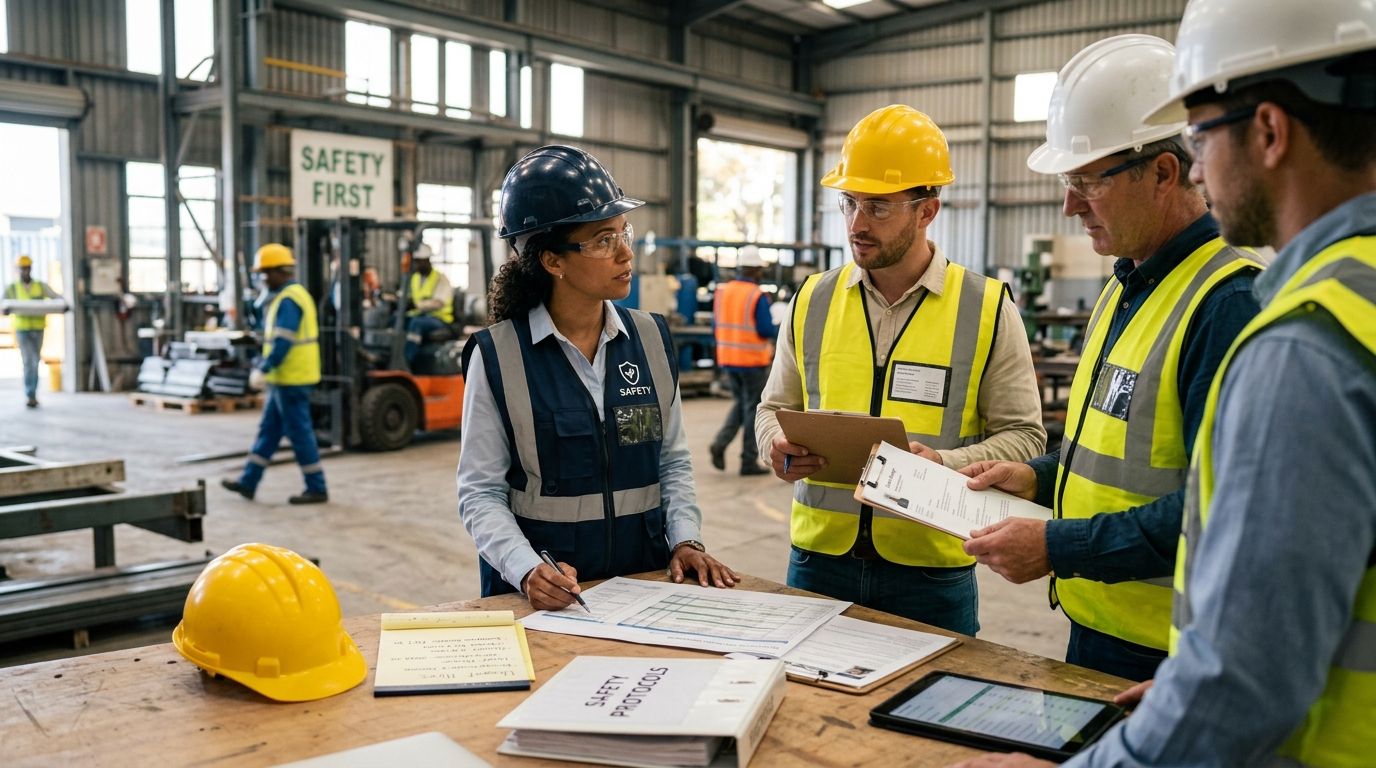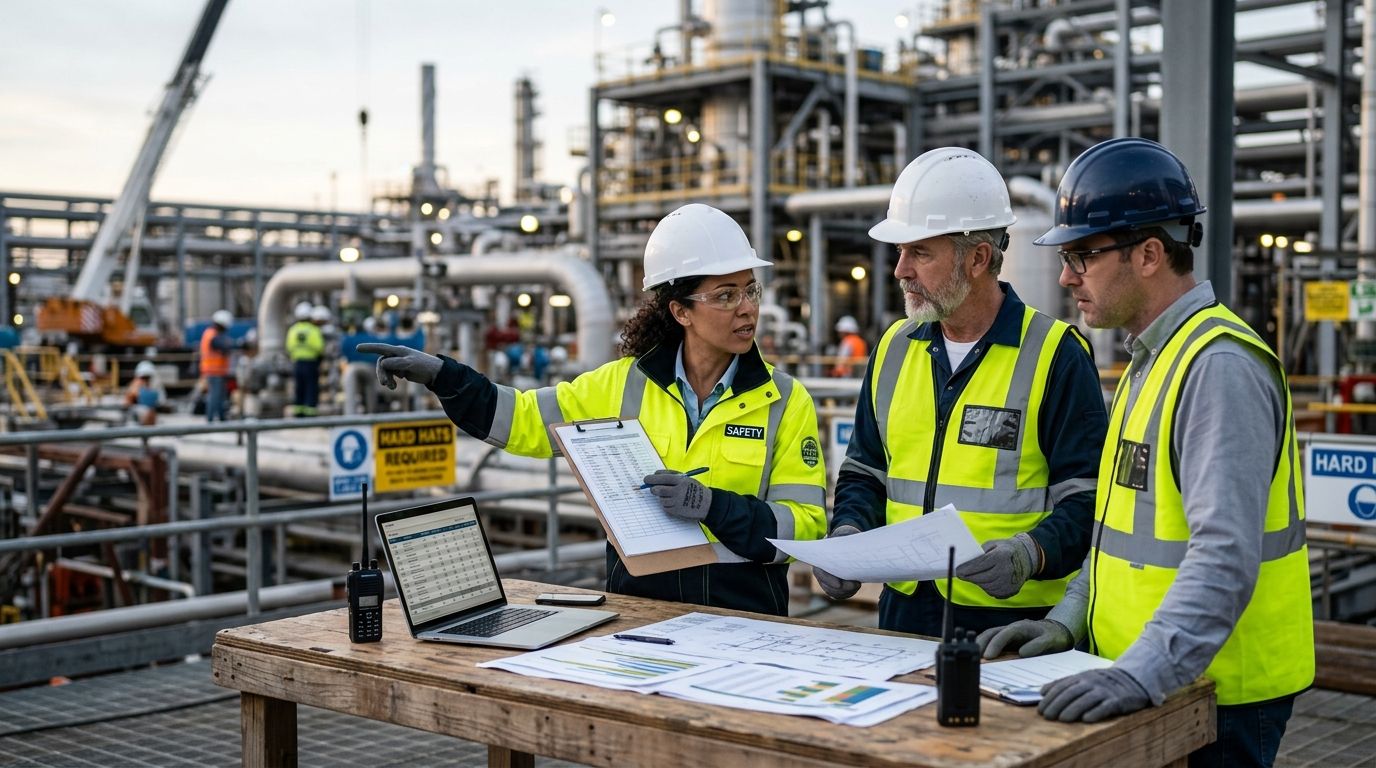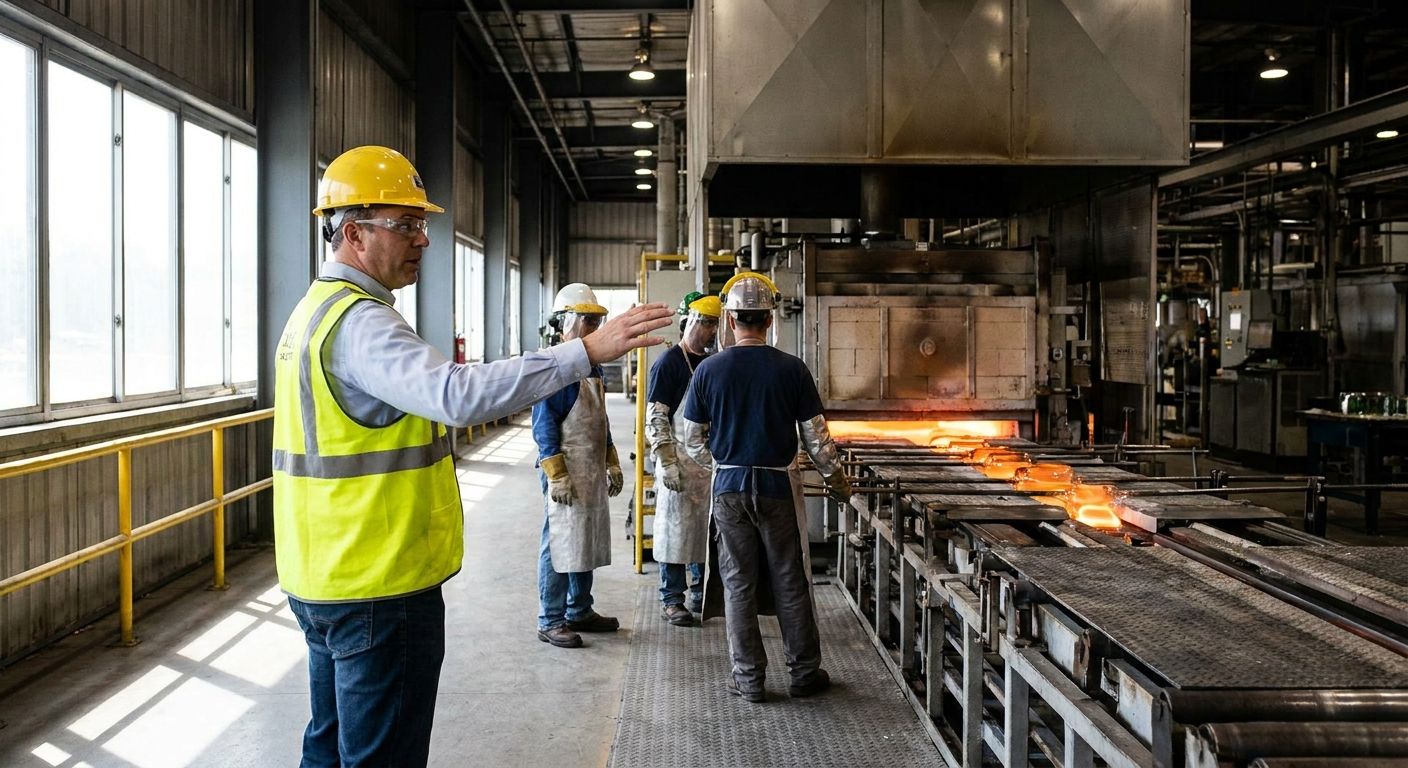
Safety staffing for glass manufacturing plants means placing EHS professionals who already understand furnace-zone heat exposure, respirable silica limits, and molten-material handling — not generalist industrial safety hires pulled from a broad staffing pool. Glass plants run continuous furnace campaigns that can last years without a full shutdown, which changes what "safety coverage" has to look like on paper and on the floor.
- Safety staffing for glass manufacturing plants requires furnace-zone and silica-specific EHS experience, not general industrial hires.
- ResponsAble Staffing places vetted safety professionals for 24/7 furnace operations, hot work, and confined space maintenance.
- OSHA's respirable crystalline silica standard, 29 CFR 1910.1053, applies directly to batch mixing and cullet crushing areas.
- Contract-to-hire works best when you're testing fit on a night shift furnace crew before committing to direct hire.
- Verify fire watch and confined space certifications before any candidate works near an annealing lehr or furnace repair.
Why safety staffing matters for glass manufacturing plants
A float glass or container furnace does not shut down between shifts, and the hazards inside a batch house, hot end, and cold end are different enough that one generalist safety hire cannot credibly cover all three. Batch mixing and cullet crushing generate respirable crystalline silica, which is why OSHA wrote a standard specifically for it, 29 CFR 1910.1053, and glass manufacturing sits squarely inside its scope.
Hot end work involves molten glass, radiant heat, and forming equipment running near furnace temperature, so burn prevention and heat stress management are daily concerns, not annual training topics. A staffing partner that treats this like generic safety staffing for manufacturing plants will send you a competent-on-paper safety coordinator who has never worked a hot-glass line, and that gap shows up fast during a furnace repair or a new hire's first week near the forming machines.
“If a glass manufacturing plant runs three shifts on one furnace, its safety staffing plan needs three shifts of dedicated EHS coverage, not one safety manager stretched thin.”
Build your glass plant safety staffing plan
Audit your furnace-zone hazard exposure first
Before you post a single job requisition, map where the real risk sits inside your plant. Glass manufacturing hazards cluster by zone, and your staffing needs should follow that map.
- Batch house: respirable silica, sand and soda ash handling, dust control equipment checks
- Hot end: molten glass burns, radiant heat stress, furnace and forehearth proximity
- Forming and annealing lehr: pinch points, conveyor entanglement, high-temperature surfaces
- Cold end: glass cutting lacerations, repetitive motion in inspection and packing
- Cullet handling: crushing noise exposure, sharp-edge cuts, forklift traffic
Verify certifications before anyone steps onto the floor
A resume that lists "industrial safety experience" tells you almost nothing about whether someone has ever worked a hot glass line. Confirm the credentials that actually matter for this environment.
- OSHA 30 for General Industry, not the Construction version
- Confined space competent person training for furnace crown and regenerator work
- Hot work / fire watch qualification for furnace repair and refractory jobs
- Respiratory protection medical clearance and fit-test records for silica exposure areas
- Forklift and powered industrial truck certification current within the last three years
Build a night shift and 24/7 furnace coverage plan
Most glass furnaces run continuously, which means your safety coverage cannot be a daytime-only function. Plants that staff EHS roles like a Monday-through-Friday office job end up with zero qualified eyes on the floor during the exact hours when fatigue-driven incidents spike.
- Map safety coverage against your actual shift schedule, including weekend rotations
- Build night shift safety staffing for 24/7 operations into your baseline headcount, not as overtime backfill
- Set a minimum ratio of certified safety staff per shift, based on your furnace count
- Cross-train hot end supervisors on basic incident response for the hours safety staff rotate out
Vet confined space and hot work competency for maintenance windows
Furnace rebuilds and refractory repairs put people inside spaces that meet OSHA's confined space definition, often at elevated residual heat. This is where an underqualified placement causes the most damage, and where the fastest path is a specialist who has done this work before.
- Confirm atmospheric monitoring experience specific to post-shutdown furnace entry
- Require documented confined space attendant staffing experience, not just a training certificate
- Check rescue plan familiarity — attendants need to know the plan, not just recite it
- Ask for prior hot work permit sign-off experience on furnace or kiln repairs
Plan for seasonal and surge production staffing
Glass manufacturers often see order surges tied to construction cycles, packaging seasons, or new product launches, and safety headcount needs to flex with production, not lag six weeks behind it. Waiting until a surge is already underway to start recruiting means running short-staffed during the exact window when incident risk is highest.
- Forecast production surges 60-90 days out and pre-clear a candidate bench
- Use temporary and project-based safety placements to cover surge periods without long-term headcount commitments
- Keep a standing relationship with a staffing partner so onboarding takes days, not weeks
- Build surge coverage into your annual EHS budget instead of treating it as an emergency spend
Decide between contract, contract-to-hire, and direct hire
Not every safety role needs to be a permanent headcount line, and not every temporary placement should stay temporary. Match the staffing structure to how long the actual need lasts.
- Use contract staffing for furnace rebuilds, turnarounds, or a single production surge
- Use contract-to-hire when you're not sure a role is permanent yet but want to evaluate fit on the floor
- Use direct hire recruiting for safety managers or safety directors who'll own your program long-term
- Reserve direct placement for roles where continuity with your plant's specific hazard profile matters most
Track incident and time-to-fill metrics from your staffing partner
Any agency can promise "vetted candidates." Ask for the numbers that actually tell you whether the promise holds up.
- Request average time-to-fill for safety roles in your production category
- Ask how the agency screens for prior recordable incidents on past placements
- Confirm how certifications get re-verified for candidates on longer assignments
- Get references from other manufacturing clients with similar furnace or hot-process operations
Compare your staffing options
| Option | Best for | Key limitation |
|---|---|---|
| Temporary / project-based safety staffing | Furnace turnarounds, rebuilds, short surges | Not built for roles that need long-term plant institutional knowledge |
| Contract-to-hire | Testing fit on a night shift or new furnace line before committing | Adds a transition step before the role is truly permanent |
| Direct hire recruiting | Safety managers or directors owning the program long-term | Longer search cycle than a temporary placement |
| Building the search entirely in-house | Plants with an existing recruiting team and deep candidate pipeline | Slower time-to-fill for niche credentials like confined space competent person |
Staff your glass plant's safety roles
Talk through furnace-zone, silica, and night shift coverage needs.
Common mistakes glass manufacturers make
- Treating hot end safety like general manufacturing safety. A safety coordinator with no molten-material experience will miss burn and radiant heat hazards that a generic checklist doesn't cover.
- Skipping silica exposure monitoring in the batch house. Respirable crystalline silica under 1910.1053 requires documented exposure assessments, and "we've always done it this way" is not a compliance defense.
- Understaffing night shift furnace monitoring. Incident rates climb during low-staffed overnight hours, and cutting safety headcount on nights to save budget usually costs more later.
- Hiring generalist safety staff for annealing lehr and furnace maintenance work. Confined space and hot work competency has to be verified, not assumed from a resume line.
- Waiting until a production surge hits to start recruiting. By the time you need extra safety coverage, a 60-90 day lead time has already passed.
Growing past your current safety bench usually means admitting one safety manager can't cover three shifts alone — that's not a failure of your program, it's a sign the plant is scaling and the staffing plan has to scale with it.
FAQ
What certifications should a glass manufacturing safety hire have in 2026?
Look for OSHA 30 General Industry, confined space competent person training, hot work or fire watch qualification, and current respiratory protection fit-test records. Glass plants also benefit from candidates with prior molten-material or furnace-zone experience specifically.
Does OSHA's silica standard apply to glass manufacturing plants?
Yes. The respirable crystalline silica standard, 29 CFR 1910.1053, applies to batch mixing, sand handling, and cullet crushing areas common in glass manufacturing. Exposure monitoring and control measures are required where silica-generating tasks occur.
Should I use temporary or direct hire safety staffing for a furnace rebuild?
Temporary or project-based staffing fits a furnace rebuild or turnaround because the need is time-bound. Direct hire makes more sense for a safety manager or director who will own your program after the rebuild finishes.
How much lead time does safety staffing for a production surge need?
Plan 60-90 days ahead of a forecasted surge whenever possible. Certified safety professionals with confined space and hot work qualifications aren't a same-week hire in most markets.
Is contract-to-hire a good fit for glass plant safety roles?
Contract-to-hire works well when you want to evaluate a candidate on your actual furnace line or night shift before committing to a permanent role. It adds one transition step compared to a straight temporary placement.
What's the biggest safety staffing mistake glass manufacturers make?
Understaffing night shift furnace coverage is the most common and costliest mistake. Continuous furnace operations need certified safety staff on every shift, not just during daytime hours.
How do I verify a staffing agency's safety track record?
Ask for time-to-fill data specific to your role type, how candidates get screened for prior recordable incidents, and references from manufacturing clients with similar hot-process operations.
One last thing
Glass furnaces don't pause for a hiring search — a furnace crown repair or an unplanned outage will happen on whatever shift it happens on, and your safety coverage either meets it or it doesn't. The plants that handle this well aren't the ones with the biggest safety department; they're the ones who staffed for all three shifts before the surge hit, not after.