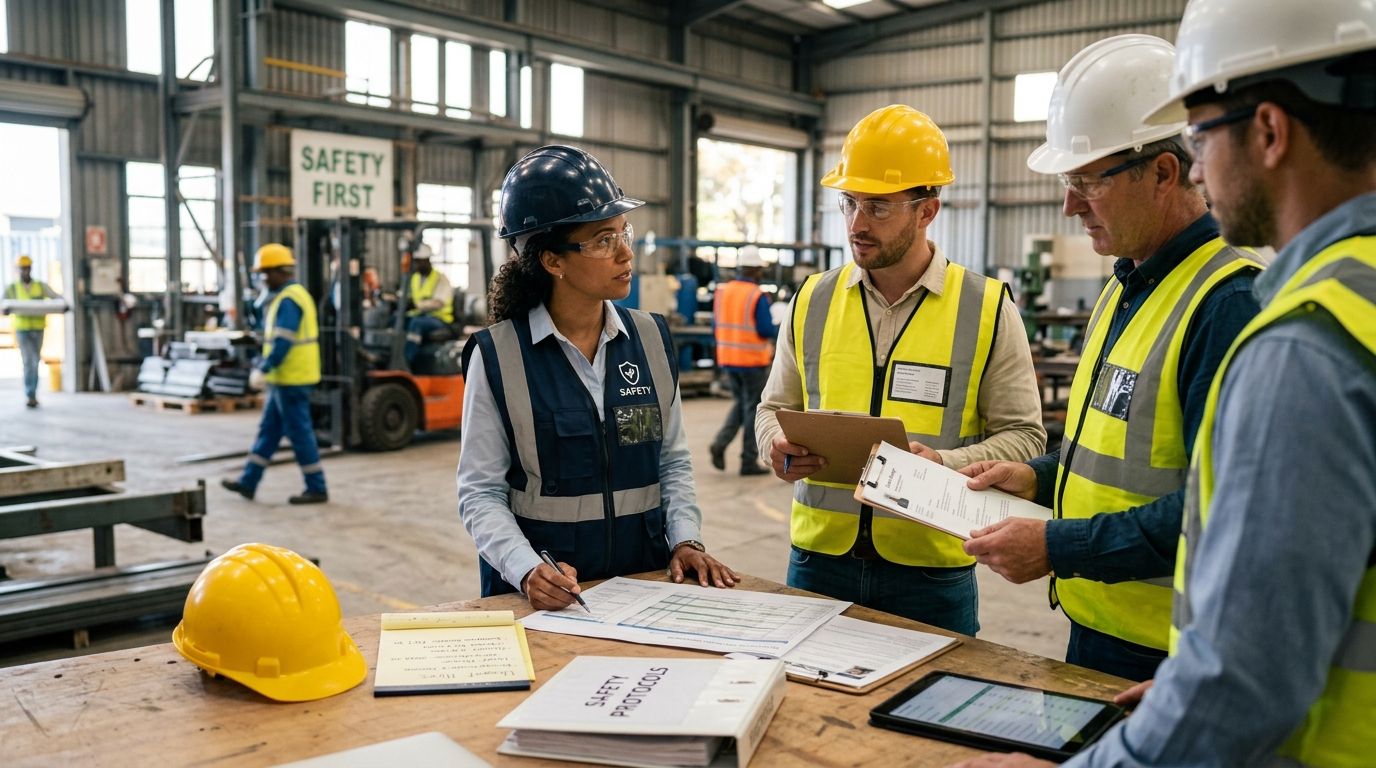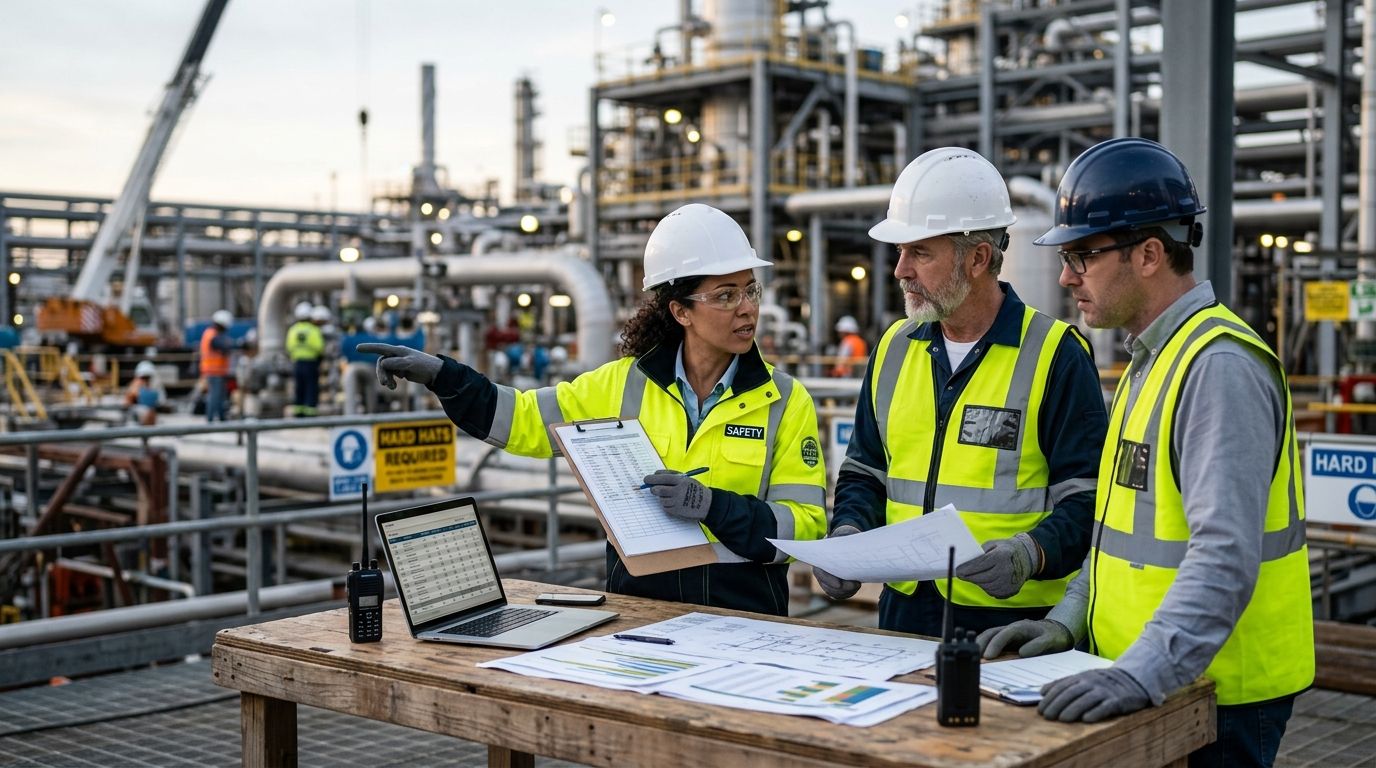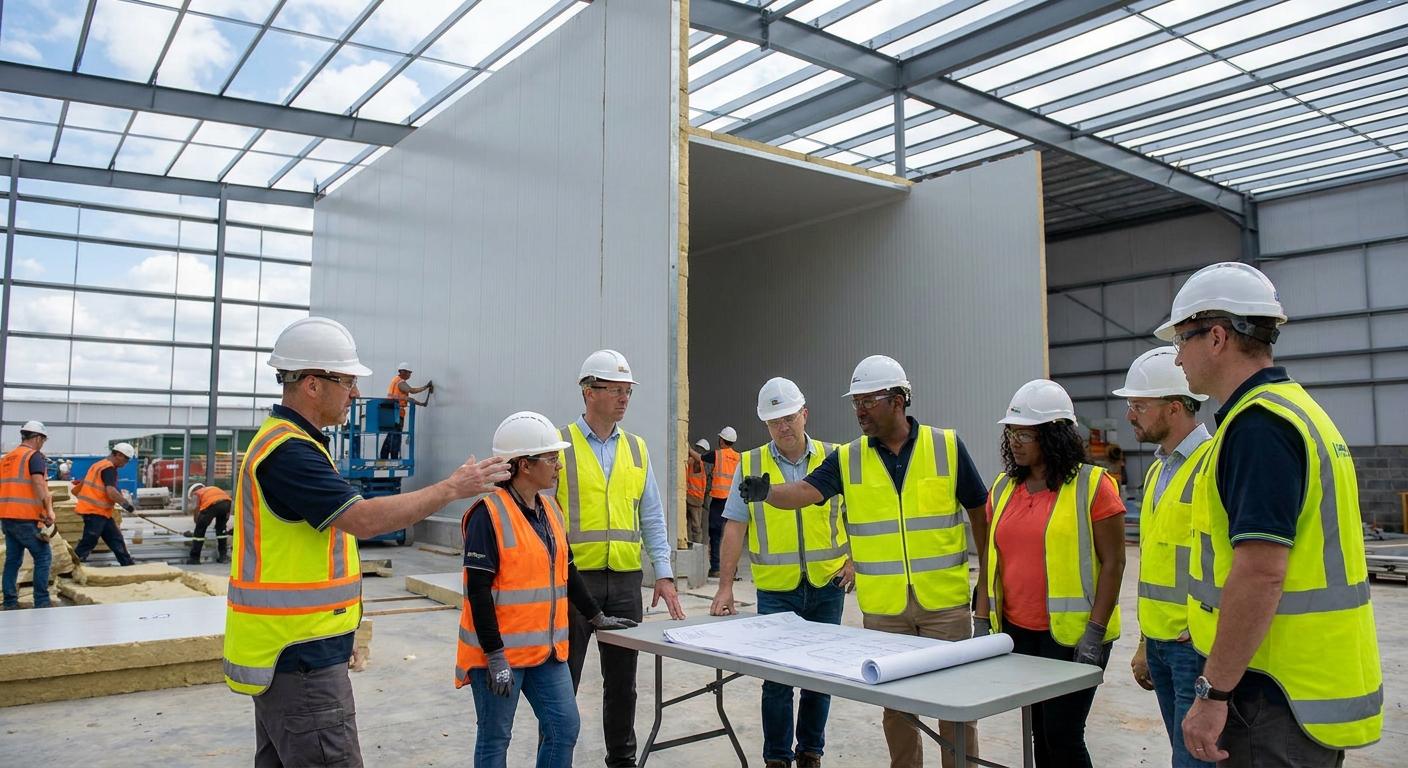
Cold storage builds run on tight refrigeration timelines, ammonia systems, and crews working in temperatures that swing from a 95°F summer slab pour to a -20°F freezer room commissioning test — and safety staffing for cold storage facility construction has to match that range, not a generic construction safety template.
- Safety staffing for cold storage facility construction needs ammonia and confined space expertise first — Confined Space Attendant Staffing is the non-negotiable pick.
- Direct Hire Safety Manager recruiting wins for full-build oversight; temp fire watch staffing covers hot work near insulated panels.
- Fast-Track Construction Safety Staffing fits 12 to 18 month compressed schedules common on 2026 cold chain projects.
- Skip any staffing vendor that can't document 1910.146 confined space training or IIAR-2 ammonia refrigeration awareness.
Why this matters
Cold storage construction combines two hazard classes most general contractors staff separately: standard industrial construction risk (falls, struck-by, electrical) and refrigeration-specific risk (ammonia exposure, permit-required confined spaces inside compressor rooms, cold stress during panel and racking install). A safety professional who's solid on a warehouse shell job can be underqualified the moment ammonia piping and machine rooms enter the schedule.
ResponsAble Staffing places vetted safety and EHS professionals into high-risk builds nationwide, and cold storage projects are one of the categories where the wrong hire costs the most — a stalled ammonia system inspection can push a 2026 delivery date by weeks, not days.
Who this is for
This guide is for general contractors, EPC firms, and cold chain developers building or expanding refrigerated warehouses, blast freezers, or distribution centers with mechanical ammonia or CO2 refrigeration systems. If your project involves a machine room, insulated panel envelope, and a compressed 12 to 18 month schedule, the staffing decisions below apply directly to you.
What to look for in safety staffing for cold storage construction
Ammonia and refrigeration hazard experience
Ammonia refrigeration systems fall under IIAR-2 design and safety standards, and a safety professional without that exposure won't catch a machine room ventilation gap before an inspector does. Ask any candidate directly how many ammonia or CO2 refrigeration jobsites they've worked, not just how many years of construction experience they list.
Confined space certification under 1910.146
Compressor rooms, below-grade trenches, and refrigerant piping vaults on cold storage sites frequently qualify as permit-required confined spaces under OSHA 1910.146. A safety hire who can run atmospheric testing and manage entry permits saves you from shutting down a crew mid-shift because nobody on site is qualified to authorize entry.
Cold stress and PPE program knowledge
Workers moving between a 90°F exterior slab and a freezer room testing at -20°F need a documented cold stress rotation plan, not a verbal reminder to bundle up. Staff who've run cold-environment PPE programs before know how to set warm-up break intervals before OSHA or your insurer asks for the paperwork.
Fast mobilization for compressed schedules
Cold storage developers rarely build slack into the schedule — refrigeration equipment lead times already eat months, so the construction window gets compressed on the back end. A staffing partner who can place a certified safety professional within days, not weeks, protects the schedule instead of becoming the bottleneck.
24/7 and multi-shift coverage capability
Ammonia charging, insulated panel installs, and concrete pours on cold storage jobs often run around the clock to hit occupancy dates. Safety coverage that only exists on day shift leaves the night crew exposed and leaves you exposed on the incident report.
Top picks for cold storage safety staffing
Confined Space Attendant Staffing — the non-negotiable pick. Machine rooms and refrigerant vaults on cold storage sites routinely require a dedicated attendant for every permit-required entry under 1910.146. Confined space attendant staffing built for industrial sites covers atmospheric monitoring and entry log management specific to ammonia environments. Buy — this role isn't optional once the machine room goes vertical.
Fire Watch / Hot Work Staffing — the phase everyone forgets. Welding near insulated panels and refrigerant piping creates hot work risk that most GCs underestimate until the fire watch requirement shows up in the permit conditions. A staffing agency that supplies fire watch attendants for hot work permits keeps welding crews moving without a stop-work order. Buy for any job with panel welding or pipe fitting inside the envelope.
Direct Hire Safety Manager — the long game. A project this technical benefits from one safety manager who owns the site from mobilization through commissioning rather than rotating temps. Direct hire recruiting for safety managers targets candidates with refrigeration-specific backgrounds instead of generalist construction resumes. Buy for builds running past 12 months, Consider for shorter fast-track jobs where a project-based hire makes more sense.
Fast-Track Construction Safety Staffing — the compressed schedule fix. When the refrigeration equipment lead time eats the calendar and the construction window shrinks to 6 to 9 months, staffing has to move as fast as the schedule. Fast-track construction safety staffing places qualified professionals on accelerated timelines instead of the standard multi-week search. Buy if your delivery date is already locked.
Night Shift Safety Staffing for 24/7 Operations — the graveyard shift gap. Ammonia charging and concrete work often push into second and third shift to hit occupancy targets, and a lot of GCs staff safety only for day shift, leaving a coverage hole exactly when fatigue and low visibility raise incident risk. Night and weekend coverage should mirror your labor shift pattern, not just your office hours. Consider this early — retrofitting night coverage after an incident is the expensive version of this decision.
Vet your safety staffing partner first
Confirm ammonia and confined space credentials before signing.
What to avoid
- General construction safety staff with no refrigeration exposure. A candidate who's only worked warehouse shells or office builds hasn't seen an ammonia machine room and won't know what a leak detection sensor placement issue looks like.
- Agencies that can't produce 1910.146 or IIAR-2 documentation on request. If a staffing vendor hesitates when you ask for training records, that's the answer — move on before the contract is signed.
- Day-shift-only staffing plans for a 24/7 build. Covering two shifts out of three isn't coverage, it's a gap with a schedule attached, and it shows up in your incident log the first month.
Verdict comparison
| Staffing Type | Confined Space Ready | Fast Mobilization | Best For | Verdict |
|---|---|---|---|---|
| Confined Space Attendant Staffing | Yes | Days | Machine room and vault entries | Buy |
| Fire Watch / Hot Work Staffing | Partial | Days | Panel welding, pipe fitting | Buy |
| Direct Hire Safety Manager | Yes | Weeks | 12+ month builds | Buy/Consider |
| Fast-Track Construction Staffing | Varies | 24-72 hours | Compressed 6-9 month schedules | Buy |
| Night Shift Safety Staffing | Yes | Days | 24/7 ammonia charging, pours | Consider |
FAQ
What is safety staffing for cold storage facility construction?
It's the placement of EHS professionals with ammonia refrigeration, confined space, and cold stress experience onto cold storage build sites. General construction safety staff often lack the machine room and refrigerant-specific training these jobs require.
Do cold storage projects need confined space attendants?
Yes, machine rooms and refrigerant vaults frequently qualify as permit-required confined spaces under OSHA 1910.146. A dedicated attendant is required for every entry, not just recommended.
Can a staffing agency provide fire watch for hot work near insulated panels?
Yes, fire watch staffing for hot work permits is a standard category for cold storage builds where welding occurs near insulated panel envelopes. The attendant monitors the work area during and after hot work per the permit terms.
How fast can a safety staffing agency mobilize for a fast-track cold storage job?
Fast-track construction safety staffing can place certified professionals in days rather than the multi-week timeline of a standard hire. Refrigeration equipment lead times often compress the construction window, making mobilization speed a real selection criterion in 2026.
Is direct hire or temporary staffing better for a cold storage safety manager?
Direct hire works best for builds running past 12 months where continuity from mobilization through commissioning matters. Temporary or project-based placement fits shorter fast-track jobs or single-phase work like panel installation.
What OSHA standards apply to ammonia refrigeration construction?
1910.146 governs permit-required confined space entry common in machine rooms, and IIAR-2 sets the ammonia refrigeration system design and safety standard referenced by most inspectors. Staff without exposure to both standards typically miss machine room-specific hazards.
How do you staff night shift safety coverage for 24/7 cold storage builds?
Match safety staffing to the actual labor shift pattern, including second and third shift coverage during ammonia charging or continuous concrete work. Day-shift-only coverage on a round-the-clock job leaves the highest-fatigue hours unsupervised.
How much does safety staffing cost for a cold storage build in 2026?
Cost varies by role, certification level, and whether the placement is temporary, project-based, or direct hire, so a direct quote from a staffing partner is the reliable way to budget. Confined space and ammonia-certified roles typically command a premium over general construction safety staff.
One last thing
The machine room inspection is the single point in a cold storage build where a staffing gap shows up fastest — if nobody on site holds current confined space entry authorization, that inspection stops the schedule cold, and every day it sits idle costs more than the staffing placement would have. Line up confined space and ammonia-experienced safety staff before the machine room goes vertical, not after the inspector asks who's authorized to enter.