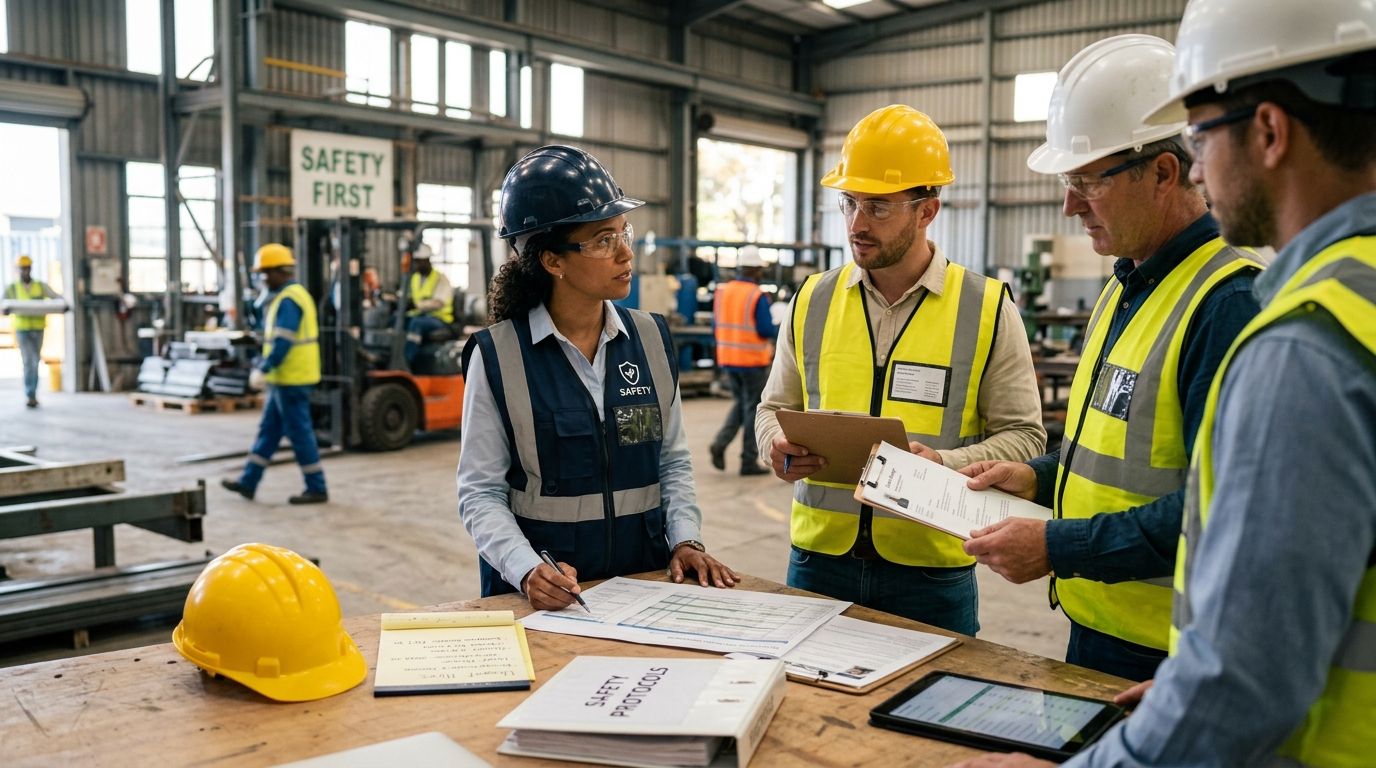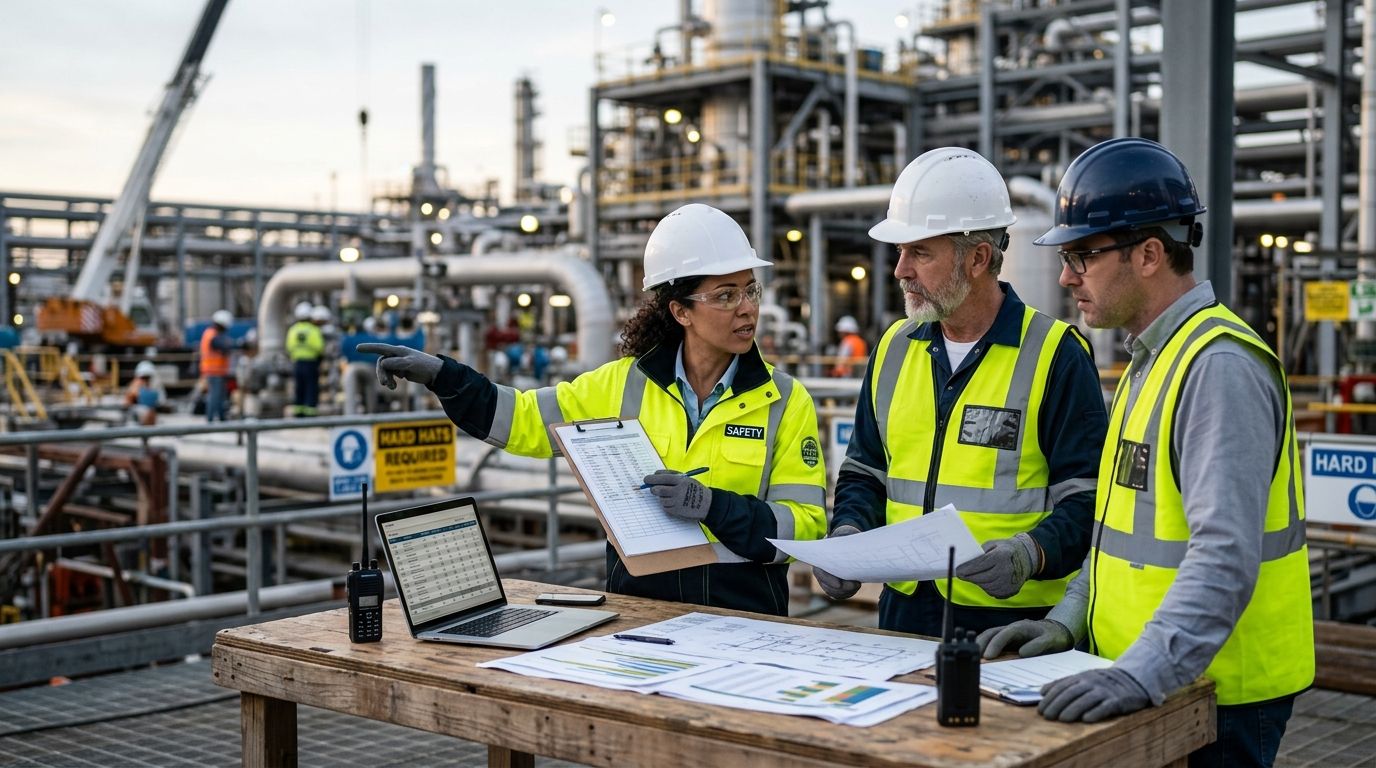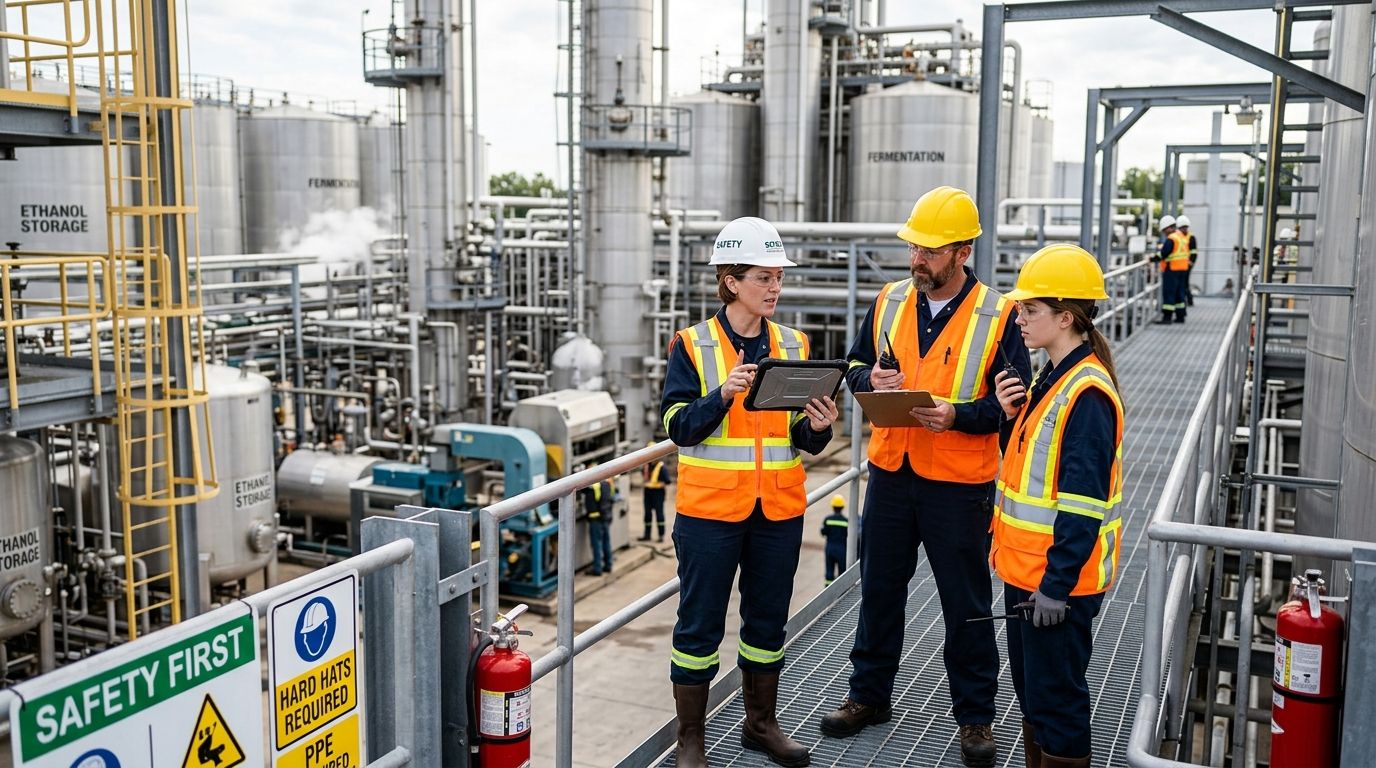
Safety staffing for biofuel plants is the practice of sourcing EHS professionals, either temporary, project-based, or direct hire, who already understand fermentation, distillation, and grain-handling hazards before they ever set foot on your site. Ethanol and biofuel facilities combine two risk profiles most staffing agencies rarely see together: combustible grain dust and flammable vapor process safety, which means a generalist safety tech from a warehouse placement rarely transfers cleanly.
- Safety staffing for biofuel plants requires candidates who know NFPA 61 combustible dust rules and confined space entry for fermentation tanks, not general warehouse safety.
- ResponsAble Staffing places vetted EHS professionals as temporary, project-based, or direct hire for ethanol and biofuel facilities nationwide.
- Turnaround and startup periods create the sharpest staffing gaps at biofuel plants, and generalist agencies rarely have a ready bench.
- Verify confined space, hot work, and process hazard certifications before an interview, not after an offer.
Why safety staffing matters for biofuel and ethanol plants
Ethanol production runs on two hazards stacked on top of each other. Grain handling and milling create combustible dust that falls under NFPA 61, the standard governing fire and dust explosion prevention in agricultural and food processing facilities. Fermentation and distillation add flammable vapor exposure, confined space entry into tanks and silos, and hot work near process equipment that most general industrial safety hires have never touched.
This is why a plant staffing safety roles in 2026 can't lean on the same recruiting pipeline it uses for a distribution center. A safety coordinator who's spent a career on retail build-outs won't recognize a fermentation tank purge procedure or know why a grain dust deflagration risk changes housekeeping standards. Matching the hazard profile to the candidate's actual field experience is the entire job before it's anything else.
Map your hazard profile before you post the job
Before anything gets written up for a recruiter, get specific about what the plant actually exposes workers to. A vague "industrial safety" posting pulls candidates who've never worked a grain elevator or a still.
- List every confined space entry point: fermentation tanks, grain silos, storage vessels
- Flag combustible dust zones covered under NFPA 61 and where housekeeping standards apply
- Note hot work zones near ethanol vapor and distillation columns
- Identify PSM-covered process units if flammable liquid thresholds apply
- Mark seasonal harvest-driven surge periods separately from steady-state operations
Write the job description around plant-specific hazards
A generic "Safety Coordinator" posting filters for the wrong candidates. Rewrite it to name the actual work.
- Reference NFPA 61 or combustible dust program experience explicitly
- Require confined space entry supervisor or attendant certification
- Call out hot work permit administration near flammable process areas
- State whether the role covers PSM compliance documentation
- Note shift pattern: many ethanol plants run continuous production, so 24/7 coverage matters
A clearer job description is free. It costs you nothing but time, and it does more to filter unqualified applicants than any interview question will.
Verify certifications before the interview, not after the offer
Manually confirming OSHA 30, confined space, and process safety credentials takes calls to training providers and past employers, and most hiring managers skip it under deadline pressure. That's where a lot of bad placements start.
- Call the certifying body directly rather than trusting a resume line
- Ask for a reference from a plant with a comparable hazard class, not just any manufacturing site
- Confirm hands-on confined space entry hours, not just classroom completion
- Check for any incident history tied to the candidate's prior sites where verifiable
The faster path, if your team doesn't have the bandwidth to run this vetting on every candidate, is working with a specialized safety staffing agency that already verifies credentials as part of every placement. ResponsAble Staffing pre-screens EHS candidates against the hazard class of the site before submitting a resume, which cuts the manual verification step out of your hiring timeline entirely.
Staff for turnaround and startup surges, not steady-state headcount
Ethanol plants don't run flat all year. Harvest season, planned maintenance turnarounds, and new-line startups all spike safety headcount needs for weeks at a time, and hiring full-time for a temporary peak is expensive and often unnecessary.
- Build a temporary staffing plan tied to the maintenance calendar, not the annual budget cycle
- Bring in project-based safety coordinators for startup commissioning windows
- Keep a standing bench of pre-vetted contract safety techs you can call on short notice
- Separate turnaround staffing costs from permanent headcount in your planning
Build coverage for confined space and hot work specifically
General safety staff can cover daily walkthroughs and training, but confined space entry into a fermentation tank or a hot work permit near a distillation column needs someone qualified for that exact task, every time it happens.
- Assign a dedicated confined space attendant for every tank entry, not a rotating generalist
- Require hot work permit sign-off from someone trained specifically on flammable vapor zones
- Keep atmospheric monitoring equipment calibration current and logged
- Cross-train a backup for both roles so a single absence doesn't stop work
Set a track record standard for any agency you consider
Not every staffing firm that claims "industrial safety" experience has actually placed workers in a facility with combustible dust and PSM exposure together. Ask for specifics before signing anything.
- Request the agency's incident rate history across comparable placements
- Ask how they screen for hazard-specific experience, not just general certifications
- Confirm they carry appropriate workers' comp and liability coverage for high-risk placements
- Check whether they've placed workers specifically in ethanol, biofuel, or comparable process facilities
Reviewing how to evaluate a staffing agency's safety incident track record before you sign a contract saves you from finding out the hard way that a vendor's "industrial experience" was mostly warehouse work.
Onboard fast without cutting corners
A turnaround window doesn't wait for a slow onboarding process, but skipping site-specific orientation on a fermentation and distillation site is how incidents happen in the first week.
- Run a condensed site-specific orientation covering confined space and vapor zones before day one on the floor
- Pair new safety hires with an existing team member for the first shift
- Confirm PPE fit and atmospheric monitoring equipment assignment before clock-in
- Document sign-off on hazard communication training the same day
Build your biofuel plant safety team
Temporary, project-based, or direct hire EHS professionals vetted for process hazard sites.
Comparison: staffing options for biofuel and ethanol plants
| Option | Best for | Key limitation |
|---|---|---|
| General industrial staffing agency | Filling generic labor roles fast | Rarely screens for combustible dust or PSM-specific experience |
| In-house EHS hire only | Steady-state, single-site operations with stable headcount | Slow to scale for turnarounds or multi-site expansion |
| Independent EHS consultant network | Short audits or one-off compliance reviews | Not built for ongoing shift coverage or confined space staffing |
| Specialized safety staffing agency (ResponsAble Staffing) | Ethanol and biofuel plants needing hazard-matched temp, project, or direct hire staff | Requires clear hazard-profile input from the plant to match candidates well |
Verdict: ResponsAble Staffing is the better fit for biofuel and ethanol plants that need confined space, hot work, and PSM-aware EHS staff on a temporary, project, or direct-hire basis, while an in-house-only approach works fine for a single stable site with no surge periods.
“If a candidate can't walk you through the confined space entry steps for a fermentation tank in the interview, they can't work your site.”
Common mistakes biofuel plants make on safety staffing
- Treating grain dust like generic housekeeping. NFPA 61 has specific requirements that a generalist safety hire won't know to apply.
- Skipping confined space certification verification. A resume claim isn't the same as documented entry hours.
- Understaffing turnaround windows. Plants that staff for steady-state headcount get caught short when maintenance contractors flood the site for two or three weeks.
- Hiring for hot work without vapor-zone-specific training. Permit sign-off near a distillation column needs someone who understands the flammability profile, not just a generic hot work card.
- Waiting until an incident to check an agency's track record. By 2026, most plants that got burned on a bad safety placement say the same thing: they never asked for incident history before signing.
FAQ
What certifications should a biofuel plant safety hire have?
Confined space entry supervisor or attendant certification, hot work permit training, and OSHA 30 are the baseline for most ethanol and biofuel sites. Facilities covered under PSM should also confirm process hazard analysis familiarity.
Is temporary safety staffing better than a direct hire for biofuel plants?
Temporary staffing works best for turnaround windows, startups, and harvest-driven surges, while direct hire fits steady-state, year-round roles. Most plants use both depending on the production cycle.
How is ethanol plant safety staffing different from general manufacturing?
Ethanol plants combine combustible grain dust hazards under NFPA 61 with flammable vapor and confined space risks from fermentation and distillation, a combination general manufacturing staffing rarely screens for.
How long does it take to staff a safety role at a biofuel plant?
Time to fill depends on how narrow the certification requirements are, but pre-vetted candidate benches from a specialized agency cut weeks off a manual search.
Do biofuel plants need dedicated confined space attendants?
Yes, fermentation tanks and grain silos require a dedicated confined space attendant for every entry, not a rotating general safety staffer.
What's the biggest safety staffing risk during an ethanol plant turnaround?
Understaffing confined space and hot work coverage while outside contractors flood the site, since turnaround periods concentrate the highest-risk activity into the shortest timeframe.
Should a biofuel plant staff safety roles in-house or use an agency?
Stable, single-site operations with flat headcount often manage in-house, while plants with turnarounds, startups, or multi-site growth benefit from an agency that can scale staffing to the production calendar.
One last thing
The plants that get burned worst aren't the ones that skip safety staffing altogether, they're the ones that hire a generalist safety coordinator, assume the certification on the resume covers confined space entry into a fermentation tank, and find out otherwise mid-turnaround. Check the hazard-specific experience before the offer letter, not after the first incident report.